
Foreign
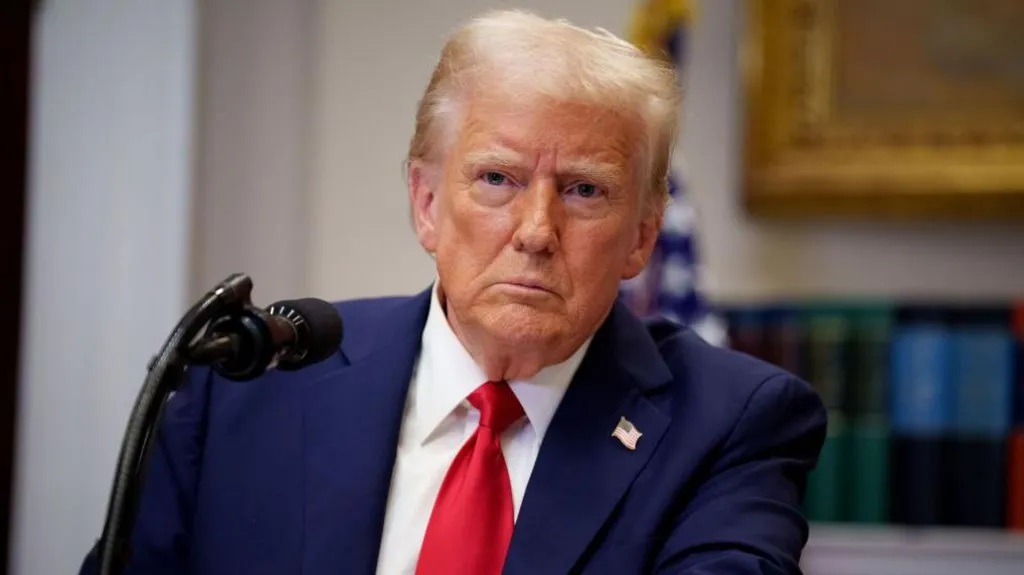
Trump cautions Iran’s Supreme leader, says “we know where you’re”

- /home/naijuinz/public_html/wp-content/plugins/mvp-social-buttons/mvp-social-buttons.php on line 27
https://naijablitznews.com/wp-content/uploads/2025/01/Donald-Trump-1-1000x575.jpg&description=Trump cautions Iran’s Supreme leader, says “we know where you’re”', 'pinterestShare', 'width=750,height=350'); return false;" title="Pin This Post">
- Share
- Tweet /home/naijuinz/public_html/wp-content/plugins/mvp-social-buttons/mvp-social-buttons.php on line 72
https://naijablitznews.com/wp-content/uploads/2025/01/Donald-Trump-1-1000x575.jpg&description=Trump cautions Iran’s Supreme leader, says “we know where you’re”', 'pinterestShare', 'width=750,height=350'); return false;" title="Pin This Post">


President Trump has revealed that the US knows “exactly” where Iran Supreme Leader Ali Khamenei is hiding but is letting him live “for now,” as Israeli and US sources say the commander-in-chief is heavily weighing whether to conduct military strikes on Tehran’s nuclear facilities.
And the world was waiting on his decision Tuesday.
Trump, who ran three times for president on an “America First” platform of opposing costly Mideast quagmires, openly threatened Tehran and called for Iran’s “unconditional surrender” following Israel’s punishing bombardment of the country’s military and nuclear infrastructure.
“We know exactly where the so-called ‘Supreme Leader’ is hiding,” Trump truthed. “He is an easy target, but is safe there – We are not going to take him out (kill!), at least not for now.”
“But we don’t want missiles shot at civilians, or American soldiers. Our patience is wearing thin. Thank you for your attention to this matter!”
He convened an 80-minute meeting with his top national security officials in the West Wing’s Situation Room on Tuesday a little after 2 p.m. to weigh the legacy-defining decision.
But, “as always, President Trump alone will make the call,” a source close to the Pentagon said Tuesday.
The source speculated that there’s an 80% chance the president would launch airstrikes to support Israel.
Early Tuesday morning the president told reporters he was “not too much in the mood to negotiate” and was seeking a “real end” to the Iran-Israel conflict.
The Situation Room meeting featured Vice President JD Vance, Defense Secretary Pete Hegseth, Secretary of State Marco Rubio and intelligence director Tulsi Gabbard.
A source familiar with Trump’s deliberations said he “likes people who know what they’re talking about and are honest with him.”
Additional sources in both the US and Israel told The Post they suspect that the president will act militarily — pushing past an outcry from some of his populist movement’s leading figures who doubt the wisdom of doing so.
Similarly, an Israeli official said Trump’s positioning of military assets in the region suggests the US is willing to help Israel destroy Iran’s nuclear sites.
Another Israeli source told The Post that Israel and the US has “reached a strategic window of opportunity” — where the parties have both the proper intelligence and weapons capabilities to wipe out Iran’s nuclear program.
The precise conversation within the Situation Room was unclear, though key players have well-known views on Iran and regional military operations.
Vance and Gabbard in particular are associated with the non-interventionist wing of Trump’s political base — with the VP putting up internal resistance to a decision earlier this year to bomb Iran-backed Houthi fighters in Yemen.
Gabbard, a former Hawaii congresswoman, left the Democratic Party and backed Trump in last year’s election largely over foreign policy.
A source said Gabbard has been at the White House and in the Situation Room consistently since the conflict started on June 13 — after reportedly missing a June 8 gathering at Camp David where Trump was informed that Israel’s attack on Iran was imminent.
Gabbard said in March that Iran wasn’t close to developing a nuclear bomb — contradicting Israeli Prime Minister Benjamin Netanyahu’s claims.
Hegseth and Rubio are more firmly tied with the Republican Party’s hawkish wing.
They were joined at the Situation Room meeting by Steve Witkoff, Trump’s Mideast special envoy, who led efforts in recent weeks to force Tehran to strike a deal to avoid a looming Israeli attack.
Although Trump floated hours earlier delegating Witkoff and Vance to negotiate with Iran, the Situation Room meeting ended with no plans for any such diplomacy, The Post confirmed.
While the president initially vetoed Israel’s plan over the weekend to take out Khamenei, both Trump and Israeli Prime Minister Benjamin Netanyahu have indicated that the nations are nearly done waiting for Tehran to give up its nuclear program.
Trump ran for office in three general elections on a platform of keeping the US military out of Mideast quagmires — but has at moments taken limited military action in the region, including in 2020 ordering an airstrike to assassinate Iranian Gen. Qasem Soleimani in Iraq.
The US military has guided 30,000-pound “bunker buster” bombs that could more effectively collapse underground nuclear facilities — averting a potential incomplete demolition of sites by Israel, which has been dropping 2,000-pound bombs sourced from America.
Netayahu on Monday night told ABC News that he was not ruling out killing Khamenei, 86, if necessary.
“We are doing what we need to do,” the prime minister said.
Khamenei has served as Iran’s supreme leader since 1989 following the death of revolutionary leader Ayatollah Khomeini, who established the country’s theocratic regime after Iran’s US-allied shah, Mohammad Reza Pahlavi, fled in 1979.
Opponents of the Iranian government described its feckless defense against Israel as evidence that the regime was on the verge of collapse.
Reza Pahlavi, the last shah’s 64-year-old son, on Tuesday called on Iranians to stage an uprising to topple the government.
“The Islamic Republic has reached its end and is in the process of collapsing. Khamenei, like a frightened rat, has gone into hiding underground and has lost control of the situation,” Pahlavi claimed in a Persian-language video posted to X.
“The regime’s apparatus of repression is falling apart. All it takes now is a nationwide uprising to put an end to this nightmare once and for all. Now is the time to rise; the time to reclaim Iran.”
Pahlavi claimed that “Iran will not descend into civil war or instability. We have a plan for Iran’s future and its flourishing. We are prepared for the first hundred days after the fall for the transitional period for the establishment of a national and democratic government.”
Israel on Monday secured air superiority over Tehran, and Trump on Tuesday said “we” now have control over Iran’s entire airspace — seemingly indicating that the US and Israel are standing strongly together.
“We now have complete and total control of the skies over Iran. Iran had good sky trackers and other defensive equipment, and plenty of it, but it doesn’t compare to American made, conceived, and manufactured ‘stuff.’”
“Nobody does it better than the good ol’ USA.”

More than 150,000 passengers have been left stranded after a volcanic eruption forced Indonesian authorities to temporarily suspend operations at eight airports.
According to the report, Jakarta’s Soekarno-Hatta International Airport was the first to be closed on Sunday morning after ash from Anak Krakatau was detected in airspace near the airport.
Transport minister Dudy Purwagandhi said so far 712 flights have been affected and asked airlines to consider diverting some flights to other airports.
The volcano had started erupting late on Friday night, generating continuous seismic activity, lava fountains, and booming sounds across surrounding regions.
The transport ministry said the pause in operations mainly affected flights to and from Singapore, and other international routes including Doha, Sydney and Kuala Lumpur.
Purwagandhi said the decision to temporarily close more airports was made after tests found that volcanic ash had spread towards West Java.
He urged airlines to speed up processes for refunding tickets for passengers who have been affected by flight cancellations, and for airlines to provide timely information to those with upcoming flights to avoid overcrowding at airports.


An Egyptian court has sentenced popular television presenter, Sarah Khalifa and 11 others to death over their alleged involvement in the production and trafficking of narcotics.
Khalifa, 39, is a well-known television personality and the presenter of ‘Mission Impossible’, a programme that focuses on security and crime-related issues.
According to the state-linked Al-Ahram newspaper, a Cairo court found Khalifa and the 11 other defendants guilty of forming an organized criminal gang involved in procuring materials used to manufacture narcotics for trafficking.
The defendants were also convicted of possessing and carrying unlicensed firearms and ammunition.
The court reached the death sentence after seeking the religious opinion of Egypt’s Grand Mufti, as required by law in capital punishment cases.
However, the verdict is subject to appeal.
State-run Akhbar Al-Youm newspaper reported that the defendants were accused of producing synthetic drugs for trafficking after allegedly importing the materials needed for their manufacture from outside Egypt.
Authorities reportedly seized more than 750 kilogrammes of narcotics and raw materials during investigations into the case. They also discovered two apartments allegedly being used as drug laboratories, alongside unlicensed firearms and ammunition.
Khalifa, who also owns a plastic surgery clinic and a production company involved in organizing parties and events, was further sentenced to five years in prison with other defendants in a separate case involving the kidnapping and assault of a young man.
Egyptian law allows the death penalty for offences including premeditated murder, terrorism, certain rape cases and drug trafficking. Data from the Egyptian Commission for Rights and Freedoms showed that 541 death sentences were handed down in Egypt in 2025
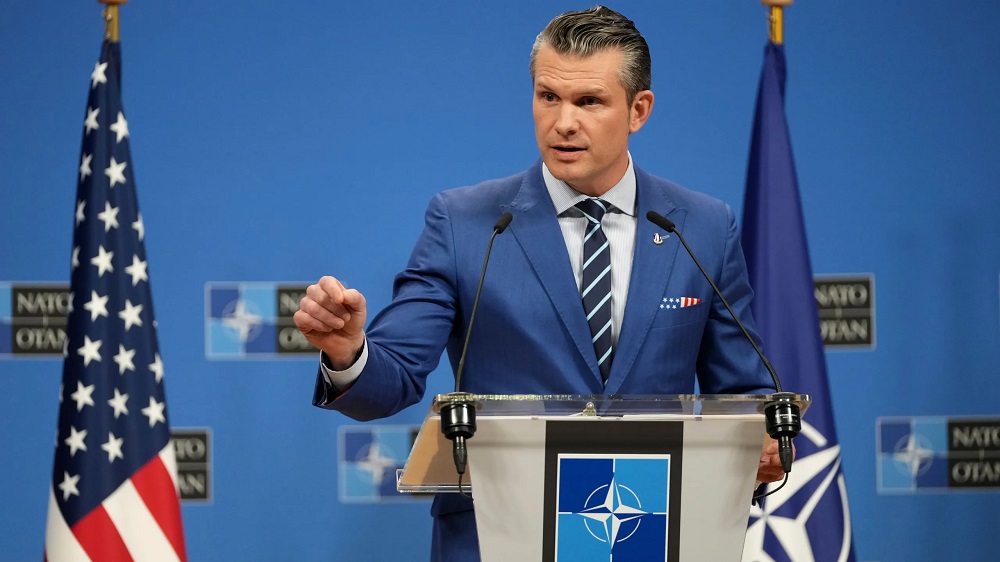
The United States has issued a fresh warning to Iran, threatening to destroy and sink Iranian oil tankers if Tehran launches further attacks against American naval vessels.
U.S. Secretary of War Pete Hegseth issued the warning on Saturday, September 5, 2026, shortly after American forces struck three Iranian oil tankers following what Washington described as ballistic-missile attacks by Iran’s Islamic Revolutionary Guard Corps (IRGC) against two U.S. Navy warships.
Hegseth, in a statement on X, said the United States would respond directly by targeting Iran’s oil fleet if American ships came under fire.
“It’s simple: if Iran shoots at U.S. ships, we will destroy (and sink) their oil tankers,” Hegseth said, adding that Iran only needed to refrain from attacking the U.S. Navy.
He further claimed that Iran’s oil tanker fleet was vulnerable because, according to him, Tehran lacked the naval and air capabilities necessary to protect the vessels.
“Iran’s oil tanker fleet is defenseless — Iran has no navy or air force. Our planes, ships & subs can strike them all,” Hegseth said, referring to areas under the U.S. Central Command and U.S. Indo-Pacific Command.
US strikes three Iranian tankers
The warning came after U.S. Central Command (CENTCOM) confirmed that American forces had struck three Iranian crude oil carriers.
CENTCOM said the action followed missile attacks by the IRGC against a U.S. aircraft carrier and a guided-missile destroyer. According to the command, both American warships successfully evaded the missiles and no U.S. personnel were injured.
The American military identified two of the vessels as M/T Downy, which was struck off Kharg Island, and M/T Stark 1, targeted near Jask.
Both vessels were described by CENTCOM as “permanently disabled.”
A third tanker, M/T Kylo, also known as Noxen, was attacked in the Gulf of Oman. CENTCOM said the crew was warned to abandon the vessel before it was destroyed.
The U.S. military said the tankers were connected to what it described as a multibillion-dollar “shadow network” allegedly used to finance Iran’s Revolutionary Guard and its regional allies.
US threatens wider action
The commander of U.S. Central Command, Admiral Brad Cooper, also warned that Washington would impose an even greater economic cost on Tehran if Iranian forces continued attacking American vessels.
“If you shoot at two of our ships, we will impose an even higher economic cost — taking out three of yours,” Cooper said.
He added that the United States would not hesitate to defend its forces and, if necessary, destroy Iran’s “limited and exposed oil fleet.”
The latest threats signal a potentially significant expansion of the maritime confrontation between Washington and Tehran, with Iranian oil shipments increasingly becoming a direct target of U.S. military pressure.
Iran condemns attacks
Iran has condemned the American strikes on its oil tankers, describing the attacks as illegal and warning that Washington and its allies would bear responsibility for the consequences of continued attacks.
Iranian authorities have also warned that further attacks on Iranian vessels could trigger retaliation against American interests in the region.
The escalation is particularly significant because it is unfolding around the Strait of Hormuz, one of the world’s most important energy shipping routes.
The waterway connects the Persian Gulf with the Gulf of Oman and is a critical route for global oil supplies. Continued attacks on commercial vessels could therefore have wider implications for international energy markets and global shipping.
With the United States now openly threatening to target Iran’s oil fleet in response to attacks on its Navy, the latest confrontation could mark a new and more dangerous phase in the ongoing U.S.-Iran conflict.

Davido’s Friend ‘Tiny’ Ubiribo, Who Died After Penis Procedure, Was Wanted by NDLEA Over Drug Trafficking

Businesses Feel Pressure as FG’s Domestic Borrowing Surges 90% to N24.7trn

WAEC Recruitment Test: Applicants Raise Alarm Over Login, Auto-Logout and Technical Glitches




-

 News20 hours ago
Awujale throne: Fusengbuwa ruling house insists it remains united, alleges sabotage
-

 News24 hours ago
Three casualties, 20 injured in Osun auto crash
-

 News8 hours ago
“I’ll Crash Petrol, Cooking Gas, And Jet Fuel To ₦200 In 12 Months!” – SDP’s Adewole Adebayo Drops 2027 Presidential Bombshell
-

 News20 hours ago
2027 Presidency: No Candidate, Including Peter Obi, Can Fix Nigeria — Datti
-

 News19 hours ago
Man Who Caught Wife Cheating With Robot Vacuum Camera Jailed for Privacy Breach
-

 News18 hours ago
Lagos Police Probe Viral Clash Between Officers, Youths in Surulere
-

 News22 hours ago
Hartland Nigeria Completes 41 Projects, Reaffirms Commitment To Infrastructure Delivery
-

 Opinion21 hours ago
Death Be Not Proud: Publisher Dotun Oladipo and the Tolling Bell
Warning: Undefined variable $user_ID in /home/naijuinz/public_html/wp-content/themes/zox-news/comments.php on line 49
You must be logged in to post a comment Login