Foreign
U.S. launches strikes on 3 Iranian nuclear facilities -Trump


- /home/naijuinz/public_html/wp-content/plugins/mvp-social-buttons/mvp-social-buttons.php on line 27
https://naijablitznews.com/wp-content/uploads/2025/06/Trump.jpg&description=U.S. launches strikes on 3 Iranian nuclear facilities -Trump', 'pinterestShare', 'width=750,height=350'); return false;" title="Pin This Post">
- Share
- Tweet /home/naijuinz/public_html/wp-content/plugins/mvp-social-buttons/mvp-social-buttons.php on line 72
https://naijablitznews.com/wp-content/uploads/2025/06/Trump.jpg&description=U.S. launches strikes on 3 Iranian nuclear facilities -Trump', 'pinterestShare', 'width=750,height=350'); return false;" title="Pin This Post">


The United States launched strikes on three Iranian nuclear facilities, President Trump announced Saturday evening, calling them a “spectacular military success.”
“The U.S. military carried out massive precision strikes on the three key nuclear assemblies in the Iranian regime: Fordo, Natanz and Esfahan,” President Trump said in a national address from the White House Saturday night. “Our objective was the destruction of Iran’s nuclear enrichment capacity and a stop to the nuclear threat posed by the world’s number one state sponsor of terror.”
Prior to his address, the president wrote on his Truth Social platform that a “full payload of BOMBS” was dropped on the “primary site” Fordo. The president also said all U.S. planes made it safely out of Iranian air space.
And in second post, Mr. Trump wrote: “This is an HISTORIC MOMENT FOR THE UNITED STATES OF AMERICA, ISTAEL (sic), AND THE WORLD. IRAN MUST NOW AGREE TO END THIS WAR. THANK YOU!”
Trump warns Iran against retaliating after U.S. strikes
The president addressed the nation regarding the strikes late Saturday night, saying that “Iran’s key nuclear enrichment facilities have been completely and totally obliterated” and issuing a warning to Iran to strive for a peace deal in its war with Israel.
“There will be either peace, or there will be tragedy for Iran far greater than we have witnessed over the last eight days,” Mr. Trump said while flanked by Vice President JD Vance, Secretary of State Marco Rubio and Defense Secretary Pete Hegseth. “Remember, there are many targets left.”
Mr. Trump added that “if peace does not come quickly, we will go after those other targets with precision, speed and skill. Most of them can be taken out in a matter of minutes.”
Iran has pledged to retaliate if the U.S. joined the Israeli assault, which began with airstrikes on Iranian nuclear sites and military targets on June 13. Iran has responded with missile and drone attacks on Israeli cities.
But in a follow-up social media post following his national address, Mr. Trump said that “ANY RETALIATION BY IRAN AGAINST THE UNITED STATES OF AMERICA WILL BE MET WITH FORCE FAR GREATER THAN WHAT WAS WITNESSED TONIGHT.”
What we know so far about the U.S. strikes
Two senior Defense Department officials confirmed to CBS News that three American B-2 bombers were used to strike Fordo early Sunday local time, with each of those B-2s armed with 2 U.S.-produced “bunker-buster” bombs known as the GBU-57 Massive Ordnance Penetrators, or MOPs — bombs so heavy that they could only be dropped by a B-2.
Fordo, the site of a high-grade uranium enrichment facility that international experts believe is key to Iran’s nuclear program, is buried almost 300 feet beneath a mountain and protected by significant air defenses. The MOP is believed to be the best chance at destroying the Fordo facility.
The officials told CBS News Natanz and Isfahan were struck by tomahawk missiles launched by submarines. It’s unclear how many missiles were launched at those two sites.
The U.S. reached out to Iran diplomatically Saturday to say the strikes are all the U.S. plans and that regime change efforts are not planned, the sources said. Earlier this week, multiple U.S. officials told CBS News that Mr. Trump opposed an Israeli plan to kill Ayatollah Ali Khamenei, Iran’s supreme leader.
Not all U.S. allies in the region who house U.S. troops that are part of U.S. Central Command were informed in advance of the coming U.S. plan to strike in Iran, according to diplomatic sources. Some of the allies were informed as the planes were in the air.
What Israeli and Iranian officials are saying
The U.S. alerted Israel ahead of the strikes, two White House officials told CBS News. Mr. Trump and Israeli Prime Minister Benjamin Netanyahu spoke following the strikes, the officials said. And in a video address, Netanyahu praised the president for conducting the strikes.
“President Trump and I often say peace through strength. First comes strength, then comes peace. And tonight President Trump and the United States acted with a lot of strength.”
According to the Iranian state media outlet IRNA, Morteza Heidari, a spokesman for crisis headquarters in Iran’s Qom province, acknowledged there had been attacks on all three nuclear sites. Iran’s Atomic Energy Organization also confirmed the attacks in a statement, but claimed the strikes will not stop it from progressing in its nuclear program. It also called on the international community to condemn the attacks.
And in a social media post Sunday morning, Iranian Foreign Minister Abbas Araghchi said that “in accordance with” the United Nations Charter “and its provisions Iran reserves all options to defend its sovereignty, interest, and people.”
Araghchi alleged that the U.S. in its attack had “committed a grave violation of the UN Charter.”
Homeland Security officials are monitoring for potential physical and cyber reprisals from the U.S. attack, domestically amid a “very high” threat level and with the “red line” of the Iranian response doctrine now crossed, CBS News has learned.
“We’re in unchartered territory,” one U.S. intelligence official told CBS News, while speaking about potential Iranian threats to the U.S. homeland. “We don’t know how Iran will react to this because this is the highest rate of tension and conflict we’ve had in recent history. We’re just not sure how the Khomeini regime will react.”
The official added that assessments range from little to no action on the part of Iranians to desperate and drastic action.
U.S. lawmakers give mixed response
House Speaker Mike Johnson was briefed ahead of the strikes, according to a source familiar.
The response from U.S. lawmakers has been mixed. Some Republicans, including Johnson, expressed support for the strikes, while others, like Rep. Marjorie Taylor Greene of Georgia, an ardent Trump supporter, posted on X that “this is not our fight.”
Both Democratic House Minority Leader Hakeem Jeffries and Senate Minority Leader Chuck Schumer criticized the president for not seeking congressional authorization for the strikes.
“President Trump misled the country about his intentions, failed to seek congressional authorization for the use of military force and risks American entanglement in a potentially disastrous war in the Middle East,” Jeffries said.
Democratic Sen. Mark Warner of Virginia, vice chair of the Senate Select Committee on Intelligence, said in a statement that Mr. Trump campaigned on a promise to “‘end the endless foreign wars.’”
“Tonight, he took steps that could drag the United States into another one, without consulting Congress, without a clear strategy, without regard to the consistent conclusions of the intelligence community, and without explaining to the American people what’s at stake,” Warner said.
The events that led up to the surprise strikes
Earlier Saturday, multiple U.S. officials had confirmed to CBS News that B-2 bombers had departed Whiteman Air Force Base in Missouri en route to Guam. Multiple U.S. aerial refueling tankers were spotted on commercial flight trackers flying flight patterns consistent with escorting aircraft from the central U.S. to the Pacific.
The U.S. strikes come after Araghchi met with European officials in Geneva Friday and said he was open to further dialogue.
“Iran is ready to consider diplomacy once again,” Araghchi said, adding, “I stress that Iran’s defense capabilities are not negotiable. (But) I express our readiness to meet again in the near future.”
On Thursday, the president said he would decide whether to strike Iran “within the next two weeks.” One source told CBS News at the time that Mr. Trump “believes there’s not much choice. Finishing the job means destroying Fordo.”
U.S. Ambassador to Israel Mike Huckabee said earlier Saturday that the U.S. had begun evacuating Americans and green card holders out of Israel aboard assisted departure flights. Two flights departed from Tel Aviv to Athens with approximately 70 U.S. citizens, their accompanying immediate family members and lawful permanent residents, the State Department said prior to Mr. Trump’s announcement of the strikes.
Meanwhile, the White House released photos of the Situation Room during the strikes. In the room with the president were Vance, Hegseth, Rubio, chairman of the Joint Chiefs Dan Caine, CIA Director John Ratcliffe, Director of National Intelligence Tulsi Gabbard, Middle East special envoy Steve Witkoff, White House chief of staff Susie Wiles, deputy chief of staff Dan Scavino, deputy national security adviser Andy Baker, White House general counsel David Warrington and White House press secretary Karoline Leavitt.
Gabbard’s presence in the room was significant, as on Friday, Mr. Trump told reporters that she was “wrong” when she testified to Congress in March that Iran wasn’t building a nuclear weapon.
Hegseth and Caine were scheduled to hold a news briefing from the Pentagon at 8 a.m. Eastern Time Sunday to provide an update on the assault.

Iran is struggling to import enough petrol to offset weak domestic production, as a US naval blockade cuts off supply routes into the country, a senior Iranian official has said.
Vice President Mohammad Jafar Ghaempanah linked the shortage directly to the blockade, which has left Tehran unable to bridge the gap between local output and demand.
“Petrol production is insufficient, and because of the US naval blockade, we cannot import it,” the official IRNA news agency quoted Ghaempanah as saying on Wednesday.
The shortage has pushed Iranians into long queues outside petrol stations in recent days, deepening the economic strain building on the country as its war with the United States increasingly plays out through financial and supply pressure rather than direct confrontation.
The conflict began on February 28, after which Iran seized control of the strategic Strait of Hormuz, prompting Washington to respond with a naval counter-blockade of Iranian ports.
Amid the fuel crunch, President Mohsen Haji-Mirzaei’s chief of staff said on Monday that petrol quotas would be reviewed, though he gave no further details on what changes might follow.
Ghaempanah also took aim at how Iran distributes its heavily subsidised fuel, arguing that the existing system favours those who own several vehicles over those with none.
“The distribution of petrol in the country is inequitable. Owners of several vehicles benefit from subsidies, unlike those who do not own one,” he said.
Iran remains one of the world’s major oil producers and has long offered some of the cheapest fuel globally, a legacy of decades of heavy subsidies that makes any move to alter pricing a politically delicate issue for the government.
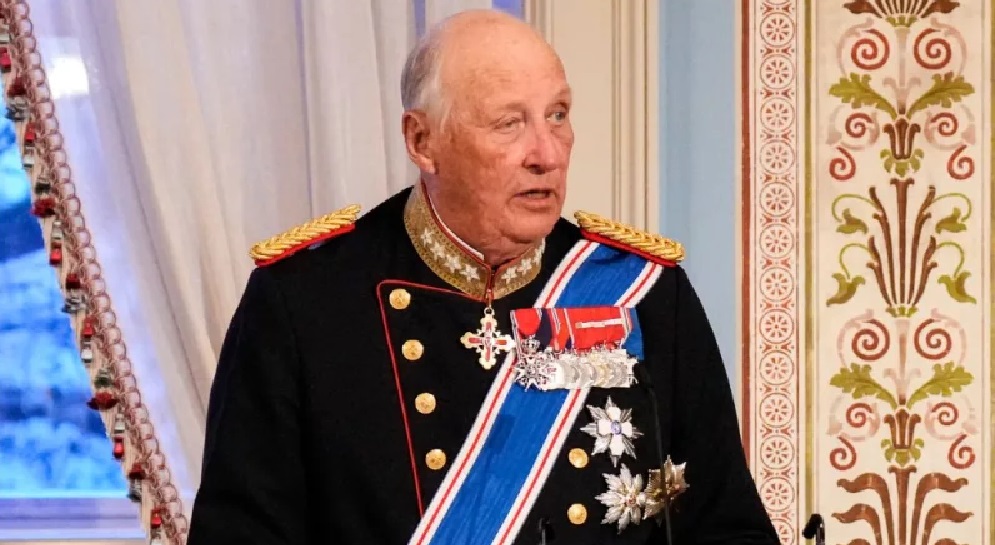
Norway’s King Harald V is in an “extremely serious” condition in hospital, according to the country’s royal household.
The 89-year-old monarch has been receiving treatment at Oslo University Hospital for more than a week after being diagnosed with haemolytic anaemia, a rare blood condition that reduces the number of red blood cells in the body and can cause fatigue and shortness of breath.
King Harald’s wife, Queen Sonja, and his son, Crown Prince Haakon, have cancelled their royal engagements and gathered at his bedside. Other members of the royal family, including Crown Princess Mette-Marit and Princess Astrid, have also reportedly visited the hospital.
Crown Prince Haakon, 53, is the heir to the Norwegian throne and has been serving as regent while his father is on leave.
Norway’s Prime Minister Jonas Gahr Støre also cancelled a planned trip to Germany, where he was due to meet Chancellor Friedrich Merz.
Advertisement
“The whole nation is with us as we send warm thoughts to the king and the rest of the royal family,” Støre said.
Members of the public have begun leaving flowers in Palace Square outside the Royal Palace in Oslo as concerns over the king’s health grow.
King Harald has experienced several health problems in recent years and has had to reduce his royal duties. In 2024, he was fitted with a pacemaker after becoming ill while on holiday in Malaysia.
He has been on the Norwegian throne since 1991 and is Europe’s oldest serving head of state.
The royal family has faced several health and personal challenges this year. Crown Princess Mette-Marit underwent a lung transplant in June after being diagnosed with a rare form of pulmonary fibrosis in 2018.
The transplant came shortly after her son, Marius Borg Høiby, was sentenced to four years in prison after being convicted of two counts of rape. Høiby, who is not a royal figure, has denied the most serious charges and is appealing the sentence.
Earlier this year, documents also revealed Mette-Marit’s frequent contact with the late convicted sex offender Jeffrey Epstein. She later apologised to the king and queen for her three-year friendship with Epstein and said she had shown “poor judgement”.

Newborn babies in England will be tested for spinal muscular atrophy (SMA) as part of a new five-year national trial examining whether the rare genetic condition should be added to routine newborn screening.
The study, led by Professor Laurent Servais, a paediatric neuromuscular disease specialist at the University of Oxford, will examine whether screening for SMA is effective, practical and cost-effective for the NHS.
The programme will begin with a phased rollout in Birmingham, Manchester and London before expanding nationally. It is expected to screen about 400,000 babies initially, with a full national rollout eventually reaching around 600,000 newborns each year.
Researchers expect the screening programme to identify about 60 babies with SMA annually. Children diagnosed through the programme will be followed for five years to assess their development, including when they learn to sit and walk, their quality of life and the level of care they require.
SMA is a rare genetic condition affecting about one in 10,000 people. It damages the motor neurons responsible for controlling movement and can cause muscle weakness.
In its most severe form, babies may initially appear healthy but can develop weakness, difficulty supporting their heads, breathing problems and problems swallowing within their first months of life. Without treatment, some children can die within their first few years.
Professor Servais said early diagnosis is important because once symptoms appear, some of the damage cannot be reversed.
The new screening programme follows a pilot study in the Thames Valley, which identified Teddy, a child from Chesham, with SMA when he was eight weeks old in 2023.
Teddy was diagnosed before he developed symptoms and was able to begin treatment quickly. He now takes the medicine Risdiplam every day and, at two and a half years old, is developing normally.
His parents, Hattie and James, said they had known very little about SMA before Teddy’s diagnosis and described the news as devastating. However, they were relieved that the condition had been detected before symptoms appeared.
The Thames Valley pilot screened more than 30,000 babies and Teddy was the only child identified with SMA.
SMA screening will be carried out using the existing NHS newborn blood spot test, commonly known as the heel-prick test. The test currently checks babies for 10 rare but serious health conditions.
Former Little Mix singer Jesy Nelson has also campaigned for newborns to be tested for SMA after her twin daughters were diagnosed with the condition at six months old.
Nelson said the introduction of newborn screening was a victory for families affected by SMA and could give future children a brighter start.
Researchers hope the national study will provide strong evidence about the medical benefits and potential cost savings of detecting SMA before symptoms develop.

NDLEA starts nationwide training of counselors on standard rehab guidelines(Photos)

Gov Muftwang saddened over demise of Dotun Oladipo condoles with family says he was an outstanding media practitioner

Discovery: ‘True Tomb’ Of Jesus Christ Found After 2,000 Years Matches Biblical Description Account



-

 Sports14 hours ago
BREAKING: Ikpeme takes over NFF as acting General Secretary, resumes today
-
 News19 hours ago
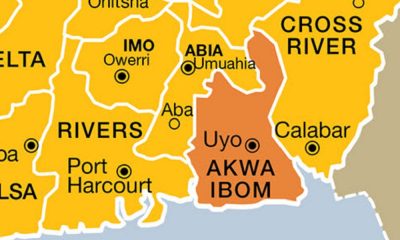
State Govt Criminalises Use Of Ambulances To Convey Corpses
-

 Foreign18 hours ago
UK’s Newborn Babies To Be Tested For Rare Genetic Condition In National Trial
-
 Metro19 hours ago
Five Traders K!lled As Military Vehicle Crashes Into Taraba Market
-

 Foreign19 hours ago
Four Children Held Captive In Truck For 7 Years By Woman And Her Fiancé
-

 Opinion18 hours ago
INEC as the Greatest Threat to the 2027 Election and Nigeria’s Democracy
-

 Economy18 hours ago
91.4% of personal pension accounts remain unfunded – PenCom
-
 Foreign18 hours ago
Iran Unable To Import Petrol Amid US Naval Blockade
Warning: Undefined variable $user_ID in /home/naijuinz/public_html/wp-content/themes/zox-news/comments.php on line 49
You must be logged in to post a comment Login