… it’s mere lip service


… insists the snail process of reformation is deliberate aimed at 2027
By Emmanuel Agaji 
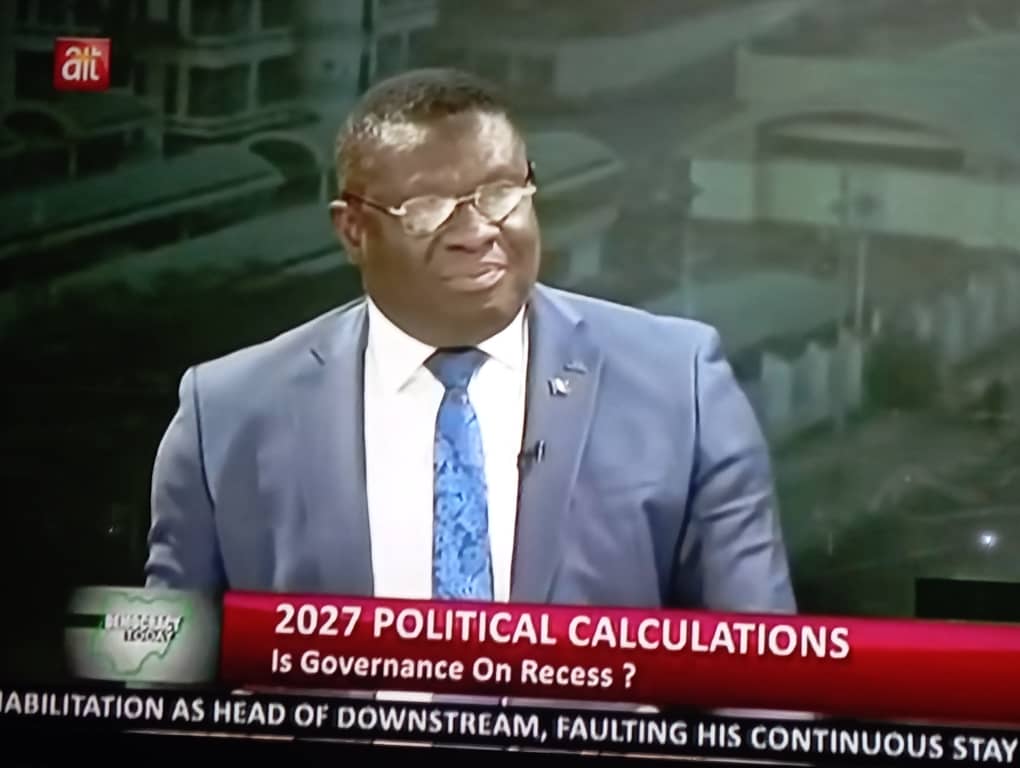
Dr Gabriel Nwambu is the Director General of Centre for Credible Leadership and Citizens Awareness CCLCA, a seasoned activist with more than two decades of practical experience, in this interview, he exposed the insincerity of politicians towards electoral reforms and the hidden agenda, excerpts.
Electoral reforms may influence whoever wins or loses an election no matter the level of election; national Assembly, presidential, local government election and whichever one of them. But do you think our politicians are truly in support of electoral reforms as we have heard it a number of times so far?
We have been observing with keen interest the issues that are playing out in the polity. Nigerians are talking about electoral reforms, INEC has also submitted a bill, Civil Societies have also done same.
But if you watch very closely what is happening, it is evident, it is very clear that there seem to be a deliberate tactic to delay, to buy time so that eventually the time will not allow for the requisite reforms to take place.
So I think that the legislative arm of government is playing its own game and up till now we’ve not even heard anything from the executive arm of government. So I think it is just a lip service.
The reality is that the body language of both the executive and the legislative arm of government is showing very clearly that we are not ready for electoral reforms.
It is just lip service and it is aimed to just buy time and at the end of the day they will now say you see what is happening, we cannot make the requisite reforms because of time, election is already here.
In other words, there is no iota of sincerity on the part of the legislature in carrying out this rather important assignment before the next round of polls.
Of course, this is clear, very simple. If you look at the way the legislative arm of government convened some meetings, convene sittings when there are pressing issues in the country.
If you see the manner with which they pass, give authorities to borrowing of money from the executive arm of government. You will know that there is just delays, unnecessary delays.
We need electoral reforms in Nigeria to get it right. For instance, we are saying that we would want an electronic transmission of election results to be made mandatory.
If you say that there is no form of sincerity on the part of the legislature, how then do you explain the fact that the two chambers of the National Assembly recently convened public hearings on electoral reforms and constitution amendments in the six geopolitical zones of the country; the Senate ended his own much earlier though than the House of Representatives. The House of Representatives own must have rounded up its own lately. So if they are not prepared for electoral reforms how come then they constituted public hearings in the six geopolitical zone of the country where prominent Nigerians even attended?
This is a national television and there are limits to which I can draw clarity. See, the truth of the matter is that the legislative arm of government, some persons that are in the legislature now are beneficiaries of the abnormalities that have taken place as a result of our electoral framework that is not put in proper perspective. A lot of them are beneficiaries. So they are jittery.
Most of them are aware that if the requisite framework is being done, if the requisite reforms are done, it will be difficult for them to come back in that chamber either Red or Green Chambers. So what they are doing is just a cosmetic that is it.
Most of them are aware that they are beneficiaries of the abnormalities. So they will just buy time and at the end of the day you will see, I’ll come back to this station to tell you that I told you that most of these things will not be passed.
And you see there are sensitive areas that will make our elections close to perfect.
Give me like a few of them, the kind of reforms that you are looking at.
Number one, we are saying that the appointment of the INEC chairman should not be done by the executive arm of government so that the chairman would be completely, not just the chairman, the chairman and national commissioners and resident electoral commissioners should not be appointed by the president and commander-in-chief so that they will be completely insulated from executive interference.
Now we are proposing that it is pertinent, it is imperative we bring in bodies like the NJC to make the appointment so that it would seem, we know that these things might not be 100 % perfect but at least it gives it some very, very clear moral backing. It makes it look more transparent than the executive arm of government just appointing them directly. It doesn’t make sense. That is one.
Two, it is also pertinent that funds that gets to INEC come directly from the federal allocation to INEC. Instead of every time INEC needs money they will now go cap in hand, go through the legislative arm before funds will get to them that is wrong.
So in other words the executive and the legislative arm of government can deliberately decide to starve the commission of funds so that they will be compelled to possibly do their biddings. So these are some of the issues we have actually opined.
If you talk about the representation of women and people living with disabilities and all that, we want a definite number of seats to be reserved for them so that we have more inclusivity in terms of the participation of women. Affirmative action for women and people living with disability including albinos. So these are some of the issues we think we should do.
And then we have the compulsory and mandatory transmission of election results.
In other words electronic transmission of the results.
R: Yes, electronic transmission of results that is the form EC8 series should be transmitted directly from the polling unit level straight to the central server and that transmission should be made compulsory with very stringent as much as 10 years imprisonment for any presiding officer who refuses as a result of issues emanating from himself, who refuses to transmit should serve at least for 10 years so that it will be stringent and with no option of fines.
So this will make it very serious and it will make Nigeria appear to be a more serious and concise nation. Not when the interpretations in courts have differed, you now have the manual and up till now it’s not even very clear.
Each time they go to court the interpretation seems to support the manual system of result collation. So, it makes it for those who manipulate, it makes it easy for people who intend to snatch ballot boxes to continue to perpetrate their actions.
We also opine that INEC should be unbundled. There should be a separate commission that is in charge of prosecution of electoral offenses.
Election petition tribunal, party monitoring and all of those.
R: Yes, a petition tribunal other than INEC, party monitoring and party registrations should be another body too.
Then we are also saying that it is pertinent we do all the elections including that of the local government in one day. That would increase voter participation. We talk about voter apathy all the time.
You don’t think that is going to aid your election rigging and all that when there are so many elections and INEC is no longer able to monitor all of these in one day.
R: INEC is going to prepare very well.
Remember it has not been unbundled yet. So in the event that comes first…?
R: If all the bills, the proposals made by the Civil Societies is implemented, I think it will go a long way in strengthening our democracy.
You talked about electronic transmission of result, that’s making more use of technology in the times that we are in, which is good but INEC is already making use of technology, remember the BVAS and of course the last election when INEC promised to transmit election results, to paste election results on the IREV in real time but INEC itself later announced that they had technical glitches and the result couldn’t be viewed as it promised. Apart from that you mentioned sending election results to INEC central server, there was a time INEC denied having a central server after it admitted that it did have. So will the introduction of more use of technology be accepted by INEC to begin with before it can even talk about being sustainable?
R: Of course we have to get everything cleared. The 2023 general elections was, especially that of the presidential election and National Assembly elections. We know what happened, INEC actually apologized that they had a technical hitch.
Now but what we as Nigerians are still asking is that that technical hitch, we do not know what has happened. Who is responsible for the technical hitch? What actually transpired? Was the server deliberately switched off? Nigerians deserve and have the right to know some of these things.
The fact that some of these things are shrouded in darkness makes people more inquisitive. They want to know and who and who are responsible for that central server. And why was it switched off? If it was switched off.
Why was the technical hitch, the technical glitch, why did it take place in the presidential election while in the state assembly and governorship elections, it was okay. So, what happened?
Nigerians deserve the right to know some of these things and until some of these things are brought to bear, they’re making it look more suspicious that is it.
Talking about INEC, it is the country’s only apex electoral body at this point, it has not been unbundled yet so everything regarding election at all levels begins and ends with INEC. It gave a warning today and it appears it has suddenly woken up to live up to his duties, to his mandates. It gave a warning, a serious warning at that to all political parties in Nigeria to stop forthwith the campaign and electioneering activities towards 2027 polls because it is not time yet because it’s supposed to be according to electoral act 150 days before polling day but it has been going on, a lot of defections and endorsements of the candidate for presidency.