… reiterate FG commitment to make Baro Port fully operational


By Gloria Ikibah
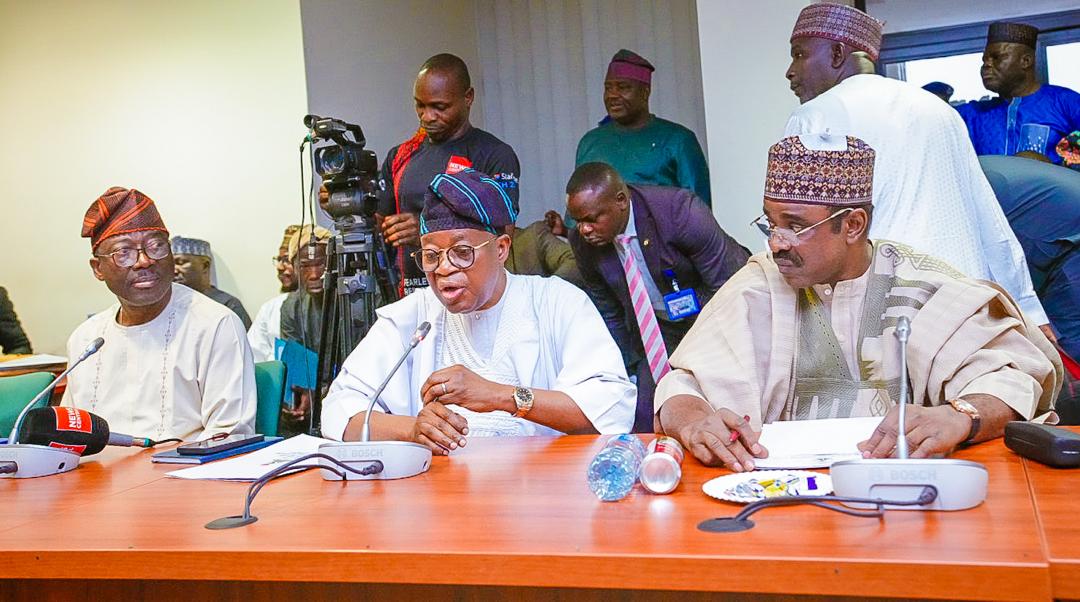
The Minister of Marine and Blue Economy, Adegboyega Oyetola, has said that the Baro River Port in Niger State has been struggling to operate at capacity since its commissioning in 2019 due to gaps in supporting infrastructure and navigability. 
The minister who stated this on Tuesday when he appeared before the House of Representatives Ad-Hoc Committee on Stakeholders’ Engagement on the Challenges and Prospects of the Baro River Port, assured that the Federal Government was committed to make Baro a vibrant inland gateway.
Naijablitznews.com report that the Ad-hoc committee was constituted sequel to the adoption of a motion on the “Need to Convene a National Stakeholders Engagement on the Challenges and Prospects of the Inland Port” during plenary.
Oyetola said, “Although commissioned in 2019 under the past administration, the port has faced operational constraints — chief among them, the absence of critical linkages to road and rail infrastructure, and navigability challenges along the River Niger.
“The challenges are there, no doubt about it. When the issue of the port was being conceived, ordinarily one would have expected that infrastructures that would make it operational should have been provided.
“The ministry was created barely two years ago, so we inherited it from the previous administration. And part of what we’re trying to do is to ensure the need to do a lot of dredging. Unfortunately, we are hampered by the scarcity of funds”.
He however outlined concrete steps to overcome the existing challenges and unlock Baro Port’s full economic potential, which according to him include improving river navigability through capital and continuous dredging, developing road and rail connections for seamless cargo movement, attracting credible private sector operators through concessions and partnerships, and instituting transparent governance systems.
He informed the Committee that the National Inland Waterways Authority (NIWA) plans to dredge up to 2,000 kilometres of inland waterways, a move that will ensure Baro Port maintains the appropriate depth for year-round operations.
“Our Ministry remains unwavering in its determination to transform Baro from a dormant facility into a thriving inland gateway.We are working closely with the Federal Ministries of Works and Transportation to deliver an integrated framework that combines infrastructure, operational efficiency, and private sector participation”, he added.
Oyetola further noted that Baro River Port was strategically positioned to link agricultural value chains and serve as a feeder to Onitsha, Lokoja, and Warri ports.
He explained that once operational, it could significantly boost Nigeria’s trade competitiveness under the African Continental Free Trade Area (AfCFTA) and ease pressure on the nation’s highways.
In his presentation, Managing Director of the National Inland Waterways Authority (NIWA), Bola Oyebamiji, noted that the Baro Port was first established in 1908 by Lord Lugard to facilitate the shipment of agricultural produce and livestock, serving as a major trade link between northern and southern Nigeria.
He stated that the port holds significant economic potential for the country, with all necessary facilities and equipment already in place.
But the MD listed the lack of dredging, as well as inadequate road and rail connectivity, as key challenges preventing the port from reaching full operational capacity.
Oyebamiji also informed the committee that the project was awarded by the previous administration at a cost of ₦3.56 billion, of which ₦3.35 billion representing 94 percent has already been paid to the contractor.
He further added that arrangements are currently underway to concession the port to private operators in order to attract fresh investment and ensure its effective operationalization.
Also speaking, Minister of Transportation Sa’idu Ahmed Alkali said that the ministry was developing a rail line to connect Baro Port with the rest of the country.
He also acknowledged that funding was a major hurdle and therefore solicited for adequate budgetary provisions to ensure the linkage is completed.
Speaking earlier, Chairman of the Ad-Hoc Committee, Rep. Saidu Musa Abdullahi, said their role is not investigative but facilitative. This he explained is aimed at ensuring the full operationalization of the port.
He disclosed that the current engagement will be followed by a national stakeholders’ forum to build consensus and mobilise political, technical, and financial backing for the project.
Abdullahi emphasised the committee’s determination to see Baro Port fully utilised, describing its strategic value to national trade, regional connectivity, and economic diversification as “immense and non-negotiable.”
The Minister while responding to a question by a member of the Committee, Rep. Jonathan Gaza Gbefwi said that, Baro Port has been a priority, but there has been lack of funds to dredge to make it navigable early enough.
He said, “But essentially, the funding thing has been a constraint, and I believe with your committee now recommending the need to ensure adequate provision is made for some of the infrastructure, I believe those challenges will be a thing of the past”.
After the various submissions by the Ministers and other heads of agencies, the Committee resolved that, it will embark on an on the spot assessment to the Port on Saturday in order to see what would be done to make its operations a reality.