News
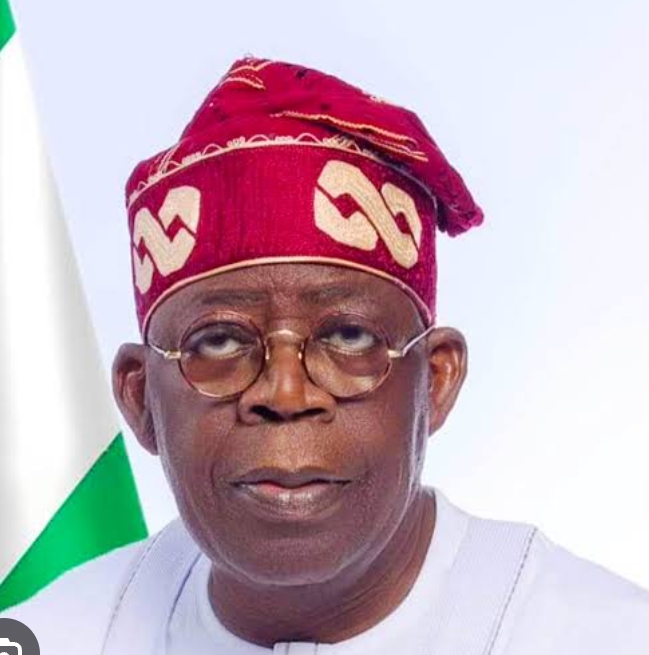
Here’s my Saturday Tribune column on the likely effect of Goodluck Jonathan’s entry into the 2027 presidential race:
- /home/naijuinz/public_html/wp-content/plugins/mvp-social-buttons/mvp-social-buttons.php on line 27
https://naijablitznews.com/wp-content/uploads/2025/08/Screenshot_20250821-074934-720x600.jpg&description=Here’s my Saturday Tribune column on the likely effect of Goodluck Jonathan’s entry into the 2027 presidential race:', 'pinterestShare', 'width=750,height=350'); return false;" title="Pin This Post">
- Share
- Tweet /home/naijuinz/public_html/wp-content/plugins/mvp-social-buttons/mvp-social-buttons.php on line 72
https://naijablitznews.com/wp-content/uploads/2025/08/Screenshot_20250821-074934-720x600.jpg&description=Here’s my Saturday Tribune column on the likely effect of Goodluck Jonathan’s entry into the 2027 presidential race:', 'pinterestShare', 'width=750,height=350'); return false;" title="Pin This Post">
.. Jonathan’s Entry Would Radically Shake the 2027 Election
By Farooq A. Kperogi
If the whispers from the smoke-filled inner rooms of northern political conclaves are to be believed, former President Goodluck Jonathan is being courted to return to the ring for the 2027 presidential bout. He may or may not be persuaded.

It is an irony too rich for fiction: some of the same northern political personages who orchestrated Jonathan’s ouster in 2015 now seek his resurrection for their own self-interested political salvation. Nigerian politics, as I’ve said before, is a theatre of paradoxes, with actors whose alliances are often dictated by the weather vane of self-preservation.
Contrary to popular misconception, which I also was once guilty of, Jonathan is not constitutionally barred from running for president in 2027. The 2017 constitutional amendment, which forbids anyone from taking the presidential oath more than twice, is not retroactive.
Jonathan’s tenure began in 2010 when he completed the remaining two years of the late President Umaru Musa Yar’adua’s term, then won election in 2011 before losing his re-election bid in 2015. The amendment came two years after his defeat. In law and logic, it does not apply to him.
Why the North is Wooing Jonathan
Northern political strategists are reading the national mood and seeing a path to reclaim power in 2031 without fracturing Nigeria’s fragile regional equilibrium. The consensus in the political weather forecast is that the South is entitled to eight uninterrupted years after Muhammadu Buhari’s northern presidency ended in 2023.
But President Bola Ahmed Tinubu’s stewardship has left a bitter taste in the mouths of many northern power brokers. They suspect that, if given a second term, Tinubu will completely erode their political foothold in the federation’s power structures.
Faced with this, the North has two options. The first is to gamble on a formidable northern candidate, likely in alliance with the Southeast.
But Peter Obi remains a towering figure in the Southeast, and the dominant temperament in his political homeland is uncompromising: Obi as president or nothing. The thought of him playing deputy to a northerner is as politically palatable there as vinegar in palm wine.
Even if Obi doesn’t run for president in 2027 (because he seems to have no firm political base at the moment and might not have one even in 2027), it is doubtful that any other politician from the Southeast who is paired with a strong northern politician can produce a powerful counterweight to President Bola Ahmed Tinubu.
The second, and far less risky, option is to back a southerner who is constitutionally shackled to a single term. This would guarantee a northern return to power by 2031.
Peter Obi’s public pledge to serve only one term if elected is seen as an empty promise born out of desperation. Power is intoxicating. Only few people have risen superior to its snares and allures.
Nigerian political history is littered with broken “gentleman’s agreements,” and Obi himself once swore eternal allegiance to APGA before defecting first to the PDP, then to the Labor Party, and most recently, to the African Democratic Congress (ADC). Power has a way of making even the sincerest pledges evaporate in the heat of incumbency and the joys of its perks and privileges. Northern politicians know this better than anyone.
Jonathan, however, is a different proposition. The constitution limits him to just one more term. For the North, he is the perfect political bridge. He is a southern Christian who is familiar with the rigors of the presidency but who is ineligible to seek a second term.
The Ironic Embrace
There is, of course, delightful irony in this potential alliance, as I pointed out before. Many members of the same cabal that hounded Jonathan out of Aso Rock in 2015 now court him for the sake of their own political continuity.
But the history of the Third Republic teaches us that northern political elites rarely sustain cordiality with the southern presidents they help enthrone. Both Olusegun Obasanjo and Bola Ahmed Tinubu can attest to that.
If Jonathan returns on northern wings, the question is not whether there will be turbulence, but how soon it will begin.
Jonathan’s Potential Nostalgia Vote
If Jonathan joins the 2027 race, his most potent asset may be that he’d benefit from what psychologists call rosy retrospection, which is the tendency for people to recall distant memories with undeservedly nostalgic feelings. Nigerians already romanticize the relative economic stability of Jonathan’s era, especially when contrasted with today’s spiraling costs of living.
Of course, this nostalgia ignores the economic reality that commodity prices would likely have risen under any administration, although we must admit that Tinubu’s double whammy of subsidy removal and naira devaluation precipitated the current never-before-seen cost-of-living crisis.
People wistfully recalling Jonathan’s years once similarly pined for Obasanjo’s. But in politics, perception trumps reality and feelings outweigh facts.
That said, there are some genuinely praiseworthy things Jonathan did when he was in power, which many of his critics, including me, acknowledge only with the benefit of hindsight.
For instance, his willingness to back down from unpopular policies after sustained outcries and protests, which we took for granted but which none of his successors has replicated, has stood him out.
The Southern Christian Vote
Jonathan’s entry would inevitably erode Peter Obi’s grip on the non-Yoruba southern and northern Christian voters, the very coalition that made Obi the darling of the 2023 race. Both men draw from the same well.
In 2023, Obi’s religious identity became a salient electoral currency in a contest that was more religiously polarized than any since 1999. Obi was the only notable Christian candidate. Should both appear on the ballot, their shared base would most likely split.
Jonathan could also pick up a share of northern Muslim votes, especially if he is backed by influential northern figures.
That advantage, however, is not guaranteed. If Atiku Abubakar contests again, as he seems poised to, Jonathan’s northern Muslim support could evaporate or at least be whittled down significantly.
Meanwhile, Tinubu remains the immovable object in the Southwest. In my August 13, 2022, column titled “Tinubu and Obi Will Either Affirm or Destroy These Two Theories in 2023,” I observed that, “The most time-honored fixity in Nigerian electoral politics since independence is the certitude that the Yoruba electorate will always overwhelmingly vote for a Yoruba candidate in national elective contests in which other candidates are non-Yoruba.”
This proved true in 2023. If the political pulse I feel from the Southwest is a reliable indicator of the potential voting behavior of the electorate of the region in 2027, Tinubu would win even more votes from the region than he did in 2023.
Of course, many voters from the region won’t vote for him, but he is likely to have an enormously commanding lead there, nonetheless.
A Likely Runoff
If Tinubu, Jonathan, Atiku, and Obi all contest, 2027 may become an electoral war of ethno-regional echo chambers, decided by razor-thin margins, in more ways than the 2023 election was.
The constitutional requirement for victory, which is 25% of the vote in at least 24 states plus the FCT, would be a high hurdle in such a fragmented field. A runoff would be almost inevitable. Note that this prognosis assumes that the election would be free, fair, and transparent, which is never a guarantee.
If Jonathan does run and the election isn’t manipulated, he will redraw its map and force each major contender to recalibrate strategy. His candidacy would transform 2027 from a predictable two- or three-horse race into an unpredictable quadrangular brawl in which the past, the present, and the future of Nigeria’s presidency will all collide.
News
Oil prices fall on Iran-US peace optimism
Oil prices tumbled on Tuesday as growing optimism over a possible diplomatic breakthrough between Iran and the United States triggered a sharp sell-off in global crude markets, with Brent sliding toward the $91 per barrel mark.
According to the Economic Times, Brent crude fell by over three per cent during intraday trading, while WTI dropped nearly four per cent, as markets reacted to reports that a draft Iran–US peace agreement had been submitted for review in Washington and described as “preliminarily acceptable”.
The development immediately weakened the geopolitical risk premium that had kept oil prices elevated in recent weeks, particularly following heightened tensions that disrupted sentiment around Middle East supply routes and the strategically critical Strait of Hormuz.
The strait, through which roughly 20 per cent of global crude shipments pass, had been a key focus for traders after earlier disruptions triggered a sharp rally that pushed oil prices above $120 per barrel in late February.
At the time, fears of prolonged supply shocks sent global energy markets into panic buying. Tuesday’s decline therefore marks a significant reversal, as traders began pricing in the possibility that easing geopolitical tensions could stabilise supply flows and reduce the likelihood of further disruptions.
Experts said the market is now reacting less to immediate supply concerns and more to expectations of diplomatic progress, although they warn that sentiment remains highly sensitive to any setback in negotiations.
Any breakdown in talks, they note, could quickly reverse the current price trend given the still-fragile security environment in the Gulf region.
The Economic Times notes that energy markets reacted swiftly to shifting geopolitical signals and easing fears over supply disruption.
Oil traders said the combination of easing geopolitical fears and shifting supply data continued to drive volatility in global crude markets.
In Nigeria, the Nigerian National Petroleum Company Limited recorded an over 70 per cent rise in revenue and profit. The Dangote Refinery also benefited from high fuel exports, but households are enduring higher fuel prices, raising inflation pressures.
However, the conflict involving Iran led to a sharp rise in fuel costs, impacting Nigeria’s inflation figures negatively. It is expected that a further crash in oil prices would translate to cheaper fuel for Nigerians.
News
Tinubu set to commission newly constructed Arterial Rd N5 Obafemi Awolowo Way today
Today, June 10th 2026, President Tinubu will commission the newly constructed Arterial Road N5 (Obafemi Awolowo Way) from Life Camp Junction to RR III, Dape District section.
#FCTProjects2026
#RenewedHopeFCT
News
Obi drags former political acolyte Okonkwo to court over alleged defamatory bribery claims
The presidential candidate of the Nigerian Democratic Congress (NDC), Peter Obi, has started legal action against his former political acolyte and kinsman, Kenneth Okonkwo, over allegations that he and other party leaders collected bribes from aspirants seeking elective positions.
The lawsuit marks a significant escalation in the public fallout between the two political associates, whose relationship has deteriorated in recent months following disagreements over political developments and party affairs.Politics
According to court documents filed by Obi’s legal team, the former Anambra State governor is challenging a series of statements allegedly made by Okonkwo during a public broadcast, in which he accused Obi and leaders of the NDC in the South-East of demanding illicit payments from aspirants seeking tickets to contest for seats in the House of Representatives.
The suit, dated June 9, 2026, was filed by Chief Alex Ejesieme (SAN) of Alex Ejesieme (SAN) & Co. (Madiba Chambers), who described the allegations as false, malicious, and highly damaging to Obi’s reputation.
According to the legal filing, Okonkwo allegedly claimed that House of Representatives aspirants were required to pay an additional ₦10 million to party leaders after paying the official expression of interest and nomination fees.
The suit quoted Okonkwo as alleging that Obi and South-East leaders of the NDC informed aspirants that payment of the additional sum was necessary to secure consideration within the party.
Obi’s lawyers further stated that Okonkwo claimed documentary evidence existed to support the allegation and that receipts had allegedly been issued for the payments.
The actor-turned-politician was also accused of alleging that Obi personally compiled the list of party candidates from a hotel room and manipulated the candidate selection process.
Among other assertions attributed to Okonkwo were claims that Obi travelled abroad to collect money from individuals and that he, alongside other NDC leaders in the South-East, was involved in activities amounting to criminal conduct.
Obi Describes Allegations as False and Defamatory
In the legal action, Obi’s lawyers strongly rejected the allegations, insisting that the statements were entirely fabricated and intended to tarnish the former governor’s image.
The legal team argued that the claims portrayed their client as a dishonest political figure involved in bribery, extortion, fraud, and criminal conspiracy.
According to the suit, the statements were capable of exposing Obi to public hatred, ridicule, contempt, and distrust among members of society.
“The above statements, in their natural and ordinary meaning and by necessary implication, falsely and maliciously represent our client as a person who demands, solicits, organises and collects bribes; who extorts, defrauds and swindles political aspirants of their money; who is a fraudster, a scammer and a dishonest political actor,” the legal team stated.
The lawyers further argued that the allegations struck directly at Obi’s reputation as a public servant and political leader.
They described the remarks as reckless and unsupported by any credible evidence.
Concern Over Social Media Amplification
Obi’s legal representatives also expressed concern over the manner in which the statements were allegedly disseminated.
According to the law firm, the comments were made during a live television appearance before being widely circulated across social media platforms and online channels, thereby increasing their reach and potential impact.
The legal team maintained that while freedom of expression remains a constitutional right, it does not extend to publishing statements capable of damaging another person’s reputation without factual basis.
They argued that the remarks went beyond the limits of political criticism and fair comment.
“Your words were not mere political commentary. They crossed the permissible bounds of fair comment and constituted a direct assault on our client’s person, integrity, image and reputation,” the lawyers stated.
Obi Demands Retraction, Apology and Compensation
As part of the reliefs sought, Obi’s legal team is demanding that Okonkwo immediately withdraw the statements in their entirety and issue a public apology.
The proposed apology, according to the lawyers, must be clear, unconditional, and given the same level of prominence as the original allegations.
They further requested that the apology be published across all major social media platforms, including X, Facebook, Instagram, and YouTube.
In addition, the legal team is seeking a written undertaking from Okonkwo, committing him to refrain from making further defamatory statements against their client.
The suit also includes a demand for financial compensation for the alleged damage caused to Obi’s reputation and public standing.
The legal battle comes amid ongoing political realignments and public disagreements involving former allies within Nigeria’s opposition landscape, with the dispute expected to attract significant public and political attention in the coming weeks.
-
News22 hours agoTinubu Swears In New Ministers
-
News8 hours agoNECO to recruit 22,000 supervisors, cautions applicants against fake recruitment portals
-
News23 hours agoIran holds funeral ceremony for two air defense personnel slain in Israeli airstrikes
-
News22 hours agoReps Demand Answers on Defence Spending, Summon Service Chiefs, Finance Minister
-
News8 hours agoOtti woos investors to Abia medical city, industrial park, others
-
News8 hours agoUmahi gives Abuja-Lokoja highway contractors 72 hours to mobilise
-
News19 hours agoTinubu Commissions OSEX Main Carriageway, Vows End To Era Of Abandoned Projects(Photos)
-
News19 hours agoINEC Parleys With Parties, Defends Decision To Appeal Court Ruling On Primary Deadlines

Warning: Undefined variable $user_ID in /home/naijuinz/public_html/wp-content/themes/zox-news/comments.php on line 49
You must be logged in to post a comment Login