

Connect with us

News

Report Warns of Mounting Crisis as Nigerian Youth Face Joblessness, Insecurity

Published

on

ADVERTISEMENT
Zoom Ad
ADVERTISEMENT
Zoom Ad

By Gloria Ikibah

A recent report has highlighted growing concern about the increasingly harsh realities faced by young people in Nigeria, warning that rising unemployment, widespread insecurity, and a worsening lack of confidence in government are trapping many in cycles of hardship and marginalisation.

The State of the Nigerian Youth Report 2025, unveiled in Abuja on Thursday by Jonathan Abakpa, Advocacy and Youth Programme Officer at Plan International Nigeria, portrays a bleak outlook for a country where more than 60 per cent of the population is under 30. The findings suggest that countless opportunities are being squandered, leaving large numbers of young Nigerians unable to reach their potential.

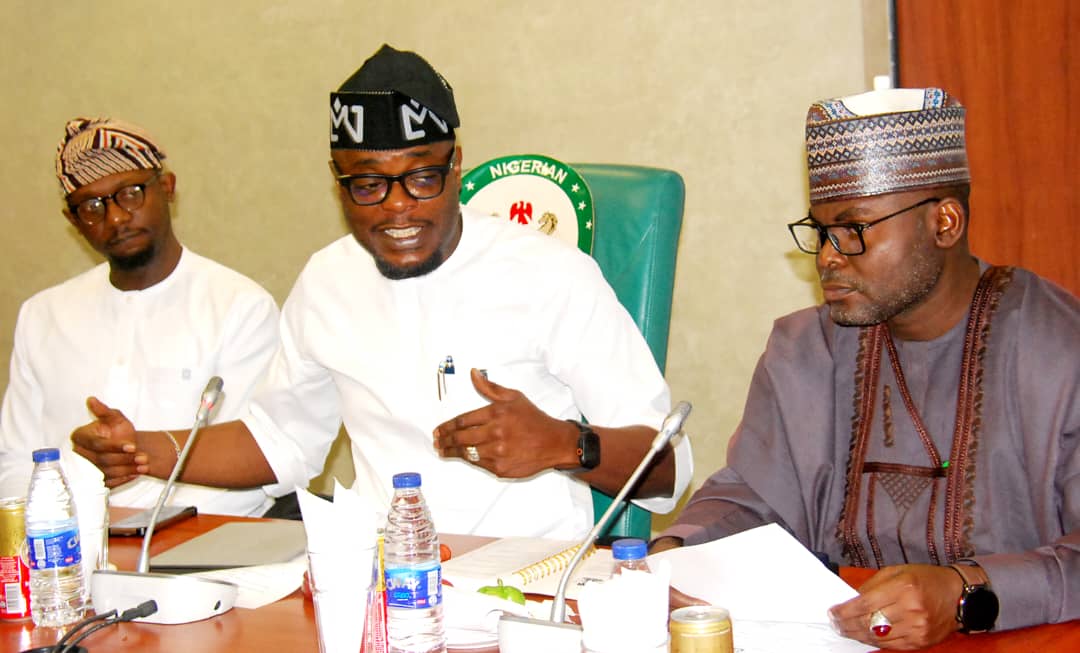
The report was formally launched during the Nigerian Youth Dialogue, held to mark International Youth Day and organised by the House of Representatives Committee on Youth in Parliament.

Advertisement

“With more than 200 million people and one of the largest youth populations in the world, Nigeria should be a powerhouse of innovation and growth.

“But the reality is stark: unemployment, insecurity, poverty, and poor infrastructure continue to weigh heavily on young people. Unless urgent action is taken, the country risks losing its greatest asset”, Abakpa said.

The report revealed that nearly 80 million young Nigerians are unemployed, representing 53 percent of the youth population. Adding that annually, about 1.7 million graduates leave tertiary institutions, but jobs remain difficult to find.

“This is not just a statistic. It represents shattered dreams and wasted talent. The desperation is pushing many into irregular migration, cybercrime, and other risky coping mechanisms”, he added.

Advertisement

The National Bureau of Statistics recorded a 5.3 per cent increase in youth unemployment during the first quarter of 2025. While there was a modest improvement in the second quarter, the overall picture remains deeply concerning.

The challenges extend well beyond a lack of jobs. Insecurity was singled out as a major force shaping the daily lives of young Nigerians. The report further noted that in recent years more than 600,000 people have lost their lives and a further 2.2 million have been abducted, with young people making up a significant share of those affected.

“The tragedy of insecurity is not only the loss of lives but also the collapse of opportunities. Over 1,500 schools have been shut down in the past two years, leaving one million children out of school. Education, which should be a ladder of opportunity, has been violently pulled away from them”, Abakpa said.

The report highlighted the devastating impact of violence on farming communities, with over 77,000 lives lost to communal clashes in the past five years and 2.6 million people displaced. With many farmers unable to access their land, UNICEF has warned that 25 million Nigerians could face hunger.

Advertisement

It also noted that 40.1 per cent of Nigerians around 82.9 million people live in poverty. For young people, this compounds the struggle to survive.

“Poverty is not just about empty pockets; it is about restricted choices and wasted futures,” Abakpa stated.

Corruption was identified as a major drain on resources and a key driver of public distrust. Basic infrastructure gaps. poor roads, unreliable electricity, and limited digital access, were also cited as obstacles preventing young people from turning ambition into enterprise.

Regional differences were highlighted in the We Listen Survey. Unemployment, inflation, and insecurity dominate in the North Central; kidnapping and banditry in the North West and North East; underemployment and high living costs in the South West and South East; and poverty and lack of education in the South South.

Advertisement

“Challenges are national but play out differently depending on the region,” he added.

The report found a deep trust deficit between youth and government, with most respondents rating state responsiveness as “poor” or “very poor.”

Abakpa therefroe warned: “Many young people no longer believe government policies serve their interests. That disconnect must be addressed to prevent further alienation”.

Despite the grim outlook, the report stressed that Nigerian youth are innovators and change-makers, already driving growth in technology, business, and the creative economy. It urged government, the private sector, and development partners to expand job creation, link training to industry, improve access to credit, and invest in infrastructure.

Advertisement

On insecurity, Abakpa argued for community-based peacebuilding, early warning systems, and rehabilitation, rather than reliance on military solutions. Social protection for marginalised groups, anti-corruption reforms, and transparent governance were also recommended.

One of the boldest proposals is to enshrine Universal Basic Education as a constitutional right, ensuring no child is denied learning due to poverty, geography, or insecurity. “Education must be non-negotiable,” he declared.

The report therefore called for a new social contract between the Nigerian state and its youth.

“Young people are not leaders of tomorrow, they are partners of today. Nigeria stands at a crossroads. The time for rhetoric is over; what is needed now is responsive leadership and accountable governance.”

Advertisement

Chairman of the House Committee on Youth in Parliament, Rep. Ayodeji Alao-Akala, restated his commitment to advancing youth-focused policies, describing Nigerian youths as the future of the nation.

According to the Chairman, the National Assembly had devoted significant time to passing bills and motions aimed at creating a more enabling environment for young people to thrive.

“As a country, we cannot afford to ignore the aspirations of our youths. They are the future of Nigeria, and our responsibility as lawmakers is to ensure their potential is harnessed for national development,” he said.

He described himself as one of the youthful members of parliament, saying that he remains passionate about ensuring that legislation coming out of the House of Representatives directly impacts young people.

Advertisement

He emphasised that policymakers and relevant agencies must ensure the next generation of Nigerians do not experience the same challenges their parents faced.

“Our task as leaders is to make sure the children of tomorrow inherit a country better than what we met, with more opportunities and less hardship,” Alao-Akala said.

The lawmaker assured that his committee would continue to work closely with stakeholders to strengthen youth development programmes and policies that prepare young Nigerians for leadership, innovation, and economic productivity.

The State of the Nigerian Youth Report 2025 was produced by Plan International Nigeria in collaboration with ActionAid Nigeria, with contributions from policy and advocacy experts.
Advertisement
Continue Reading
Advertisement
Click to comment

Warning: Undefined variable $user_ID in /home/naijuinz/public_html/wp-content/themes/zox-news/comments.php on line 49

You must be logged in to post a comment Login

Leave a Reply

News

Xenophobic Attacks: Details of What Nigeria, South Africa Discussed

Published

on

ADVERTISEMENT
Zoom Ad
ADVERTISEMENT
Zoom Ad

The Federal Government has demanded urgent action from South Africa to end recurring attacks on Nigerians and other African nationals, disclosing that 98 Nigerians have been killed in mob and hate-related incidents in the country since 2022.

The Minister of State for Foreign Affairs, Ambassador Sola Enikanolaiye, made the demand in Abuja on Monday while receiving South Africa’s Minister of International Relations and Cooperation, Ronald Lamola.

Lamola was sent to Nigeria as a special envoy by South African President Cyril Ramaphosa amid growing diplomatic tension over repeated attacks on foreign nationals.

The envoy delivered a message from Ramaphosa to President Bola Tinubu before holding talks with senior Nigerian officials led by Enikanolaiye.Executive Branch

Advertisement

Enikanolaiye said Tinubu directed the meeting to allow both countries to frankly discuss what he described as persistent “Afrophobic attacks” against Nigerians and other African migrants in South Africa.

“We have seen a pattern that has become a concern to the Nigerian government,” he said.

The minister cited outbreaks of anti-migrant violence dating back to 1995 and said official records showed that 98 Nigerians had been killed in mob attacks and hate-related violence in South Africa since 2022.

He warned that the continued attacks could damage the long-standing strategic relationship between Africa’s two largest economies.

Advertisement

Enikanolaiye urged Pretoria to take immediate and concrete measures to protect Nigerians and other foreign nationals legally residing in the country.Politics

The minister disclosed that the Federal Government had evacuated more than 1,500 Nigerians from South Africa following previous attacks.

He described receiving some of the evacuees as an emotional experience, noting that many returned home without their possessions.

“I shed tears when I received the first batch of evacuees. I saw children, women and the elderly returning home with almost nothing after their properties had been looted and destroyed. That is not the Africa we want,” he said.

Advertisement

Enikanolaiye said several victims were lawful residents and raised concerns over the alleged failure of South African security personnel to intervene during some attacks.

He argued that such incidents raised questions about state responsibility and the safety of foreigners living in South Africa.

The minister stressed that Nigeria would not defend citizens involved in drug trafficking or other criminal activities.

He, however, insisted that suspects must be arrested and prosecuted through the legal system rather than subjected to mob violence.

Advertisement

“Nigeria will not support drug traffickers or any criminal activity, but those accused of crimes must be treated in accordance with the rule of law, South Africa’s Constitution and international human rights standards,” Enikanolaiye said.

He maintained that criminal allegations should not be used to justify attacks on Nigerians and other migrants.

Enikanolaiye reminded the South African delegation of Nigeria’s role in the struggle against apartheid and the subsequent cooperation between both countries.

He recalled their collaboration in transforming the Organisation of African Unity into the African Union and promoting the New Partnership for Africa’s Development.

Advertisement

Despite the current tension, the minister reaffirmed Nigeria’s commitment to maintaining cordial relations with South Africa.

He expressed hope that continued dialogue would rebuild confidence, strengthen bilateral relations and protect the principle of African solidarity.

Responding, Lamola said his visit was aimed at reaffirming the historic friendship between Nigeria and South Africa while addressing concerns over violence against foreign nationals.

He acknowledged Nigeria’s contribution to the struggle against apartheid, saying South Africans remained grateful for the sacrifices made.

Advertisement

“We remain deeply indebted to the people of Nigeria for their sacrifice,” Lamola said.

He added that Ramaphosa and the South African government remained opposed to xenophobia, racism, discrimination, homophobia and other forms of intolerance.

The envoy, however, maintained that South Africa had a sovereign responsibility to enforce its immigration laws and combat irregular migration and criminal activities.

He identified drug trafficking, internet fraud and other offences as challenges the government was determined to address.

Advertisement

Lamola described migration as a continental challenge requiring cooperation among African countries under the African Union’s framework on orderly and regular migration.

“We believe that Nigeria and South Africa have a shared responsibility to respond to these challenges within the African continent,” he said.

He added that further details of Ramaphosa’s message to Tinubu would be discussed during a closed-door session.

Advertisement
Continue Reading

News

Details Of Alleged Coup Leader’s Agenda Note Emerge

Published

on

ADVERTISEMENT
Zoom Ad
ADVERTISEMENT
Zoom Ad

Alleged masterminds of the failed plot to overthrow President Bola Tinubu’s administration had reportedly drawn up a three-point programme for implementation after taking control of government.

The proposed measures included a review of the removal of petrol subsidy, an adjustment of salaries and wages for members of the Armed Forces and other security agencies, and national honours for military personnel killed in active service.

According to Premium Times, details of the plan were reportedly contained in a handwritten note recovered from the residence of the alleged leader of the plot, an Army colonel, Mohammed Ma’aji.

Ma’aji and some of the alleged conspirators are currently facing proceedings before military and civil courts over the purported attempt to remove the democratically elected government.

Advertisement

The allegations against them have not been established by the courts.

Premium Times revealed that the document was among confidential materials gathered by investigators examining the alleged conspiracy.Government

A page of the note, titled “Immediate Actions,” reportedly listed the steps the alleged plotters intended to take after seizing power.

It read, “Set up a committee to review fuel subsidy removal.

Advertisement

“Set up a committee to review salaries and wages of all members of the Armed Forces and all security agencies.

“Set up a committee to recommend all fallen heroes for national award.”

Investigators reportedly said the note was recovered from Ma’aji’s home and subjected to forensic examination by the Economic and Financial Crimes Commission.

The forensic report, dated January 26, was said to have been forwarded to the Defence Headquarters.

Advertisement

Colonel Admits Writing Note
Ma’aji reportedly admitted ownership of the document in a handwritten statement made during interrogation.

He was said to have told investigators that he personally wrote the proposed “action plans,” motivational statements and other entries in preparation for an alleged takeover of government.

Although the document was written in a jotter distributed as a souvenir at a social event, investigators reportedly considered its contents significant to understanding the alleged plot and the thinking of those involved.

The note was also said to contain about 20 motivational statements, which investigators believed reflected Ma’aji’s state of mind during the planning.

Advertisement

One of the entries read, “Money is the great way to lubricate the wheels of a coup d’état.”

Another stated, “All our dreams can come true if we have the courage to pursue them.”

The collection also included the statement, “Try not to become a man of success but a man of value,” which Ma’aji attributed to scientist Albert Einstein.

Other entries encouraged courage, persistence and the pursuit of long-term ambitions.

Advertisement

Plotters Allegedly Targeted Subsidy Policy
The reported proposal to review the removal of petrol subsidy appeared designed to address the economic hardship experienced by Nigerians since the policy was announced.Geographic Reference

Tinubu declared an end to fuel subsidy payments during his inauguration on May 29, 2023.

The decision led to a sharp rise in petrol prices and contributed to increases in transportation, food and other living costs.

Investigators reportedly believed the alleged conspirators hoped that reversing or reviewing the policy would attract public support for their planned government.

Advertisement

The proposed subsidy review was seen as the alleged plotters’ offer to Nigerians outside the military, while the other two measures focused on the welfare and recognition of security personnel.

Documents reviewed during the investigation reportedly showed that Ma’aji identified the salaries, allowances and living conditions of military personnel as a major reason for the alleged conspiracy.

In his statement, the colonel claimed there was widespread dissatisfaction among officers and soldiers over the treatment of their welfare.

“If you interact with officers and soldiers, 80 per cent are disgruntled already. And it was a voluntary thing. Nobody was coerced,” he reportedly wrote.

Advertisement

Ma’aji further claimed that he had abandoned the idea at one point but was encouraged to continue by other officers.

“In this recent effort, I had given up the motive, but some officers kept texting and calling for my intervention.

“There were none who, after I spoke to them, drew back after sharing the plan with them. The desire for change is genuine, and that has been what has kept the plan alive for a long time,” he added.

Military Welfare Remains Contentious

Advertisement

The remuneration and welfare of Nigerian military personnel have remained subjects of public concern for several years.Geographic Reference

Serving and retired personnel have repeatedly complained that their salaries and allowances do not adequately reflect the risks and demands associated with military service.

Families of personnel killed in active duty have also called for improved compensation, housing, education and long-term support.

Although the Federal Government has periodically introduced welfare measures and reviewed some allowances, military personnel and veterans have maintained that the interventions have not kept pace with inflation and the rising cost of living.

Advertisement

Investigators reportedly believed that the proposed national honours for fallen personnel and the review of security agencies’ salaries were intended to present the alleged takeover as an effort to improve conditions within the Armed Forces

Continue Reading

News

Kebbi Weds 600 Couples, Pays ₦250k Dowry Each

Published

on

ADVERTISEMENT
Zoom Ad
ADVERTISEMENT
Zoom Ad

Kebbi State Governor, Nasir Idris, on Monday conducted a mass wedding for 600 couples drawn from less privileged backgrounds in Birnin Kebbi, the state capital.

The ceremony was attended by the daughter of President Bola Ahmed Tinubu, Dr.
Mujidat Folashade Tinubu, alongside Islamic scholars and other dignitaries from across the state.

Speaking at the event, Governor Idris said the mass wedding was facilitated through his wife, Dr. Nafisa Nasir Idris’ NANA Foundation, in collaboration with the state government, in line with Islamic injunctions. He pledged that the initiative would continue for as long as he remains governor of the state.

According to the governor, the programme sponsored 300 women and another 300 beneficiaries, including widows and persons with disabilities.

Advertisement

The government, through the foundation, also paid an Islamic dowry of ₦250,000 for each couple.
Governor Idris congratulated the newly married couples and urged them to uphold the values and responsibilities of marriage in accordance with the teachings of Islam.
He also expressed appreciation to everyone who attended the ceremony, especially Dr. Mujidat Folashade Tinubu, Islamic clerics, and other dignitaries who graced the occasion.

Continue Reading

Trending

Copyright © 2024 Naija Blitz News