Economy
Cardoso reaffirms commitment to macroeconomic stability, stronger banking sector
- /home/naijuinz/public_html/wp-content/plugins/mvp-social-buttons/mvp-social-buttons.php on line 27
https://naijablitznews.com/wp-content/uploads/2024/05/Cardoso-cbn.jpg&description=Cardoso reaffirms commitment to macroeconomic stability, stronger banking sector', 'pinterestShare', 'width=750,height=350'); return false;" title="Pin This Post">
- Share
- Tweet /home/naijuinz/public_html/wp-content/plugins/mvp-social-buttons/mvp-social-buttons.php on line 72
https://naijablitznews.com/wp-content/uploads/2024/05/Cardoso-cbn.jpg&description=Cardoso reaffirms commitment to macroeconomic stability, stronger banking sector', 'pinterestShare', 'width=750,height=350'); return false;" title="Pin This Post">
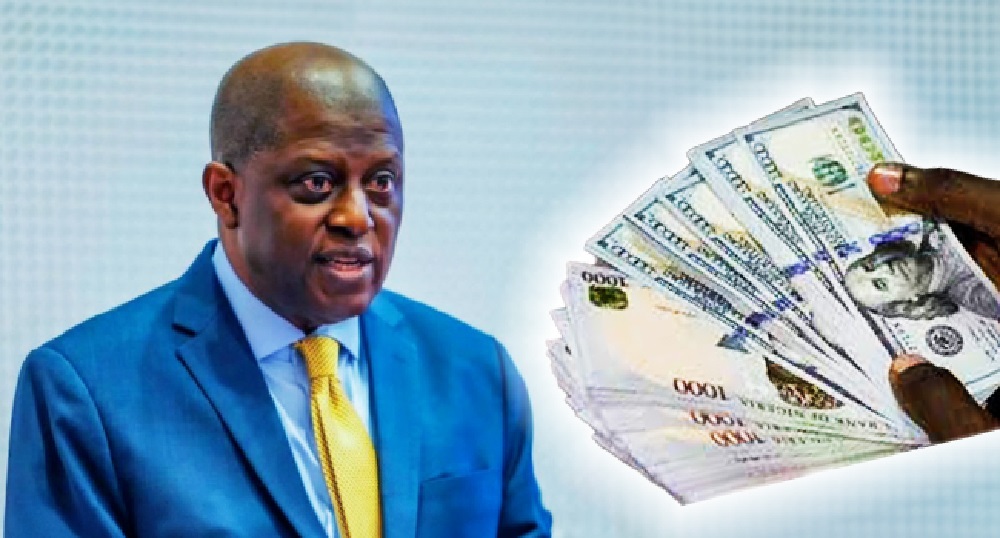
The Governor of the Central Bank of Nigeria (CBN), Mr. Olayemi Cardoso, has reiterated the apex bank’s commitment to establishing macroeconomic stability, fortifying the banking sector, and establishing Nigeria as a top investment destination.

Mr. Cardoso stated this during a fireside chat moderated by Andreas Voss, the Chief Country Representative, Deutsche Bank Nigeria, at the European Business Chamber (Eurocham Nigeria) C-Level Forum held in Lagos.
The CBN governor disclosed that the bank recapitalisation exercise is making good progress and will result in even stronger financial institutions that can withstand shocks and financial growth.

He stated that the key drivers of renewed investor confidence in the Nigerian economy were the CBN’s reforms and the stabilisation of the naira.
Cardoso observed that though headline inflation is currently elevated, however, it is decreasing as a consequence of collective efforts.
“It is anticipated that the advantages of the bank’s tightening posture will persist.
“We will protect the stability that has been re-established in the financial system with the utmost zeal.
“Our primary objective is to maintain that stability while simultaneously addressing inflation and ensuring that the financial system is sufficiently resilient to facilitate corporate lending and investment,” he stated
When asked about the impact of high lending rates in Nigeria on investment, the CBN governor acknowledged the concern but linked it to his previous statement regarding inflation and stability.
He stated that there is a substantial potential for interest rates to decrease in the future as inflation continues to decline and as markets become more efficient in allocating capital.
“That is the environment in which stronger corporate lending and higher levels of investment will naturally follow,” he continued.
Cardoso observed that the CBN’s recapitalisation directive, which mandates that banks increase their minimum capital, is specifically intended to fortify the financial system and guarantee that it is capable of supporting a wider range of economic activities.
Also, he emphasised the importance of technology-driven solutions in order to deepen access and address poverty, as well as efforts to expand financial inclusion and fortify the fintech ecosystem.
Cardoso identified the increased collaboration with the Ministry of Finance, the Ministry of Trade and Industry, and the Budget Office as a positive development.
He asserted that the collaboration will enable the country to maintain reforms and achieve long-term stability.
Regarding Nigeria’s position in the global economy, he stated that “the urgency of addressing our own affairs is underscored by the ongoing geopolitical changes.
“Nigeria is a market that is both large and appealing in its own right, and it is also situated at the entrance to the broader continent and West Africa.
“This underscores the importance of maintaining stability at home.”
In his introductory remarks, Eurocham President, Yann Gilbert, characterised the chamber as a conduit that links European businesses with Nigerian policymakers.
He stated that “our members are profoundly dedicated to this nation. We aspire to establish enduring partnerships, generate employment opportunities, and invest.”
The purpose of this forum is to foster engagement, dialogue, and solutions that enhance confidence and unleash opportunities between Nigeria and Europe.
Economy
See Black Market Dollar to Naira exchange rate today 10th September 2026
NOTE: The exchange rate changes hourly. It depends on the volume of dollars available and the Demand. This means…you can buy or sell 1 dollar at a certain rate, and the price can change (high or low) within hours.
The official naira black market exchange rate in Nigeria today, including the Black Market rates, Bureau De Change (BDC), and CBN rates.
The exchange rate fluctuates hourly based on the supply and demand of dollars in the market.
What’s the dollar to naira black market today, 10th September 2026?
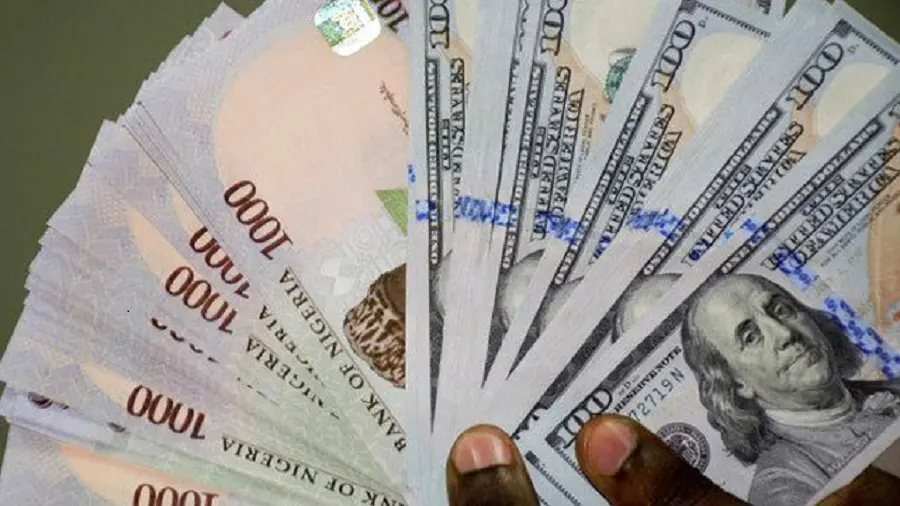
The exchange rate for a dollar to naira at Lagos Parallel Market (Black Market) players sell a dollar for ₦1390 and buy at ₦1380 on Thursday, 10th September, 2026, according to sources at Bureau De Change (BDC).
Please note that the Central Bank of Nigeria (CBN) does not recognize the parallel market (black market), as it has directed individuals who want to engage in Forex to approach their respective banks.
Dollar to Naira Black Market Rate Today
Dollar to Naira (USD to NGN) Black Market Exchange Rate Today
Selling Rate ₦1390
Buying Rate ₦1380
Dollar to Naira CBN Rate Today
Dollar to Naira (USD to NGN) CBN Rate Today
Highest Rate ₦1322
Lowest Rate ₦1326.
Economy
See Dollar to Naira exchange rate today, September 9, 2026
The Naira yesterday appreciated to N1,387 per dollar from N1,390 in the parallel market on Monday.
Similarly, the naira appreciated to N1,322.9 per dollar in the Nigerian Foreign Exchange Market, NFEM.
Data from the Central Bank of Nigeria, CBN, showed that the indicative exchange rate for the naira fell to N1,322.9 per dollar from N1,320 per dollar on Monday, indicating N2.9 appreciation for the local currency.
Consequently, the margin between the parallel and official markets narrowed to N64.1 per dollar from N70 per dollar on Monday. The value of interbank turnover in NFEM declined by 48.07 percent to $55.6 million from $107.07 million on Monday.
Economy
CBN tightens watch on banks over terrorism financing
The Central Bank of Nigeria (CBN) has announced that it will be paying closer attention to how banks and other financial institutions in the country are being used, or misused, to move money that could fund terrorism.
In a statement signed by Hakama Sidi-Ali, Acting Director of the apex bank’s Corporate Communications and Investor Relations Department on Tuesday, the CBN said it has made terrorism financing supervision one of its current priorities. According to the statement, this is part of the bank’s “ongoing commitment to protecting the Nigerian financial system from abuse by illicit actors.”
What this means in plain terms is that the CBN will be looking more closely at how banks identify and manage the risk of their platforms being used to fund terrorism, how well they monitor suspicious transactions linked to terrorism financing, how they carry out sanctions ordered against specific individuals or groups, and how promptly they report suspicious activity connected to terrorism financing.
The statement explained that this new push covers four broad areas: how financial institutions manage terrorism financing risk, how they monitor transactions for signs of terrorism financing, how they carry out targeted financial sanctions, and how they report suspicious transactions linked to terrorism.
The apex bank said it will not be sitting back and waiting for problems to surface on their own. Instead, it plans to use a risk-based approach, which means banks and institutions seen as more exposed to this kind of risk will attract closer attention.
This will involve both on-site inspections, where CBN officials visit institutions directly, and off-site checks, where the bank reviews reports and data from a distance.
The goal, the statement said, is to support “effective Anti-Money Laundering, Countering the Financing of Terrorism and Countering Proliferation Financing (AML/CFT/CPF) controls across the financial sector,” referring to the fight against money laundering, terrorism financing, and the financing of weapons proliferation, all of which are governed by existing Nigerian laws and regulations.
The CBN also linked this move to Nigeria’s wider efforts, both at home and internationally, to fight terrorism financing and the financing of weapons proliferation, and to protect the integrity of the country’s financial system.
The apex Bank did not name any specific institution under investigation or give a timeline for these actions, but noted that “further supervisory engagement will be undertaken as appropriate,” suggesting that more steps could follow depending on what its checks turn up.
For the ordinary Nigerian, the announcement signals that the CBN wants banks to be more careful and more accountable in how they track the movement of money through the financial system, particularly where there is any possible link to terrorism or the funding of violent groups.
It is also a reminder that financial institutions operating in Nigeria are expected to follow strict rules designed to keep the banking system safe from being used for illegal purposes.
-
News23 hours agoBREAKING: Heavy shake up in Nigerian Army, top officers affected
-
News19 hours agoAkpabio Petitions DSS Over Viral ‘Anti-North’ Statement, Demands Probe
-
News19 hours agoSad! Kano social media commentator Ibrahim Shagamu killed in his apartment
-
News24 hours agoBenue Govt Challenges Obi To Name Aide Who Led Youths To Block His Convoy
-
Education19 hours agoFinally, FG pays university, polytechnic, lecturers eight months tool allowance
-
News18 hours agoImmigration nabs two with N34m allegedly for kidnap ransom
-
News11 hours agoINEC Begins Readiness Tour In Lagos
-
Entertainment10 hours agoPopular Nigerian Singer Dies After Illness + Photo

Warning: Undefined variable $user_ID in /home/naijuinz/public_html/wp-content/themes/zox-news/comments.php on line 49
You must be logged in to post a comment Login