Economy
Ghanaian Banks Begin Charging 5% Fee on Foreign Currency Withdrawals
- /home/naijuinz/public_html/wp-content/plugins/mvp-social-buttons/mvp-social-buttons.php on line 27
https://naijablitznews.com/wp-content/uploads/2025/09/Foreign-Currency-1000x575.jpg&description=Ghanaian Banks Begin Charging 5% Fee on Foreign Currency Withdrawals', 'pinterestShare', 'width=750,height=350'); return false;" title="Pin This Post">
- Share
- Tweet /home/naijuinz/public_html/wp-content/plugins/mvp-social-buttons/mvp-social-buttons.php on line 72
https://naijablitznews.com/wp-content/uploads/2025/09/Foreign-Currency-1000x575.jpg&description=Ghanaian Banks Begin Charging 5% Fee on Foreign Currency Withdrawals', 'pinterestShare', 'width=750,height=350'); return false;" title="Pin This Post">
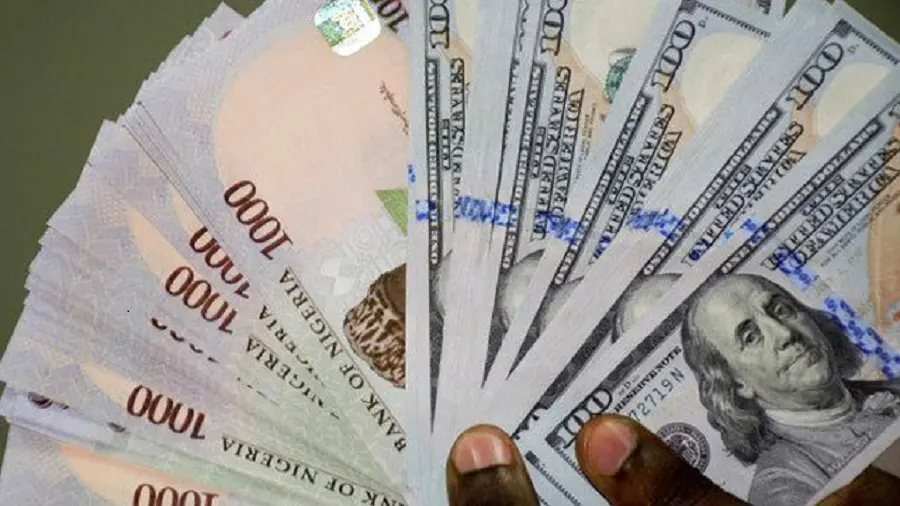
Commercial banks across Ghana have started implementing a 5% fee on all foreign currency (forex) cash withdrawals, following a new directive from the Bank of Ghana (BoG) aimed at curbing rising demand for foreign currency and stabilising the cedi.

The move comes as the central bank battles persistent pressure on Ghana’s foreign exchange reserves and volatility of the local currency. By imposing this fee, the BoG hopes to discourage unnecessary forex withdrawals and reduce speculative demand, which it says contributes to the cedi’s depreciation.
The 5% levy applies to cash withdrawals from foreign currency accounts, including U.S. dollars, euros, and pounds sterling.

It affects both individuals and businesses who withdraw physical forex from their accounts.
The measure does not apply to electronic transfers or payments made directly from foreign currency accounts.
Banks have begun notifying their customers of the changes, with the charges taking effect immediately.
Many Ghanaians who regularly withdraw forex—such as travellers, importers, and business operators—will now pay higher transaction costs.
Some financial analysts warn this could push more people toward informal currency markets, while others believe it will help preserve Ghana’s dwindling forex reserves.
According to the Bank of Ghana, foreign currency withdrawals have surged in recent months, placing pressure on the nation’s reserves. The regulator believes that discouraging excessive cash withdrawals will help strengthen the cedi and improve liquidity management in the banking system.
A statement from a BoG representative said the move is part of a broader strategy to “promote stability in the forex market and ensure prudent use of foreign currency resources.”
The directive has sparked mixed reactions among the public. Some customers see it as an added financial burden during a period of rising living costs, while others support it as a necessary step to stabilise the economy.
Economy
See Black Market Dollar To Naira Exchange Rate Today 1st July 2026
The Black Market Dollar-to-Naira Exchange Rate for 1st July 2026 Can Be Accessed Below.
NOTE: The exchange rate changes hourly. It depends on the volume of dollars available and the Demand. This means…you can buy or sell 1 dollar at a certain rate, and the price can change (high or low) within hours.
The official naira black market exchange rate in Nigeria today, including the Black Market rates, Bureau De Change (BDC), and CBN rates.
Please note that the exchange rate is subject to hourly fluctuations influenced by the supply and demand of dollars in the market.
What’s the dollar to naira black market today, 1st July 2026?
The exchange rate for a dollar to naira at Lagos Parallel Market (Black Market) players sell a dollar for ₦1400 and buy at ₦1390 on Wednesday, 1st July, 2026, according to sources at Bureau De Change (BDC).
Please note that the Central Bank of Nigeria (CBN) does not recognize the parallel market (black market), as it has directed individuals who want to engage in Forex to approach their respective banks.
Dollar to Naira Black Market Rate Today
Dollar to Naira (USD to NGN) Black Market Exchange Rate Today
Selling Rate ₦1400
Buying Rate ₦1390
Dollar to Naira CBN Rate Today
Dollar to Naira (USD to NGN) CBN Rate Today
Highest Rate ₦1385
Lowest Rate ₦1376
Economy
Five states get $3m reward each for budget reforms
Five states will receive $3 million each in performance-based grants under the World Bank-supported HOPE Governance Programme after meeting key requirements aimed at improving budget planning and transparency in the education and primary healthcare sectors.
The National Coordinator of the programme, Dr. Assad Hassan, announced this on Tuesday at a retreat in Abuja attended by Commissioners, Permanent Secretaries and Directors of Budget and Planning from the 36 states and the Federal Capital Territory.
He said the incentive payments, amounting to $27 million, are tied to the successful implementation of specific governance reforms verified by an independent assessment team engaged by the programme.
According to Hassan, Bayelsa, Borno, Kano, Kebbi and Yobe states emerged as the top performers after meeting two major reform targets relating to budget planning for basic education and primary healthcare. Each of the five states qualified for $1.5 million under each target, bringing their total reward to $3 million.
He explained that the reforms required participating states to introduce standard guidelines for preparing and submitting annual work plans for education and primary healthcare budgets within the prescribed timeline.
Nine states also qualified for another round of incentives after ensuring that their local governments adopted harmonised budget guidelines and a uniform chart of accounts.
The benefiting states are Adamawa, Bayelsa, Borno, Delta, Gombe, Kano, Plateau, Taraba and Yobe, with each receiving $500,000.
In another category, 15 states met the conditions for publishing their 2025 Citizens’ Budgets for basic education and primary healthcare, making them eligible for grants of $500,000 each.
The states are Abia, Bayelsa, Borno, Edo, Ekiti, Enugu, Imo, Jigawa, Kano, Kebbi, Kogi, Nasarawa, Ondo, Plateau and Yobe.
Hassan said many states were unable to benefit because they failed to complete the required reforms before the deadline, did not satisfy key assessment conditions or failed to make the required documents available on their official websites.
“The disbursement is based on the findings and recommendations of the Interim Independent Verification Agent, which assessed the performance of states in meeting the Year Zero Disbursement-Linked Indicators,” he said.
He noted that the programme had also identified weaknesses that slowed implementation in several states, particularly the absence of effective coordination among relevant government institutions, which affected ownership of the reforms and their long-term sustainability.
The National Coordinator disclosed that the second phase of the Year Zero verification exercise is expected to be completed by July this year.
He said preparations had already begun for a comprehensive capacity-building programme that would provide technical support to states to improve their performance in subsequent assessments.
According to him, the HOPE Governance Programme is designed to improve how public funds are managed in basic education and primary healthcare by promoting transparency, strengthening accountability and ensuring that money allocated to the two sectors is used more effectively.
He added that the programme also supports better planning and implementation of annual budgets while helping governments address shortages of teachers and primary healthcare workers through improved recruitment and deployment.
The HOPE Governance Programme is a $500 million initiative supported by the World Bank to strengthen financing, accountability and service delivery in Nigeria’s basic education and primary healthcare sectors across the federal, state and local government levels.
Economy
See Black Market Dollar To Naira Exchange Rate Today 30th June 2026
Dollar To Naira Exchange Rate
The Black Market Dollar-to-Naira Exchange Rate for 30th June 2026 Can Be Accessed Below.
NOTE: The exchange rate changes hourly. It depends on the volume of dollars available and the Demand. This means…you can buy or sell 1 dollar at a certain rate, and the price can change (high or low) within hours.
The official naira black market exchange rate in Nigeria today, including the Black Market rates, Bureau De Change (BDC), and CBN rates.
Please note that the exchange rate is subject to hourly fluctuations influenced by the supply and demand of dollars in the market.
What’s the dollar to naira black market today, 30th June 2026?
The exchange rate for a dollar to naira at Lagos Parallel Market (Black Market) players sell a dollar for ₦1400 and buy at ₦1387 on Tuesday, 30th June, 2026, according to sources at Bureau De Change (BDC).
Please note that the Central Bank of Nigeria (CBN) does not recognize the parallel market (black market), as it has directed individuals who want to engage in Forex to approach their respective banks.
Dollar to Naira Black Market Rate Today
Dollar to Naira (USD to NGN) Black Market Exchange Rate Today
Selling Rate ₦1400
Buying Rate ₦1387
Dollar to Naira CBN Rate Today
Dollar to Naira (USD to NGN) CBN Rate Today
Highest Rate ₦1390
Lowest Rate ₦1377
-
News24 hours agoFG inaugurates National Laureate Committee, unveils ₦365m Annual Research Prize for Nigerian Students
-
News14 hours agoFG Scraps JSS And SSS Secondary Education System
-
News14 hours agoAkpodiete Queries Delta Assembly’s Morality on Udu Seat, Cites Lawmakers’ Defection to APC
-
Politics14 hours agoAPC drops Suswam, Elegbeleye, 5 other senatorial, 19 Reps candidates
-
Metro14 hours agoFUT Minna students shut campus over alleged robbery killing, rising insecurity
-
News8 hours ago2027: NDC granted access to upload candidates on INEC portal – Dickson
-
News14 hours agoPope Leo appoints two Nigerians to key Vatican roles
-
News6 hours agoEkiti APC Primary Row Deepens As Akinlayo Releases Ibrahim’s Payslips Over Resignation Dispute