News
Speaker Abbas Pledge Support for Tinubu’s Borrowing Plans
- /home/naijuinz/public_html/wp-content/plugins/mvp-social-buttons/mvp-social-buttons.php on line 27
https://naijablitznews.com/wp-content/uploads/2025/09/IMG-20250922-WA0023-1000x600.jpg&description=Speaker Abbas Pledge Support for Tinubu’s Borrowing Plans', 'pinterestShare', 'width=750,height=350'); return false;" title="Pin This Post">
- Share
- Tweet /home/naijuinz/public_html/wp-content/plugins/mvp-social-buttons/mvp-social-buttons.php on line 72
https://naijablitznews.com/wp-content/uploads/2025/09/IMG-20250922-WA0023-1000x600.jpg&description=Speaker Abbas Pledge Support for Tinubu’s Borrowing Plans', 'pinterestShare', 'width=750,height=350'); return false;" title="Pin This Post">
…say responsible loans will drive infrastructure, growth

…Nigeria loses $18bn yearly to financial crimes
By Gloria Ikibah

The Speaker House of Representatives, Rt. Hon. Tajudeen Abbas, has reaffirmed the support of the 10th House for President Bola Tinubu’s borrowing plans, insisting that strategic loans are necessary to fund critical infrastructure and stimulate economic growth.
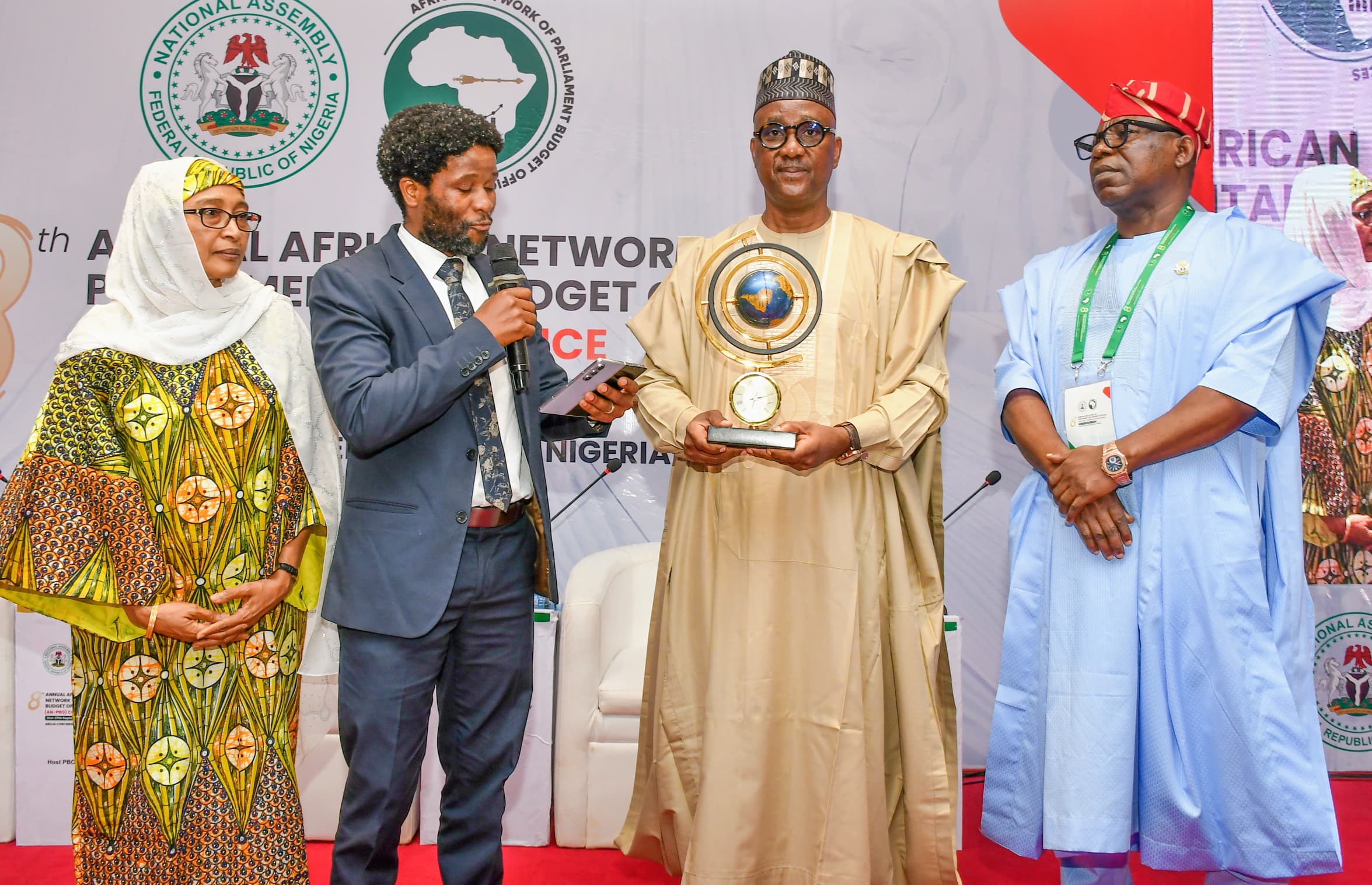
The Speaker who stated this at the 8th Annual African Network of Parliamentary Budget Offices (AN-PBO) Conference, said recent reports misrepresented the House’s stance on government borrowing.
He stressed that while Nigeria’s debt profile remains a concern, the legislature has always supported responsible and targeted borrowing as a tool for national development.
“Borrowing, when done strategically, is a vital fiscal instrument. Nigeria must, at times, leverage credit to finance essential infrastructure, spur economic expansion, and protect vulnerable citizens,” Abbas explained.
The Speaker also assured that loans taken under the current administration would be transparent, sustainable, and consistent with both Nigeria’s medium-term debt strategy and international best practice.
The conference which was hosted by the National Assembly in partnership with NABRO, is theme: “The Role of PBOs in African Parliaments’ Fiscal Oversights: Contribution to the African 2063 Development Agenda.”
Abbas referenced the remarks he made earlier this year at the West Africa Association of Public Accounts Committees (WAAPAC) assembly, where he cautioned that Nigeria’s debt-to-GDP ratio had risen to 52 per cent, surpassing the 40 per cent statutory benchmark. He clarified, however, that his comments were a call for stronger oversight, not opposition to borrowing.
He further lamented that Nigeria loses an estimated $18 billion annually to financial crimes, describing it as a drain that undermines development efforts. Abbas urged parliaments across Africa to intensify fiscal scrutiny and adopt innovative approaches to safeguard public resources.
He said: “Recently, a speech delivered by the House leader at the West Africa Parliamentary Conference was horrendously and mischievously reported out of context, creating the false impression that the House of Representatives does not support the borrowing strategy of President Tinubu administration. We should state clearly that this interpretation is both inaccurate and misleading.
“The House and indeed the National Assembly have consistently affirmed that in the face of present developmental needs, strategic and responsible borrowing is an essential fiscal tool. Like every modern economy, Nigeria most sometimes liberates credit to finance critical infrastructure. Stimulate growth and protect vulnerable populations.
“What is important and what the President has assured is that all borrowings remain targeted, transparent and sustainable, consistent with Nigeria’s medium term debt strategy and guided by global best practices.
“Under our President’s leadership, borrowed forms are being channeled towards transformative projects that will expand revenue generating capacity, such as power, transport and agriculture, rather than for consumption.
“The House stands firmly behind the President’s vision of using judicial borrowing as a catalyst for growth and poverty reduction, while simultaneously strengthening oversight mechanisms”.
Revealing that Nigeria forfeits an estimated $18 billion each year to financial crimes — about 3.8 per cent of its GDP — the Speaker underscored the pressing need for stronger parliamentary oversight to protect public funds.
He further cautioned that, across Africa, losses from corruption, illicit financial flows and systemic inefficiencies amount to more than $587 billion annually, a figure he described as deeply alarming.
Abbas said: “Africa is at the crucial crossroads in its history, with a population of approximately 1.4 billion people, roughly one-sixth of humanity. Our continent is young, growing and breathing with potentials. Nigeria, as Africa’s most populous nation, with over 200 million people and a GDP of around $477 billion in 2022, carries a special responsibility in this African story.
“We are a continent of abundant resources and talented youth, and we have bold ambitions captured in the African Union Agenda 2063, which serves as the blueprint for the Africa we want. However, the path to realizing this vision remains difficult. Economic growth in sub-Saharan Africa is recovery, although modestly, with the World Bank projecting an increase from 3.3 per cent in 2024 to 3.5 per cent in 2025.
“This is indeed encouraging, but it is not yet sufficient to meet our development needs. Poverty remains widespread. An estimated 464 million Africans live in extreme poverty as of 2024. Unemployment and underemployment, especially among young people, are urgent issues.
“Each year, 12 million young Africans enter the labor markets, yet only around 3 million formal jobs are created. This gap in opportunities highlights a potential demographic dividend that could turn into a demographic risk if we do not take action”,
He pointed out that, if properly harnessed, such lost funds could be redirected towards strengthening social infrastructure, including the provision of better schools across Africa.
In his remarks, the Chairperson of the African Network of Parliamentary Budget Offices (AN-PBO), Professor Dumisani Jantjies, cautioned that the continent’s economies remain highly exposed to external shocks, from volatile capital flows and global trade disruptions to the mounting effects of climate change.
Professor Jantjies highlighted the growing role of Parliamentary Budget Offices (PBOs) as vital mechanisms for fiscal transparency, policy accountability, and ensuring that national priorities are aligned with Africa’s long-term development agenda.
He acknowledged Nigeria’s recent macroeconomic reforms, noting that growth climbed to 3.4 per cent in 2024, the highest in ten years. However, he warned that persistent inflation and widespread poverty continue to pose significant challenges.
“Our mandate is to provide legislatures with credible, non-partisan, evidence-based analysis to enable informed fiscal decisions,” he said.
News
Citizen Patience and Collaborative Efforts: A Pathway to Greatness for Tinubu’s Government, By Hajia Hansatu Zannah*
Nation-building is never the sole responsibility of government; it is a shared endeavor that requires the active participation, patience, and collaboration of citizens. In Nigeria today, President Bola Ahmed Tinubu’s administration faces the daunting task of steering the country toward economic stability, social cohesion, and sustainable development. While policies and reforms are critical, their success ultimately depends on the willingness of citizens to remain patient and supportive during the often difficult process of implementation.
Transformational leadership demands bold decisions—structural reforms, economic adjustments, and institutional restructuring—that may not yield immediate results. In such circumstances, patience becomes a vital national asset. By resisting the urge for instant gratification and allowing time for reforms to mature, Nigerians can help create an environment where government initiatives are given the opportunity to succeed.
Every nation, regardless of its stage of development, grapples with challenges—economic struggles, political transitions, social tensions, and infrastructural gaps. These realities test the resilience of both leaders and citizens. In moments of strain, the attitude of the people toward their country becomes a powerful determinant of progress. Constructive criticism is healthy and necessary for accountability, but outright condemnation and vitriolic attacks against one’s nation can be deeply counterproductive.
Words shape perception, and perception influences reality. When citizens consistently speak negatively about their country, they reinforce hopelessness and despair. This weakens national morale and discourages foreign investors, partners, and allies who rely on the confidence of citizens as a measure of stability. By contrast, balanced and solution-oriented dialogue strengthens Nigeria’s image and inspires collective action.
Collaboration, however, goes beyond compliance—it requires active engagement. Citizens can contribute meaningfully to nation-building by supporting reforms through constructive dialogue rather than resistance, participating in civic duties such as voting, community service, and public consultations. These actions serve as catalysts for greater national progress. At the same time, holding leaders accountable in a respectful and lawful manner is essential. While harsh and divisive criticism may be insidious, patriotism calls for promoting unity across ethnic, religious, and political divides to strengthen national cohesion.
If citizens embrace patience and collaboration, Tinubu’s government stands a better chance of achieving greatness. Economic reforms can stabilize markets, infrastructural projects can transform communities, and social policies can uplift vulnerable populations. Greatness, in this context, is not merely about political success but about building a Nigeria where prosperity, justice, and peace are attainable for all.
Citizens are not passive observers; they are active participants in governance. By engaging in respectful dialogue, supporting reforms, and holding leaders accountable through lawful means, they contribute to the nation’s growth. Patriotism does not mean blind loyalty—it means believing in the possibility of progress and working toward it.
A nation is like a family; disagreements are inevitable, but condemnation destroys trust. Citizens must rise above destructive criticism and embrace constructive engagement. By doing so, they preserve the dignity of their country and create an atmosphere where greatness can flourish. The path to national transformation lies not in tearing down but in building up—through patience, collaboration, and unwavering belief in Nigeria’s future.
The greatness of any government is measured not only by the vision of its leaders but also by the resilience and cooperation of its people. For Tinubu’s administration, citizen patience and collaborative effort are indispensable. Together, government and citizens can write a new chapter in Nigeria’s history—one defined by progress, unity, and enduring impact.
*Hajia Hansatu Zannah is a distinguished member of the Governing Council of the African Union Agenda 2063 and Ambassador Plenipotentiary. She is also the widow of the late Zannah Umar Mustapha, former Deputy Governor of Borno State.*
News
BREAKING: CBN revokes licences of 46 Microfinance Banks over failure to satisfy regulatory requirements
The Central Bank of Nigeria (CBN) has revoked the operating licences of 46 microfinance banks across the country, citing their failure to meet key regulatory requirements for continued operation.
The decision takes effect from Wednesday, July 1, 2026, according to a statement issued by the Acting Director of the CBN’s Corporate Communications Department, Hakama Sidi-Ali. The apex bank said the action was taken in line with its powers under Sections 12 and 13 of the Banks and Other Financial Institutions Act (BOFIA), 2020, and was approved by the CBN Governor, Olayemi Cardoso.
According to the CBN, the affected institutions lost their licences after failing to satisfy the conditions required to remain licensed financial institutions.
The bank explained that the revocation was based on one or more regulatory infractions, including insufficient assets to meet liabilities, shutting down operations without obtaining CBN approval, prolonged inactivity and cessation of financial intermediation, failure to commence business within 12 months after receiving a licence, and failure to maintain the minimum capital requirements without impairment from accumulated losses.
The CBN described the move as part of its ongoing efforts to strengthen the nation’s financial system and ensure that all licensed financial institutions operate in compliance with existing laws and prudential regulations.
“The revocation of the licences is part of the Bank’s ongoing efforts to safeguard the stability of the financial sector, protect depositors, and ensure that licensed institutions comply with current laws and regulatory requirements,” the statement said.
The apex bank reiterated its commitment to maintaining a safe, sound and resilient financial system, stressing that it would continue to take appropriate supervisory and regulatory measures where necessary to sustain public confidence in Nigeria’s banking sector.
News
Tinubu Hails Wike’s Performance, Says All FCT Districts Now Feeling Impact of Governance(Photos)
President Bola Ahmed Tinubu on Wednesday hailed the performance of the Federal Capital Territory (FCT) Minister, Nyesom Wike, declaring that it has become very evidently clear that all districts in the FCT are now feeling the impact of governance through completed projects that improve the quality of life of residents.

The President, represented by Senate President Godswill Akpabio, spoke while commissioning the Full Scope Development of Akinwumi Ajibola Street, comprising Important Local Streets (ILS) 16, 18 and 19, in Gaduwa District, Abuja.
Describing the project as a practical demonstration of the Renewed Hope Agenda, Tinubu said his administration was focused on delivering projects that address the everyday needs of Nigerians.
“We are here to open a road, but more importantly, we are here to restore access. The Full Scope Development of Akinwumi Ajibola Street is now complete and open for use. In this government, we measure ourselves by finished work. This street is finished work,” he said.
According to the President, residents of Gaduwa endured years of hardship despite owning homes in the district because there was no motorable road linking them to their properties.
“For years, families in Gaduwa built homes here in good faith, yet they had no motorable road to reach those homes. When the rains came, the place became impassable. That is not how a capital city treats its citizens. Under the Renewed Hope Agenda, we came to work, and today that promise is visible on these streets,” he added.

Tinubu commended the Minister of the Federal Capital Territory, Barr. Nyesom Wike, for changing what he described as the culture of project delivery in Abuja through effective supervision, prompt funding and timely completion of projects.
“When the Honourable Minister reviewed the files and saw the neglect, he did not issue another memo. He brought contractors back to site, gave clear targets and backed those targets with funding.
“You have changed the culture of delivery in the FCT. You ended the era of mobilisation without movement and abandoned inner roads. You are taking development from the city centre into the districts and satellite towns so that no resident is left behind. You have my confidence and my commendation,” the President said.
He noted that the completed road would improve mobility, reduce travel time, enhance property values and provide safer access for residents through the provision of drainage and streetlights.
Tinubu also urged residents to protect the infrastructure by preventing vandalism and ensuring drainage channels remain free of refuse.
“We will not stop here. Across the FCT, from the city centre to the area councils, our task is to finish what matters, connect what was separated and ensure that public funds translate into public value,” he said.
Earlier, FCT Minister Barr. Nyesom Wike said the commissioning formed part of the 16th project in the administration’s ongoing 31-day project inauguration programme marking President Tinubu’s third year in office.
According to him, the President had directed upon assumption of office that every district in the FCT must benefit from government projects, irrespective of whether they are located in the city centre or satellite communities.
“You instructed us that every district in the FCT must feel the impact of this administration. Today, I can confidently say that no district can claim it has been neglected. We have taken development to Jahi, Gwarimpa, Katampe, Guzape, Kwali and now Gaduwa,” Wike said.
The minister attributed the rapid execution of projects to the cordial working relationship between the Executive and the National Assembly, which ensured timely budget approvals and releases.
He also cautioned the Abuja Municipal Area Council (AMAC) against naming roads constructed by the Federal Government without due approval.
“If the Federal Government constructs the roads, permission must be obtained before naming them. Do not wait for us to build roads before putting names on them or using them to generate revenue,” he warned.
In her remarks, the Minister of State for the FCT, Dr. Mariya Mahmoud, described the commissioning as another milestone in the implementation of the Renewed Hope Agenda.
She said the project reflected the administration’s commitment to people-oriented infrastructure that improves mobility, enhances economic activities and raises the living standards of residents.
Mahmoud commended President Tinubu, Wike, the National Assembly, contractors, consultants, traditional rulers, security agencies and residents of Gaduwa for their contributions to the successful completion of the project, assuring that the FCT Administration would sustain the pace of infrastructure development across the territory.
-
News23 hours agoFG inaugurates National Laureate Committee, unveils ₦365m Annual Research Prize for Nigerian Students
-
News23 hours agoPhotos: Etsu Kwali celebrates completed Gomani – Dafa – Yangoji road
-
News13 hours agoFG Scraps JSS And SSS Secondary Education System
-
News23 hours agoPFIPC: Centre demands probe of Prince Adeyemi over alleged impersonation, false claims
-
News24 hours agoNigerian Husband of South African Deputy Mayor Nabbed After Police Uncover 28 Alleged Illegal Migrants in His, Bloemfontein, Guest House
-
Sports24 hours agoLionel Scaloni warns Argentina says don’t underestimate Cape Verde in World Cup tussle
-
News13 hours agoAkpodiete Queries Delta Assembly’s Morality on Udu Seat, Cites Lawmakers’ Defection to APC
-
News24 hours agoSee List Of 104 Nigerian Soldiers Declared Missing After Boko Haram Attack