
Economy
CBN Reduces Interest Rate By 50 Basis Points To 27%
The Central Bank of Nigeria’s Monetary Policy Committee has reduced the interest rate by 50 basis points, from 27.5 per cent in July to 27 per cent.

This followed the decision of the 12 members of the Committee at its 302nd meeting held on September 22nd and 23rd, 2025.
The asymmetric corridor around the MPR was retained at +260 and -250 basis points, providing a framework for liquidity management and signaling the CBN’s cautious approach toward market volatility.

CBN Governor, Olayemi Cardoso, who briefed journalists after the meeting, said the committee’s decision to lower the monetary policy rate was predicated on the sustained disinflation recorded in the past five months, projections of declining inflation for the rest of 2025, and the need to support economic inflation records.
It also reduced the cash reserve requirement to 45 per cent for commercial banks and retained that of merchant banks at 16 per cent.
The Committee has also introduced a 75 per cent cash reserve requirement on non-TSA public sector deposits for enhanced liquidity management.
To improve the efficiency of the bank market and strengthen monetary policy transmission, the MPC also adjusted the standing facilities corridor
Meanwhile, the liquidity ratio has been left unchanged at 30 percent.
Consideration:
The MPC expressed satisfaction with the prevailing macroeconomic stability evidenced by the improvements in several indicators such as sustained disinflation, improved output growth, stable exchange rate, and robust external reserves.
It particularly noted the increased momentum of disinflation in August 2025, being the highest in the past five months.
This deceleration, underpinned by monetary policy tightening, exchange rate stability, and increased capital inflow surplus current account balance, has helped to broadly anchor inflation expectations, the Committee noted.
“Other factors that contributed to the deceleration include the continued moderation in the price of PMS and the notable increase in crude oil production.
“In the view of the committee, the stability in the macroeconomic environment offered some headroom for monetary policy to support economic growth and recovery.”
“Notwithstanding the consistent deceleration in inflation, the Committee said it observed the persistent reduction of excess liquidity in the banking system, resulting largely from fiscal releases emerging from improving revenues.
“Being mindful of the need to preserve the prevailing macroeconomic stability, the MPC noted the risk posed by the excess liquidity in the banking system.
“Members noted that the effective functioning of the inter-banking system is critical to enhance transmission of the monetary policy.
“This, therefore, informed the decision to adjust the width of the standing facilities corridor to boost inter-banking market transactions and the stability of the market.”
Nigeria’s Gross Domestic Product (GDP) grew by 4.23 per cent on a year-on-year basis in the second quarter of 2025, according to data released by the National Bureau of Statistics (NBS) on Monday.
The latest figures showed an improvement from the 3.48 per cent growth recorded in the same quarter of 2024, indicating continued recovery and resilience in the economy.
According to the report, the agriculture sector grew by 2.82 per cent in real terms during the period under review, an increase from the 2.60 per cent recorded in the second quarter of 2024.
The industry sector also showed strong performance, growing by 7.45 per cent, compared to 3.72 per cent in the corresponding period of the previous year. Meanwhile, the services sector recorded a real growth of 3.94 per cent, slightly up from the 3.83 per cent posted in the second quarter of 2024.
The share of the industry sector in the country’s GDP increased to 17.31 per cent in Q2 2025, higher than the 16.79 per cent recorded in the same quarter of 2024.
In nominal terms, aggregate GDP stood at N100.73 trillion in the second quarter of 2025, up from N84.48 trillion in the same period of the previous year, representing a nominal year-on-year growth of 19.23 per cent.
Economy
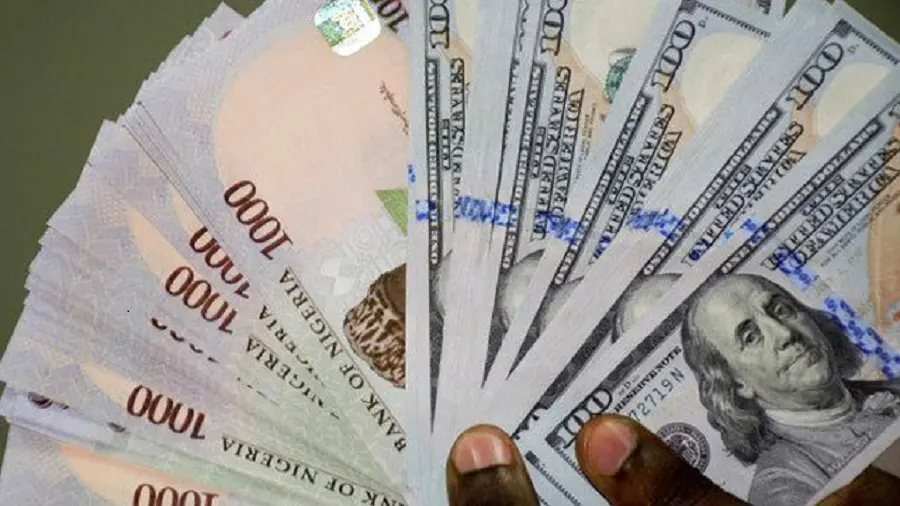
See Black Market Dollar To Naira Exchange Rate Today 20th April 2026
The Black Market Dollar-to-Naira Exchange Rate for 20th April 2026 Can Be Accessed Below.
IMPORTANT NOTE: The exchange rate changes hourly. It depends on the volume of dollars available and the Demand. This means…you can buy or sell 1 dollar at a certain rate, and the price can change (high or low) within hours.
The official naira black market exchange rate in Nigeria today, including the Black Market rates, Bureau De Change (BDC), and CBN rates.
Please note that the exchange rate is subject to hourly fluctuations influenced by the supply and demand of dollars in the market.
What’s the dollar to naira black market today, 20th April 2026?
The exchange rate for a dollar to naira at Lagos Parallel Market (Black Market) players sell a dollar for ₦1400 and buy at ₦1390 on Monday 20th April, 2026, according to sources at Bureau De Change (BDC).
Please note that the Central Bank of Nigeria (CBN) does not recognize the parallel market (black market), as it has directed individuals who want to engage in Forex to approach their respective banks.
Dollar to Naira Black Market Rate Today
Dollar to Naira (USD to NGN) Black Market Exchange Rate Today
Selling Rate ₦1400
Buying Rate ₦1390
Dollar to Naira CBN Rate Today
Dollar to Naira (USD to NGN) CBN Rate Today
Highest Rate ₦1348
Lowest Rate ₦1340
Disclaimer:NEWSRAIN NIGERIA does not set or determine forex rates. The official NAFEX rates are obtained from the FMDQOTC website. Parallel market rates (black market rates) are obtained from various sources, including online media outlets. The rates you buy or sell forex may be different from what is captured in this article.
Economy
CBN, FMDA introduce the Nigerian Overnight Financing Rate
The Central Bank of Nigeria (CBN) in collaboration with the Financial Markets Dealers Association (FMDA) has introduced the Nigerian Overnight Financing Rate (NOFR).
The new initiative is a standardized benchmark, aimed at enhancing transparency, strengthening monetary policy transmission, and deepening Nigeria’s money market.
The introduction of the NOFR was made known in a statement issued on Sunday by the Director, Corporate Communications of the CBN, Mrs. Hakama Sidi Ali.
The apex bank explained that the NOFR was developed to align Nigeria with global best practices in short-term interest
rate benchmarks.
Moreover, it said the initiative is expected to improve price discovery and transparency, while promoting consistent pricing of money market instruments.
“It will enhance the effectiveness of monetary policy, support financial innovation, boost investor confidence, and strengthen risk management across the financial system,” the CBN said.
The introduction of NOFR positions Nigeria alongside leading global benchmarks such as SOFR in the United States, SONIA in the United Kingdom, €STR in the Eurozone, and TONA in Japan.
Also, it complements African benchmarks such as the JIBAR in South Africa.
The CBN added that the benchmark was adopted after a stakeholder engagement session held on February 27, 2026, with market participants formally endorsing the initiative.
It further disclosed that following the subsequent regulatory approval, NOFR is now in use, with the CBN serving as the benchmark administrator.
“The bank will ensure governance, transparency, and regular publication of the rate,” the statement stated.
Economy
Naira Slumps At Official FX Market
The Nigerian naira depreciated slightly against the United States (US) dollar, trading at N1,343.6398 per dollar at the Central Bank of Nigeria (CBN) official foreign exchange window on Friday, 17th April, 2026.
According to the data on the CBN’s official platform, the naira traded at the Nigerian Foreign Exchange Market (NFEM) rate of N1,343.6398/$per dollar and closed at N1,342.5000 per dollar.
When compared with the previous trading rate, the Nigerian currency traded at N1342.3037 on 16th April, 2026. With this, the Nigerian currency depreciated slightly by a minimum of N1.3.
At the parallel market, the naira-to-dollar exchange rate for the buying rate didn’t change while the selling rate increased by N3 when compared to that of the previous trading rate.
According to Aboki FX , the Naira-to-dollar exchange rate at the black market on Friday, 17th April, 2026, was N1,395 and N1,405 per dollar for buying and selling rate respectively.
-
News24 hours agoAisha Yesufu faults FCT teachers’ strike, wants Wike to intervene
-
News22 hours agoPDP Holds First NEC Meeting After Police Reopen National Secretariat
-
News23 hours agoJust in: Terrorists invade military camp, k!ll three soldiers in Kwara
-
News8 hours ago2027: APC Snubs Gbenga Daniel, Throws Weight Behind Dapo Abiodun for Senate
-
News16 hours agoTinubu approves N15bn take off grant for new police academy
-
News8 hours agoBillionaire Blord Steps Out Of Prison Into Brand New Vehicle (Video)
-
News19 hours agoNYSC Reschedules Orientation Date For Enugu, Osun Corps Members
-
Economy18 hours agoSee Black Market Dollar To Naira Exchange Rate Today 20th April 2026