Connect with us

Economy

Naira in 9th position as Weakest Currency In Africa-Report

Published

on

ADVERTISEMENT
Zoom Ad
ADVERTISEMENT
Zoom Ad

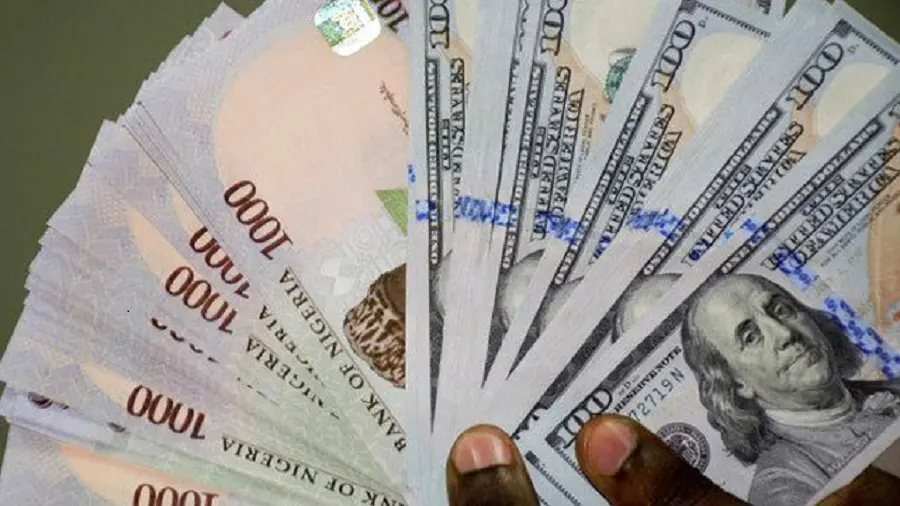
The Nigerian Naira has been positioned as the ninth weakest currency in Africa, according to the latest Forbes currency calculator report for September 2025.


The ranking, which relies on real-time data provided through the Open Exchange Rates API, updates every five minutes to reflect live trading activity. It factors in demand and supply dynamics, economic stability, and overall market sentiment affecting different African currencies.

According to the report, the São Tomé & Príncipe Dobra topped the list as the weakest African currency at 22,282 per $1, followed by the Sierra Leonean Leone at 20,970 per $1, and the Guinean Franc at 8,680 per $1.

Other currencies on the weak list included:

Advertisement

Ugandan Shilling – 3,503 per $1

Burundian Franc – 2,968 per $1

Congolese Franc – 2,811 per $1

Tanzanian Shilling – 2,465 per $1

Advertisement

Malawian Kwacha – 1,737 per $1

Nigerian Naira – ₦1,490 per $1

Rwandan Franc – rounding off the top 10

On the other hand, the continent’s strongest currencies were listed as:

Advertisement

Tunisian Dinar – 2.90 per $1

Libyan Dinar – 5.40 per $1

Moroccan Dirham – 9.91 per $1

Ghanaian Cedi – 12.31 per $1

Advertisement

Botswanan Pula – 14.15 per $1

Africa currently consists of 54 recognized countries, according to the United Nations.

Naira’s Weakness Amid Signs of Economic Stability

Although the Naira remains among Africa’s weakest-performing currencies, recent figures suggest that Nigeria’s broader economy may be experiencing some relief.

Advertisement

Data from the National Bureau of Statistics (NBS) shows that headline inflation dropped from 24.5% in January 2025 to 20.12% in August 2025, representing the fifth consecutive month of disinflation.

Analysts attribute this improvement to:

Steady foreign exchange inflows from oil exports and diaspora remittances

A boost in agricultural output

Advertisement

The Central Bank of Nigeria’s (CBN) tight monetary stance, which kept the benchmark interest rate at 27.5%

Expert View and Outlook

According to Dr. Omoniyi Akinsiju, chairman of the Independent Media and Policy Initiative (IMPI):

“Nigeria recorded a rare disinflation in 2025, with inflation falling from 24.5% in January to 20.12% in August the sharpest mid-year slowdown in over a decade.”

Advertisement

Looking ahead, IMPI projects that inflation could fall further to 17% by December 2025, offering hope that consumer prices may stabilize and provide some relief to households battered by years of rising costs.

While the Naira continues to rank low against other African currencies, signs of easing inflation and stable forex inflows suggest that Nigeria may be inching toward economic stability, even if currency strength remains a major challenge.

Continue Reading
Advertisement

Economy

Nigeria meets 99.2% of OPEC crude oil production in April

Published

on

By

ADVERTISEMENT
Zoom Ad
ADVERTISEMENT
Zoom Ad

The Nigerian Upstream Petroleum Regulatory Commission (NUPRC) has revealed that in April 2026, Nigeria met 99.2% of its Organization of Petroleum Exporting Countries (OPEC) crude oil production quota of 1.5mb/d.

This was revealed in the X handle of the commission, which stressed that the output rose to 1.48b/d of crude oil and 174,873b/d of condensate.

The total crude oil and condensate production, according to NUPRC, was 1.66mb/d.

“Nigeria’s production increased in the month of April to 1,488,540 barrels of crude oil and 174,873 barrels of condensates totaling 1, 663, 413 barrels per day. This implies that Nigeria met 99.2% of its 1.5mbpd OPEC quota of crude oil.”

Advertisement

The report revealed the that the figure also represents a 7.58% increase when compared to the month of March. NUPRC said the peak production in April was 1.85mbpd while the lowest production for the month was 1.46mbpd.

Continue Reading

Economy

See Black Market Dollar To Naira Exchange Rate Today 12th May 2026

Published

on

ADVERTISEMENT
Zoom Ad
ADVERTISEMENT
Zoom Ad

Dollar To Naira Exchange Rate

The Black Market Dollar-to-Naira Exchange Rate for 12th May 2026 Can Be Accessed Below.

NOTE: The exchange rate changes hourly. It depends on the volume of dollars available and the Demand. This means…you can buy or sell 1 dollar at a certain rate, and the price can change (high or low) within hours.

The official naira black market exchange rate in Nigeria today, including the Black Market rates, Bureau De Change (BDC), and CBN rates.

Advertisement

Please note that the exchange rate is subject to hourly fluctuations influenced by the supply and demand of dollars in the market.

What’s the dollar to naira black market today, 12th May 2026?
The exchange rate for a dollar to naira at Lagos Parallel Market (Black Market) players sell a dollar for ₦1400 and buy at ₦1387 on Tuesday, 12th May, 2026, according to sources at Bureau De Change (BDC).

Please note that the Central Bank of Nigeria (CBN) does not recognize the parallel market (black market), as it has directed individuals who want to engage in Forex to approach their respective banks
Dollar to Naira Black Market Rate Today
Dollar to Naira (USD to NGN) Black Market Exchange Rate Today
Selling Rate ₦1400
Buying Rate ₦1387
Dollar to Naira CBN Rate Today
Dollar to Naira (USD to NGN) CBN Rate Today
Highest Rate ₦1375
Lowest Rate ₦1367
Disclaimer:NEWSRAIN NIGERIA does not set or determine forex rates. The official NAFEX rates are obtained from the FMDQOTC website. Parallel market rates (black market rates) are obtained from various sources, including online media outlets. The rates you buy or sell forex may be different from what is captured in this article.

Advertisement
Continue Reading

Economy

CBN warns non-interest banks over rising risks

Published

on

By

ADVERTISEMENT
Zoom Ad
ADVERTISEMENT
Zoom Ad

The Central Bank of Nigeria has warned that growing risks in Nigeria’s non-interest banking sector could weaken public confidence and threaten financial stability if they are not properly managed.

The apex bank said the rapid growth, increasing sophistication and stronger connections within the banking industry have exposed Non-Interest Financial Institutions (NIFIs) to several challenges, including non-compliance with regulations, weak governance structures, operational weaknesses and emerging technology-related risks.

Speaking during the second Annual Interactive Session between the CBN Financial Regulation Advisory Council of Experts (FRACE) and the Advisory Committees of Experts (ACE) of Non-Interest Financial Institutions in Abuja, the Deputy Governor in charge of Financial System Stability, Mr. Philip Ikeazor, said the risks facing the sector require stronger oversight and improved governance.

Represented by the Director of the Financial Policy and Regulation Department, Dr. Rita Ijeoma Sike, Ikeazor said poor management of these risks could damage the credibility of the non-interest finance industry and reduce public trust in the system.

Advertisement

He explained that the creation of FRACE and the mandatory establishment of ACEs in all Non-Interest Financial Institutions were meant to build a stronger and more coordinated governance structure for the industry.

According to him, regular engagement between FRACE and ACE members is important to ensure that institutions clearly understand regulatory expectations and apply them properly.

“The objectives of today’s session include fostering the institutionalisation and effective operation of a robust Shariah governance system within Non-Interest Financial Institutions, and providing a structured platform for dialogue, knowledge-sharing, and collaboration,” he said.

Ikeazor said the CBN remains committed to strengthening Shariah governance, improving regulatory clarity and promoting effective risk management in the non-interest financial services sector in order to maintain financial stability and public confidence.

Advertisement

He noted that the current engagement builds on discussions from the inaugural session and reflects the CBN’s determination to sustain a sound and resilient non-interest banking system driven by good governance, compliance and prudent risk management.

The deputy governor added that Non-Interest Financial Institutions have become increasingly important to Nigeria’s financial system by providing ethical and Shariah-compliant financial services while supporting financial inclusion, financing for the real sector, Micro, Small and Medium Enterprises (MSMEs), and shared economic growth.

In his opening remarks, the Deputy Chairman of FRACE, Prof. Bashir Aliyu Umar, said the meeting was organised to strengthen governance in the non-interest finance industry and encourage constructive engagement between the CBN and advisory committees of the institutions.

He also praised the management of the CBN for reviving the interactive session which was first introduced in 2014.

Advertisement

Earlier, Dr. Rita Ijeoma Sike said the central bank remained focused on building a credible and properly governed non-interest financial services industry.

She said the increasing variety of products, institutions and financial service channels, especially the rise of Islamic fintech, has made continuous dialogue, strong regulation and quality advisory support more important.

The event featured technical presentations on Shariah non-compliance risks and the impact such risks could have on the non-interest financial services industry. Another presentation focused on Islamic fintech and its role in promoting financial inclusion.

Participants at the session also held discussions on practical challenges affecting the sector, including capacity building, the independence of advisory committees, risk management strategies and ways to improve governance and innovation within the industry.

Advertisement

In his closing remarks, Prof. Abdul-Razzaq Alaro commended participants for their contributions and thanked the CBN for organising the session.

He urged stakeholders to take practical steps towards implementing the resolutions reached during the engagement, saying the success of the meeting would depend on visible improvements across the non-interest financial sector.

FRACE serves as an advisory body that helps bridge the gap between conventional financial regulation and faith-based financial practices. The council supports consistency, investor confidence and proper regulation within Nigeria’s non-interest finance industry, while the ACEs carry out similar oversight responsibilities within individual institutions.

Advertisement
Continue Reading

Trending

Copyright © 2024 Naija Blitz News