
News
Nigeria’s procurement reform: New era of transparency and accountability




By Sufuyan Ojeifo
Every year, the United States Department of State releases its Fiscal Transparency Report, a document that often provokes both debate and defence across Africa. In its 2025 edition, Nigeria was included among 32 countries said to face challenges of fiscal transparency, with particular reference to budget execution and the independence of audit institutions.
To be fair, while such reports provide an external perspective, they do not always capture the lived reality of reform on the ground. In Nigeria, a revolution has been unfolding in public procurement. Under President Bola Ahmed Tinubu’s Renewed Hope Agenda, public procurement, which channels more than 70 per cent of the federal budget, is being transformed into a system of transparency, accountability, and value for money.
At the centre of this effort is the Bureau of Public Procurement (BPP), led by Director General, Dr Adebowale Abraham Adedokun. His response to the report was a calm assurance of policy and performance. He presented a catalogue of reforms that shows procurement is moving from suspicion to trust, from bottleneck to enabler, and from rhetoric to measurable results.
The starting point of reform has been fidelity to the Public Procurement Act of 2007. There is significant improvement in terms of public notices. Contract awards follow due process. These are institutionally mandated practices, reinforced by presidential circulars and powered by benchmarking and price intelligence tools that prevent inflated bids and ensure value for money.
The Nigeria Open Contracting Portal (NOCOPO) is being upgraded and linked with the Bureau’s website, which will be launched soon. Through NOCOPO, contract awards and implementation data are published monthly. Civil society, journalists, legislators, and ordinary citizens can log into NOCOPO, track expenditures, and see the decisions taken in real time.
The BPP has also embedded anti-graft institutions directly into the procurement cycle. The EFCC, the ICPC, the Police, and the Code of Conduct Bureau work hand in hand with the Bureau to investigate and prosecute infractions. In 2024 alone, more than 40 firms were blacklisted and refunds were compelled. Since 2023, over 100 contractors have been debarred. These measures demonstrate not only transparency but also enforcement.
● Harnessing technology for efficiency and accountability
Technology and decentralisation have delivered the clearest dividends of reform. NOCOPO, aligned with global open contracting standards, has become the country’s digital price checker. Between January and June 2025, it saved ₦173 billion by identifying inflated costs and rejecting bids that did not reflect market realities.
The broader effect has been to shorten timelines. Procurement cycles that once took 120 days in 2023 now close in an average of 45 days. This acceleration has brought direct benefits to citizens in terms of execution of contracts. Some argue that faster timelines might compromise oversight. The evidence suggests otherwise. The revised thresholds approved by President Tinubu in May 2025 keep contracts above ₦5 billion for goods and services and above ₦10 billion for works firmly under Federal Executive Council scrutiny. What has changed is that smaller projects can now be processed by ministerial tenders boards, subject to post review by the Bureau. Oversight is intact, but delivery is swifter.
A striking illustration of openness is the case of a foreign company that won a Nigerian government contract without ever setting foot in the country. Its owners submitted bids online, received the award digitally, and commenced execution from abroad. Payments have been processed promptly. If the system were opaque or compromised, such a process would not be possible.
● Capacity building and inclusive procurement
Another line of criticism is that reforms on paper are not matched by human capacity. The government has moved to address this directly. For the first time in over a decade, resources are being committed to training procurement officers nationwide. Through the Nigeria Procurement Certification Programme, more than 8,000 officers have been certified, with a further 1,200 young professionals mentored. The National Procurement Officers Management System (NAPOMS) ensures each officer is traceable and accountable. Decisions are no longer faceless. They are recorded, reviewable, and attributable.
To strengthen the chain of oversight, the Bureau of Public Procurement has upgraded the National Database of Contractors, Consultants, and Service Providers. This platform categorises and pre-qualifies service providers in line with Section 5(h) of the Procurement Act. By ensuring that only properly vetted entities can bid, the risk of abandoned projects is reduced, and compliance with standards is enforced.
Reforms have also widened participation. The Nigeria First policy has secured 45 per cent local content in procurement. The BPP is developing and finetuning policies on affirmative procurement, which will reserve nearly a quarter of contracts for women-led firms and small businesses as well as community-based procurement which will ensure that local suppliers in rural areas gain from government spending. These are in the process of being implemented.
Within the BPP itself, reform has been institutional as well as operational. The headquarters in Abuja is being rehabilitated into a modern facility. Staff members’ welfare has been improved through promotions, training, and better conditions of service. A 2024 survey showed a satisfaction rate above 90 per cent, the highest in more than a decade. Staff members now speak of belonging to an institution that values them. That morale feeds directly into the vigour with which reforms are carried out.
● The future of Nigeria’s procurement: Progress amid challenges
There are those who argue that these measures are not enough, that transparency is still elusive. But one must judge reform by both trajectory and evidence. Wrongly awarded contracts are being reversed in favour of legitimate winners. Contractors now report infractions directly to the Bureau, confident that their petitions will be heard. Civil society organisations participate in monitoring and evaluation. Professional bodies and development partners are engaged in continuous consultation.
To be clear, challenges remain. Some agencies still lag in compliance. Security constraints slow down projects in certain regions. Amendments to the Procurement Act are still being finalised. Yet these are not marks of inertia. They are the marks of a system that is working through its legacy burdens while moving forward with resolve.
Above all, the guiding hand of the president is unmistakable. His directive to the Bureau has been simple and firm: follow the law, be fair, and be accountable. With this political cover, the Bureau has been able to cancel inflated contracts, integrate blockchain oversight, and resist vested interests.
The bigger picture is that procurement reform in Nigeria is not a side note. It is central to the country’s development. With trillions of naira flowing through it each year, procurement is the engine that determines whether budgets become bridges, classrooms, and hospitals or whether they become stories of waste.
Nigeria’s procurement system is not perfect, but it is decisively better than it was. It is more open, more accountable, and more efficient. The system is saving money, building trust, and opening opportunities. Roads are completed on time. Hospitals are equipped transparently. Schools receive supplies without delay. Local manufacturers are finding new markets. Citizens can trace where their money goes.
As the Director General of BPP, Dr Adebowale Adedokun, has said, “Yes, we can do better, but in the last 18 months, we have done better, and we will keep marching on.”
Here is what matters more than the mistaken report of a foreign body. It is the reality unfolding on the ground: new transparent and accountable systems built, contracts delivered, and trust steadily restored, one bridge, one hospital, and one school at a time.
■ Sufuyan Ojeifo is a journalist, publisher, and communication consultant/expert.


Iran’s Revolutionary Guards said on Wednesday that their naval forces stopped two ships attempting to cross the Strait of Hormuz and directed them to the territorial waters of the Islamic Republic.
“The Islamic Revolutionary Guard Corps naval force this morning identified and stopped in the Strait of Hormuz two violating ships,” the Guards said in a statement.
“The two offending ships… were seized by the IRGC’s naval forces and directed to the Iranian coast.”
They identified one ship as “MSC-FRANCESCA”, which they said belonged “to the Zionist regime” in reference to Israel, and the other as “EPAMINONDAS”, which they said was “tampering with navigation systems and jeopardising maritime security.”
The Guards further warned against any action against the regulations imposed by the Islamic republic in the strait “as well as activities contrary to the safe passage” through the waterway.
Tehran has said vessels must seek permission to leave of enter the Gulf through Hormuz, through a route that in peacetime accounts for a fifth of the world’s oil and gas exports along with other vital commodities.
Source: AFP
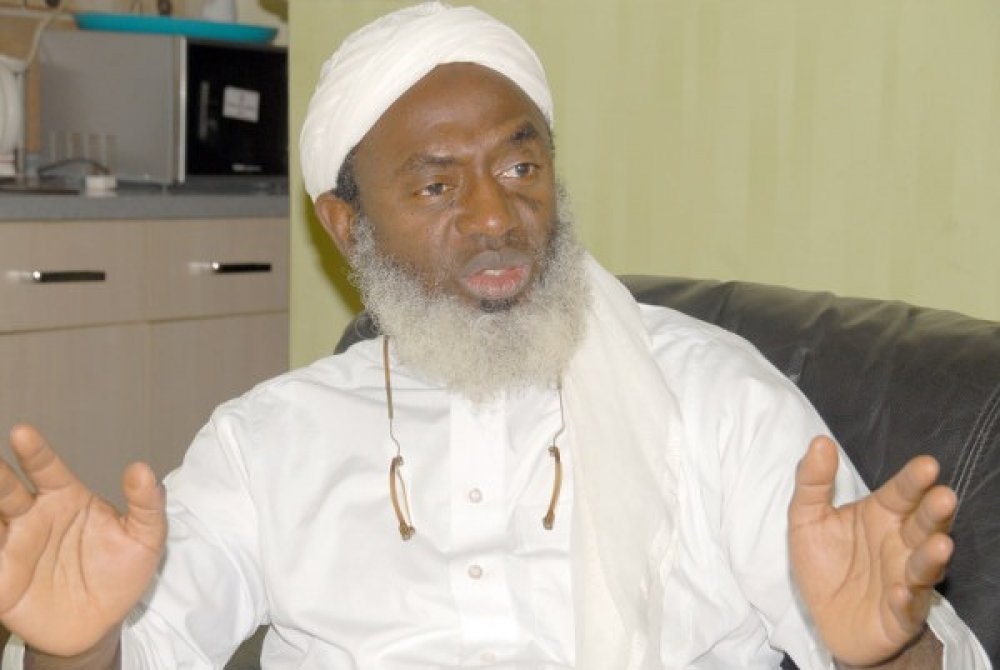
Islamic cleric Sheikh Ahmad Gumi has advised the Nigerian government to rethink its stance on refusing to negotiate with terrorists, saying dialogue may be key to ending the country’s long-running violence.
In a Facebook post on Wednesday, the Kaduna-based cleric argued that Nigeria is being influenced by a “Western slogan” that does not always reflect reality.
He stressed that talks, rather than force alone, could help break the cycle of attacks affecting many parts of the country.
Gumi also warned that weak border control is worsening insecurity, allowing weapons and criminal elements to move freely.
According to him, this has made it more difficult to defeat terrorism and protect citizens.
He pointed to ongoing tensions involving the United States and Iran, saying even powerful nations engage in negotiations despite public positions against it. He urged Nigeria to draw lessons from such situations.
He said: “We should not be misled by the Western slogan, ‘We don’t negotiate with terrorists.’”
Gumi added that violence often leads to more suffering for civilians, as both terrorist attacks and military operations tend to harm innocent people.
He further explained: “As long as Nigeria’s borders remain porous, the cycle of violence will persist.”
The cleric emphasised that understanding the root causes of terrorism is crucial to finding lasting solutions, warning that force alone cannot resolve the crisis.
In his words: “The lesson is clear: lasting solutions require realism, dialogue, and strategic understanding, not just force.”
Gumi suggested that Nigeria may need a neutral mediator to help open dialogue and reduce tensions, similar to efforts seen in other conflict zones.
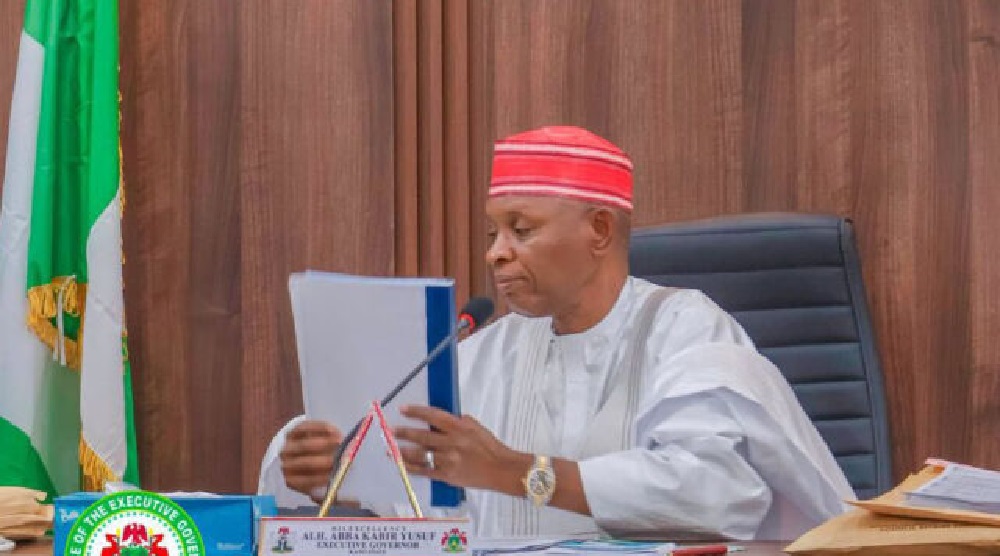
Governor of Kano State, Abba Yusuf, has nominated and forwarded Murtala Garo to the State House of Assembly for screening and confirmation as the new deputy governor of the State.
This is contained in a statement by the Chief Press Secretary to the governor, Mustapha Muhammad, late Tuesday night.
According to the statement: “The nomination is in line with Section 191(3) of the 1999 Constitution (as amended), which empowers the Governor to nominate a Deputy Governor where a vacancy exists.”
Recall that the position of the deputy governor became vacant after the resignation of Abdussalam Gwarzo on March 27, 2026.
“Following wide consultations with key stakeholders, the Governor has requested the Assembly to grant the necessary approval for Garo’s nomination,” the statement added.

Iran Seizes Two Ships attempting to cross Strait of Hormuz

Gumi wants Nigerian government to consider dialogue in tackling terrorism

Kano Gov nominates Garo as deputy



-

 News13 hours ago
How Tinubu Sacked Finance Minister Wale Edun Weeks After Hon. Alex Mascot Exposed ‘Missing’ N1.15tr
-
 News13 hours ago
Yul Edochie Under Attack Over Disparaging Post Against Peter Obi
-

 Health13 hours ago
Cross River reports outbreak of Covid-19, activates response centre
-
 News13 hours ago
Okowa Accuses Ned Nwoko of Misleading Anioma People Over State Creation Proposal
-

 Entertainment13 hours ago
Davido Bags Political Appointment
-

 Foreign13 hours ago
Trump Extends Ceasefire To Give Iran More Time To Negotiate
-
 News13 hours ago
Dangiwa Reacts To His Sack As Minister By Tinubu
-

 Metro13 hours ago
Soldiers Arrest Suspected IPOB Leader Over K!lling Of Delta Police Officer