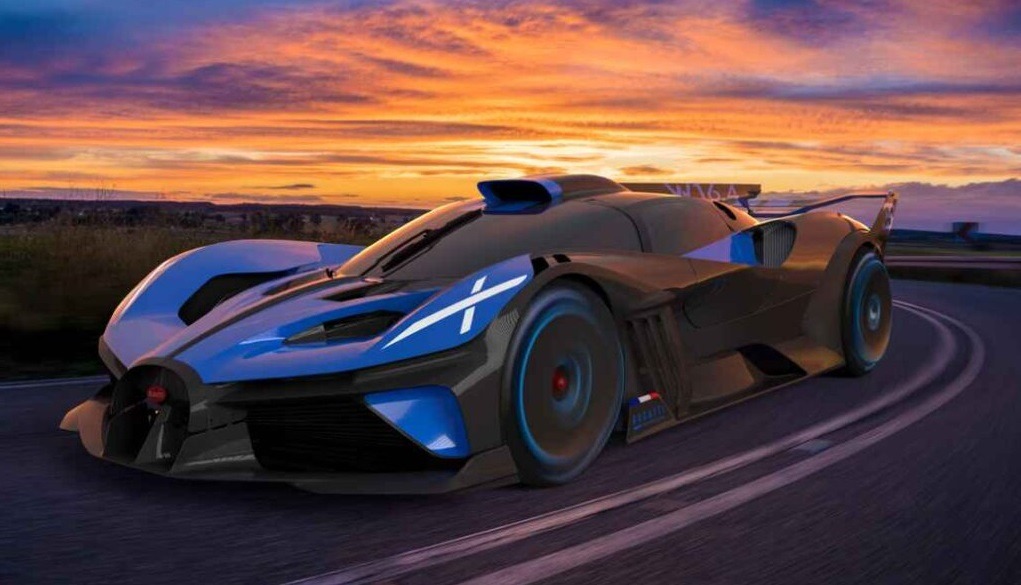
Most of us look for sensible things in a car, such as its speed, reliability, and lower running costs. However, many of us crave speed and performance, and sports cars, in this case, are no exception. So, have you ever wondered which is the fastest car in the world? If yes, then you are at the right place.


We have compiled a list of the top 11 fastest cars in the world, ranked by top speed, which can break the 250 mph barrier and even reach speeds of up to 300 mph. Let’s delve into the blog!
1. BYD Yangwang U9 Xtreme (Fastest Electric Car Tested in 2025) 
The BYD Yangwang U9 Xtreme is a high-performance electric hypercar that recently set a new top-speed benchmark.
Design and Aerodynamics
The car uses active and dynamic aerodynamics, allowing real-time airflow optimization to maintain stability at extreme speeds.
Engine and Performance
It is powered by a quad-motor electric drivetrain producing over 2959 hp, utilizing the DiSus-X intelligent body control system and an advanced carbon-fiber chassis.
Speed
During official track testing, the U9 Xtreme has proven to be one of the fastest cars with highest top speed of 308.4 mph (496.3 km/h).
Production and Price
The car is now being available to the customers with a limited production of 30 units. BYD launched the base Yangwang U9 in China at price of about ¥1.68 million (≈ USD 236,000).
2. Koenigsegg Jesko Absolut
Koenigsegg unveiled the Jesko Absolut in 2020 as the speed-focused variant of the Jesko lineup. The company calls it the fastest car they will ever produce, aiming to push the boundaries of modern hypercar performance.
Design and Aerodynamics
It is a high-speed hypercar with a stunning design and unmatched speed. Its shape and every part are made to reduce drag and increase speed. It has a drag coefficient of 0.278, which makes it one of the most aerodynamic cars ever.
Additionally, Koenigsegg replaced the Jesko Absolut’s rear wings with two rear fins, which enhance high-speed stability and reduce drag force. The car uses carbon fiber materials and an advanced chassis system for its body.
Engine and Performance
Koenisegg Jesko Absolut is powered by a 5.0L twin-turbocharged V8 engine that can produce up to 1600 horsepower when running on E85 biofuel. The engine is paired with a 9-speed light transmission. Its engine rev limit can reach up to 8500 rpm.
Top Speed
Regarding the top speed, it is the fastest car in the world, capable of exceeding 500 km/h (310 mph), due to its lightweight body and reduced drag. However, it is worth noting that Koenigsegg hasn’t officially set a speed record yet, and time will tell if the car achieves this impressive top speed on the track.
Production and Price
The Koenigsegg Jesko Absolut is part of a 125-unit limited production run, shared with the Jesko Attack variant. It is priced around $2.84 million, excluding bespoke options.
3. Bugatti Tourbillon
Design and Aerodynamics
Bugatti Tourbillon is an upcoming mid-engine sports car and is a successor of Chiron. It shares some design elements while keeping alive the Bugatti’s brand lineage. These are horseshoe shaped front grille, central spine, C-shaped side lines, and two-tone color body.
Bugatti teamed up with Divergent
Technologies to make originally shaped 3D-printed suspension components. In addition, Tourbillion’s suspension is 45% lighter than Chiron.
The rear diffuser in the car helps to protect the car in a crash, manages the airflow at high speed, and enhances its stability at high speed.
Engine and Performance
It is powered by an 8.3L V16 engine developed by Cosworth capable of delivering 1000+ hp and runs in conjunction with three electric motors from which 2 of them are located on the front axle and 1 on the rear. The engine is mated with 8-speed dual clutch transmission which is mounted longitudinally on the rear of the vehicle.
If we talk about acceleration and speed, this luxury missile can accelerate from 0-60 mph in just 2.0 seconds and can reach up to a top speed of 277 mph ( 446 km/h). However, it is not confirmed yet in real-world conditions.
Top Speed
A faster version of the Bugatti can be expected in the near future since the company has already achieved over 300 mph with the previous Chiron.
Production and Price
Its production is limited to only 250 units and its price is US $4.1 million rupees.
4. SSC Tuatara
SSC Tuatara is a sports car designed by SSC North America and is a result of design collaboration between Jaston Catriota and SSC.
Design and Aerodynamics
Moving onto the design, the car uses carbon fiber for its body, including a carbon monocoque and carbon fiber wheels.
This sports car has the leading drag coefficient of 0.279 with active aerodynamics. It is due to the presence of rear winglets, side butteresses, a front wing, and an active rear wing that helps to reduce drag, and increase downforce at high speeds.
If we talk about the interior, it features aluminum and leather upholstery. SSC Tuatara includes a center console, and drivers can control all functions through a touchscreen.. Plus, there’s a customizable digital display behind the steering wheel that displays the necessary information about the car along with the speedometer. It has three driving modes i.e., Sport, Track, and Lift. The car’s height is different at the front and at the rear in each mode.
Engine and Performance
It uses a 5.9L twin-turbocharged flat-plane crank V8 engine that produces 1750 hp on E85 fuel and pairs with a 7-speed automated manual transmission.
The Bugatti’s W16 engine is undoubtedly impressive. However, you just can’t beat sometimes the power of a big V8 engine with two turbos bolted on. One such engine can be found in SSC Tuatara that produces horsepower of 1750 hp when it’s running on ethanol. If we talk about its acceleration and speed, it can accelerate from 0-60 mph in 2.5 seconds.
Top Speed
SSC claimed the Tuatara crossed the top speed of 331 mph in October 2021. However, later in 2022, the test showed that a car can hit an actual top speed of 295 mph ( 474 km/h).
Production and Price
The company limits the car’s production to 100 units and sets its price at US $2 million.
5. Hennessey Venom F5
Hennessey Special Vehicles manufactured the American sports car Venom F5 in 2017. The company built its chassis and body from carbon fiber, which enhances performance and stability.
Design and Aerodynamics
Regarding the design, the exterior is simple with minimal sharp lines that control the air flow during high speed driving. The interior is also spacious and comprises carbon-fiber bucket seats that offer relaxing driving experience under extreme acceleration and at high speeds. It has a yoke-shaped bespoke carbon fiber steering wheel which also contributes to its overall aesthetics.
It has a drag coefficient value of 0.39d contributing to its sleek, and aerodynamic body designed for ultra high-speed stability.
Engine and Performance
Moving towards the engine, it has a powerful twin-turbo 6.6L V8 engine 1817 hp ( 1842 PS) and 1193 lb-ft ( 1617 Nm) torque. The engine pairs with a 7-speed single-clutch automated transmission with paddle shifters and a rear-wheel-drive system. It can rev up to 8500 rpm in F5 mode.
If we talk about the acceleration and speed, this car can launch from 0-60 mph in 2.6 seconds.
Top Speed
Venom F5 can go onto a top speed of around 272 mph (437.7 km/h).
Production and Price
Hennessey limited the Venom F5’s production to 24 units and priced it at $1.6 million in the United States. However, the company increased the price to $2.1 million for the remaining 12 models.
6. Rimac Nevera
Another on the list is Rimac Nevera, the fastest car in the world with exceptional speed and unmatchable power. This electric sports car has ultra stiff suspension, engineering, and build quality.
Design and Aerodynamics
If we take a look at its design, it uses active aero elements including a moveable front splitter, rear diffuser, and wing that maintains the car’s speed at high speeds. Its drag coefficient is 0.3 in low drag mode.
Nevera has an advanced interior including minimal gearbox, digital high-resolution displays, and premium material seats.
Engine and Performance
Regarding the specs, an electric motor drives each wheel independently through a single-speed gearbox. The car delivers combined output of 1914 hp and 2340 Nm torque. It uses a 120 kWh lithium manganese nickel battery integrated into the carbon monocoque for reliable weight distribution and rigidity. Rimac’s R-AWTV system offers more grip and sends more power to the wheel when needed. Revera’s WLTP battery range is 489 km based on final testing.
Top Speed
Regarding the speed, the car can accelerate from 0-60 mph in just 1.85 seconds that makes it one the fastest electric cars in the world. The official top speed of Nevera is 258 mph ( 412 km/h).
Production and Price
The company has produced only 150 units, and in 2025 the price will start at $2,200,000 and reach up to $2,500,000.
7. McLaren Speedtail
Speedtail is Mclaren’s fastest hyper GT car that offers ultra aerodynamic efficiency and stability. However, it provides outright straight line speed rather than performing purely on the racing track.
Design and Aerodynamics
Design-wise, this hyper car is all about aerodynamics. It comprises a long teardrop-shaped body, flexible rear ailerons, and no traditional side mirror. These retractable high-definition cameras have replaced these mirrors. This helps reduce drag and improve high-speed stability.
The interior allows you to accommodate three people with the driver seat in center and two passenger seats set slightly back just like the ones in McLaren F1.
Engine and Performance
Moreover, it operates on a hybrid petrol-electric powertrain that combines a 4.0L twin-turbocharged V8 engine with an electric motor. The car delivers a combined power output of 1070 PS (1036 hp) and 1150 Nm torque, and its engine pairs with a 7-speed dual-clutch transmission.
The car can accelerate from 0-60 mph (0-100 km/h) in just 3.0 seconds and 0-200 km/h in just 6.6 seconds.
Top Speed
It’s top speed of 250 mph ( 402 km/h).
Production and Price
McLaren produced a total of 106 Speedtail units, each priced at over $2 million USD.
8. Koenigsegg Regera
The 8th on our list is Koenigsegg Regera, a luxury megacar alternative to the company’s lightweight racing cars. It is the first car in the world with fully automatic body openings. The car has proximity sensors that protects its doors from hitting the nearby objects during opening or closing.
Design and Aerodynamics
Moving towards the design, the interior comprises 8-way adjustable memory foam seats, smart center touch screen, and dual zone climate control. In the exterior, the constellation DRLs provides a view of the night sky with a carbon fiber background that enhances its aesthetic appeal.
Engine and Performance
Koenigsegg manufactured Regera as its first car with a hybrid powertrain. It consists of a twin-turbo aluminum 5.0L V8 engine that delivers the total horsepower 1500+ and over 2000+ Nm torque. Moreover, the car uses an 800-Volt 4.5 kWh flooded liquid-cooled battery pack that weighs 75 kg.
Regarding the transmission, Regera comprises Koenigsegg Direct Drive transmission that does support gear shift mechanism. Instead of this, the engine directly engages with the wheels through a single speed gearbox which in turn helps the car to accelerate faster without an abundant energy loss.
Performance-wise, the Koenigsegg Regera can go from 0-60 mph in just 2.8 seconds.
Top Speed
The car’s top speed is 250 mph ( 402 km/h) just like the McLaren Speedtail.
Production and Price
Koenigsegg planned to build only 80 Regress and all sold out before two years after the unveiling of the Car in Geneva.
9. Aston Martin Valkyrie
Aston Martin Valkyrie is a hybrid sports car having an extremely aerodynamic body with carbon fiber material all around. It weighs around 1030 kg.
Design and Aerodynamics
Regarding the design, the car’s striking aerodynamic elements like rear diffuser, and open underbody maximize downforce and control the overall air flow, especially at high speed driving.
Engine and Performance
Valkyrie comprises a 6.5L naturally aspirated V12 that produces up to 1140 hp. The engine pairs with a 7-speed automated single-clutch transmission for reliable track performance and acceleration.
Acceleration-wise, the car can accelerate from 0-60 mph in just 2.5 seconds .
Top Speed
It has a top speed of 250 mph ( 402 km/h).
Production and Price
Aston Martin produced 150 coupes, 85 spiders, and 40 AMR Pro Models combining to total 275 units. In addition, the company said it had sold all the produced models but had not yet delivered them.
10. Pagani Huayra
Pagani Huayra is a stylish sports car with efficient active aerodynamics that contributes to its reliable performance. The four flaps in the front and rear control the airflow around the car’s body and adjust the downforce at different speeds and driving conditions.
Design and Aerodynamics
Regarding the design, Huayra has aggressive and low front with wide rear consisting of quad exhaust that creates its visually appealing powerful stance. The designer of the Huayra i.e., Horacio Pagani claimed that it has a drag coefficient between .31 and .37.
Engine and Performance
The car consists of Mercedes AMG developed 6.0l V12 engine which offers 730 hp and 1000 Nm torque. The engine in Pagani aims to minimize turbo lag and improve performance. It is paired to a seven-speed sequential gearbox and a single disc clutch. It has Brembo brakes, rotors, and calipers.
In terms of acceleration and top speed, the car can accelerate from 0-60 mph in 2.8 seconds .
Top Speed
It has a top speed of 238 mph (383 km/h).
Production and Price
Only 100 Huayra Coupe cars were made, and they are all sold. There are also special versions like the Huayra BC and Huayra Roadster. The price of Pagani Huayra starts at around $3.4 million USD.
11. Chevrolet Corvette ZR1
Chevrolet Corvette ZR1 is the high-performance version of the Corvette. The upcoming Corvette will include active aerodynamics that reduce drag and maintain the car’s speed.
Design and Aerodynamics
In terms of design, the interior consists of driver-centric cockpit, excellent quality material, and bespoke options. The exterior includes covered underbody, 10-spoke carbon fiber wheels, and split rear window with hatch intakes that improves the cooling and airflow over the engine.
Engine and Performance
It consists of a 5.5L twin-turbo V8 engine that produces 1064 hp horsepower, paired with an e-dual clutch transmission and rear-wheel drive setup.
Moreover, the Chevrolet Corvette ZR1 can accelerate from 0-60 mph in 2.3 seconds.
Top Speed
It has a top speed of 233 mph ( 375 km/h).
Production and Price
Chevrolet Corvette ZR1 for 2025 model year has not been launched yet. However, the starting price of Corvette ZR1 is expected to be $174,996 before options.
Wrap Up
From powerful V8 engines to cutting-edge electric motors, the world of performance cars is more exciting than ever. Whether it’s the raw speed of the Koenigsegg Jesko Absolut or the breakthrough electric performance of the BYD U9 Xtreme, these machines represent the fastest cars with the highest top speed. As technology evolves, these records will keep shattering.