News
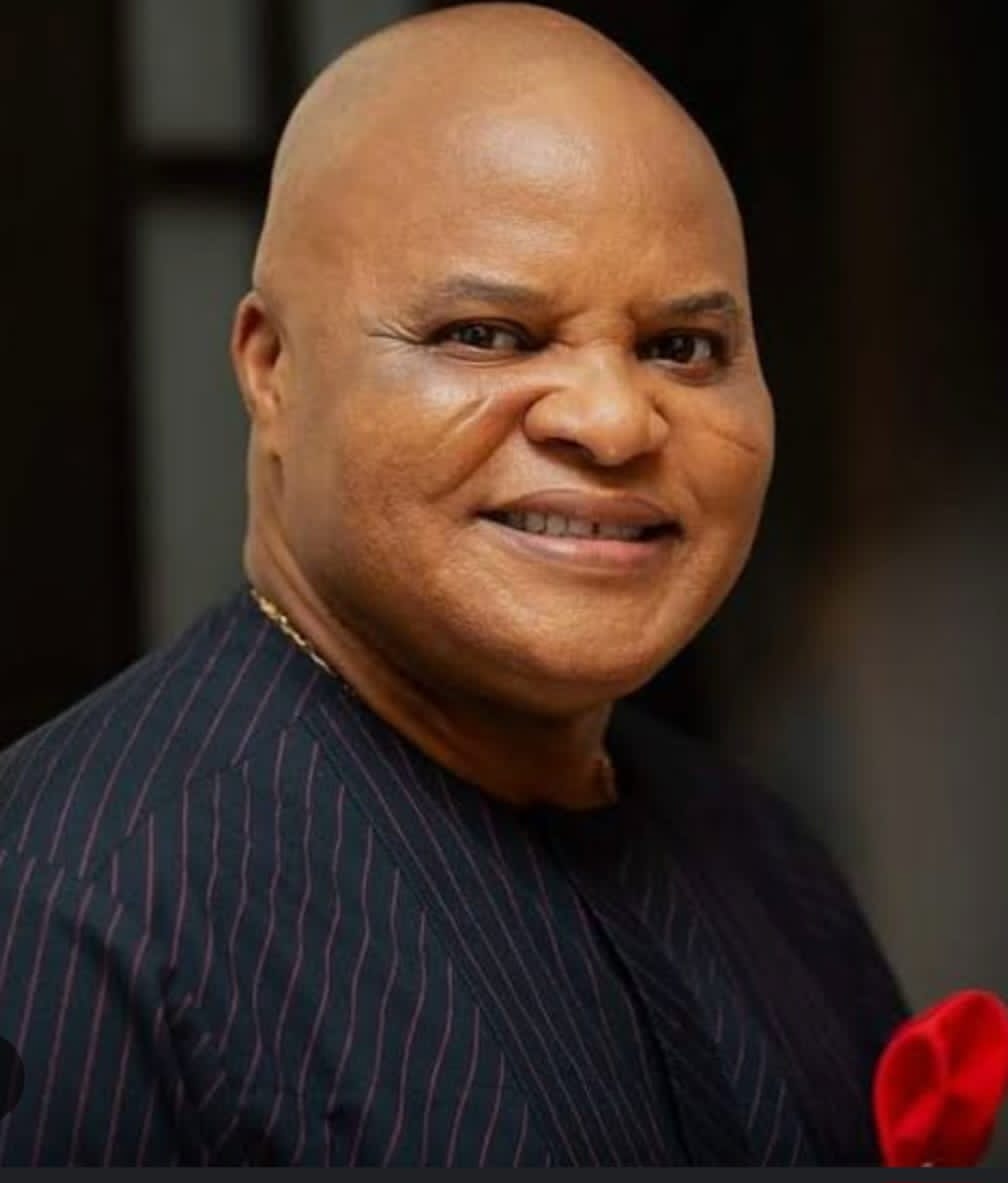
Araraume felicitates President Tinubu, Nigerians on Nigeria’s 65th Independence Anniversary
- /home/naijuinz/public_html/wp-content/plugins/mvp-social-buttons/mvp-social-buttons.php on line 27
https://naijablitznews.com/wp-content/uploads/2025/10/IMG-20251001-WA0012-1000x600.jpg&description=Araraume felicitates President Tinubu, Nigerians on Nigeria’s 65th Independence Anniversary', 'pinterestShare', 'width=750,height=350'); return false;" title="Pin This Post">
- Share
- Tweet /home/naijuinz/public_html/wp-content/plugins/mvp-social-buttons/mvp-social-buttons.php on line 72
https://naijablitznews.com/wp-content/uploads/2025/10/IMG-20251001-WA0012-1000x600.jpg&description=Araraume felicitates President Tinubu, Nigerians on Nigeria’s 65th Independence Anniversary', 'pinterestShare', 'width=750,height=350'); return false;" title="Pin This Post">
A senior chieftain of the All Progressives Congress [APC] in Imo State, Senator Ifeanyi Araraume has described the 65th Independence Anniversary of Nigeria as a milestone that offers a timely opportunity to reflect on Nigeria’s collective journey – one marked by resilience, unity, and significant progress in the ongoing quest to build a stronger, more prosperous society.

Araraume felicitated President Bola Ahmed Tinubu and Nigerians on the joyous occasions, even as he took the opportunity to commend the president for his visionary leadership in driving transformative reforms that are actively reshaping Nigeria’s future.
His goodwill message was contained in a statement he personally issued on Wednesday in Abuja.
The state reads in extenso: “On the joyous occasion of Nigeria’s 65th Independence Anniversary, heartfelt congratulations are extended to President Bola Tinubu GCFR and every citizen across our great nation.
“This milestone offers a timely opportunity to reflect on Nigeria’s collective journey—one marked by resilience, unity, and significant progress in the ongoing quest to build a stronger, more prosperous society.

“President Tinubu’s visionary leadership stands out for ushering in transformative reforms that are actively reshaping Nigeria’s future. Notable highlights of these reforms include:
“● THE RENEWED HOPE AGENDA: A comprehensive plan fostering economic diversification, job creation, and poverty reduction. Initiatives such as the Consumer Credit Corporation are making affordable financing accessible to many, boosting purchasing power, while the Nigerian Youth Investment Fund empowers young entrepreneurs with both capital and essential skills.
“● THE SOLARIZATION PROJECT: Delivering sustainable energy solutions, this initiative deploys solar mini-grids and home systems targeting over 25 million Nigerians, especially in rural communities, thereby improving electricity access and reducing reliance on fossil fuels.
“● FISCAL REFORMS: These measures have significantly reduced the debt service-to-revenue ratio from 97% to below 50%, saving trillions of Naira for vital investments. The removal of fuel subsidies and the unification of exchange rates have redirected resources towards development, stabilising the economy and attracting foreign investment.
“●EDUCATION AND YOUTH DEVELOPMENT: The National Education Loan Fund (NELFUND) has disbursed over ₦10 billion in interest-free loans to support indigent tertiary students. Alongside, the Digital and Creative Enterprises (DICE) initiative is equipping thousands of young people with valuable technology and innovation skills.
“● INFRASTRUCTURE DEVELOPMENT: With the rehabilitation of over 3,000 kilometres of roads, commissioning of new railway lines like Lagos-Ibadan, and upgrades to major airports and seaports, Nigeria’s trade and connectivity are being greatly enhanced.
“● AUTONOMY OF THE MINISTRY OF THE FEDERAL CAPITAL TERRITORY ADMINISTRATION (FCTA): This step has accelerated infrastructure advancements in the Federal Capital Territory, including modernised road networks and urban renewal projects, while creating enhanced career opportunities for civil servants through merit-based promotions and professional development.
“These reforms serve as clear demonstrations of the administration’s unwavering commitment to inclusive growth, sustainable development, and a brighter future for all Nigerians.
“Such bold leadership and steadfast dedication to national progress are truly commendable.
“As Nigeria marks 65 years of independence, all citizens are encouraged to unite in the collective pursuit of nation building. Together, it is possible to overcome every challenge and unlock the limitless potential within this great country.
“Happy Independence Day, Nigeria!”
e-Signed
Senator Ifeanyi Araraume PhD
Senior Chieftain of APC, Imo State
News
Pope Leo appoints two Nigerians to key Vatican roles
Pope Leo has appointed two Nigerians to key positions in the Vatican’s Dicastery for Evangelization.
According to Fides News Agency, the appointments were announced alongside those of three other African Catholic leaders.
Archbishop Alfred Adewale Martins of Lagos was named a member of the Dicastery for Evangelization (Section for First Evangelization and New Particular Churches), one of the Vatican’s principal departments responsible for missionary activities and the establishment of new local Churches.
Also appointed as a consultor of the same Dicastery is Father Wenceslaus C. Madu, C.M.F., Vice-Chancellor of the Claretian University of Nigeria, Nekede.
Other African appointees as members of the Dicastery are Cardinal Fridolin Ambongo Besungu, OFM Cap, Archbishop of Kinshasa in the Democratic Republic of the Congo, and Archbishop Andrew Nkea Fuanya of Bamenda, Cameroon.
Archbishop François Sylla of Conakry, Guinea, was also appointed as a consultor.
The appointments are expected to strengthen African representation in the Vatican’s evangelization mission and governance of new particular Churches.
News
Terrorists Now Recruit, Raise Funds Online, Nigerian Army Warns
The Nigerian Army has warned that terrorist and criminal groups were increasingly exploiting cyberspace to recruit members, raise funds, coordinate attacks and spread propaganda, describing the trend as a growing threat to Nigeria’s national security.
The Chief of Army Staff (COAS), Lt.-Gen. Waidi Shaibu, raised the alarm on Tuesday at the 2026 Nigerian Army Cyber Warfare School Seminar in Abuja.
Represented by the Deputy Chief of Special Services and Programmes, Maj.-Gen. Jeremiah Manjang, the Army Chief said cyberspace has evolved into a strategic battlefield where both state and non-state actors operate with unprecedented speed, making security threats more complex and difficult to counter.
He noted that hostile actors no longer require physical presence to disrupt critical infrastructure, compromise sensitive information, manipulate public opinion or undermine national security through anonymous cyber attacks.
According to him, terrorism, insurgency, banditry, kidnapping, separatist agitations, organised crime, misinformation and disinformation are increasingly being enabled, coordinated and amplified through digital platforms and cyber networks.
“The reality is that terrorist and criminal groups now exploit cyberspace for recruitment, propaganda, fundraising, intelligence gathering, attack coordination and concealment of illicit financial transactions. This demands a proactive and coordinated national response,” he said.
Shaibu said the changing nature of security threats had compelled the Nigerian Army to strengthen its cyber capabilities to effectively address complex, asymmetric and technology-driven challenges.
He called for stronger cyber intelligence capabilities driven by artificial intelligence (AI), machine learning and advanced data analytics to improve early warning systems, threat detection and predictive security analysis.
The COAS also advocated deeper collaboration among government institutions, the military, law enforcement agencies, academia and the private sector, stressing that cybersecurity can no longer be handled by a single institution.
He emphasised the need for sustained investment in indigenous cyber capabilities, research, technological innovation and human capacity development to protect Nigeria’s digital sovereignty and enhance national resilience against emerging threats.
Shaibu further stated that integrating cyber capabilities into conventional military operations would strengthen surveillance, intelligence gathering, geospatial analysis, command-and-control systems, situational awareness and overall operational effectiveness.
Earlier, the Commandant of the Nigerian Army Cyber Warfare School, Brig.-Gen. Jacob Bawa, said the seminar was organised to deepen cybersecurity awareness, strengthen cyber resilience and promote collaboration among security stakeholders.
Bawa noted that Nigeria’s increasing reliance on digital technologies has exposed critical infrastructure, including telecommunications, power systems, financial institutions and government databases, to cybercriminals, terrorists and hostile state actors.
He said the Cyber Warfare School was established as a centre of excellence for cyber warfare training, education and research.
According to him, participants at the seminar would examine cyber resilience, threat intelligence, incident response, cyber warfare and emerging technologies with a view to developing practical recommendations for strengthening Nigeria’s cybersecurity architecture.
Also speaking, cybersecurity expert Abdulhakeem Ajijola warned that national security now depends significantly on the protection of digital systems, noting that artificial intelligence is transforming military operations, command structures and the protection of critical infrastructure.
Ajijola urged Nigeria to develop sovereign cyber capabilities, warning that excessive dependence on foreign-controlled software, platforms and artificial intelligence systems could undermine national resilience, operational continuity and independent decision-making during periods of crisis.
He stressed that while technology should be deployed to strengthen national sovereignty, responsibility for operational decisions must remain with human commanders.
News
Kano, Lagos maintain lead in Continuous Voter Registration
Kano and Lagos states have continued to lead the ongoing Continuous Voter Registration exercise ahead of the 2028 general election, with 118,207 and 78,360 registered voters, respectively.
However, the seven states in the North West and their counterparts in the North Central are leading the zonal distribution of registered voters, with 414,208 and 262,252 registered voters, respectively.
These figures are contained in data released by the Independent National Electoral Commission (INEC) at the end of week seven in the last phase of the registration exercise, which began in August 2026.
The CVR exercise, which is expected to conclude on the 20th of July 2026, is suspended in Ekiti and Osun states due to the off-cycle governorship elections in both states.
Kano and Lagos are closely followed by Taraba with 64,293, Sokoto with 64,019, Jigawa with 57,304, Kaduna with 53,998, Benue with 52,861, Bauchi with 52,603, Ogun with 48,684, and Niger with 48,267 registered voters.
Ondo State has the fewest registered voters, with 8,578; Akwa Ibom, 14,253; Plateau, 16,878; the Federal Capital Territory, 21,826; and Enugu and Borno, 24,225.
Meanwhile, the Commission has charged media practitioners in the country to treat vote buying as a frontline investigative priority ahead of the August 15, 2026 Governorship Election and asked journalists to help document incidents with the specificity needed to trigger prosecution.
National Commissioner and Chairman, Information and Voter Education Committee (IVEC), Mohammed Kudu Haruna, made the call at a One-Day Media Stakeholders’ Forum in Osogbo, Osun State.
Haruna described vote buying as the most alarming development to emerge from the June 20, 2026, Ekiti State Governorship Election, saying political actors and their agents were widely reported to have offered cash to voters at polling units, in some cases through numbered vouchers redeemable outside polling locations to evade detection.
Haruna cited Section 22 of the Electoral Act 2026, which prescribes a fine of not less than five million naira, imprisonment of up to two years, or both, and a ten-year disqualification from contesting public office for persons convicted of vote trading.
He called on editors to allocate dedicated resources to the issue before, during and after Election Day, and on reporters to capture names, locations, amounts and the structure of coordination in their investigations, adding that such reporting would feed directly into an enforcement framework involving the Commission, the Economic and Financial Crimes Commission, the Nigeria Police Force and the State Security Service.
He said the Commission had concluded major pre-election preparations for Osun State, including clearing candidates from fourteen political parties, enrolling 381,817 new voters during the Continuous Voter Registration exercise, and arranging the deployment of the Bimodal Voter Accreditation System (BVAS) and the INEC Result Viewing Portal (IReV) across all 30 local government areas.
He cited the performance of these technologies in Ekiti, where BVAS recorded a 96 per cent functionality rate and IReV achieved a 98 per cent result-upload completion rate, as a benchmark for the Osun exercise.
The National Commissioner also highlighted declining voter turnout nationally, noting that accreditation in the Ekiti election covered fewer than four in every ten registered voters. He urged media organisations to extend their reach to voter mobilisation, alongside continued public enlightenment on the dangers of vote buying and the importance of result verification through IReV.
Osun State Resident Electoral Commissioner, Mrs Oluwatoyin Babalola, described the media as an indispensable partner of the Commission in promoting democratic values through objective reporting and public enlightenment, and called for continued collaboration to deliver a peaceful and credible election.
INEC Director, Voter Education and Publicity, Mrs Victoria Eta-Messi, said the forum was designed to strengthen INEC’s working relationship with media professionals, provide updates on election preparations, and clarify the Commission’s processes under the Electoral Act 2026.
-
News19 hours agoWHO warns of disease crisis in quake-ravaged Venezuela
-
News19 hours agoRelief for Activist, Sowore as court grants him fresh N200m bail
-
News19 hours agoBillionaire wife Shade Okoya breaks silence following cheating allegations
-
News19 hours agoFG secures release of 136 Nigerians from Ethiopian prisons after Justice Ekwo’s judgment
-
News15 hours agoFG inaugurates National Laureate Committee, unveils ₦365m Annual Research Prize for Nigerian Students
-
News19 hours agoArdo Risku: Fear grips Idoma communities as security checkpoints disappear after Fulani leader’s death
-
News18 hours agoFederal High Court Issues New 2026 Pre-Election Practice Directions
-
News15 hours agoPhotos: Etsu Kwali celebrates completed Gomani – Dafa – Yangoji road