
News
Nigeria @65: Time to build, not just celebrate – Idahosa

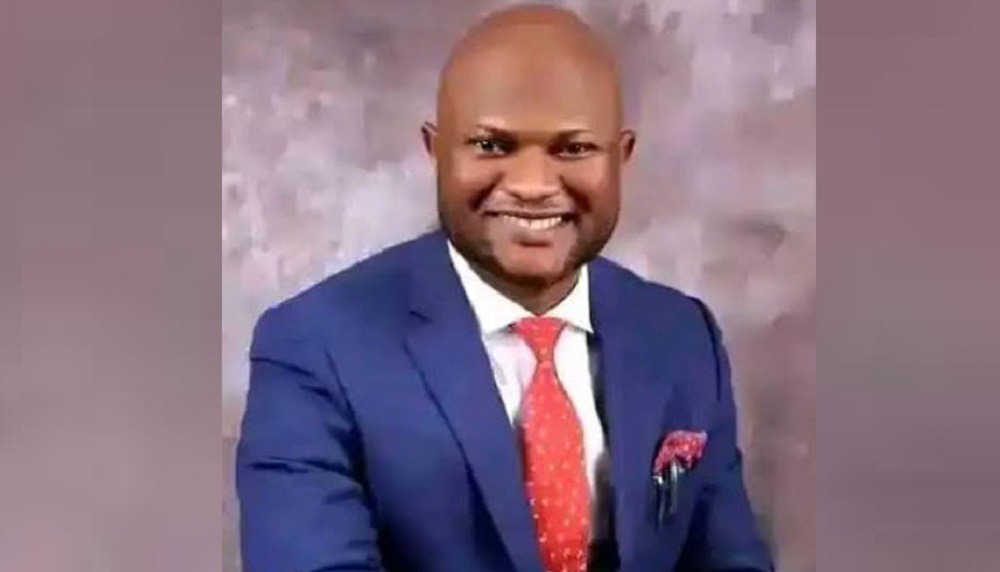


The Deputy Governor of Edo, Mr Dennis Idahosa, has called on Nigerians to view the occasion of the nation’s 65th Independence anniversary, not only as a celebration of freedom but also as a renewed call to duty.
Idahosa, in a statement issued on Tuesday by his Chief Press Secretary, Friday Aghedo, was quoted as saying Oct. 1 was a solemn reminder of the courage, sacrifices, and vision of Nigeria’s founding fathers who laid the groundwork for a united and prosperous nation.
The deputy governor acknowledged the nation’s challenges over the decades but noted that Nigerians had consistently demonstrated resilience, creativity and determination.
He said these qualities must be harnessed to build a stronger and more prosperous country.
“Independence anniversary is not only a celebration of our freedom as a people but also a call to duty.
“It reminds us that the task of building a greater Nigeria lies with every one of us.
“Let us remain committed to peace, justice, and the collective good of our nation,” the deputy governor said.
Idahosa, who congratulated Nigerians on the independence anniversary, commended the people of Edo for their steadfast support for Gov. Monday Okpebholo’s vision of inclusive growth.
He pledged the administration’s continued commitment to improving the quality of life for citizens through people-centered policies and programmes.
While praying for God’s blessings on the country, he urged Nigerians to reflect on the nation’s journey so far and renew their dedication to patriotism, integrity, and selfless service to humanity.
(NAN)


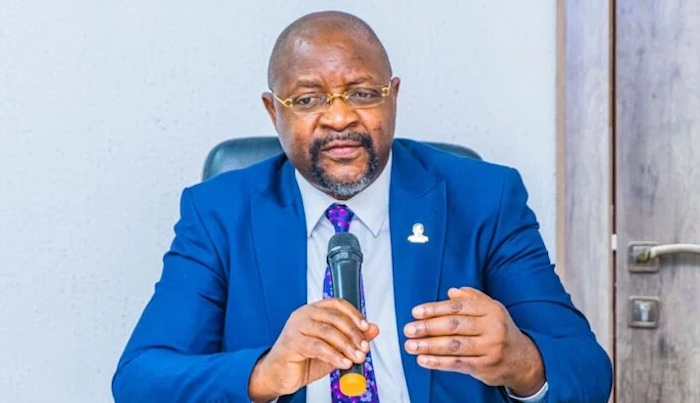
The presidency has said that opposition political parties are standing on a quick sand while President Bola Tinubu is standing solidly on the rock of competence.
Special Adviser to President Tinubu on Media and Public Communication, Sunday Dare, stated this on Sunday in an interview on Arise Television.
The presidential spokesman, who was reacting to the Ibadan declaration by the opposition to field one presidential candidate, described the summit as a collection of recycled politicians.
He said they are people who have been ministers, governors, and political actors for years, stressing that a closer look at their recent performances, whether in executive or legislative roles, there is little evidence of fresh thinking.
According to him, the individuals have nothing new to offer Nigerians.
He said, “They are free to field five, seven presidential candidates. But I said they’re standing on the sinking ground.
“That is the beauty of democracy. You have the opposition, you have individuals, political leaders decide on what they want to do.
“But that does not diminish the fact that there is a government in place that is functional, that has measured outcomes in what it has been doing. It does not take that away.”
The Socio-Economic Rights and Accountability Project (SERAP) and the Nigerian Guild of Editors (NGE) have filed a lawsuit before the Federal High Court in Lagos against the National Broadcasting Commission (NBC) over the alleged arbitrary, unconstitutional, and unlawful ‘Formal Notice’, which threatens to sanction broadcast stations and presenters for allegedly ‘expressing personal opinions as facts, bullying or intimidating guests, or failing to maintain neutrality.’”
The NBC had recently threatened to sanction broadcast stations and presenters who ‘express personal opinions as facts’ or ‘bully and intimidate guests,’ claiming it had ‘identified a sustained increase in breaches of the 6th Edition of the Nigeria Broadcasting Code across news, current affairs, and political programmes.’
In the suit marked FHC/L/CS/854/2026 and filed last Friday before the court, SERAP and NGE are asking the court “to determine whether the various provisions of the Nigeria Broadcasting Code relied upon by the NBC to threaten broadcasters are inconsistent with the Nigerian Constitution 1999 (as amended) and the country’s international human rights obligations.”
SERAP and NGE are asking the court for “a declaration that the provisions of the 6th Edition of the Broadcasting Code used by the NBC are vague and overly broad and constitute a fundamental breach of freedom of expression and media freedom guaranteed by the Nigerian Constitution and international human rights standards.”
SERAP and NGE are also seeking “an order of interim injunction restraining the NBC, its agents or privies, whether jointly or severally or any other authority from imposing sanctions on broadcast stations and presenters based on the patently unlawful provisions of the 6th Edition of the Broadcasting Code, pending the hearing and determination of the motion on notice filed simultaneously in this suit.”
In the suit, SERAP and NGE are arguing that: “Unless the reliefs sought are granted, the NBC will continue to use the provisions of the 6th Edition of the Broadcasting Code to threaten and sanction broadcast stations and presenters solely for carrying out their constitutional responsibilities and exercising their rights.”
SERAP and NGE are also arguing that, “The Nigerian Constitution and international human rights law protect both the absolute right to hold opinions and the qualified right to express ideas of all kinds. Journalistic opinion is protected expression.”
Human rights lawyer, Mr Femi Falana (SAN) would lead a team of senior lawyers to represent SERAP and NGE in the lawsuit.
The originating summons, motion exparte, motion on notice and affidavit of urgency filed in court, reads in part: “Value judgments are not susceptible of proof and enjoy heightened protection. Journalism necessarily includes analysis and commentary.”
“The right to impart ideas necessarily includes opinions, commentary, and analysis. A blanket prohibition on the expression of ‘personal opinions by anchors and presenters’ amounts to an impermissible restriction to this right.”
“Journalists are entitled to express their opinions as a matter of professional standard, including commentary and analytical expression, which lie at the very core of journalistic practice and democratic discourse.”
“The Nigerian Constitution is the supreme law, and any law that is inconsistent with it is null and void. The Nigeria Broadcasting Code, as subsidiary legislation, cannot override constitutional rights or exceed its enabling Act. Provisions that are vague and overly broad unlawfully restrict freedom of expression and must be struck down.”
“Under Article 27 of the Vienna Convention on the Law of Treaties, a State may not invoke the provisions of its internal law as justification for its failure to perform international treaties, including the human rights treaties to which Nigeria is a state party.”
“The Nigeria Broadcasting Code, as subsidiary legislation, is subject to the Nigerian Constitution and cannot override fundamental rights. Its vague and overly broad provisions grant excessive discretion and undermine freedom of expression. Such impermissible restrictions are unconstitutional and should be struck down.”
“The NBC’s claim of a ‘crisis of anchor and presenter professionalism’ as justification for restrictive measures is legally insufficient and cannot be a permissible ground of derogation from freedom of expression. Any limitation on the rights must be reasonably justifiable in a democratic society.”
“The blanket prohibition imposed by Section 1.10.3 of the Nigeria Broadcasting Code, which prohibits presenters from expressing opinions. This amounts to prior restraint that impermissibly excludes commentary, analysis, and value judgments—the core of journalism and democratic discourse.”
“Section 1.10.3 amounts to a form of prior censorship or restraint. Such a blanket restriction fails the legal tests of legality, necessity and proportionality required in a democratic society.”
“The NBC’s reliance on multiple vague provisions of the Broadcasting Code to classify a wide range of presenter conduct as ‘Class B breaches’ attracting sanctions is contrary to the Nigerian Constitution and international human rights law.”
“Section 39 of the Nigerian Constitution, article 9 of the African Charter on Human and Peoples’ Rights and article 19 of the International Covenant on Civil and Political Rights to which Nigeria is a state party guarantee the right to ‘receive and impart ideas and information without interference.’”
“Under the Nigerian Constitution and international human rights law, restrictions must pursue a legitimate aim and be necessary and proportionate. The NBC’s reliance on an undefined and subjective standard of ‘professionalism’ introduces vagueness and opens the door to arbitrary enforcement.”
“While the prohibition of misuse of broadcast platforms by political actors is a legitimate concern, it does not justify sweeping or repressive regulatory measures that infringe on fundamental human rights.”
“Addressing any alleged misuse must be grounded in lawful, precise, necessary, and proportionate responses that respect freedom of expression and editorial independence.”
“Ahead of the 2027 general elections, the NBC’s Formal Notice undermines Nigerians’ democratic rights to receive diverse information, hear competing political viewpoints, and engage in open debate.”
“Rather than curbing misuse, such measures risk entrenching self-censorship, limiting scrutiny of political actors, and weakening the media’s essential role in ensuring transparent, accountable, and credible elections.”
“While certain aims such as preventing harassment or ensuring fairness in broadcasting may be legitimate, the provisions as invoked by the NBC are vague, overbroad, and susceptible to arbitrary interpretation.”
“The threat of sanctions for broadly defined conduct creates a chilling effect on journalists and broadcasters, thereby undermining constitutional guarantees and international human rights standards.”
“The provisions of the Broadcasting Code are not formulated with sufficient precision to enable individuals regulate their conduct. The imposition of administrative sanctions without adequate procedural safeguards raises fair hearing concerns.”
“The NBC’s enforcement posture transforms regulatory oversight into a regime of indirect censorship. While the regulation of misinformation may constitute a legitimate aim, the prohibition on presenters expressing ‘personal opinion as fact’ is framed in vague and overly broad terms that fail the requirement of legal certainty.”
“The absence of clear definitions distinguishing fact from opinion renders the provision prone to arbitrary application, thereby creating a chilling effect on legitimate journalistic expression and debate.”
“Although the prevention of harassment in broadcasting is a legitimate regulatory objective, the provisions of the NBC’s notice prohibiting ‘bullying or intimidation’ lack clear and objective criteria, and fail the requirement of precision and foreseeability.”
“The undefined scope of ‘bullying’ or ‘intimidation’ risks capturing critical or adversarial questioning, which is an essential feature of investigative journalism and democratic discourse.”
“The notice would also seriously undermine the media’s constitutional role as a public watchdog because any regulation that discourages rigorous questioning undermines this function.”
“The requirement that broadcasters must always provide ‘fair hearing to opposing views, while ostensibly grounded in principles of balance, imposes an impermissible form of compelled speech and editorial control.”
“Apart from explicitly undermining editorial independence, such a requirement also suppresses legitimate expression, and disregards the autonomy of journalists and media houses. The requirement may also unduly burden or distort programming, particularly in formats such as commentary or opinion-based shows.”
“The classification of the alleged conduct as a ‘Class B breach’ attracting sanctions, including fines or suspension, constitutes a disproportionate interference with freedom of expression and raises serious due process and fair hearing concerns.”
“The Nigerian Constitution and international human rights law provide that individuals and entities are entitled to fair hearing before the imposition of penalties. Similarly, sanctions affecting expression must be strictly necessary and proportionate.”
“The imposition of punitive measures based on vague and broadly defined infractions creates a chilling effect on broadcasters, discouraging legitimate journalistic activity and undermining democratic discourse. Such a regime of sanctions also amounts to indirect or prior censorship.”
SERAP and NGE are therefore asking the court for the following reliefs:
1. A DECLARATION that Sections 1.10.3, 3.3.1(b), 3.4.1(b), 5.3.3(b), 3.1.1, 3.11.1(a), 5.4.1(f), 3.11.1(b), and 5.5.1(b) of the 6th Edition of the Nigeria Broadcasting Code, by reason of their vagueness and imprecision, constitute a breach of the rights to freedom of expression and opinion and access to information as guaranteed by the Nigerian Constitution and the country’s international human rights obligations.
2. A DECLARATION that Sections 1.10.3, 3.3.1(b), 3.4.1(b), 5.3.3(b), 3.1.1, 3.11.1(a), 5.4.1(f), 3.11.1(b), and 5.5.1(b) of the 6th Edition of the Nigeria Broadcasting Code are overbroad, vague and fail to provide citizens and broadcasting stations with sufficient notice of what constitutes a breach, and are consequently unlawful, unconstitutional, null and void.
3. AN ORDER of the Court nullifying and setting aside Sections 1.10.3, 3.3.1(b), 3.4.1(b), 5.3.3(b), 3.1.1, 3.11.1(a), 5.4.1(f), 3.11.1(b), and 5.5.1(b) of the 6th Edition of the Nigeria Broadcasting Code for being inconsistent with, and amounting to a fundamental breach of the rights to freedom of expression and opinion, and access to information as guaranteed under the Nigerian Constitution, the African Charter on Human and Peoples’ Rights and the International Covenant on Civil and Political Rights.
4. AN ORDER OF PERPETUAL INJUNCTION restraining the NBC, whether jointly or severally or any other authority, person or group of persons from enforcing, imposing sanctions, or levying fines on broadcast stations and presenters based on the provisions of Sections 1.10.3, 3.3.1(b), 3.4.1(b), 5.3.3(b), 3.1.1, 3.11.1(a), 5.4.1(f), 3.11.1(b), and 5.5.1(b) of the 6th Edition of the Nigeria Broadcasting Code.
No date has been fixed for the hearing of the interim application and the substantive suit.
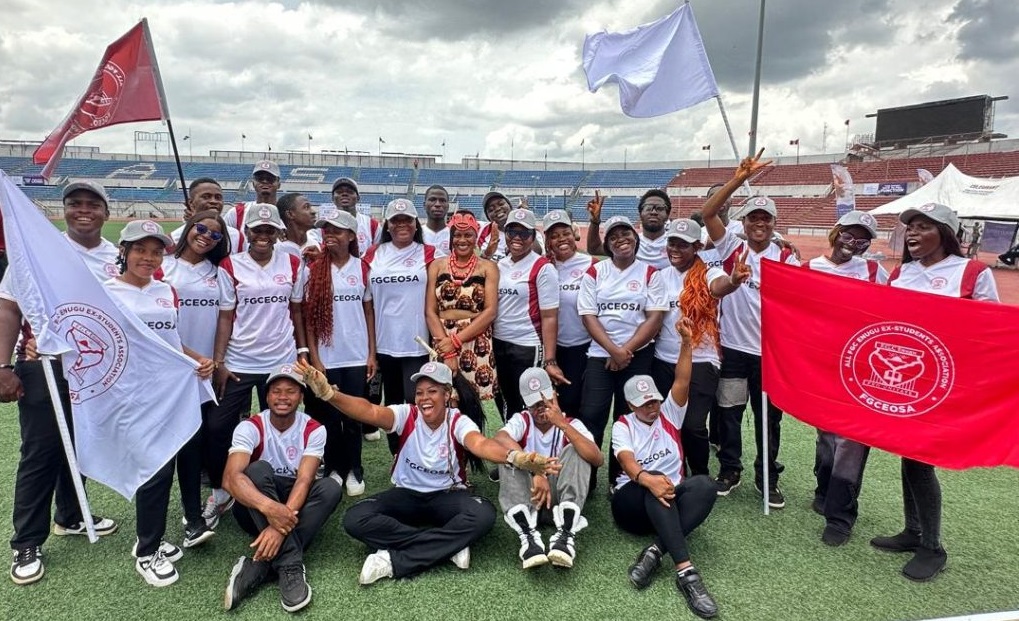
The 2026 National Sports Fiesta of the Unity Schools Old Students Association, USOSA, has ended in Enugu, with the Federal Government College, FGC, Enugu emerging champions.
It topped the table with eight gold, three silver and two bronze medals.
FGC Ikot Ekpene Old Students Association finished in second place with seven gold, seven silver, and three bronze medals.
The keenly contested sports fiesta that featured 30 Unity Schools from across the country.
The week-long sports festival, which was held at the Nnamdi Azikiwe Stadium, Enugu, brought together alumni from federal unity colleges nationwide.
Events featured at the fiesta included football, tug of war, march-past, swimming, lawn tennis, table tennis, snooker, ludo, draughts, badminton, volleyball, basketball, golf, among others.
FGC Ikot Ekpene, one of the strong contenders, battled alongside 29 other schools in its bid to retain the trophy but ultimately settled for second place as FGC Enugu dominated the medals table.
Speaking after the tournament, the President-General of USOSA, Michael Magaji, said the fiesta goes beyond competition, describing sports as a vital tool for national unity and development.
“We are fully aware of the power of sports as a unifying force—one that brings people together and fosters prosperity. This event in Enugu provides us with yet another platform to strengthen our bonds, celebrate our diversity, and demonstrate that we are models of responsible citizenship,” he said.
Magaji noted that while the association remains committed to advancing public education, sports serve as an additional platform to deepen relationships and promote nation-building.
“Through this initiative, we aim to build bridges across the country and reinforce relationships that, in many cases, span 30, 40, or even 50 years,” he added.
He emphasised that USOSA’s interventions are voluntary and aimed at giving back to society, particularly the public education system that shaped its members.
According to him, the association is working to restore the high standards once associated with unity schools.
“These were once centres of excellence, and while standards may have declined over time, our goal is to restore and even surpass those standards, one school at a time,” he said.

“I Prefer Pets To Children” — BBNaija Star Phyna Replies Critics Over Decision To Be Childless

Ibadan declaration: Opposition standing on quick sand– Presidency

NDC woos Obi, Kwankwaso with presidential ticket



-

 News23 hours ago
Trump, wife escape as gunman opens fire during dinner with press men
-

 News23 hours ago
Trump boasts says, shooting won’t stop him from Iran war
-
 News23 hours ago
APC to Makinde: “Your ‘operation wetie’ remark at Ibadan opposition summit is reckless and inciting”
-

 Opinion23 hours ago
TINUBU’S DANGEROUS OVERREACH: A STARK WARNING AGAINST INTIMIDATING THE LEGISLATURE, JUDICIARY, AND THE NIGERIAN PEOPLE
-

 News15 hours ago
NAF airstrikes destroy terrorists camps in North East
-

 Foreign5 hours ago
White House Shooting Suspect Admits He Planned To ‘Shoot Trump Officials’
-

 News18 hours ago
SAD! Malian defence minister k!lled in coordinated attacks
-

 News15 hours ago
JAMB distances self from ‘fake’ 394 UTME result slip in circulation