
News
Professional certification: Nigeria’s giant leap in public procurement reform



By Sufuyan Ojeifo
The National Procurement Certification Programme (NPCP), a flagship initiative of Nigeria’s Bureau of Public Procurement (BPP), is redefining how the nation manages public resources.
Anchored in the World Bank-funded Sustainable Procurement, Environmental, and Social Standards Enhancement (SPESSE) programme, the initiative prioritises transparency, efficiency and good governance. By making professional certification compulsory for procurement officers, the NPCP ensures that only qualified professionals handle Nigeria’s vast procurement responsibilities, tackling inefficiencies, inflated contracts and public distrust.
To be clear, the NPCP, as part of SPESSE, represents more than a technical fix. It is a bold attempt to professionalise an ecosystem that has long struggled with weak capacity and inconsistent standards. SPESSE itself is backed by an 80-million-dollar World Bank grant [being the first tranche and an additional $65m recently approved] and designed to align procurement practice with global benchmarks for sustainability, environmental responsibility and social accountability. Six centres of excellence in Nigerian universities now form the backbone of this reform, providing training for a pipeline of skilled professionals. The NPCP acts as the gatekeeper by validating candidates’ mastery of procurement laws, ethics, and best practices under the Public Procurement Act of 2007.
This initiative is not merely a symbolic exercise but a decisive shift towards professionalism in public service. Nigeria’s procurement spending accounts for almost a third of the national budget, estimated at more than 30 billion dollars annually. That scale makes procurement a make-or-break determinant of national development. When roads fail before completion or hospitals are left unequipped despite heavy investment, the roots of the problem are almost always found in weak procurement oversight. The NPCP, combined with SPESSE’s training, provides the corrective mechanism.
Recently, 250 participants attended a virtual orientation session organised by the NPCP team. The Certification Support Unit Coordinator, Mr. Babatunde Oladele, outlined the objectives of the professional certification process. The BPP Director-General, Dr. Adebowale Adedokun, delivered a clear message that professional certification was no longer optional but compulsory for all procurement officers, in line with broad institutional reforms. He stated that procurement officers would undergo Nigeria Procurement training modules covering Nigeria procurement laws, Category Management, ethical standards, environmental considerations, and global best practices. These modules, developed under SPESSE, are designed not only to strengthen technical competence but also to embed sustainability and social safeguards into daily procurement practices.
Participants were guided step by step on the Safe Exam Browser that would be used for the professional certification exam. The orientation included illustrated instructions on downloading and launching the browser and laid out clear rules for the process.
A lively question-and-answer session allowed participants to clarify doubts, reinforcing confidence that the process would be both transparent and fair. The SPESSE programme’s investment in digital accessibility was evident, ensuring that candidates from across Nigeria could participate without the logistical burden of travel, a mark of inclusion and scalability.
The first set of the professional certification examination was held three days later. Out of 330 qualified candidates, 325 took part in the virtual session, which ran from 10.00 am to 1.00 pm. The test was rigorous, drawing 60 questions at random from a pool of 150, with each candidate receiving a different mix. They had 75 minutes to complete their answers. Stringent security was in place, with webcams required to be active throughout and automatic logout for anyone who lost connection.
These measures might have been tough, but they underlined the seriousness of the process and the credibility of the results, which are under review.
The implications for Nigeria’s procurement ecosystem are significant. The Office of the Head of Civil Service has approved the creation of a procurement cadre, linking promotions directly to professional certification. This marks a historic change in career progression and creates strong incentives for officers to embrace the NPCP.
For now, SPESSE subsidies make participation free of charge, but with the World Bank already signalling that this will not last forever, officers are being urged to take the opportunity while it remains accessible. A future where professional certification incurs fees could exclude those who delay; so urgency is both rational and necessary.
The stakes are high. The BPP audit of 2024 showed that 63 per cent of federal contracts missed their deadlines. The Nigeria Extractive Industries Transparency Initiative estimated that 4.1 trillion naira was lost to inflated contracts between 2020 and 2024.
These are not abstract numbers. They translate into abandoned infrastructure, underfunded schools, ill-equipped hospitals, and frustrated citizens. The costly redesign of the Abuja–Lokoja Highway, which added 217 billion naira to the project due to weak contract supervision, is only one example of why reform is urgent.
By linking training at university centres of excellence with a rigorous, technology-driven professional certification process, the SPESSE programme offers a dual strategy to address these failures. Officers are being prepared not only to meet technical requirements but also to uphold ethical and sustainable standards.
Embedding environmental and social considerations in procurement training places Nigeria within global currents, such as climate-conscious contracting and equitable resource allocation. In practice, this means procurement officers will be trained to consider carbon footprints when evaluating contractors or to ensure that local communities are not disadvantaged by large infrastructure projects.
For a better contextual understanding, it should be noted that Nigeria’s ambitions draw inspiration from countries like Rwanda and Morocco, where more than 90 per cent of procurement officers are certified, and e-procurement adoption exceeds 80 per cent. Vietnam has also emerged as a leader in embedding sustainability into procurement. By introducing a digital, randomised, and secure professional certification process, Nigeria is signalling that it is ready to join this group of reformers and, in time, set the pace on the continent.
Challenges remain, and it is important not to ignore them. Unstable internet access, particularly in rural areas, can limit equitable participation. Technical support must be strengthened to deal with glitches such as sudden webcam disconnections. Some candidates have already expressed concerns that security measures, while necessary, may disadvantage those with weaker connectivity.
The SPESSE programme’s resources, including its partnerships with universities and international experts, provide a platform to tackle these hurdles. Sustaining political will and scaling infrastructure will be essential if the early momentum is not to be lost.
For the avoidance of doubt, the NPCP is not simply a bureaucratic innovation. It is a milestone in Nigeria’s governance journey, one that combines political will, World Bank support, and the leadership of the BPP.
The message is already clear. Procurement can no longer be left to outdated practices or informal arrangements. It must be anchored in professionalism, transparency, and competence.
The NPCP, powered by the SPESSE programme, is a statement of intent. It signals that Nigeria is serious about ensuring every naira spent delivers value and builds public trust. If sustained, it will not just reform procurement but revolutionise it, laying the foundation for a governance system that truly serves citizens and stands comparison with the best in the world.
● Sufuyan Ojeifo is a journalist and editor-in-chief of THE CONCLAVE online newspaper.


By Gloria Ikibah
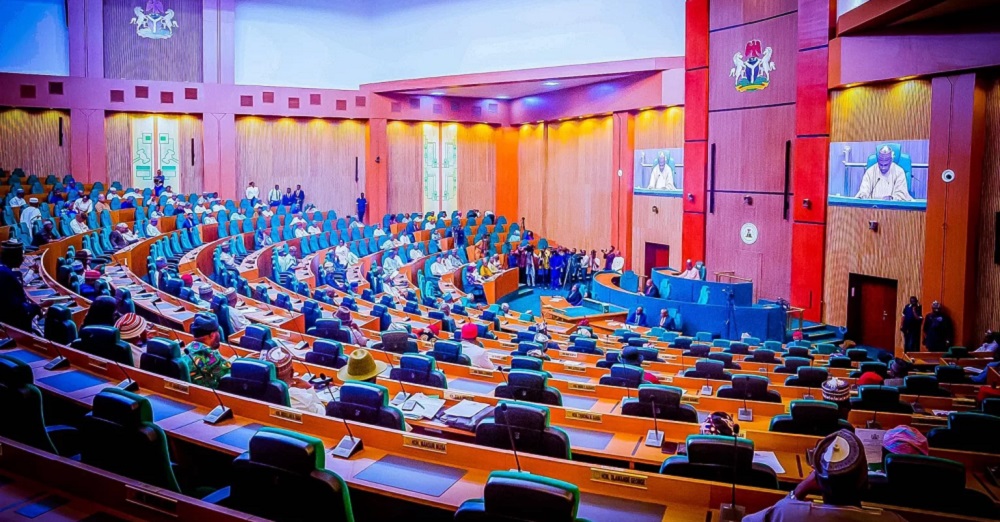
The House of Representatives has given the green light to President Bola Ahmed Tinubu’s request to secure more than $516 million in external financing, paving the way for a major infrastructure push under the current administration.
The approval was granted during Tuesday’s plenary in Abuja following the consideration of a report presented by Abdullahi Rasheed, deputy chairman of the House Committee on Aids, Loans and Debt Management.
The funding, arranged through a syndicated facility led by Deutsche Bank AG, is earmarked for the development of key sections of the ambitious Sokoto–Badagry Super Highway project.
The proposed financing will specifically support sections 1, 1A and 1B of the road, covering roughly 120 kilometres in the first phase of construction. The request was submitted to the National Assembly in line with statutory provisions governing public borrowing.
The highway scheme, a centrepiece of the administration’s economic agenda, is designed to improve connectivity across several states and streamline the movement of goods along critical trade routes. Stretching an estimated 1,000 kilometres, the corridor is expected to link Sokoto, Kebbi, Niger, Kwara, Oyo, Ogun and Lagos, connecting Illela in the north to Badagry on the Atlantic coast.
As part of the financing structure, the loan is backed by a partial risk guarantee from the Islamic Corporation for the Insurance of Investment and Export Credit, providing an additional layer of assurance for lenders.
The Federal Government is also expected to commit substantial counterpart funding exceeding ₦265 billion to cover land acquisition, compensation and associated infrastructure costs.
The borrowing arrangement is structured over a nine-year period, including a three-year grace window, with interest tied to the Chicago Mercantile Exchange SOFR benchmark plus a margin of 5.3 per cent annually.
The Federal Executive Council had earlier endorsed the financing plan, clearing the path for legislative approval and the next phase of implementation.
By Gloria Ikibah
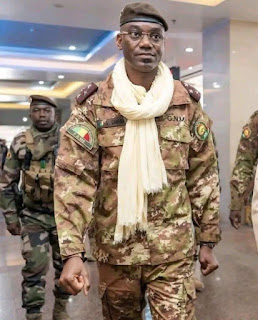
Nigeria has condemned the killing of Mali’s Defence Minister, Lieutenant General Sadio Camara, describing the attack as a tragic blow to regional stability and a stark reminder of the growing threat of terrorism across West Africa.
In a statement issued from Abuja, by Spokesperson of the Ministry of Foreign Affairs, Kimiebi Ebienfa, the expressed outrage over the minister’s death following terrorist attacks on 25 April 2025, while extending condolences to the government and people of Mali.
“The Federal Government of Nigeria condemns in strong terms the tragic killing of the Minister of Defence and Veteran Affairs of the Republic of Mali, Lieutenant General Sadio Camara, following the terrorist attacks of 25 April 2025,” the statement read in part.
Nigeria described the loss as particularly painful given the timing, noting that Mali is navigating a delicate period in its national history.
“Nigeria expresses its deepest sympathies to the bereaved family, the Malian Armed Forces, and the Government and people of Mali for this grievous loss at a critical moment in the nation’s history.
“In times such as these, when the fragility of human life is laid bare by violence, the bonds that unite nations are felt most deeply,” the statement continued.
Reaffirming its solidarity, the Nigerian government emphasised shared regional ties and resilience in the face of adversity.
The government also used the moment to condemn a broader wave of violence, pointing to recent attacks across Mali that have resulted in significant casualties and destruction.
“Nigeria stands in solidarity with Mali and reaffirms the enduring ties of brotherhood, shared destiny, and collective resilience that define the African spirit.
“The Federal Government of Nigeria condemns the cowardly acts perpetrated by terrorist groups in different parts of the country in recent days which have resulted in the loss of lives and properties.
“Such acts not only threaten national stability but also undermine the shared values of peace, dignity, and coexistence upon which our societies are built,” the statement said.
Calling for a united response, Nigeria stressed the need for sustained cooperation among nations to tackle extremism.
Nigeria further reiterated its backing for Mali’s efforts to restore stability and defend its sovereignty, pledging continued collaboration within regional and international frameworks.
“Terrorism, in all its forms and manifestations, remains a common adversary that demands unified resolve, sustained cooperation and reaffirmation of our shared humanity to tackle.
“Nigeria reiterates its support to the Republic of Mali in its efforts to safeguard its sovereignty, preserve its territorial integrity, and restore lasting peace and security,” it said.
“Nigeria remains committed to working with Mali and other partners within regional and international frameworks to confront the scourge of terrorism and to promote stability across the Sahel and the wider West African sub-region”, the statement added.
As the region grapples with persistent insecurity, Nigeria urged stronger global solidarity, stressing that peace in one nation is closely tied to peace in another.
“At this moment of mourning, Nigeria renews its call for strengthened solidarity among nations, guided by the principles of mutual respect, collective security, and the recognition that the peace of one is inseparable from the peace of all”, the statement further read.
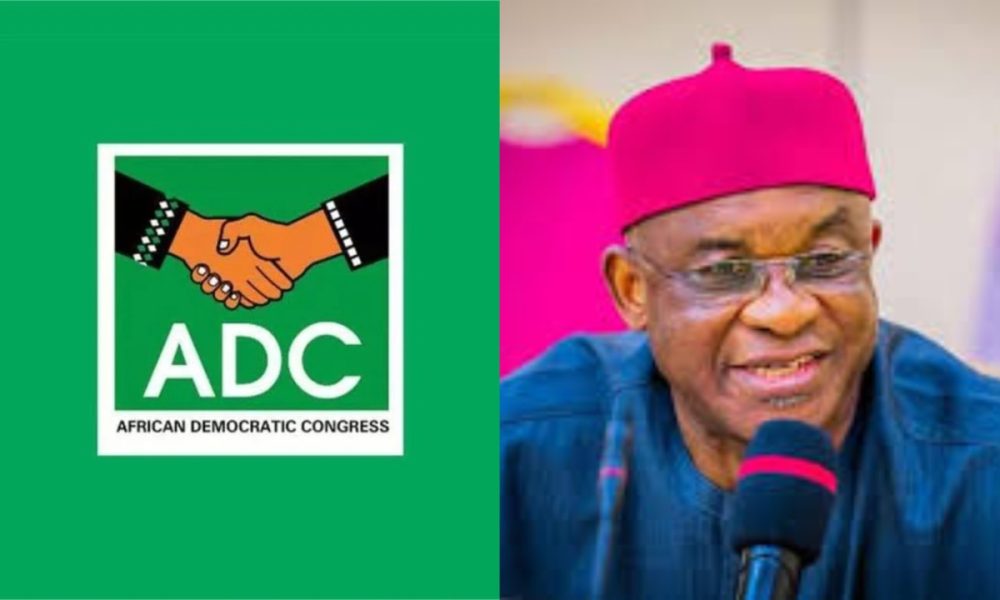
The African Democratic Congress (ADC) led by David Mark has written to the Chief Justice of Nigeria, Olukayode Ariwoola, seeking an urgent hearing and judgement from the Supreme Court over the lingering leadership crisis in the party.
In a letter dated April 28, the group urged the CJN to intervene by constituting a panel of the Supreme Court of Nigeria to hear and determine the dispute without further delay.
The group expressed concern that the prolonged legal battle over the party’s leadership has continued to create uncertainty within its ranks, affecting its activities and preparations ahead of future political engagements.
The letter said the matter requires urgent judicial attention in the interest of justice and internal party stability.
“The continued delay in resolving this dispute is detrimental to the party and its members nationwide,” the faction stated.
They further appealed to the CJN to use his constitutional powers to ensure that the case is expedited at the apex court.
The leadership tussle within the ADC has been the subject of multiple legal proceedings, with opposing factions laying claim to the party’s structure and control.

Reps Clear $516m Foreign Loan for Flagship Highway Project

Nigeria Denounces ‘Cowardly’ Killing of Mali Defence Chief, Urges United Front Against Terror

Mark’s ADC writes CJN, wants urgent Supreme Court judgement




-

 News19 hours ago
Xenophobia: Two Nigerians K!lled in South Africa
-
 Entertainment19 hours ago
Veteran Nollywood Actor Dies In His Sleep
-

 News19 hours ago
Sowore mocks Malami at court, says ‘ You see how it feels now to be persecuted’
-
 News14 hours ago
EXPOSED! Senator Kingibe Allegedly Collected $65,000 For A Contract That Never Existed, Dragged To ICPC As Bizman Insists She Used Her Office To Defraud Him
-
 News14 hours ago
Sanwo-Olu’s resignation on health grounds story is false- Lagos govt
-

 Politics19 hours ago
Ekiti 2026: Oyebanji’s Re-Election Already Won, Says APC Chairman, Yilwatda, Governors
-

 News14 hours ago
US Considering Latest Iranian Proposal
-

 Politics19 hours ago
Senator Natasha Declares Second Term Bid, Set To Battle Ex-Governor Yahaya Bello In Kogi Central