News
FORMAL REQUEST FOR CLARIFICATION ON THE SCREENING PROCESSES OF MINISTERIAL APPOINTEES AND THE RECENT CERTIFICATE FORGERY SCANDAL
- /home/naijuinz/public_html/wp-content/plugins/mvp-social-buttons/mvp-social-buttons.php on line 27
https://naijablitznews.com/wp-content/uploads/2025/10/Andy-Osiebe.jpeg&description=FORMAL REQUEST FOR CLARIFICATION ON THE SCREENING PROCESSES OF MINISTERIAL APPOINTEES AND THE RECENT CERTIFICATE FORGERY SCANDAL', 'pinterestShare', 'width=750,height=350'); return false;" title="Pin This Post">
- Share
- Tweet /home/naijuinz/public_html/wp-content/plugins/mvp-social-buttons/mvp-social-buttons.php on line 72
https://naijablitznews.com/wp-content/uploads/2025/10/Andy-Osiebe.jpeg&description=FORMAL REQUEST FOR CLARIFICATION ON THE SCREENING PROCESSES OF MINISTERIAL APPOINTEES AND THE RECENT CERTIFICATE FORGERY SCANDAL', 'pinterestShare', 'width=750,height=350'); return false;" title="Pin This Post">
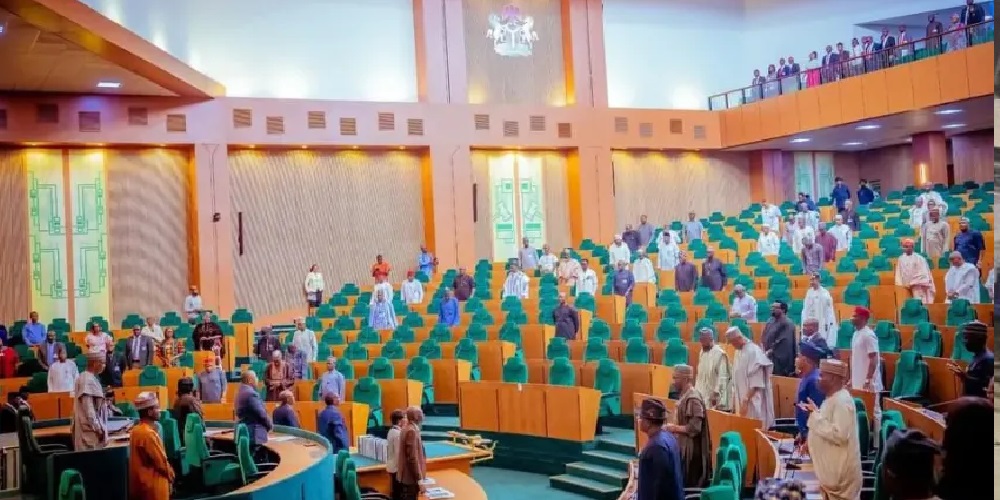
The HallowMace Foundation Africa, a non-governmental organization dedicated to promoting accountability, good governance, and transparency in public service, writes to express profound concern regarding the recent resignation of Hon. Geoffrey Uche Nnaji as Minister of Innovation, Science and Technology over allegations of certificate forgery. This development has raised serious questions about the effectiveness of the screening processes conducted by the National Assembly and the Directorate of State Security Services (DSS).

1.1 Specifically, we seek clarification on why these reputable institutions failed to detect the alleged forgery before his confirmation and assumption of office. If the National Assembly and DSS, with their extensive resources and mandate, could not authenticate a certificate from a Nigerian institution, what confidence can citizens have in their ability to vet appointees for critical national positions?
*1.0 Evidence Of Screening Failures And Institutional Lapses*
The sequence of events in Minister Nnaji’s case reveals catastrophic failures in the verification systems designed to prevent such occurrences:

*Timeline Of Screening Failures In The Uche Nnaji Case*
*Date: July 2023*
*Event:* Initial allegations emerged regarding Nnaji’s credentials
*Screening Implications:* Early warnings were apparently ignored during preliminary screening
*Date: August 2023*
*Event:* Nnaji presented credentials to Senate during screening
*Secrening Implications:*
Senate failed to identify inconsistencies in documents
*Date: May 2025*
*Event:* UNN officially disowned Nnaji’s certificate
*Secrening Implications:* Revelation came nearly two years after Senate confirmation
*Date:* October 2025
*Event:* Internal UNN records showed Nnaji failed a virology course
*Secrening Implications:* Basic verification with the university would have uncovered this
1.2 The failure becomes even more alarming when considering that the university in question University of Nigeria, Nsukka (UNN), is within Nigeria and should have been easily accessible for verification .
According to the timeline of events, UNN had clearly stated in May 2025 that they had no record of issuing a degree certificate to Nnaji in 1985, and this position was reaffirmed in October 2025 . Why wasn’t this basic verification conducted during the screening process in 2023?
*2.0 The Fundamental Neglect Of Local Institutional Verification*
2.1 Nigeria has established procedures for document authentication through the Federal Ministry of Education and Ministry of Foreign Affairs . The Ministry of Education has direct channels to contact educational institutions for verification purposes, making the failure to utilize these systems inexplicable. The fact that media investigators could obtain definitive information from UNN while our premier security agency and legislative screening committee could not suggests either institutional incompetence or wilful negligence.
2.2 This incident reflects a broader pattern of deficient screening processes for ministerial and other high-level appointments. Analysis of previous ministerial screenings reveals systemic problems, including the absence of portfolio-specific assessments and the controversial “bow and go” practice that exempts former legislators from rigorous questioning . When the Senate screens nominees without knowing their intended portfolios, how can they possibly assess their specific competencies and qualifications?
*3.0 The Damaging Impact On Nigeria’s Global Reputation*
3.1 Beyond domestic governance concerns, such certificate scandals profoundly damage Nigeria’s international reputation. As noted in recent studies, Nigeria already suffers from negative stereotypes that cost the nation an estimated $2.1 billion annually in economic losses due to stereotype-based discrimination . When high-ranking officials are embroiled in credential forgery scandals, it reinforces harmful global perceptions and validates international skepticism about Nigeria’s institutions.
3.2 This case adds to a troubling pattern of behavior that has seen Nigeria classified poorly in international assessments and subjected to restrictive visa regimes and financial precautions . Each such incident diminishes opportunities for legitimate Nigerian professionals and businesses abroad and undermines the country’s soft power assets, including its thriving tech ecosystem and cultural exports.
*4.0 Conclusions And Demands For Accountability*
In light of these grave concerns, the HallowMace Foundation Africa demands the following clarifications and actions:
*1. Full Disclosure:* The National Assembly should immediately make public the complete screening report on Hon. Geoffrey Uche Nnaji, including all documents reviewed and verification steps taken.
*2. Institutional Explanation:* The DSS should explain specifically what credential verification procedures were undertaken regarding Minister Nnaji’s academic qualifications and why these procedures failed to detect what media investigators later uncovered.
*3. Process Reform:* The National Assembly should undertake comprehensive reforms of the screening process, including:
* Mandatory direct verification of all academic credentials with issuing institutions
* Elimination of the “bow and go” practice for any nominee
* Requirement that nominees be screened for specific portfolios
* Establishment of an independent technical verification unit
*4. Public Accountability:* The leadership of both screening institutions should issue public apologies to the Nigerian people for this grave failure of due diligence and outline concrete steps being taken to prevent recurrences.
We trust that you will treat this matter with the urgency it deserves and positively take urgent actions within reasonable time from the date of this publication.
The Nigerian public deserves transparent, accountable institutions that serve as effective gatekeepers against unqualified individuals occupying high public office.
The HallowMace Foundation Africa remains committed to working with all stakeholders to strengthen Nigeria’s governance frameworks and restore public confidence in our institutions.
*Yours in faithful service to our nation,*
Amb. Anderson Osiebe
*Executive Director*
HallowMace Foundation Africa
Amb. Oguh Hyginus John
*Head, Public Communications Desk*
HallowMace Foundation Africa.
News
Nigeria to Push Humanitarian, Youth, Economic Ties at OIC Meeting in Jeddah
By Gloria Ikibah
Nigeria is set to push for stronger humanitarian cooperation, youth empowerment and economic partnerships when the Organisation of Islamic Cooperation (OIC) Council of Foreign Ministers meets in Jeddah, Saudi Arabia, on August 27.
The Nigerian delegation to the meeting is being led by the Minister of State for Foreign Affairs, Ambassador Sola Enikanolaiye, who said the country’s participation was aimed at securing practical partnerships that would deliver tangible benefits to Nigerians.
The delegation departed from the Mallam Aminu Kano International Airport, Kano, on Tuesday ahead of the meeting.
Speaking to journalists before departure, Enikanolaiye said Nigeria’s participation was in line with President Bola Ahmed Tinubu’s Renewed Hope Agenda and the country’s 4-D Foreign Policy Doctrine of Demography, Development, Diaspora and Democracy.
“This is a journey of strategic partnership and purpose devoid of ideological or religious fixation. Nigeria goes to Jeddah to advance cooperation that delivers real benefits to our people.
“Under President Tinubu’s leadership, our focus goes beyond partisan religious orientation and persuasion. It is about bringing real benefits and development to Nigerians. Our focus remains peace, prosperity, from stronger ties with the Islamic world,” the Minister of State said.
On humanitarian and security cooperation, the minister said Nigeria will advocate the operationalisation of a Nigeria-OIC Working Group on Humanitarian Affairs.
He said the proposed mechanism would strengthen regional responses to insecurity and humanitarian challenges in the Lake Chad Basin and the Sahel.
According to him, the initiative would cover support for interfaith dialogue, the rehabilitation of displaced communities, as well as efforts to tackle terrorism and violent extremism.
The minister also said Nigeria will seek expanded OIC-supported programmes targeting young people, women and other vulnerable groups.
He listed vocational training, women’s empowerment, healthcare and cultural exchanges among areas where Nigeria would seek greater cooperation.
The aim, he said, was to equip Nigerian youths with relevant skills while promoting peace and unity among OIC member states.
On economic diplomacy, Enikanolaiye said Nigeria will use the meeting to showcase the country’s economic reforms and investment opportunities under the Renewed Hope Agenda.
He said priority areas will include agriculture, manufacturing, Business Process Outsourcing, automotive, oil and gas, and commerce.
The minister added that Nigeria will engage OIC investors and institutions on Business-to-Business (B2B) and Business-to-Government (B2G) partnerships to attract foreign direct investment and support economic diversification.
The meeting will also feature the election of a new Secretary-General of the OIC.
Enikanolaiye said Nigeria will participate constructively in the process and work towards the emergence of leadership committed to unity, reform and people-centred programmes across the 57-member organisation.
He also sought to correct what he described as a lack of awareness about the activities of the OIC in Nigeria, noting that the organisation had implemented several programmes and projects in the country without religious bias.
The minister reaffirmed Nigeria’s commitment to multilateralism and stronger solidarity within the OIC, which he described as the second-largest intergovernmental organisation after the United Nations.
He noted that Nigeria had remained an active and prominent member of the OIC since 1986 and continued to play a leading role in promoting peace, development and cooperation among its 57 member states.
“Nigeria remains a committed member of the OIC. We will work with all member states to ensure our collective decisions reflect the aspirations of over 1.8 billion people and contribute to global peace and development,” he added.
The Minister of State is also expected to hold bilateral meetings with his counterparts and OIC officials on the sidelines of the Council of Foreign Ministers meeting.
The discussions are expected to focus on strengthening bilateral relations and advancing Nigeria’s interests in humanitarian affairs, security, youth development and economic cooperation.
News
Nigeria-Thailand Sign Technical Cooperation Pact, Target Bigger Economic Ties
By Gloria Ikibah
Nigeria and Thailand have signed a Memorandum of Understanding (MoU) on technical cooperation as both countries seek to deepen economic relations, increase bilateral trade and attract more investment.
The agreement was signed on Tuesday at the Ministry of Foreign Affairs in Abuja by Nigeria’s Minister of Foreign Affairs, Ambassador Bianca Odumegwu-Ojukwu, and Thailand’s Deputy Prime Minister and Minister of Foreign Affairs, Mr Sihasak Phuangketkeow.
Speaking at the signing ceremony, Odumegwu-Ojukwu said the agreement would provide a fresh platform for both countries to work together in skills development, technology transfer and sustainable development.
She welcomed Thailand’s Thailand-Africa Initiative (TAI) and called for closer collaboration between the Nigerian Technical Aid Corps (NTAC) and the Thailand International Cooperation Agency (TICA).
The minister also highlighted the ongoing Thailand-Nigeria Sustainable Agricultural Technology Development Project, proposing that it be expanded to other parts of Nigeria.
She called for greater cooperation in agricultural research, technology and innovation, stressing the need to use the partnership to improve development outcomes.
Odumegwu-Ojukwu said Nigeria was interested in taking its relationship with Thailand beyond its current level and building a strategic partnership anchored on stronger economic cooperation.
She urged both countries to diversify bilateral trade, which has largely centred on commodities and agricultural products.
The minister called for increased Thai investment and joint ventures in agro-processing, manufacturing, energy, ICT, mining, renewable energy and other value-added sectors.
She also drew attention to Nigeria’s large consumer market and the investment opportunities available to Thai businesses, urging them to take advantage of the country’s incentives and growing economic potential.
The minister further proposed the establishment of a Joint or Bi-National Commission to provide a permanent framework for bilateral economic dialogue, monitor the implementation of agreements and speed up the conclusion of pending bilateral instruments.
Among the agreements she identified for attention were the Investment Promotion and Protection Agreement, Trade Agreement, and Agreement on Economic, Scientific, Technical and Cultural Cooperation.
Nigeria also called for closer relations between the Association of Southeast Asian Nations (ASEAN) and the Economic Community of West African States (ECOWAS), saying stronger regional cooperation could open up fresh opportunities for trade, investment and development.
Odumegwu-Ojukwu reaffirmed Nigeria’s commitment to building a stronger economic partnership with Thailand through increased trade and investment, technical cooperation and regular high-level engagements.
On his part, Thailand’s Deputy Prime Minister and Foreign Minister, Sihasak Phuangketkeow, described Nigeria as “a key economy in Africa.”
He said a strategic economic partnership between the two countries would boost investment and trade while delivering benefits to their citizens.
The signing of the MoU comes as Nigeria and Thailand seek to build on their longstanding diplomatic relations by expanding cooperation beyond traditional areas of trade and towards technology, agriculture, manufacturing and other sectors capable of creating jobs and supporting economic growth.
News
Nigeria-Thailand Move to Deepen Ties, Expand Trade, Security Cooperation
By Gloria Ikibah
Nigeria and Thailand have agreed to strengthen their longstanding diplomatic ties and expand cooperation in trade, agriculture, investment, technology, security and other areas of mutual interest.
The commitment was made at the inaugural Nigeria-Thailand Bilateral Consultations Meeting held in Abuja.
The meeting brought together senior officials from the foreign ministries of both countries and provided an opportunity to review bilateral relations, discuss regional and global developments and identify practical areas for closer cooperation.
The Nigerian delegation was led by Ambassador Grema Garba, Director, Regions Department, Ministry of Foreign Affairs, while the Thai delegation was led by Mrs Sirilak Nyom, Deputy Permanent Secretary, Ministry of Foreign Affairs.
The consultations also marked an important step in implementing the Memorandum of Understanding on the Establishment of Bilateral Consultations, signed during the visit of Thailand’s then Deputy Prime Minister and Foreign Minister to Nigeria in 2023.
Nigeria and Thailand established diplomatic relations in 1962 and, at the meeting, both sides reaffirmed the cordial and mutually beneficial nature of their relationship.
Nigeria highlighted opportunities for increased cooperation in trade and investment, agriculture and food security, energy, manufacturing, tourism, healthcare, technology and technical cooperation.
Both countries also acknowledged their strategic positions as gateways to their respective regions, with Nigeria offering access to the African market and Thailand providing a gateway to Southeast Asia and the wider Asian market.
Agriculture emerged as one of the key areas of interest, with Nigeria expressing interest in Thailand’s experience in rice production, cassava processing, aquaculture, agricultural machinery and food processing.
The two sides also explored opportunities for increased Thai investment in Nigeria’s agricultural value chains.
Other sectors identified for greater economic cooperation included agro-processing, oil and gas, renewable energy, manufacturing, mining, healthcare, tourism, ICT and infrastructure.
The consultations further considered the possible operationalisation of the Joint Trade Committee and measures to encourage greater private-sector participation and make trade and investment between both countries easier.
Visa and consular matters also featured prominently during the meeting, with Nigeria raising concerns about visa procedures affecting Nigerian businesspeople, investors, students and tourists travelling to Thailand.
Nigeria called for greater transparency, efficiency and predictability in the visa application process.
The two countries also discussed migration management, human trafficking, migrant smuggling, protection of nationals, repatriation and prisoner-transfer arrangements.
On security, Nigeria and Thailand agreed on the need to strengthen cooperation against drug trafficking, human trafficking, cybercrime, online scams and other forms of transnational organised crime.
Thailand highlighted its existing cooperation with Nigeria’s National Drug Law Enforcement Agency and the proposed Memorandum of Understanding on narcotic drug control and suppression.
It also introduced the SHIELD database as a tool for sharing information on scams and human trafficking, while expressing readiness to strengthen cooperation in intelligence sharing, digital forensics, law-enforcement coordination and capacity building.
The two countries equally welcomed opportunities for expanded technical cooperation through the Thailand International Cooperation Agency (TICA), including training, scholarships and institutional partnerships.
The areas identified for such cooperation include agriculture, food innovation, climate resilience, renewable energy and digital technology.
On international affairs, Nigeria and Thailand reaffirmed their commitment to multilateralism, international peace and security, regional integration and a rules-based international order.
Both countries supported comprehensive reform of the United Nations Security Council to ensure more equitable representation for Africa and stronger participation of developing countries in global decision-making.
Nigeria also welcomed Thailand’s Thailand-Africa Initiative and expressed its readiness to support stronger Thai engagement with the African Union and the Economic Community of West African States (ECOWAS).
The two sides exchanged views on regional developments, including insecurity in West Africa and the Sahel, stressing the importance of dialogue, confidence-building and coordinated responses to emerging security challenges.
They further agreed to continue consultations on cooperation within multilateral organisations and mutual support for candidates seeking positions in international institutions.
At the end of the meeting, both sides expressed satisfaction with the outcome and pledged to turn the discussions into concrete programmes and deliverables.
Thailand also indicated its readiness to host the second round of the Nigeria-Thailand Bilateral Consultations in Bangkok on a mutually agreed date and expressed interest in advancing outstanding bilateral agreements.
Nigeria, in turn, reaffirmed its commitment to working closely with Thailand to deepen their longstanding friendship and expand cooperation across economic, agricultural, technological, security, consular, developmental and multilateral areas.
-
News23 hours agoNigerian Council Of Legal Education Bans Atiba University From Offering Law For 10 Years
-
News23 hours agoFG excludes Makinde from Ibadan-Ijebu-Ode Road flag-off, Oyo govt reacts
-
Politics23 hours agoAPC Campaign Council: Meet 14 governors tasked with delivering Tinubu in 2027
-
News23 hours agoOby Ezekwesili Reveals ‘Only Achievement’ Recorded Under Tinubu
-
Entertainment23 hours agoOgogo’s Burial: Yinka Quadri, wife, Ilaro weep as Nollywood Stars bid Actor farewell
-
News23 hours agoCanada announces recruitment of nurses, dentists, pharmacists, psychologists from Nigeria, other nations
-
News23 hours agoUS visitor Visa: How To Prove You Will Return To Nigeria After Your Trip
-
News22 hours agoFG Releases New Operational Guidelines For WAEC, NECO Students’ Assessment Records