

Connect with us

News

Between the 2025 Budget and Wale Edun, Who Is Ailing

Published

on

ADVERTISEMENT
Zoom Ad
ADVERTISEMENT
Zoom Ad

By Adeyemi Jackson

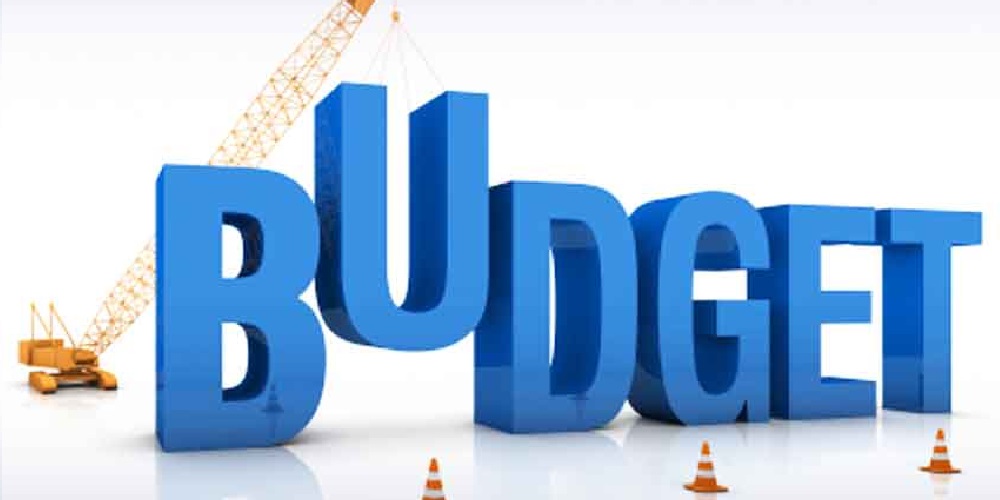
That Nigerian’s feel the pinch of the ongoing reforms of President Bola Tinubu’s administration is something that could be blamed on the shoddy implementation of the ₦54.99 trillion 2025 Budget or a total lack of it.

It is farcical that implementation of the nation’s 2025 spending plan did not begin until late September, actually, effectively in October, when the year is almost over, with scant three months left. For a government that market itself as reform oriented, this failure to restore the budget to a January to December circle is a catastrophic failure that have negated every other thing it claims to have achieved and this failure lands squarely on the desk of the man entrusted with ensuring that the country has financial certainty, the Minister of Finance and the Coordinating Minister of the Economy, Wale Edun.

The disruption of the budget cycle, aside being a problem in itself – a misalignment with the global business cycle, has created other problems. It has created operational and service delivery challenges that made Ministries, Departments, and Agencies (MDAs) facing delays in receiving funds, delay in the implementation of critical projects with the non-implementation of capital projects negatively affecting job creation and poverty alleviation efforts. On another front are the economic and fiscal impacts that have shaken investor confidence because of uncertainty over Nigeria’s fiscal direction, which means the handling of the 2025 Budget has deterred foreign and domestic investment.

Advertisement

We must not lose sight of the fact that the shabby attitude towards the 2025 Budget worsened inflationary pressures because delaying capital spending is a sure recipe for price variations that ensure that prices have been pushed up beyond what was used to articulate the budget.

Additionally, governance and accountability risks have been heightened as the delay made room for last-minute manipulations that undermine transparency and the essence of budgeting, which would be further compounded by inevitable delays to the preparation of performance data that would in turn weaken accountability mechanisms.

Tragically, the Minister of Finance, Wale Edun, is playing the ostrich. He would not accept that the 2025 Budget is ailing the same way he has refused to accept his frail health and the reality that his current role is larger than his capacity, hence the strain that led to his recent health scare.

Like cancer that eventually kills its host if not excised by amputation, Edun’s health is poised to wreck not just the economy but also the entire country because of the aforementioned consequences. And like an insidious ailment that disguises its existence, Edun’s team is whitewashing his lack of grasp with rosy statistics that are at variance with the harsh reality Nigerians are surviving.

Advertisement

He is telling us about improvement in the economy when the non-implementation of the 2025 budget is crippling the nation’s economy. Despite the beautiful postings and assertions by the Federal Government that it has surpassed targeted 2025 revenue generation as of August this year, it is yet to give life to its 2025 budget.

Since the economy was put in Edun’s care, our currency has been plagued by turbulence and tough realities that made the country a veritable hell. In May 2023, the currency traded at around ₦460 to the dollar officially, with a parallel market rate near ₦740. Yes, the clamour was to eliminate the multiple exchange rates and the decision to unify the exchange rates was hailed as a bold reform, but Edun’s handling of the economy under the circumstances unleashed a wave of economic shocks. By October 2025, the naira had plunged to over ₦1,470 per dollar, reflecting deep structural weaknesses and the painful adjustment process. For ordinary Nigerians, this was not just a macroeconomic shift because it has made our existence into a daily struggle. Prices of essentials soared, savings lost value, and businesses faced rising costs. This makes it nauseating that Edun and his team are insisting the reforms will yield long-term gains, whereas the immediate impact has been a squeeze on livelihoods and a test of public patience.

Whatever flicker of hope Nigerians held that the 2025 Budget would ease their economic hardship is fast fading. The delay in implementation has compounded public frustration, and the man at the helm—Finance Minister Wale Edun, appears increasingly absent from the task. His health, understandably, has taken precedence, but governance cannot be paused for personal recovery. The urgency of restoring economic stability demands leadership that is present, responsive, and accountable. Nigerians are not asking for miracles; they are demanding functionality, an economy that works, a government that delivers, and a budget that translates into real relief. The silence from the Ministry of Finance is deafening, and the absence of clear direction is costing lives, livelihoods, and trust.

Is it Wale Edun that is ailing, or is it the budget itself? Nigerians deserve clarity, not on the health of the Minister of Finance as it is now crystal clear that he is out of the game, but on the health of the economy he is meant to superintend. The indifference, silence, and sluggishness surrounding the 2025 Budget implementation have stranded citizens in uncertainty, watching their hopes for recovery crushed and unravel. If the Minister is unable to carry out his duties, the government must act decisively—not out of political loyalty, but out of responsibility to the people. The budget is not a theoretical document; it is a lifeline for millions. And right now, that lifeline is fraying. What Nigerians are asking is not perfection, they are asking for leadership, for urgency, and for a government that does not wait for its stewards to recover before it begins to serve. The question is no longer rhetorical. It is a demand: who will take charge and restore confidence in Nigeria’s economic future?

Advertisement

Jackson is a public affairs analyst writing from Jos.
Continue Reading
Advertisement

News

Rep OK Chinda’s political network sparks across Rivers

Published

on

By

ADVERTISEMENT
Zoom Ad
ADVERTISEMENT
Zoom Ad

The battle for the political soul of Rivers State gathered fresh momentum on Monday, August 3, 2026, as supporters of the former House of Representatives Minority Leader, Hon. Kingsley Chinda, activated what appears to be an early statewide mobilisation strategy, extending their campaign machinery to all 23 local government areas and ward structures ahead of the 2027 governorship election.

The development signals that while the official electioneering whistle is yet to be blown, political camps are already laying claim to the grassroots in what analysts describe as a familiar contest where influence, structure and strategic alliances often determine who eventually occupies Brick House.

The pro-Chinda support group, Our Will, announced the expansion of its political network across the state, directing its state executive members to immediately establish functional local government and ward executives capable of driving voter mobilisation before formal campaigns commence.

State Chairman of the group, King Okene, said the organisation was determined to transform Chinda’s existing political popularity into what he described as an “unstoppable electoral mandate,” insisting that every ward must become a political fortress for the lawmaker’s governorship aspiration.

Advertisement

According to him, the publication of the electoral timetable has effectively opened a new phase of political calculations, making early grassroots organisation a strategic necessity rather than a luxury.

“We should double our efforts to ensure we meet the targets before electioneering campaigns officially begin. Every local government and ward structure must be fully operational within the first week of August,” he charged members.

In what appeared to be a calculated attempt to frame Chinda as the political heir to a tested governance model, President-General of Our Will, Glory Wobo, declared that the federal lawmaker’s years of public service and close political association with the Minister of the Federal Capital Territory, Nyesom Wike, have adequately prepared him for the state’s highest office.

Wobo argued that leadership is cultivated through mentorship rather than chance, maintaining that Chinda’s political apprenticeship under Wike – combined with his experience as commissioner and long-serving legislator – has equipped him with the administrative depth required to govern Rivers State.

Advertisement

He cited ongoing infrastructure renewal in the Federal Capital Territory as evidence of the leadership tradition from which Chinda emerged, suggesting that effective governance leaves measurable footprints rather than campaign slogans.

According to Wobo, Chinda enjoys goodwill that cuts across political parties, ethnic groups and religious divides, describing the lawmaker as a consensus figure whose appeal extends beyond partisan politics into credibility, accessibility and public service.

The latest mobilisation drive underscores the intensifying political chess game ahead of the 2027 governorship election, where aspirants are increasingly investing in grassroots structures long before formal campaigns begin.

With support groups already deploying ward-by-ward political architecture and competing camps quietly consolidating influence, Rivers State is once again demonstrating that, in Nigerian politics, the contest for power often begins long before the first ballot is printed.

Advertisement
Continue Reading

News

NBC files fresh appeal, justifies N5m fine regime for broadcasters

Published

on

By

ADVERTISEMENT
Zoom Ad
ADVERTISEMENT
Zoom Ad

The National Broadcasting Commission (NBC) has filed an application seeking the permission of the court of appeal to file a fresh appeal against the judgement of the federal high court in Abuja barring it from imposing N5 million fines on erring broadcast stations.

In the application filed at the court of appeal in Abuja by Dapo Akinosun, counsel to the NBC, the commission argued sanity in Nigeria’s broadcasting sector is under threat and that the public interest would be better served if the court grants the application.

In the application, the NBC urged the court to grant it leave to raise and argue a fresh issue on appeal relating to the legal capacity of MRA to institute and maintain the original suit before the lower court.

The commission argued that the defect in the earlier notice of appeal, which resulted in the dismissal of its appeal, arose “solely from an inadvertent misdescription” of its name by its lawyer.

Advertisement

The NBC told the court that the subsisting judgement raises questions on the commission’s statutory powers to regulate broadcasting and enforce compliance with broadcasting standards in Nigeria.

The commission argued that the subsisting judgment is capable of creating uncertainty regarding its regulatory powers if it is allowed to stand.

The NBC also argued that without the pronouncement by the appellate court on the issues raised in the appeal, its regulatory framework would be weakened.

“A weakened regulatory framework may embolden non-compliance with established broadcasting standards, thereby increasing the dissemination of false, misleading and unverified information capable of causing unnecessary public anxiety, panic and social unrest,” the NBC said.

Advertisement

“Absence of effective regulatory oversight may further encourage irresponsible broadcasting practices and the misuse of broadcast and digital media platforms by persons who deliberately publish sensational, inaccurate or inflammatory content to intimidate, harass or unduly influence individuals, institutions and public discourse.”

Continue Reading

News

Senate threatens sanctions as CBN, NUPRC, NDDC, others shun committee

Published

on

By

ADVERTISEMENT
Zoom Ad
ADVERTISEMENT
Zoom Ad

The Senate’s ambitious investigation into the billions of naira in oil and gas revenues suffered a setback yesterday after several key government agencies failed to honour summons before the Senate Public Accounts Committee over issues arising from the Nigeria Extractive Industries Transparency Initiative (NEITI) audit reports.

Affected were the Central Bank of Nigeria (CBN), the Nigerian Upstream Petroleum Regulatory Commission (NUPRC) and the Niger Delta Development Commission (NDDC).

The committee, chaired by Senator Ibrahim Hassan Dankwambo (PDP, Gombe North), reacted angrily to the agencies’ absence, describing it as a blatant disregard for the National Assembly’s constitutional oversight powers and a direct affront to Nigerians who expect transparency and accountability in the management of public resources.

Yesterday’s hearing marked the commencement of a comprehensive legislative investigation into the 2021, 2022 and 2023 NEITI Oil and Gas Industry Audit Reports, a process expected to scrutinise oil sector revenues, remittances to the Federation Account, statutory financial obligations, royalty payments, regulatory compliance and the operational activities of over 60 Ministries, Departments and Agencies (MDAs), regulators, government-owned enterprises, as well as indigenous and multinational oil companies.

Advertisement

Despite formal invitations, public notices published in national newspapers and weeks of advance notice, the invited agencies failed to appear before the committee. Their absence forced the lawmakers to suspend the proceedings after waiting for over an hour.

Visibly displeased, members of the committee accused the agencies of treating the Senate with contempt and undermining legislative efforts to ensure accountability in one of Nigeria’s most strategic economic sectors.

Leading the criticism, Senator Babangida Hussaini described the repeated failure of government agencies to honour Senate invitations as a “recurring decimal,” arguing that such conduct erodes public confidence in democratic institutions and weakens parliamentary oversight.

According to him, the committee derives its investigative powers from the Constitution and the Senate Standing Orders, making compliance with its summons a legal obligation rather than a matter of discretion.

Advertisement

He lamented that lawmakers had cut short their yearly recess and constituency engagements to attend the hearing, only to discover that none of the invited agencies considered it necessary to send either their chief executives or representatives to explain their absence.

Hussaini warned that if the Senate of the Federal Republic of Nigeria could summon heads of agencies and they failed to appear without consequences, it would send the wrong message about accountability in government. He urged the committee to invoke the appropriate constitutional powers to address what he described as a disgrace to the nation.

Similarly, Senator Francis Ndubuezecriticised the agencies for failing to provide any explanation for their absence, noting that no letters were written, no excuses offered and no representatives sent to brief the committee. He argued that such conduct showed a lack of respect for the Senate and its constitutional oversight responsibilities, insisting that the integrity of the National Assembly must be protected.

Following the debate, the committee unanimously resolved to grant the defaulting agencies one final opportunity to appear before it on Thursday, August 6, 2026.

Advertisement

The committee also directed its secretariat to immediately communicate the resolution to all affected organisations and notify them that failure to honour the rescheduled hearing could compel the Senate to invoke its constitutional powers to enforce compliance.

MEANWHILE, the federal government has barred MDAs from awarding contracts, signing agreements, or incurring financial obligations without approved expenditure warrants and cash backing, in a move aimed at strengthening fiscal discipline and improving public financial management.

The directive, contained in a Federal Treasury Circular dated July 31, 2026, and released yesterday, introduces stricter guidelines for implementing the 2026 capital budget as the government seeks to curb the award of unfunded contracts and ensure that spending aligns with available resources.

Signed by the Accountant-General of the Federation, ShamseldeenOgunjimi, the circular was addressed to ministers, permanent secretaries, heads of extra-ministerial departments and agencies, service chiefs, the CBN Governor, the Clerk of the National Assembly, the Chief Registrar of the Supreme Court, heads of diplomatic missions and other federal institutions.

Advertisement

Under the new guidelines, MDAs are prohibited from issuing letters of award, signing contracts, or entering into any financial commitment unless they have first received the appropriate Warrant or Authority to Incur Expenditure (AIE) covering either the full contract value or the portion to be committed.

“In compliance with the provisions of Financial Regulations 318 and 415, respectively, no expenditure shall be incurred except on the authority of a Warrant/AIE (including employee payables),” the circular stated.

Continue Reading

Trending

Copyright © 2024 Naija Blitz News