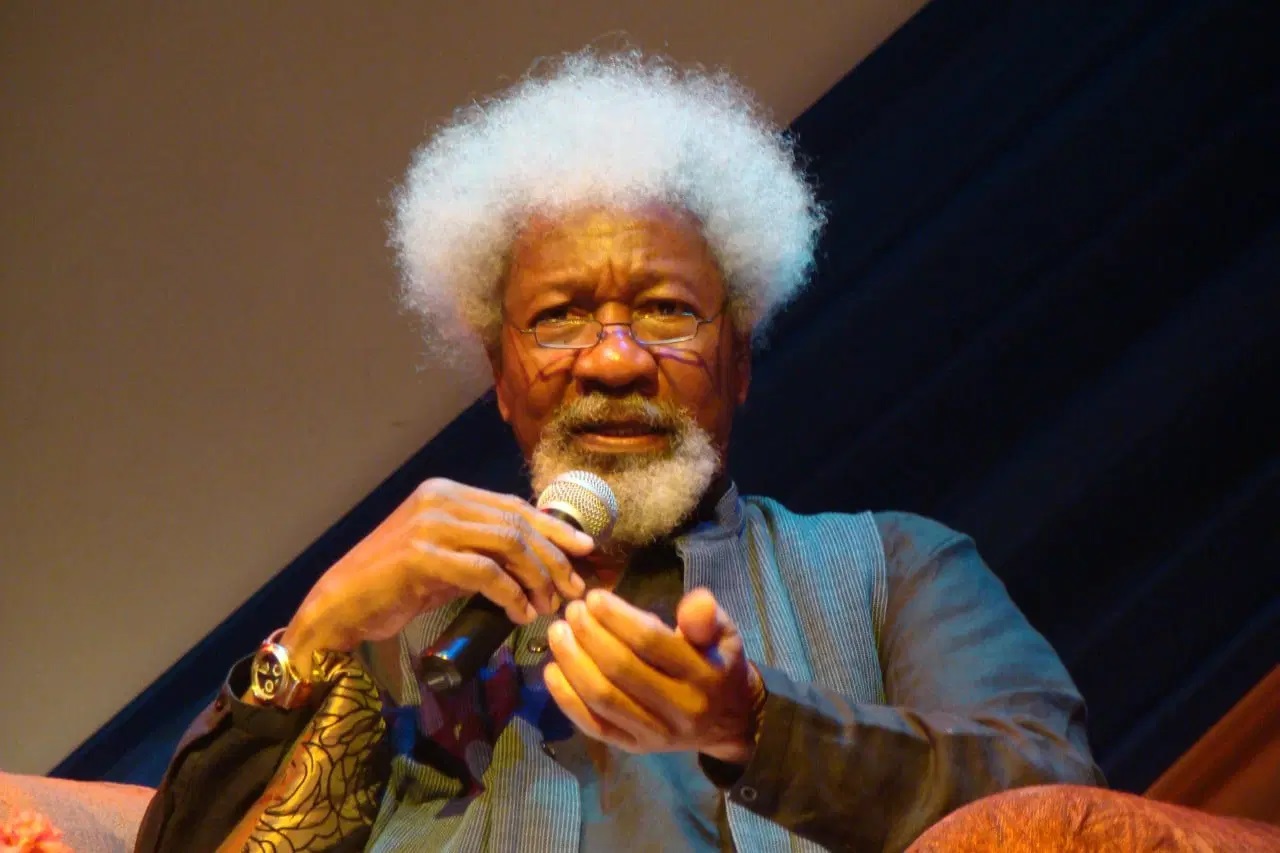
The United States Embassy in Lagos has clarified that the issuance of visas to foreign nationals is a privilege, not a right, as it defended the revocation of the travel visa of Nigeria’s Nobel Laureate, Prof. Wole Soyinka.
In a statement to The PUNCH on Thursday, the U.S. Consulate in Lagos explained that while visa details are confidential, the American government reserves the discretion to revoke any visa at any time.
“Under U.S. law, visa records are generally confidential. We will not discuss the details of this individual visa case,” said Julia McKay, Public Diplomacy Officer, U.S. Department of State, U.S. Consulate General, Lagos. 
McKay emphasized that visa privileges could be withdrawn whenever circumstances warrant, noting that “visas are a privilege, not a right. Every country, including the United States, can determine who enters its borders. Visas may be revoked at any time, at the discretion of the U.S. government.”
Soyinka Confirms Revocation
Prof. Wole Soyinka, 91, had earlier revealed the revocation of his B1/B2 U.S. visa during a media parley held at Freedom Park, Lagos, on Tuesday.
Speaking at the event tagged “Unending Saga: Idi Amin in Whiteface,” the Nobel laureate announced that the notice of revocation was formally communicated to him in a letter dated October 23, 2025, by the U.S. Consulate General in Lagos.
“It is necessary for me to hold this press conference so that people in the United States who are expecting me for this event or that event do not waste their time,” Soyinka said.
“I have no visa; I am banned, obviously, from the United States. And if you want to see me, you know where to find me.”
‘I Don’t Know What I Did Wrong’ — Soyinka
The world-renowned author and playwright expressed surprise over the decision, saying he was unaware of any wrongdoing that could have warranted such action.
“I’ve started looking back—have I ever misbehaved towards the United States of America? Have I been convicted or gone against the law anywhere?” he wondered.
Soyinka, who has lived and taught extensively in the U.S., recalled two minor incidents decades ago — one involving undeclared green chilies at a Chicago airport and another confrontation with police in Atlanta in the early 1970s — but doubted they were related to the visa cancellation.
According to the letter from the U.S. Consulate, Soyinka’s non-immigrant visa “has been revoked pursuant to the authority contained in the U.S. Department of State regulations 22 CFR 41.122 and is no longer valid for entry into the United States.”
The correspondence added that the revocation was based on “additional information” obtained after the visa was issued, and requested Soyinka to return the visa for physical cancellation — a request the laureate described humorously.
“If you have plans to travel to the United States, you must apply again to re-establish your qualifications for a new non-immigrant visa,” the letter concluded.
Soyinka, Africa’s first Nobel Laureate in Literature (1986), has held academic positions across several U.S. universities and remains one of Nigeria’s most respected intellectuals.
The revocation of his visa has stirred debate among scholars and human rights advocates, amid growing scrutiny of U.S. immigration and border policies under the Trump administration.
newsmirrorng