BY BOLAJI AFOLABI


From 2019, the Independent National Electoral Commission, (INEC) has been on the front burner of political discourse, and national development. Political parties, politicians, commentators, groups, associations, individuals, and many others have made varied comments about the electoral body; thumbs up, kudos, as well as scathing and spanking reviews. Somehow, the public rating of INEC; under Professor Mahmood Yakubu took a nose-dive after the 2023 general elections. More intriguing was the numerous talk-down by some politicians who kept complaining of electoral malpractices, when they knew that they never did enough to win elections. In many ways, INEC, and particularly Yakubu became the fall-guy; chiselled and pummelled from different corners.
However, a few people argue that, amid the cacophony of vilification, Nigerians lost sight of a few positives recorded by the Yakubu-led INEC. They are quick to mention that it introduced INEC Results Viewing Portal, (IReV); Bimodal Voter Accreditation System, (BVAS); and other significant technological innovations geared towards electoral efficiency. Also, there were concerted efforts to promote inclusivity; improve voters access; and the regular clean up of voters register. They believe that though Yakubu encountered challenges in his duties he was able to impact, and effect certain changes in INEC. 
Many people think differently. From empirical studies, and opinion sampling, the public perception of INEC is largely negative. Roundly criticized for many reasons including lack of transparency, incompetence, and the delivery of questionable elections. The electoral body was accused of logistical failures, information mismanagement, and improper preparations. Some electoral observers criticize INEC for not scaling-up its digital infrastructure across the country which led to technical glitches, and delayed results uploads given room for alleged electoral malpractices.
Within spans and space, whatever INEC; under Yakubu sees as achievement, was stained and spoiled by the vagaries of electoral infractions that are repeatedly highlighted by some people. Worse off, the percentage of Nigerians willing to acknowledge these positives are scant and scarce. The depth and dimensions of public umbrage against INEC was dour and damaging, as it suffered huge trust deficit. With the 10-year reign of the Bauchi-born Professor of History grinding to close, there was increased national discourse about who to succeed him. Politicians, the organized labour, CSOs, and other critical stakeholders joined the fray. As debates heightened on the need to push for a credible person to lead INEC, some people canvassed against President Bola Tinubu being the sole person responsible for the nomination of the INEC Chairman. This proposition runs contrary to what the constitution says. Section 158 (1) of the 1999 Constitution (as amended), gives the president (whoever he is) the powers to nominate the CHAIRMAN (and other MEMBERS) of INEC.
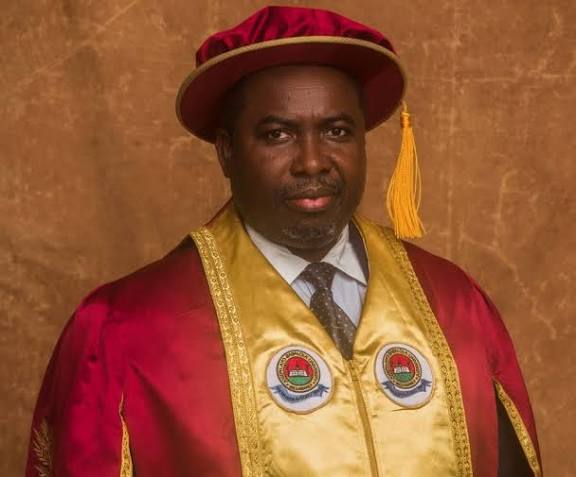
Amid general conjectures and calculations, as well as projections and postulations, President Bola Tinubu, in fulfillment of the appropriate provisions of the Constitution, after due consultations with the National Council of States, announced and forwarded the name of Professor Joash Ojo Amupitan to the Senate for consideration as nominee for the position of Chairman of the INEC. The choice of Amupitan; a Senior Advocate of Nigeria, (SAN), who was Deputy Vice Chancellor (Administration ) of the University of Jos, was described as a master stroke by Tinubu. Amupitan, who is the 6th INEC boss in the 4th Republic, becomes the the 1st person from the Middle Belt Region, North Central zone, and Kogi State to oversee the nation’s electoral institution.
Perhaps, given his legendary background and achievement, his appointment elicited broad-based endorsement and national acceptance. Though his enviable academic epaulettes, and professional attainments have been brilliantly discussed on numerous platforms, but a few will suffice here. Giving politicians knack for approaching courts after elections, Amupitan’s distinction in the law of evidence is expected to be a massive boost for INEC in electoral litigations. Also, his teachings and research on public law, corporate governance, and other relevant specialization of law will re-invigorate INEC in achieving electoral efficiency and commendable performances.
Conscious of the herculean task before Amupitan, many people have emphasized the need to increase INEC’s capacity, and change the negative narrative. At his swearing-in, President Tinubu acknowledged Amupitan’s competence, and tasked him to “approach your responsibility with the highest level of integrity, dedication, and patriotism.” Tinubu, also emphasized aligning our electoral processes with global best practices, and the protection of electoral integrity at all stages. Aware of the challenges, and the need to meet expectations of Nigerians, Amupitan has consistently demonstrated his understanding and readiness for the job. At different platforms, Amupitan who sees his appointment as “divine calling” has espoused the need to restore public confidence, delivery of credible elections, and stopping election rigging as the core of his reforms. Aware of the strategic position of the staff members, Amupitan has declared that, “staff welfare is going to be my priority.”
Given the negative perception about the INEC, the namby-pamby, and wishy-washy attitudes of some staff members during elections, Amupitan, no doubt have many issues to grapple with. An election observer who pleaded anonymity disclosed that, “the institution is fraught with many encumberances which can make the efforts of any person pale into insignificance. There are staff members who are allegedly “principalities and powers.” Another stakeholder who craved anonymity added that, “INEC is full of cobwebs. How well the new chairman wriggles around and about these issues will be interesting. Many people, impressed with his colourful track record hope and pray that he succeeds.” For Hon. TeeJay Yusuf, a former lawmaker and politician, he averred that, “Amupitan is apolitical, a worthy example of ethical fidelity, uprightness, discipline, and probity. I am confident that he will excel in INEC”
Amupitan is expected to hit the runway with no intentions of slowing down. To achieve improved service delivery by INEC, he should consider these strategies. Regular capacity building programmes on “ethics, moral values, and patriotism” for ALL categories of staff members, parties, and stakeholders. Expand the scope of Returning Officers, (ROs) to include people of proven character and competence from other professions – not just academics. Embark on gradual overhaul of the institution by re-jiging, and deployment of staff members who have been in a particular office or schedule for 5 years. Foster more robust engagements with ALL stakeholders. Implementation of necessary reforms. Create two or three units to complement the office of the chief press secretary for robust, timely, and engaging information management. More importantly, Nigerians will welcome any action, and decisions by Amupitan that will demonstrate the independence of the electoral body.
Being the first person (after Justice Ephraim Akpata) with legal background to be appointed as INEC Chairman, and as a SAN, it is expected that his expertise in electoral law reform will be pivotal in fixing the numerous loopholes in the system, strengthening enforcement, and extending the frontiers of democracy. Nigerians are also hopeful that Amupitan will usher in discipline, stability, and due diligence in INEC. Some stakeholders are confident that as a technocrat, and professional who values order, process, and law, Amupitan will uphold fairness, build trust, and elicit public confidence in Nigeria’s electoral body, and institution. As the Anambra State Governorship election is days, hours, and minutes away; which will be Amupitan’s baptism of fire, another stakeholder hopes that, “INEC will uphold the sanctity of peoples will, and kickstart a new, defining moment in Nigeria’s march towards improved democracy.”
BOLAJI AFOLABI, a Development Communications specialist was with the Office of The Presidency, Abuja.