Connect with us

News

Rafsanjani Takes Helm at CAPPA’s Advisory Board, Sounds Alarm on Solid Minerals Drive

Published

on

ADVERTISEMENT
Zoom Ad
ADVERTISEMENT
Zoom Ad

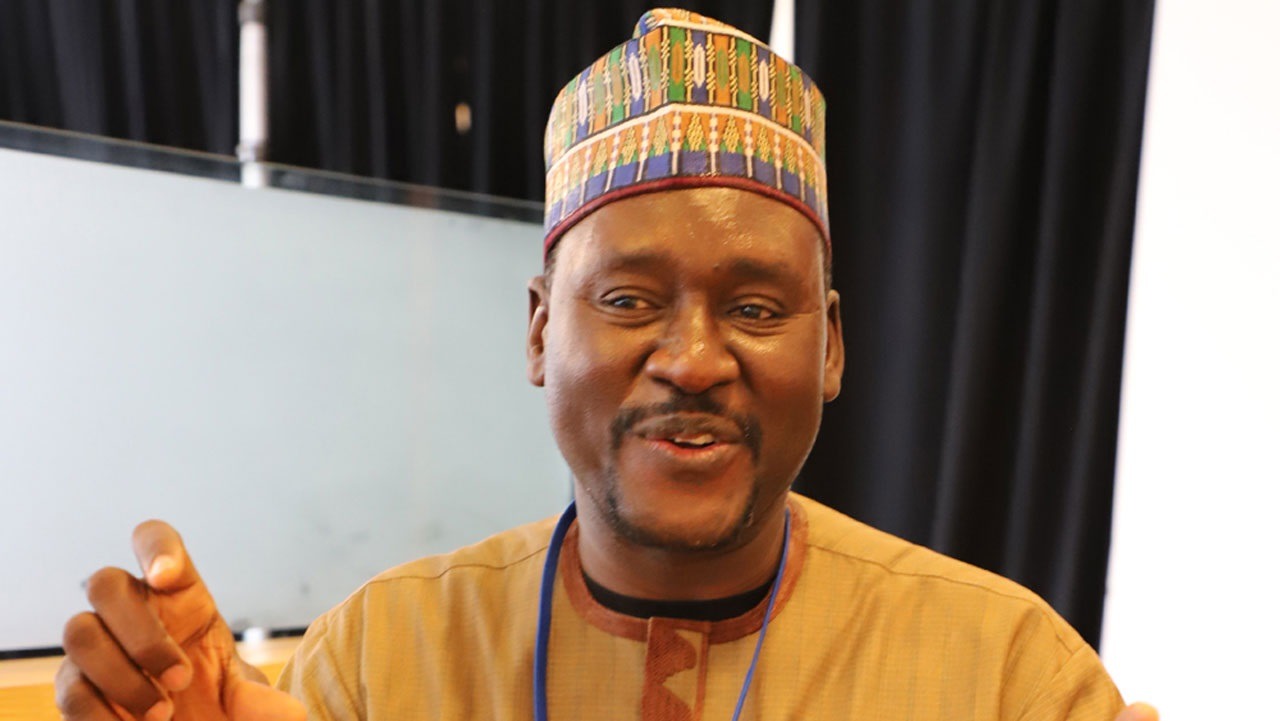
Auwal Musa Rafsanjani has been named Chairman of the Corporate Accountability and Public Participation Africa (CAPPA)’s Advisory Board. Rafsanjani, a veteran civil rights leader, brings decades of experience in promoting transparency, human rights, and anti-corruption reforms.


Rafsanjani’s Background:

– Executive Director, Civil Society Legislative Advocacy Centre (CISLAC)
– Head, Transparency International Nigeria
– Chair, Board of Trustees, Amnesty International Nigeria
– Leader, Zero Corruption Coalition

Rafsanjani’s appointment signals a renewed commitment to defending people’s rights and promoting accountability in Africa

Advertisement

In its statement to the media, CAPPA said it is confident that Mr Rafsanjani’s formidable experience in anti-corruption campaigns and policy advocacy will strengthen its work across Africa. The organisation noted that his leadership arrives at a time when civic space is shrinking, state resources are being commercialised, and communities face the double risk of economic exclusion and environmental harm.

The Advisory Board also includes Akinbode Oluwafemi, Executive Director and Board Secretary; Evelyn Nkanga Bassey, Treasurer; Scott Pegg; Kayode Ogunbunmi; Betty Abah; and Doifie Buokoribo. Together they bring deep experience in policy-advocacy, environmental and rights activism, global-development practice and community-defence organising.

Speaking after his election, Mr Rafsanjani noted that his priority is to anchor CAPPA more firmly as a fearless watchdog for public good. He highlighted the organisation’s work in public health advocacy, environmental protection and extractive justice, democratic rights, and defence of public services as core areas that will receive stronger institutional backing and clearer strategic direction.

The board also used the occasion to sound a clear warning on the direction of Nigeria’s mining sector. It stated that the global energy transition has triggered an aggressive hunt for lithium and other “green minerals” essential for batteries, electric vehicles, and digital infrastructure.

Advertisement

While corporations present this as a new economic frontier and the Nigerian government recently celebrated that the mining sector now contributes about 4.6 percent to national GDP— up from less than half a per cent a decade ago, the board stressed that this growth is unfolding alongside land grabs, forced displacement, environmental degradation, and the return of concession-style politics in host communities.

The board stated plainly that Nigeria risks repeating the tragedy of the Niger Delta all over again, where oil wealth produced national revenue but destroyed entire ecosystems and livelihoods. It stressed that unless the government enforces strong regulation, guarantees community consent, and ensures transparent governance, the country will simply replace one resource curse with another.

The board reminded policymakers that there can be no just transition if communities do not share in its benefits. CAPPA called for a people-centered resource framework that treats land, water, culture, and livelihoods as more than collateral for investment. It urged Nigerians to question any development model that enriches a few while displacing many and devastating the environment.

Reaffirming its commitment, CAPPA vowed to expand alliances with labour movements, grassroots organisations, women’s groups, youth formations, and community defenders across the continent. It declared that the fight for public accountability and participation is one struggle that scattered voices cannot win.

Advertisement
Continue Reading
Advertisement

News

DAY 13 of Projects Commissioning in the FCT

Published

on

ADVERTISEMENT
Zoom Ad
ADVERTISEMENT
Zoom Ad

President Tinubu Will Commission Roads 01 and 02 Linking Mabushi Bus Terminal and Ahmadu Bello Way Today

#FCTRenewedHope
#FCTProjectsCommissioning

Continue Reading

News

BEWARE: FG warns 26 States of flood, places, Bayelsa, Delta, Lagos, Adamawa, Benue, others as critical risk areas

Published

on

ADVERTISEMENT
Zoom Ad
ADVERTISEMENT
Zoom Ad

The Federal Government has alerted residents of 26 states and the Federal Capital Territory (FCT) to the possibility of flooding between June 22 and July 5, 2026, following forecasts of heavy rainfall in different parts of the country.

The warning was issued by the Federal Ministry of Environment through the National Flood Early Warning Centre under its Erosion, Flood and Coastal Zone Management Department.

The ministry said several communities across the country have been identified as areas that could face serious flood threats during the period.

According to the forecast released on June 22, heavy rainfall is expected in many locations, raising concerns about possible flooding in vulnerable communities.

Advertisement

States placed under the critical-risk category include Abia, Adamawa, Akwa Ibom, Anambra, Bayelsa, Benue, Cross River, Delta, Ebonyi, Edo, Ekiti, Enugu, Imo, Kogi, Kwara, Lagos, Niger, Ogun, Ondo, Osun, Oyo and Rivers.

In Abia State, the affected communities include Aba, Arochukwu and Umuahia. In Adamawa, the ministry listed Jimeta and Numan, while Eket, Oron and Uyo were named in Akwa Ibom. In Anambra, Onitsha Inland Town and Awka Urban Drainage Corridors were identified as vulnerable locations.

Bayelsa communities such as Yenagoa, Brass and Nembe Town were also listed among areas that could be affected by flooding.

Other locations mentioned include Makurdi, Gboko and Katsina-Ala in Benue State; Calabar Metropolis and Creek Town in Cross River State; Asaba, Warri and Sapele in Delta State; and Abakaliki, Afikpo and Onueke in Ebonyi State.

Advertisement

The ministry also identified Benin City Urban Core and Auchi in Edo State, Ado-Ekiti and Ikere-Ekiti in Ekiti State, as well as Enugu, Nsukka and Oji River Town in Enugu State.

In Imo State, Owerri, Orlu and Okigwe were listed, while Lokoja and Ajaokuta were named in Kogi State. Communities such as Ilorin, Jebba and Pategi in Kwara State were also included in the warning.

Several parts of Lagos State were equally listed among the areas at risk.

These include Agege, Alimosho, Apapa, Badagry, Ikeja, Ikorodu, Lagos Island, Lekki and Surulere.

Advertisement

In Niger State, Bida, Minna, Mokwa, Suleja and Kontagora were identified, while Abeokuta, Ota and Sagamu were listed in Ogun State.

The flood alert further covered Akure, Owo and Okitipupa in Ondo State; Oshogbo, Ile-Ife and Ilesa in Osun State; Ibadan, Ogbomoso and Oyo in Oyo State; as well as Port Harcourt Urban Core, Bonny, Ahoada and Omoku in Rivers State.

Apart from the states under the critical-risk category, the ministry also placed parts of Adamawa, the FCT, Kebbi, Kogi, Nasarawa, Plateau and Taraba states under a high-risk category.

Communities listed in this group include Yola North, Yola South, Mubi and Gurin in Adamawa State; Abuja Municipal, Gwagwalada, Kubwa, Nyanya and Wuse in the FCT; Birnin Kebbi and Argungu in Kebbi State; Bako in Kogi State; and Keffi, Lafia, Karu and Toto in Nasarawa State.

Advertisement

The warning also covered Jos and Jos North in Plateau State, as well as Jalingo, Wukari, Takum, Serti and Karim Lamido in Taraba State.

Continue Reading

News

Finally, INEC confirms suspension of staff linked to Emeka Ike’s voter data leak

Published

on

ADVERTISEMENT
Zoom Ad
ADVERTISEMENT
Zoom Ad

Finally, the Independent National Electoral Commission, INEC, has confirmed suspended an electoral officer allegedly involved in the voter data leak concerning Nollywood actor and politician, Emeka Ike.

The Commission disclosed that investigations by security agencies and data protection regulators are still ongoing.

INEC National Commissioner and Chairman of the Information and Voter Education Committee, Mohammed Haruna, made the disclosure during a fireside chat organised by the Peering Advocacy and Advancement Centre in Africa, PAACA, in Abuja.

The suspension came against the backdrop of a controversy that arose after the voter registration details of actor and politician, Emeka Ike, surfaced online during a dispute linked to a political party primary election in the Federal Capital Territory.

Advertisement

The electoral body said preliminary findings showed there was no external breach of its ICT infrastructure or compromise of its voter register.

Rather, according to the Commission, the data was allegedly accessed using valid credentials assigned to officials involved in the ongoing CVR exercise and subsequently disclosed without authorisation.

INEC said its audit trail enabled investigators to identify the specific user account used to access the voter record, leading to the questioning of personnel with access to the system.

Advertisement
Continue Reading

Trending

Copyright © 2024 Naija Blitz News