
News
Reps Launch Border Security Drive as Speaker Abbas Warns of “Economic and Existential Threat”

- /home/naijuinz/public_html/wp-content/plugins/mvp-social-buttons/mvp-social-buttons.php on line 27
https://naijablitznews.com/wp-content/uploads/2025/11/IMG-20251111-WA0035-1000x600.jpg&description=Reps Launch Border Security Drive as Speaker Abbas Warns of “Economic and Existential Threat”', 'pinterestShare', 'width=750,height=350'); return false;" title="Pin This Post">
- Share
- Tweet /home/naijuinz/public_html/wp-content/plugins/mvp-social-buttons/mvp-social-buttons.php on line 72
https://naijablitznews.com/wp-content/uploads/2025/11/IMG-20251111-WA0035-1000x600.jpg&description=Reps Launch Border Security Drive as Speaker Abbas Warns of “Economic and Existential Threat”', 'pinterestShare', 'width=750,height=350'); return false;" title="Pin This Post">


By Gloria Ikibah
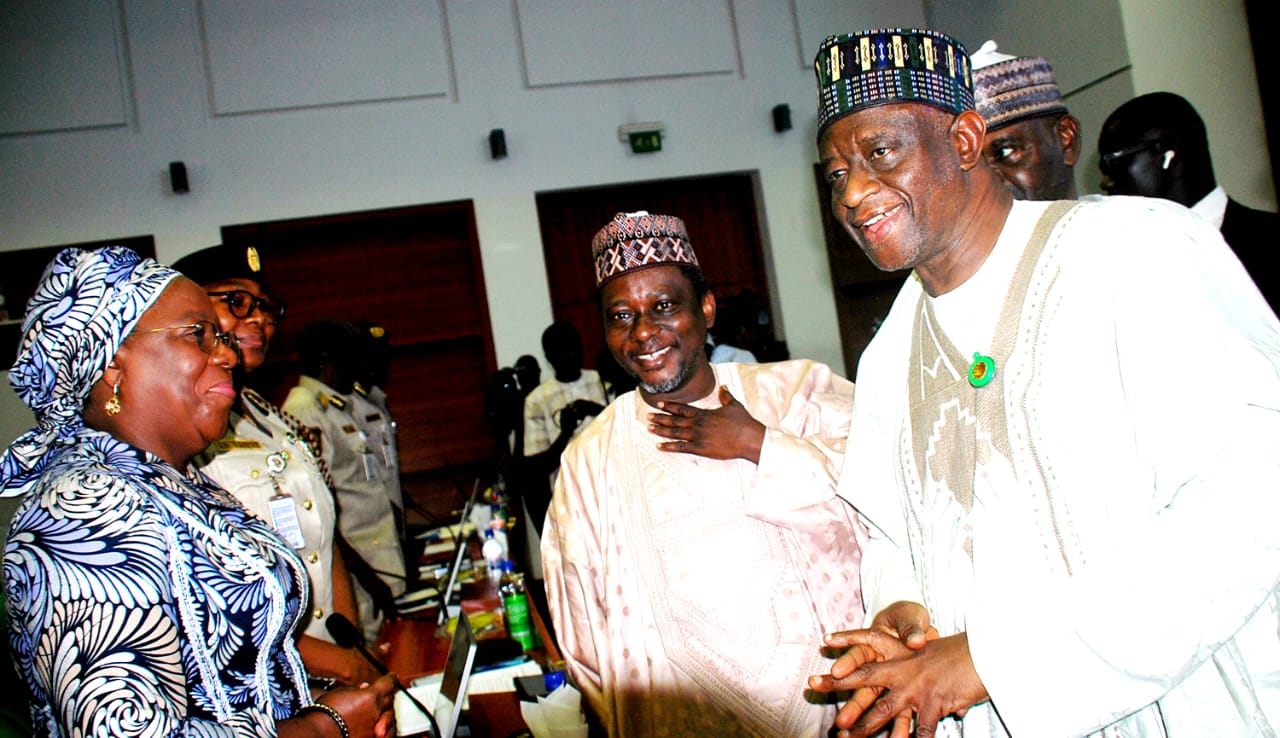
The House of Representatives has kicked off a major push to tighten Nigeria’s porous borders with the inauguration of an Ad-Hoc Committee on Border Security.
Declaring the committee open, Speaker Tajudeen Abbas, who was represented by the Deputy Minority Leader, Rep. Iisa Ali JC, said the move was part of the House’s determination to strengthen national security and restore public confidence in the government’s ability to protect lives, property and territorial integrity.
He warned that Nigeria’s weak border control system had become “both an economic and existential threat”, undermining citizens’ faith in state institutions.
Abbas reminded the committee that the National Assembly had a constitutional duty to ensure that all agencies responsible for border management “do their jobs properly.”
The newly inaugurated committee has been tasked with developing strategies and recommendations to help stamp out security threats or reduce them to the barest minimum across the country’s vast borders.
Describing the initiative as part of the Agenda of the House, the Speaker said the committee’s work demonstrates Parliament’s commitment to “a People’s House — one that is responsive to the fears and aspirations of Nigerians.”
He therefore charged members to approach the assignment with diligence and patriotism, stressing that border security remained key to Nigeria’s safety, economy and national sovereignty.
He said: “Today, we inaugurate this committee with a clear and urgent mandate, to examine and strengthen Nigeria’s border security architecture in the interest of national safety and sovereignty.
“Since the security and welfare of Nigerians is at the heart of our legislative agenda, we are resolved to ensure that Nigerians, whatever their ethnicity or religion can afford to live peacefully wherever they choose.
“This committee is therefore part of our efforts to provide concrete solutions to the violent attacks by fringe members of the society that have led to the misrepresentation of our country, and the distortion of the narrative of violence, which is fueled by greed, corruption and sheer avarice, rather than by any religious agenda”.
The Speaker who stated that the task of securing the borders is a multi-dimensional and multi-agency responsibility, urged all relevant agencies to foster greater co-operation, eliminate duplication of roles, and develop unified operational frameworks.
“It demands synergy, transparency, and patriotism from all institutions of government involved. Border security cannot be achieved in isolation, it requires a whole-of-government and whole-of-society approach — one that harmonises the efforts of the military, paramilitary, intelligence, and law enforcement agencies; promotes intelligence sharing; and ensures that communities at the borders are active partners in safeguarding our nation.
“Similarly, the welfare and training of personnel deployed at border posts must be prioritized, as no agency can perform optimally without motivated officers.
“The House of Representatives remains unwavering in its commitment to strengthen Nigeria’s border governance through effective legislation, rigorous oversight, and adequate budgetary support. We are determined to ensure that all appropriated funds meant for border security are judiciously utilised and that the principles of accountability, transparency, and efficiency are upheld.
“The findings and recommendations of this Committee will guide the House in initiating legislative reforms and policy interventions to modernize border security frameworks. This may include reviewing existing laws such as the Immigration Act, the Customs and Excise Management Act, and related statutes to reflect emerging global best practices and security realities”, he added.
Chairman of the Ad-Hoc Committee, Rep. Isa Mohammed Anka, described the inauguration as a clear demonstration of the House’s shared resolve to protect Nigeria’s sovereignty and safeguard the nation’s prosperity.
He expressed concern that, despite the over ₦9 trillion spent by the government on security in recent years, the country is still far from achieving meaningful progress in addressing its security challenges.
“It is deeply troubling that with such huge investments, our security landscape has not recorded commensurate improvement.
“In recent years, we have witnessed an escalation in illegal cross-border activities that threaten our national security such as illegal arms smuggling, human trafficking and drug smuggling etc. It is noteworthy, that our borders are porous, with many unofficial routes for smuggling goods.
“We also need to ask ourselves some of the contributing factors leading to poor border security which includes:
i. Inadequate Resources: Border security agencies suffer from inadequate funding, poor logistics, ineffective and outdated surveillance equipment and shortage of personnel.
ii. Difficult Terrain: A lot of our borders are located in difficult terrains like thick forests, distant rivers, mountains and deserts, making them tough to police effectively.
iii. Numerous Illega Entry Points: A recent report from Research Gate highlighted that out of Nigeria’s 1,978 entry points only 84 are officially manned by security operatives, leaving 1,894 illegal routes. This is a disturbing statistic and shows a gap in our defences.
iv.Negative Human elements: Negative behavioural attitudes of some of our border security officials are also a major setback that hinders their effectiveness in policing and controlling borders.
“While the Nigeria Immigration Service serves as the agency responsible for border security as it relates to human movements, the Nigerian Customs controls the border security as it relates movement of goods and services. The efforts of these agencies are being complimented by some others including, but not limited to, the Nigerian Navy, National Drug Law Enforcement Agency, the Police Force, Nigerian Army etc”, Rep. Anka said.
The Chairman said the committee was committed to producing strong, actionable resolutions aimed at securing Nigeria’s borders, protecting the nation’s sovereignty and territorial integrity, and ensuring the safety of every citizen.
“The challenges are immense, but so is our resolve. By combining strategic action with a commitment to regional and community-level partnerships, we can and will reclaim control of our borders and build a more secure future for all,” he stated.
Representing the Minister of Interior, the Permanent Secretary, Mrs Magdalene Ajani, explained that the ministry’s agencies play a crucial role in maintaining internal security by carrying out border operations designed to curb illegal migration into the country.
Also speaking, the Comptroller-General of the Nigeria Immigration Service, Mrs Kemi Nanna Nandap, appealed for better welfare and support for officers stationed at border posts, noting that their morale and wellbeing were essential to effective border control.
In his remarks, Major General Aliyu Idris, who represented the Nigerian Army, reaffirmed the military’s readiness to support efforts towards achieving full and effective coverage of the nation’s borders.
Other stakeholders at the session pledged to work collaboratively to strengthen Nigeria’s borders and restated their collective commitment to safeguarding the nation’s unity and security.

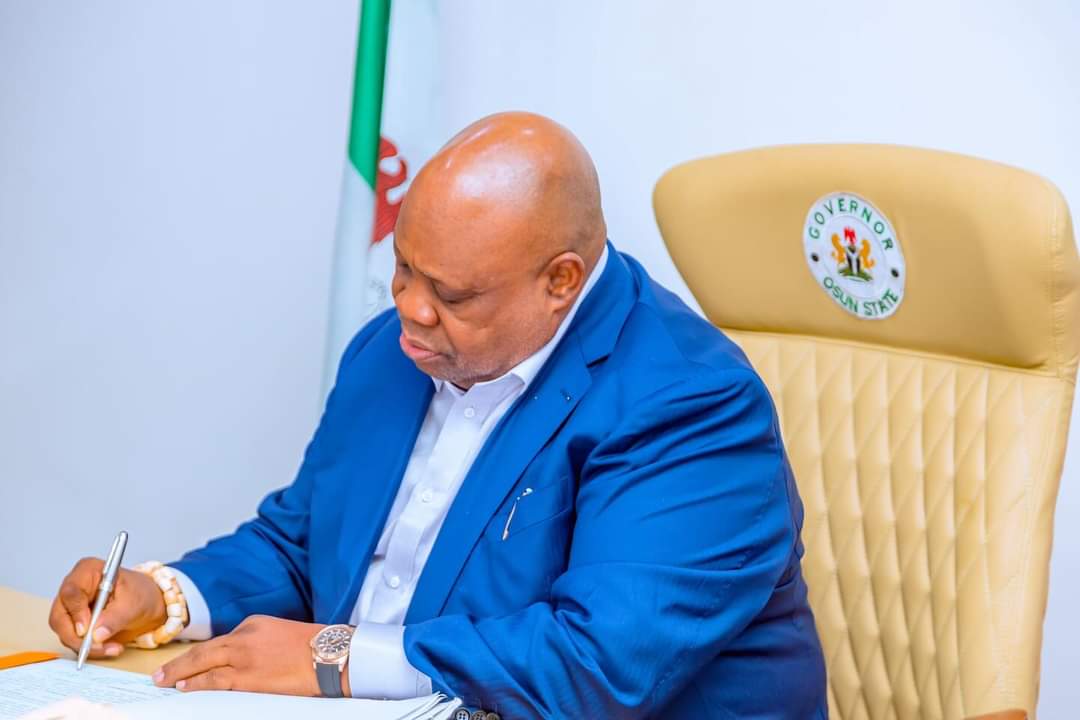
The Osun State Government has said it has filed an application before the Federal High Court in Lagos seeking to set aside the ex parte order restricting transactions on accounts operated by the state government over a $13.9 million arbitration award in favour of Gamji Nigeria Company Limited.
The government also assured the public that it had commenced necessary legal steps to vacate the order and protect the state’s interests through a judicial review of the arbitration award.
In a statement issued on Sunday and signed by the Commissioner for Information and Public Enlightenment, Kolapo Alimi, the government described the order as having been obtained through what it called non-disclosure of material facts to the court.
According to the statement, the arbitration award Gamji sought to enforce was also allegedly affected by several irregularities, prompting the state government’s legal team to approach the Lagos State High Court to challenge the award.
The government said the ex parte order of September 9, 2026 referenced an alleged arbitral award, but maintained that no such award was made against the state government in July 2024.
It clarified that the only arbitral award against the state government was issued in July 2026 and that the award was already being challenged by the government before the Lagos State High Court.
The government traced the dispute to a 2017 contract awarded during the administration of former Governor Adegboyega Oyetola. It said the administration rejected a variation request by Gamji, particularly over the company’s claim that the state was indebted to it in the sum of $15,982,638.22.
The matter subsequently proceeded to arbitration, which the state government alleged was improperly handled in favour of Gamji, while the state was denied a fair hearing and full participation in the process.
The government said its legal team had already filed a suit at the Lagos State High Court on September 1, 2026, seeking to set aside the arbitral award before Gamji approached the Federal High Court.
It added that a motion on notice seeking to suspend enforcement of the award pending the determination of the suit was also filed and served on Gamji and its counsel.
According to the state government, Gamji was therefore aware that the award was being challenged before a competent court when it approached the Federal High Court to seek enforcement.
The government further alleged that Gamji failed to disclose to the Federal High Court that the validity of the award was already being challenged before the Lagos State High Court and that the company had been served with an application seeking to suspend enforcement pending the determination of the case.
The state government disclosed that it had also filed a motion on notice seeking to set aside the September 9 order and informed the Federal High Court of the circumstances surrounding the arbitration proceedings and the pending challenge.
It, however, said it would refrain from making further comments on the merits of the case because the matter remains sub judice.

The 20 National Youth Service Corps (NYSC) members kidnapped by gunmen in Imo State have allegedly been subjected to physical ass@ult by their captors, with the kidn@ppers reportedly reducing their ransom demand to N5 million per victim.
The graduates were abducted on Thursday while travelling from Ibadan to their NYSC orientation camps in Abia and Akwa Ibom states. They were reportedly att@cked along the Owerri-Onitsha Road in Umunoha, Imo State, while travelling in two buses.
A relative of one of the victims, Alhaja Alimot Akande, said the abd¥ctors initially demanded N50 million for each victim but had now reduced it to N5 million.
“They are still demanding N5 million. They have come down to N5 million each,” she said.
Akande also alleged that the abductors had started beating the victims, including the women.
When I spoke to my sister, they started beating them since yesterday,” she said.
Asked if the female victims were also being assaulted, she replied: “They are not sparing anybody. They are beating all of them.”
She said one victim was also allowed to speak with his father, with the abd¥ctors reportedly monitoring the calls to assess the family’s ability to raise the ransom.
Meanwhile, the Oyo State Government said it was working with the Imo State Government and security agencies to secure the victims’ release.
Oyo State Commissioner for Information, Prince Dotun Oyelade, said the government was drawing on its experience from the recent Oriire abduction to assist efforts in Imo State.
“Oyo State Government had not and will not abandon its citizens. We will continue to work endlessly and desperately to secure the release of our children,” he said.

Tansian University, Umunya, Anambra State, has been thrown into mourning following the sudden death of its newly inaugurated substantive Vice-Chancellor, Professor Carter Dike Umeoduagu, barely 48 hours after assuming office.
Umeoduagu was formally sworn in as the substantive Vice-Chancellor of the university on Thursday, October 1, 2026, marking the commencement of his tenure.
However, the professor reportedly took ill on Saturday, October 3, two days after his assumption of office, and subsequently died.
His sudden death has sent shock waves through the university community, particularly coming at a time when the institution has been facing leadership challenges.
The development is also coming amid recent controversy over the leadership of the university, including disputes surrounding the tenure of the former Vice-Chancellor, Professor Eugene Okoye Nwadialor, and the emergence of an acting leadership structure.
The death of Umeoduagu, coming almost immediately after his formal assumption of office, has added a tragic dimension to the university’s recent leadership crisis.
Details of the circumstances surrounding his illness and death were not immediately available as of the time of filing this report.
The university community, academics, colleagues, family members and associates are expected to mourn the deceased academic and administrator, whose tenure as Vice-Chancellor ended almost as soon as it began.

BREAKING: Temi Nkem emerges winner of BBNaija 11th season

Osun Govt finally speaks As Court orders banks to freeze state accounts

Sad development as abductors beat up 20 corp members, reduce ransom from N50m to N5m each


-
 News12 hours ago
Monarchs in Etche LGA presenting symbolic traditional kola to FCT minister Wike at ongoing interactive meeting with Ogbakor, other stakeholders (Video)
-

 News24 hours ago
Madonna University Expels Nursing Students Over Viral ‘Offensive’ Video In Hospital
-
 News24 hours ago
Court places restriction on Osun bank accounts
-

 News13 hours ago
Madonna Varsity rusticates students, suspends 14 others over viral Gen Z nurses video
-

 News12 hours ago
Watch moment FCT minister Wike arrives Etche in Etche LGA for town hall meeting today (Video)
-
 News11 hours ago
Tinubu’s lawyers agree there are errors in U.S. Court filing on 1990s drug probe, demand amendment