Connect with us

News

Reps Push for Greater Female Representation in Nigeria Police

Published

on

ADVERTISEMENT
Zoom Ad
ADVERTISEMENT
Zoom Ad

By Gloria Ikibah

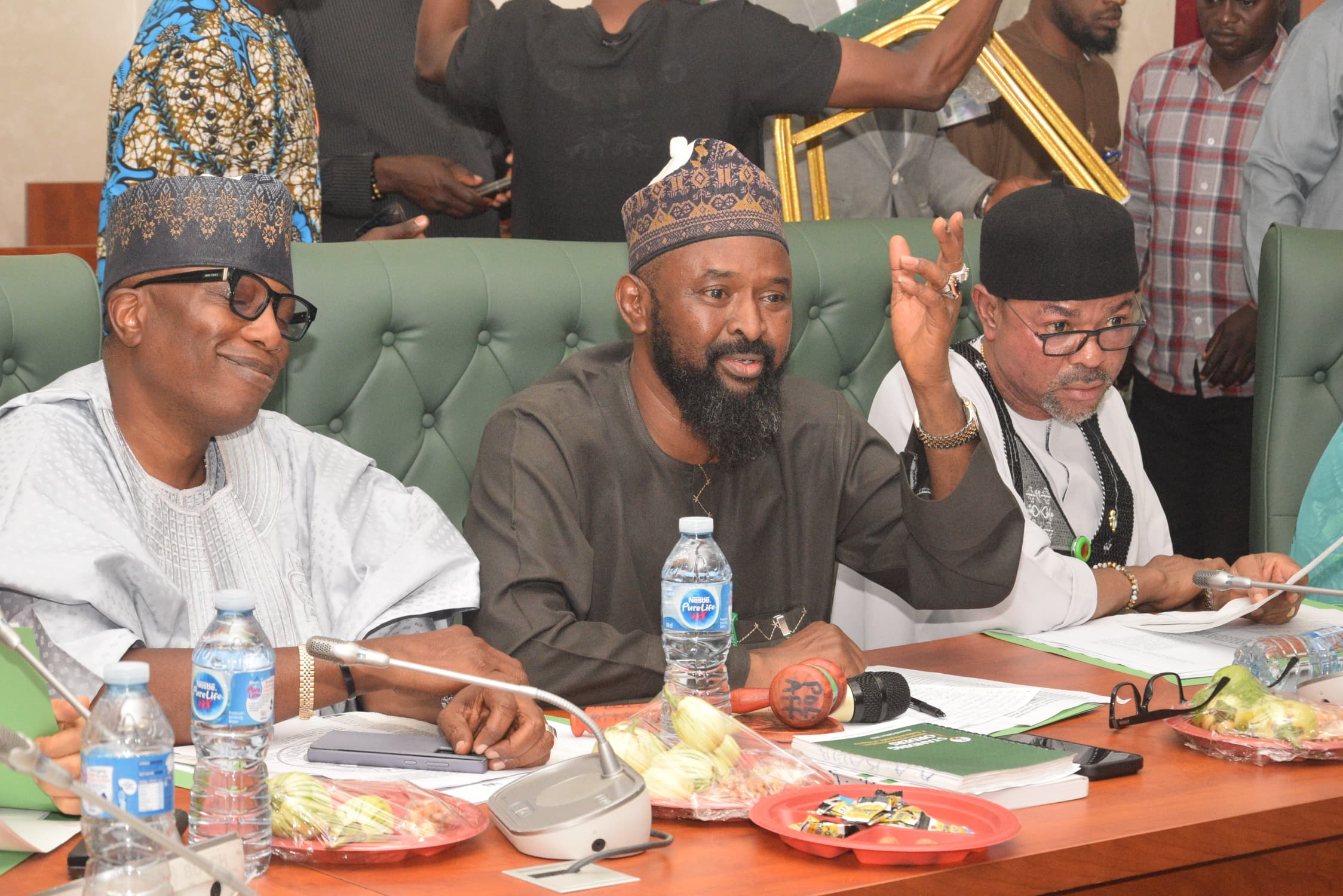
The House of Representatives has held a public hearing on a proposed amendment to the Nigeria Police Act, which seeks to ensure that women make up at least 15 per cent of all new police recruits. The amendment also aims to overhaul gender-related policies across the Force.

Under the proposal, the Police would be required to implement a gender-responsive framework covering recruitment, training, deployment, disciplinary procedures, and marital considerations. It would also establish a dedicated unit responsible for monitoring compliance with these standards.

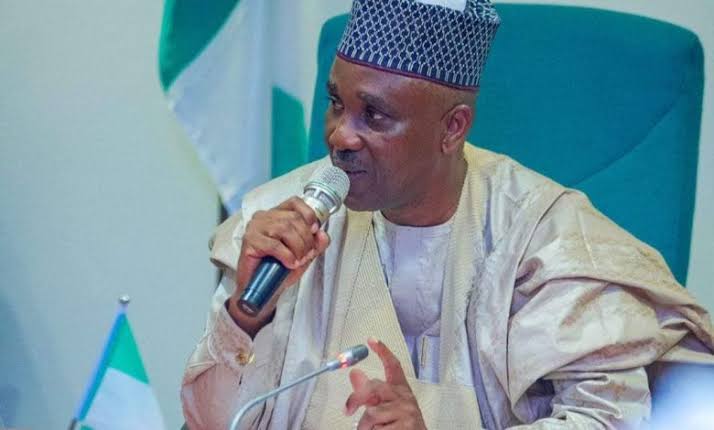
Speaking at the hearing, the Chairman of the House Committee on Police Affairs, Rep. Makki Abubakar Yalleman, stressed that women are indispensable to effective policing and must no longer be relegated to the margins of the Nigeria Police Force.

Advertisement

Yalleman noted that boosting female participation is not merely a symbolic gesture but a practical necessity. He emphasised that women officers are particularly vital in dealing with cases such as domestic abuse, sexual violence, and other offences where women and children are often the most vulnerable.

“The proposed amendment seeks to increase the recruitment of women into the force on at least 15% and to also provide a gender-friendly ambience for women to thrive in the system. This move is a welcome development as it falls in line with Legislative Agender of the 10th Assembly which seeks to promote gender equality and empower women.

“The benefits of having more women in the force cannot be overemphasised as it enhances the effectiveness of law enforcement agencies in addressing crimes that affect women disproportionately such as domestic violence and sexual assault. Women officers are often better equipped to handle these sensitive cases, providing a safe and supportive environment for victims to report incidents.

“Furthermore, increasing the number of women in the Police Force will help to promote a culture of inclusivity and diversity within the system, thus helping to set an example for young ladies, showing them that they too can pursue careers in law enforcement and contribute meaningfully to the development of their communities in particular and the nation in general.

Advertisement

“We are aware that certain societal and cultural biases act as barriers to entry into the Force for women. This can be corrected through targeted outreach programs and mentorship initiatives that will portray the Force in a good light. This amendment will prioritise the recruitment, promotion and creation of friendly working environment for women. it will provide training schemes for women that will equip them with the requisite skills and knowledge they need to excel in the job”, he stated.

At the hearing, the Ministry of Police Affairs was represented by Okorie Kalu from its Legal Unit, he expressed full support for the amendment and described the initiative as “commendable and overdue”, he noted that the ministry has already begun drafting regulations to eliminate discriminatory enlistment criteria, including restrictions linked to pregnancy and marital status.

Kalu said the Ministry was working on policies to ensure equitable training, duty assignment, dressing guidelines, maternity leave, fair postings, and the establishment of a Women and Children Protection Centre under the Inspector General of Police.

He noted that the amendment would serve as a legal backbone for sustainable reform, but emphasized that proper funding and officer training must accompany the policy shift.

Advertisement

“The amendment of Section 9 (1)(F) of the Police Act to address historical gender gaps and discriminatory provisions is an applaudable step in revolutionizing the Nigeria Police Force. The Ministry has no objection to the amendment”,  he said.

He disclosed that the Ministry has already begun drafting new regulations to eliminate discriminatory enlistment criteria such as restrictions based on marital status and pregnancy, and to remove gender-based duty assignments and dress code limitations.

“Other reform measures initiated by the Ministry include: Integration of the NPF Gender Policy into routine police procedures; Introduction of maternity leave and religious accommodation provisions; Equitable posting policies; Establishment of grievance and complaint mechanisms with oversight; and Reorganization of the IGP’s office to include a Women and Children’s Protection Centre, as well as human rights and internal affairs units”, he added.

In his opening remarks,  Speaker  Tajudeen Abbas, said  raising the number of women in the Nigeria Police Force is not just a gender issue but a matter of justice, fairness, and improved policing outcomes.

Advertisement

Speaker Abbas, who was represented by Rep. Nnamdi Ezechi, said the Police Force has operated for too long with a disproportionately low number of women, especially in leadership positions.

According to him, the situation has limited opportunities for qualified women and weakened the institution.

“Today’s gathering represents another crucial step in our collective strive to reform and modernize our policing system so that it becomes more inclusive, equitable, and truly reflective of the society it serves.

“The Bill before us seeks to amend the Nigeria Police Act No. 2 of 2020 in order to guarantee a minimum of fifteen percent women representation in the recruitment of police officers. It further mandates the Nigeria Police Force to establish and maintain a gender-responsive compliance programme that addresses key aspects of policing such as recruitment, training, posting, discipline, and career progression. Additionally, it provides for the creation of a monitoring unit to keep accurate record of the integration process and ensure adherence to these provisions.

Advertisement

“At its core, this Bill speaks to justice, fairness, and the recognition that effective policing must draw strength from diversity. For too long, the Nigeria Police Force has operated with a disproportionately low representation of women, particularly in its leadership structure. This has not only limited opportunities for many capable women, but also deprived the institution of the unique perspective and empathy that female officers bring to law enforcement and community relations.

“By increasing the participation of women in the Force, we are not merely advancing the cause of gender equality; we are enhancing professionalism, deepening accountability, and improving the overall quality of policing in Nigeria. Research consistently show that police institutions with stronger female representation record fewer incidents of excessive force, handle cases of gender-based violence more effectively, and generally enjoy greater public trust.

“This amendment therefore aligns with the spirit and intent of our Constitution, as well as Nigeria’s international commitments under the Convention on the Elimination of All Forms of Discrimination Against Women (CEDAW) and the Sustainable Development Goals, particularly Goal 5 which emphasizes gender equality and women’s empowerment. It also reinforces our constitutional mandate as legislators to ensure that public institutions embody the principles of equity, justice, and good governance.

“However, it is obvious that legislation alone will not lead to the achievement of these goals, and a way must be found to enforce implementation and sustained monitoring. To this end, this Bill provides for the establishment of a dedicated unit within the Nigeria Police Force to maintain records and assess compliance with gender-responsive policies. This will ensure that our good intentions are translated into measurable action and tangible results”, he said.

Advertisement

The public hearing drew participation from women’s rights advocates, security experts, civil society groups, and senior police officers, many of whom described the Bill as a necessary step to modernize the country’s policing system.

The Committee is expected to consider stakeholder submissions before presenting its final recommendations to the House.
Continue Reading
Advertisement

News

INEC showcases Tinubu, Shettima’s personal details ahead of 2027 elections

Published

on

ADVERTISEMENT
Zoom Ad
ADVERTISEMENT
Zoom Ad

Electoral Commission has begun the public display of the personal particulars and academic credentials of presidential candidates for the 2027 general election.

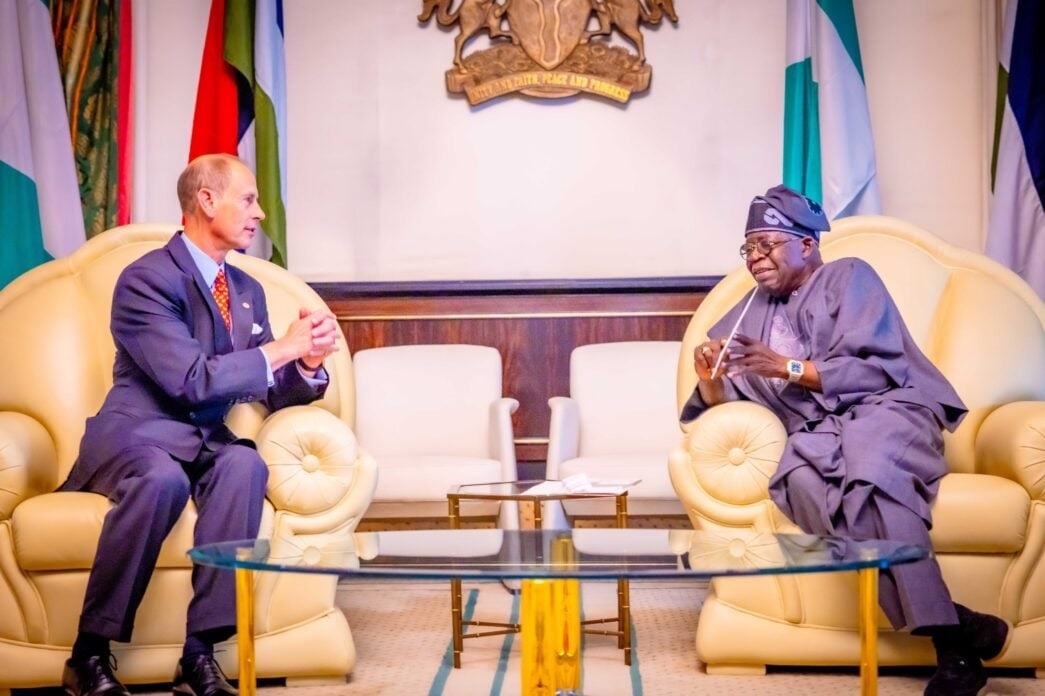
The exercise, which took off on Saturday, features documents submitted by President Bola Tinubu of the All Progressives Congress and running mate, Vice President Kashim Shettima.

Copies of Tinubu’s Form EC9 sighted showed his Bachelor of Science degree in Business Administration from Chicago State University, United States, which his transcript indicated was awarded “with honours” on June 22, 1979.

The form also carried his National Youth Service Corps discharge documents, which showed he served in Oyo State from December 1982 and was demobilised in November 1983.

Advertisement

His work history, as listed in the form, showed three employers: Mobil Nigeria Limited, where he worked from 1983 to 1992 and left on account of “advancement”; the Lagos State Government, where he served from 1999 to 2007 until the “legal end of tenure”; and the Federal Government of Nigeria, where he has worked from 2023 till date.

The years listed against his primary and secondary school attendance in the same form were entered as “0000,” with only his university qualification, a B.Sc obtained in 1979, indicated.

The President’s personal information section listed his date of birth as March 29, 1952, and his age as 74.

It also listed his birthplace as Lagos, his residential address as No. 4, Queen’s Drive, Ikoyi, and his occupation as “politician.”

Advertisement

For Shettima, the displayed documents traced his education from primary school.

His Certificate of Primary Education, issued by the Ministry of Education, North-Eastern State, showed he attended Lamisula I Primary School between 1972 and 1978, finishing second out of 22 pupils in his final year, with English, History and Religious Knowledge listed as his strongest subjects.

His West African Examinations Council result, obtained at Government Secondary School, Potiskum, in June 1983, showed six credits and passes, including a distinction in Religious Knowledge and Economics.

He proceeded to the University of Maiduguri, where records showed he bagged a Second Class Upper Division degree in Agriculture in August 1989, before earning a Master of Science in Agricultural Economics from the University of Ibadan.

Advertisement

His NYSC discharge certificate indicated he served from October 1989 to October 1990.

The display, contained in Form EC9, is a statutory requirement under Section 29(3) of the Electoral Act, 2026, which mandates INEC to publish candidates’ particulars within 21 days of receipt.

In a statement, the commission explained Form EC9 contains the credentials, personal particulars and affidavits submitted by candidates.

“Form EC9 contains the credentials, personal particulars and affidavits submitted by candidates sponsored by political parties,” INEC stated.

Advertisement

The documents were displayed at INEC offices nationwide, including its Lagos State office in Sabo-Yaba and Local Government Area offices within affected constituencies.

The Electoral Act empowers members of the public to apply to INEC for certified true copies of nomination forms and other documents submitted by candidates, and to seek legal redress over allegations of false declaration or forgery.

Campaigns for the presidential and National Assembly elections are scheduled to begin on August 19, while those for governorship and state assembly elections will follow later, in line with the commission’s revised timetable.

Advertisement
Continue Reading

News

Elon Musk reveals Nigeria had four million more births than EU

Published

on

ADVERTISEMENT
Zoom Ad
ADVERTISEMENT
Zoom Ad

Richest man globally, Elon Musk has said Nigeria alone had four million more births than the entire European Union.

Musk made the claim on his X account on Saturday, citing his artificial intelligence chatbot, Grok, as the source of the information.

“Nigeria alone had 4 million more births than the entire EU last year,” he wrote on X.

Musk’s remarks highlight Nigeria’s high birth rate compared with the European Union.

Advertisement

Available data from Musk’s Grok showed that Nigeria recorded an estimated 7.8 million births in 2025, while the European Union had 3.5 million births.

This means Nigeria recorded approximately four million more births than the EU.

Recall that in February 2026, the United Nations Children’s Fund, UNICEF, said 14 million Nigerian children had their births officially registered over the previous two years, marking significant progress in legal identity coverage.

Africa’s most populous country continues to record a high birth rate, placing further strain on its already fragile economy.

Advertisement

World Bank data showed that Nigeria’s poverty rate stood at 63 percent in 2025 amid rising economic hardship fueled by the skyrocketing cost of living.

Meanwhile, the Emir of Kano, Muhammadu Sanusi II, said at the 31st Nigerian Economic Summit that, for the first time, the country’s economy was growing faster than its population, which is estimated at 250 million.

Daily Post

Advertisement
Continue Reading

News

Presidency reacts to Onaiyekan’s comment, says he’s not speaking for Christians, insists Catholics supporting Obi

Published

on

ADVERTISEMENT
Zoom Ad
ADVERTISEMENT
Zoom Ad

The Presidency has rubbished comments by Cardinal John Onaiyekan criticising the administration of President Bola Tinubu, insisting that the Catholic cleric was expressing a personal and political opinion rather than speaking on behalf of Christians in Nigeria.

Daniel Bwala, Special Adviser to the President on Policy Communication, made the remarks in a post on his X account on Saturday.

Bwala’s comments came in response to Onaiyekan’s criticism of the Tinubu administration after the recent visit of the Catholic Bishops’ Conference of Nigeria, CBCN, to the President.

The cardinal had accused the government of being more focused on winning by all means than addressing the country’s challenges.

Advertisement

Reacting, Bwala alleged that Onaiyekan was speaking for the Catholic Church and not the entire Christian community, claiming that the institution largely supported Labour Party presidential candidate, Peter Obi, during the 2023 election.

He argued that the cardinal’s comments were political rather than spiritual, adding that not all Catholics supported Obi during the election.

According to Bwala, President Tinubu was within his rights to disagree with the bishops’ assessment of Nigeria’s economy, maintaining that the administration’s position was backed by “facts, statistics and numbers.”

The presidential spokesman also contended that there is a broader Christian body comprising different denominations, including the Catholic Church and the Catholic Bishops’ Conference, whose position, he said, should remain neutral rather than political.

Advertisement

Bwala said: “Cardinal Onaiyekan, wasn’t speaking for Christian’s, he was speaking for Catholics, the very institutions rooting for Peter Obi @PeterObi infact likely the institution where Peter Obi also said in 2022 “take back your country “.

“Therefore , Cardinal is more political than spiritual. And not all catholic members are supporting peter Obi. The president @officialABAT was well within his right to disagree with their assertion as regards Nigeria’s economy based purely on facts, stats and numbers factored into context.

“Ironically, the same priest would rebuke their members if the members said “we are suffering or we are poor” they would tell them to rather say “we are doing great and or we are rich even when they are suffering or poor”

“There is a body comprising all Christian’s including the Catholics and catholic bishops conference and that body’s position is neutral and should be so, otherwise it is political.”

Advertisement
Continue Reading

Trending

Copyright © 2024 Naija Blitz News