Connect with us

News

ISWAP leader sentenced to 20 years imprisonment over terror attacks

Published

on

ADVERTISEMENT
Zoom Ad
ADVERTISEMENT
Zoom Ad

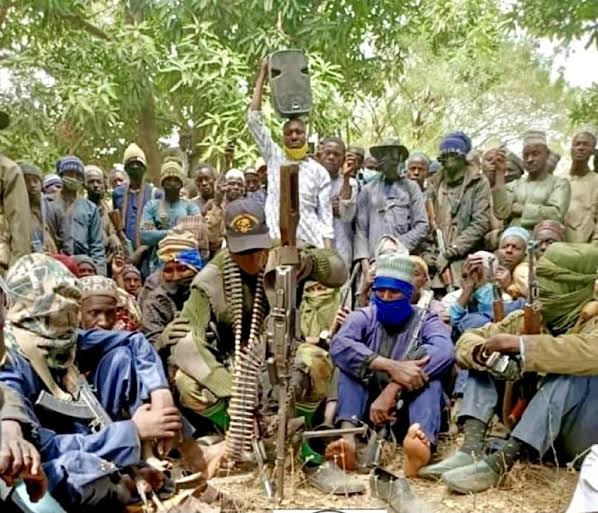
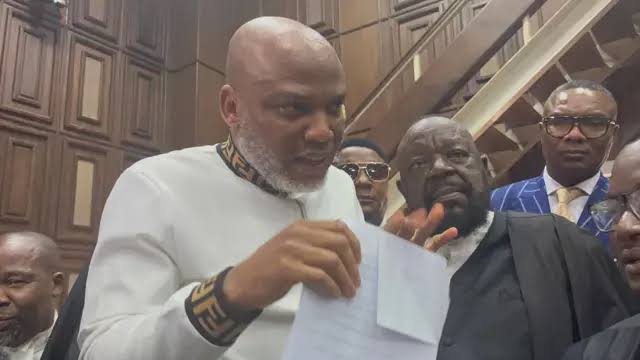
The Federal High Court in Abuja has sentenced Hussaini Ismaila, a leader of the Islamic State West Africa Province, to 20 years in prison for terrorism-related offences.


Justice Emeka Nwite delivered the judgment on Tuesday after Ismaila, also known as Mai Tangaran, changed his plea from not guilty to guilty on four counts filed under the Terrorism Prevention (Amendment) Act, 2013.

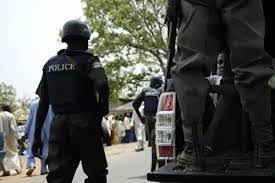
Ismaila was accused of orchestrating coordinated attacks on police formations in Kano State in 2012.

He was said to have attacked the Police Headquarters in Bompai, the Mobile Police Base on Kabuga Road, Pharm Centre Police Station, and Angwa Uku Police Station, during which multiple people were injured.

Advertisement

He was arrested on August 31, 2017, at Tsamiyya Babba Village in Gezawa Local Government Area of Kano State.

The trial experienced delays due to interlocutory appeals and a trial-within-trial to determine the voluntariness of his extra-judicial statements.

The Department of State Services called five witnesses, including operatives and eyewitnesses.

Following the testimony of the fifth witness, Ismaila changed his plea.

Advertisement

His counsel, P. B. Onijah of the Legal Aid Council, urged the court to temper justice with mercy, noting that Ismaila was remorseful and had pleaded guilty to avoid further delays.

Justice Nwite found him guilty on all four counts, sentencing him to 15 years on count one and 20 years each on counts two, three, and four, to run concurrently.

The sentence takes effect from the date of his arrest, August 31, 2017.

The judge also ordered Ismaila to undergo rehabilitation and deradicalisation upon completion of his term.

Advertisement

Meanwhile, the trial of two alleged Ansaru leaders, Mahmud Usman and Abubakar Abba, has been adjourned to January 15, 2026.

The defendants face a 32-count charge filed by the DSS, with alleged offences ranging from terrorism and kidnapping to illegal mining, terrorism financing, and arms procurement committed between 2015 and 2024.

Usman has pleaded guilty to Count 10 related to an economic crime but denied the remaining counts.

He had previously been sentenced to 15 years for engaging in illegal mining to fund terrorism and kidnapping. Abba has pleaded not guilty to all charges.

Advertisement

The charges allege that the duo bombed the Wawa Military Cantonment in Niger State, trained in weapons handling and improvised explosives, kidnapped security personnel—including a Customs officer and an Immigration officer who was later killed—and collected millions of naira in ransom payments to procure arms and train followers in Mali and Sudan.

During Wednesday’s proceedings, defence counsel B. I. Bakum requested that the defendants be transferred to a correctional centre to facilitate access for trial, but DSS counsel David Kaswe opposed the request, citing procedural requirements.

Justice Nwite adjourned the matter to January 15, 2026, directing the defence to follow proper protocol in requesting access to their clients.
Advertisement
Continue Reading
Advertisement

News

Wike Slams Cardinal Onaiyekan over Alleged Political Bias in 2023 Elections

Published

on

ADVERTISEMENT
Zoom Ad
ADVERTISEMENT
Zoom Ad

Federal Capital Territory (FCT) Minister Nyesom Wike has challenged the impartiality of Cardinal John Onaiyekan, accusing the Archbishop Emeritus of Abuja of taking sides during the 2023 general election.

Speaking during a media parley on Tuesday, Wike addressed the recent clash between the Presidency and Onaiyekan following the Catholic Bishops’ Conference of Nigeria’s (CBCN) closed-door meeting with President Bola Tinubu.

After the meeting, Onaiyekan publicly suggested that aides were painting a “rosy picture” for the President while he remained focused on 2027—a statement the Presidency criticized as an abuse of privilege.

Wike argued that religious leaders undermine their credibility when their commentary is purely negative.

Advertisement

While acknowledging that constructive criticism is valid, the minister insisted that leaders must also recognize government achievements to remain objective.

He said while it was appropriate to criticise the government where necessary, leaders should also recognise areas where progress had been made.

“If a religious leader is seen taking a side, it becomes difficult for people to see their comments as helpful. Onaiyekan’s political leanings in 2023 were not hidden.

“I am aware of the position of Cardinal Onaiyekan; all of us know, it’s not hidden, whom he supports; everybody knows that”.

Advertisement

“It’s not every time you say things are bad; nobody has heard you say the government has done this well.

“The point I am trying to make is that, as a leader, commend the government when it has done well in certain areas; criticise but acknowledge areas of progress ‘but you should improve in these other areas.”

He concluded that consistent, one-sided criticism naturally leads the government to view such remarks as politically motivated rather than objective advice.

“It’s not every time you say things are bad; nobody has heard you say the government has done this well”, Wike said.

Advertisement
Continue Reading

News

President Tinubu should provide primary and secondary school details–ADC chieftain, Kalu

Published

on

ADVERTISEMENT
Zoom Ad
ADVERTISEMENT
Zoom Ad

African Democratic Congress (ADC) chieftain Kalu Kalu has challenged President Bola Ahmed Tinubu to publicly provide details of the primary and secondary schools he attended following the release of presidential candidates’ personal particulars and credentials by the Independent National Electoral Commission (INEC) ahead of the 2027 general election.

Speaking on Channels Television’s Politics Today on Monday, August 3, 2026, Kalu queried the educational information submitted by the President, arguing that Nigerians deserve a clearer account of his academic background.

The ADC chieftain said his concerns were based on details contained in the nomination documents submitted to INEC, which he claimed raised fresh questions about Tinubu’s educational history.

President Tinubu’s failure to include details of his primary and secondary school education in the educational qualifications section of his INEC documents has sparked renewed public discussion over his academic records.

Advertisement

Kalu also referred to documents allegedly submitted by Tinubu during the 2022 election cycle, claiming that the President listed a National Youth Service Corps (NYSC) certificate among his credentials. He questioned the name and details contained in the document, alleging that they required further clarification.

According to him, the issues surrounding the President’s academic records should be addressed publicly to ensure transparency.

“Even in 2022, in the INEC document he submitted, he claimed he had a National Youth Service Corps (NYSC) certificate. And the name on that certificate was Bola Adekunle Tinubu. So where did he get ‘Adekunle’ from? He claimed he graduated, but the certificate was forged,” Kalu said.

The claims have added to ongoing public debate over the educational qualifications and eligibility of political candidates ahead of the 2027 presidential election.

Advertisement
Continue Reading

News

Wike: Tinubu Only Leader With Courage to Fix Nigeria Now

Published

on

ADVERTISEMENT
Zoom Ad
ADVERTISEMENT
Zoom Ad

Minister of the Federal Capital Territory (FCT), Barr. Nyesom Wike, has declared that President Bola Tinubu remains the only credible leadership option for Nigeria, insisting that no other potential presidential contender has demonstrated the courage or capacity to confront the country’s long-standing economic challenges.

Speaking at his monthly media briefing on Tuesday in Abuja, Wike defended Tinubu’s economic reforms, particularly the removal of petrol subsidy, describing the decision as the boldest taken by any Nigerian president in decades.

According to him, while the reforms have imposed temporary hardship on Nigerians, they have strengthened the finances of state governments, improved infrastructure funding and ended the era when states depended on bank loans to pay workers’ salaries.

“Asiwaju is the only person we have now. He has not done everything, and nobody says he has, but he has shown the courage to take decisions others refused to take. Give him credit for that,” Wike said.

Advertisement

The minister argued that Nigerians should not expect an economy weakened over many years to recover within a short period.

“When problems have accumulated for over 15 years, people expect them to be solved in one year. It doesn’t work that way. Healing takes time, but it will happen,” he said.

Wike described the fuel subsidy regime as “a cancer,” recalling that as governor, he had to rely on bank borrowing to meet salary obligations because of declining allocations to states.

“The fuel subsidy consumed over ₦3 trillion at a time. Today, states receive more money. Pensioners are being paid, governors no longer queue before bank managers to borrow money just to pay salaries, and there are more resources for infrastructure,” he said.

Advertisement

He maintained that leadership is defined by the willingness to make difficult decisions rather than by popular sentiment.

“Everybody agreed that subsidy was a scam, but no president had the political will to remove it. President Tinubu took that decision. No decision is 100 per cent perfect, but leadership is about taking responsibility,” he added.

Continue Reading

Trending

Copyright © 2024 Naija Blitz News