The Department of State Services (DSS) has invited Senator Yusuf Datti Baba-Ahmed, founder of Baze University and former vice-presidential candidate, over recent comments in which he blamed both the judiciary and the Nigerian military for allowing the inauguration of President Bola Ahmed Tinubu and Vice President Kashim Shettima.


A top security source who confirmed the development on Friday said the invitation followed what intelligence authorities considered “inflammatory and potentially destabilizing” remarks made by Baba-Ahmed on national television and other media platforms.
According to the source, Baba-Ahmed’s latest statements have raised concerns within the intelligence community, particularly his claims that Nigeria is currently facing a “constitutional crisis,” and his criticism of state institutions for not preventing the swearing-in of the current administration. 
The source explained that the DSS has been monitoring his public appearances in recent weeks and had become increasingly alarmed by what was described as a pattern of provocative commentary capable of stirring political tension.
“A few days ago, Baba-Ahmed appeared on national television blaming the judiciary and the military for allowing the swearing-in of President Bola Tinubu and Vice President Kashim Shettima,” the source said. “He went as far as suggesting that the military had been demeaned, saying it was the inauguration that allegedly emboldened civilians to look them in the face and call them ‘bloody fools.’”
Security officials reportedly consider such statements to be not only inflammatory but potentially capable of emboldening anti-government sentiments or inciting elements within the security architecture. The source noted that, given Nigeria’s fragile political environment, rhetoric of this nature cannot be taken lightly.
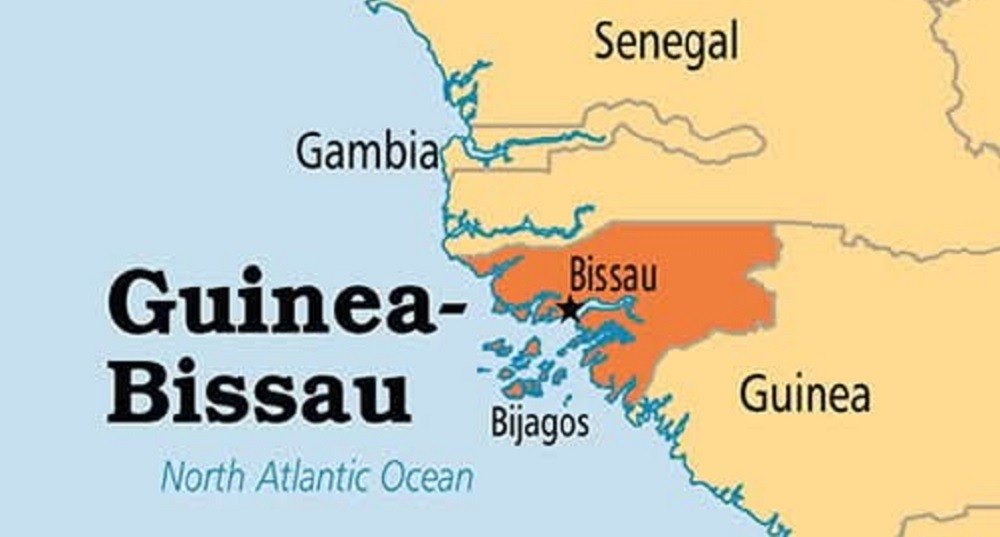
“His comments carry undertones that could heighten national tension, especially at a time when Nigeria is still navigating political sensitivities,” the official warned. “It is disturbing, particularly when we consider how similar narratives contributed to instability in places like Guinea-Bissau and other countries.”
The source stressed that the DSS invitation was not politically motivated but driven by national security considerations. According to him, the agency is acting in line with its mandate to prevent any situation that could threaten Nigeria’s corporate existence.
“I believe the secret police is treating his comments with caution,” he said. “This has nothing to do with politics. The corporate existence of our nation could be threatened if such rhetoric is allowed to fester.”
He added that Baba-Ahmed’s remarks regarding the “complacency” of the military and the judiciary in not halting President Tinubu’s inauguration were considered particularly troubling by national security analysts.
The security source further revealed that the DSS sees the invitation as a preventive measure rather than a punitive one, explaining that such engagements are meant to provide clarity and avoid escalation.
“These sessions are not punitive; they are preventive,” he stated. “They are focused on clarifying intent, contextualizing the remarks, and preventing the emergence of narratives that could unintentionally fuel unrest.”
He also pointed out that Baba-Ahmed’s recent criticism of government efforts to improve national security—describing them as a “joke”—may undermine public confidence in state institutions if left unchecked.
Such public figures, he argued, wield influence and their statements can easily shape public perception or reinforce anti-establishment views among citizens already disillusioned by insecurity and economic hardship.
The intelligence community’s heightened sensitivity to such commentary also stems from Nigeria’s history of political tensions, where public statements by influential personalities have occasionally triggered large-scale unrest.
With the 2023 election disputes still fresh in the minds of many Nigerians, and opposition figures continuing to challenge the legitimacy of the current administration, security agencies remain cautious about rhetoric that could inflame already polarized segments of the population.
The DSS, the source said, aims to avoid a situation where public statements by political actors escalate into street protests, institutional distrust, or actions by non-state groups seeking to exploit political divisions.
As of the time of this report, neither Senator Baba-Ahmed nor his media team had publicly commented on the DSS invitation. Attempts to reach his spokesperson for clarification were unsuccessful.
Baba-Ahmed, who served as the running mate to Peter Obi of the Labour Party in the 2023 election, has been a vocal critic of the Tinubu administration. He has repeatedly insisted that the outcome of the 2023 election was flawed and has consistently questioned the legitimacy of the current government.
His comments, however, have drawn criticism from government supporters and some neutral observers who accuse him of making statements that undermine national unity.
Security analysts maintain that the DSS invitation is part of routine engagement used by intelligence agencies worldwide when political rhetoric begins to cross into the territory of potential incitement. The agency is expected to question him on the intent behind his comments, his interpretation of the alleged “constitutional crisis,” and the implications of his statements concerning the military and judiciary.
Zagazola Makama, a counterinsurgency expert who first reported the development, noted that intelligence agencies consider such interventions critical to preventing political instability in an already charged environment.
The invitation, expected to take place within days, will likely determine whether further security actions will be considered necessary.
For now, analysts say the development underscores the heightened sensitivity of Nigeria’s security agencies to political commentary that challenges the legitimacy of national institutions.