Connect with us

News

What FG Is Doing To Address Fraudulent Calls, Track Activities Of Criminals — Bosun Tijani

Published

on

ADVERTISEMENT
Zoom Ad
ADVERTISEMENT
Zoom Ad

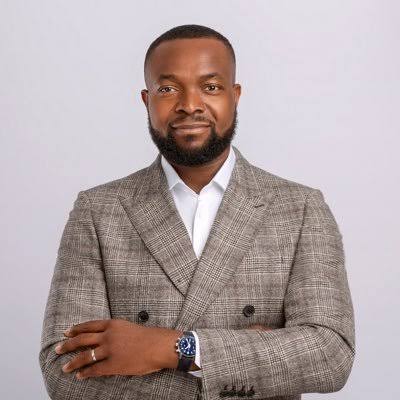
Nigeria’s Minister of Communications, Innovation and Digital Economy, Bosun Tijani, has explained the steps taken by Federal Government to tackle insecurity, through the telecommunications space.

According to the minister, the issue is “far more technical” than commonly understood.

The telecom sector has been under scrutiny since 2020, when the government introduced the mandatory National Identification Number–SIM linkage to curb fraud, anonymous communication, and crimes facilitated through unregistered lines.

In an interview on Channels Television’s Politics Today on Friday, Tijani acknowledged public worry over cases of kidnapping and ransom negotiations allegedly conducted through unregistered SIMs.

Advertisement

“There was an exercise that was conducted by the telcos to clean out all SIMs. The reason the President pushed us to invest in towers in those areas was the fact that we realised there was a special type of technology they [criminals] were using to call,” he explained.

However, he revealed that some criminal networks had shifted tactics, relying on technologies that allow them to route calls across multiple towers, a method that becomes particularly effective in remote or poorly connected locations.

“They were not using the normal towers; they bounce calls off multiple towers. That’s why they enjoy living in areas that are unconnected,” he added.

To address these vulnerabilities, the minister outlined a connectivity strategy involving satellite upgrades, fibre expansion.

Advertisement

He noted that Nigeria remains the “only West African country” currently operating its own communications satellites, a capability, he said, the government is now strengthening.

“This is why we are upgrading our two satellites, so that if our towers are not working, our satellites will work,” he said.

4,000 Telecom Towers

The minister also confirmed that the deployment of 4,000 new telecom towers across underserved rural communities would reduce coverage blackspots, exploited by kidnappers and illegal SIM operators, and would be executed in collaboration with Huawei.

Advertisement

“It is why we are investing in fibre, it is why next year this project will start. We are doing it with Huawei, 4000 towers in rural areas,” he said.

The collaborative effort, which was approved by the Federal Executive Council last Wednesday, according to the minister, ”is expected to significantly improve rural connectivity, stimulate commerce and enhance security surveillance in areas currently lacking network coverage.”

Responding to questions about when Nigerians should expect the upgraded satellites to go live, the minister said satellite deployment remains “the third leg” of the broader connectivity operation.

“That one will take longer than the other two. The other two are well in progress,” Tijani added.

Advertisement

Telcoms Shutdown

The Nigerian Communications Commission (NCC) had in September 2021 directed telecommunications providers to shut down services in Zamfara State.

The shutdown, according to the commission, became necessary due to the lingering insecurity in the state.

The then-Commissioner for Information, Ibrahim Dosara, had said the military onslaught against the bandits was yielding tremendous success, especially since the shutdown of telecoms services in the state.

Advertisement

“Zamfara State Government, in efforts to ensure the crushing of the bandits, has requested the closing down of all networks in the state, and this has been effective. The security officials are finding it very easy to deal with the bandits in their enclaves in the forests,” Dosara disclosed at a press briefing in the state.

But in October 2021, the Zamfara State Government directed the restoration of telecommunication services only around the Gusau metropolis, the state capital.

It explained that the restoration of the network in the state capital became imperative following the success recorded in the fight against banditry.

It added that the decision was aimed at easing the hardship faced by both the private and public sectors in the state.

Advertisement
Continue Reading
Advertisement

News

FG, states, LGAs share ₦2.551trn as June 2026 revenue

Published

on

ADVERTISEMENT
Zoom Ad
ADVERTISEMENT
Zoom Ad


The Federation Account Allocation Committee (FAAC), at its July 2026 meeting chaired by the Honourable Minister of Finance and Coordinating Minister of the Economy, Mr. Taiwo Oyedele, has shared a total of ₦2.551 trillion among the Federal Government, the 36 States and 774 Local Government Councils as Federation Account revenue for June 2026.

The meeting, held in Abuja, was attended by the Accountant General of the Federation, State Commissioners of Finance and other members of the Committee.

The amount distributed comprised ₦1.810 trillion in Statutory Revenue and ₦740.724 billion from Value Added Tax (VAT).

Advertisement

From the Statutory Revenue, the Federal Government received ₦849.366 billion, the State Governments ₦430.810 billion, while the Local Government Councils received ₦332.136 billion. The oil producing States also received ₦197.610 billion as 13 per cent derivation.

The VAT distribution saw the Federal Government receive ₦74.072 billion, the State Governments ₦407.398 billion, while the Local Government Councils received ₦259.253 billion.

In all, the Federal Government received ₦923.438 billion, the State Governments ₦838.208 billion, the Local Government Councils ₦591.390 billion, while ₦197.610 billion was shared as 13 per cent derivation to the oil producing States.

FAAC noted that gross revenue available in June 2026 stood at ₦4.501 trillion, comprising ₦3.701 trillion in statutory revenue and ₦799.746 billion in gross VAT collections.

Advertisement

The Committee observed a strong improvement in revenue performance during the month.

Gross statutory revenue increased by ₦1.049 trillion over the figure recorded in May 2026.

The growth was driven largely by higher receipts from Companies Income Tax, Value Added Tax, Import Duty, Customs Excise Tariff Levies, Petroleum Royalties, Gas Flared Penalties, Rental Income and Miscellaneous Oil Revenue.

However, collections from Petroleum Profit Tax, Hydrocarbon Tax, Mineral Royalties and Fees recorded declines.

Advertisement

VAT collections also recorded positive growth.

Gross VAT revenue rose from ₦743.668 billion in May to ₦799.746 billion in June, representing an increase of ₦56.078 billion.

Continue Reading

News

Senator Ikpea Thumbs Down Reintegration of Repentant Boko Haram Members

Published

on

ADVERTISEMENT
Zoom Ad
ADVERTISEMENT
Zoom Ad

Chairman of the Senate Committee on Drugs and Narcotics, and the senator representing Edo Central, Senator Joseph Ikpea, has thumbed down the rehabilitation and reintegration of repentant Boko Haram members into society, insisting that individuals involved in terrorism should face the full weight of the law rather than be returned to civilian life.

Speaking with journalists after the inaugural meeting of the Senate Committee on Drugs and Narcotics at the National Assembly on Wednesday, Ikpea described the policy of reintegrating former insurgents as “unreasonable,” arguing that it undermines the sacrifices of security personnel and victims of terrorism.

According to him, insurgents responsible for the killing of innocent Nigerians and members of the armed forces should not be rehabilitated or reintegrated into society.

“I don’t understand the rationale behind reintegrating Boko Haram members into society. Our gallant soldiers have lost their lives protecting the country from these terrorists. If someone has committed acts of terrorism and is apprehended, such a person should face the consequences of the law,” he said.

Advertisement

The senator maintained that Boko Haram and other terrorist groups remain enemies of every Nigerian, irrespective of religion or ethnicity, noting that they target Christians, Muslims, civilians and security personnel alike.

Ikpea also alleged that some recent kidnapping incidents across the country could have political undertones, suggesting that certain actors may be exploiting insecurity to undermine the government ahead of future elections.

On the issue of drug control, the committee chairman disclosed that the Senate Committee on Drugs and Narcotics would review the proposed bill seeking to impose the death penalty for drug-related offences after a thorough examination of the legislation.

He explained that he was not a member of the Senate when the bill was previously debated and therefore could not comment on its current status.

Advertisement

“I have no idea about that bill because I was not a senator when it came up on the floor. My committee will look at it and advise accordingly. For now, I cannot say much about it,” he said.

Ikpea noted that the committee’s inaugural meeting was convened to outline its legislative agenda and oversight responsibilities.

He said one of its immediate priorities would be strengthening oversight of the National Drug Law Enforcement Agency (NDLEA) and inspecting rehabilitation centres across the country to ensure they comply with approved operational standards.

“We are planning to visit rehabilitation centres to ensure they meet the required standards. You cannot just establish a rehabilitation centre without complying with the necessary regulations. We want to ensure they are operating properly and delivering quality services,” he said.

Advertisement

Speaking on the proposed death penalty for drug traffickers, the senator declined to take a firm position, saying punishment for offences should be proportionate to the crimes committed and that the final decision rests with the National Assembly and the Federal Government.

“Every offence should attract punishment commensurate with its severity. Different countries have different laws on drug trafficking. Whatever the Senate and the Federal Government eventually decide will be respected,” he stated.

Ikpea further raised concern over the growing prevalence of drug abuse among Nigerian youths, warning that the trend poses a serious threat to the nation’s future.

Citing estimates that about 14 million Nigerians are affected by drug abuse, he advocated the introduction of drug education into school curricula from the primary level to discourage substance abuse from an early age.

Advertisement

“The youth are the leaders of tomorrow. If we fail to educate them on the dangers of drug abuse, the nation’s future will be in jeopardy. We are looking at introducing drug education into school curricula so children understand the consequences from an early age,” he said.

Continue Reading

News

UK Backs National Assembly Security Dialogue as Push for State Policing Gathers Momentum

Published

on

ADVERTISEMENT
Zoom Ad
ADVERTISEMENT
Zoom Ad

UK Backs National Assembly Security Dialogue as Push for State Policing Gathers Momentum

By Gloria Ikibah

The UK Government-funded Strengthening Peace and Resilience in Nigeria (SPRiNG) Programme has thrown its weight behind the National Assembly Security Roundtable, describing the initiative as a timely platform to advance security sector reforms, strengthen institutional accountability and accelerate discussions on state policing.

In a statement issued ahead of the roundtable, scheduled for Wednesday as part of the National Assembly Open Week 2026, it said that the engagement will bring together Nigeria’s top security chiefs, lawmakers and governors to review the country’s security challenges and identify the legislative and budgetary measures needed to improve the nation’s security architecture.

Advertisement

The meeting, to be held at the Conference Hall of the National Assembly Library Trust Fund, is expected to examine the support required by security agencies while also advancing constitutional reforms relating to state policing.

Among those expected at the event are the National Security Adviser, Chief of Defence Staff, Inspector-General of Police,  Ministers of Defence, Interior and Police Affairs, as well as the governors of Kaduna, Katsina, Plateau and Benue — the four focal states of the SPRiNG Programme — alongside their counterparts from Kwara, Zamfara, Niger and Borno states.

Speaking on the significance of the dialogue, the Head of Development Cooperation at the British High Commission in Abuja, Cynthia Rowe, said lasting security can only be achieved through strong and accountable institutions.

She said: “Sustainable security requires strong, accountable institutions that are responsive to the needs of the people. The UK Government remains committed to supporting Nigeria’s legislative frameworks to ensure that security interventions are transparent, well-resourced, and firmly rooted in respect for human rights. This roundtable is a commendable step towards codifying reforms that will protect vulnerable communities and foster long-term stability.”

Advertisement

According to the statement, the roundtable’s agenda aligns closely with the SPRiNG Programme’s security sector reform objectives, with discussions expected to focus on banditry, kidnapping, farmer-herder conflicts, inter-agency collaboration, technology-driven security operations and modern approaches to community engagement.

The Team Leader of the SPRiNG Programme, Ukoha Ukiwo, said experience from the programme’s work across participating states had shown that peacebuilding efforts require solid legal backing to succeed.

“Our work across our state compacts has continually highlighted that operational peacebuilding must be backed by robust legal frameworks. The focus of this roundtable on state policing, security funding, and accountability is incredibly timely. By bridging the gap between grassroots realities and legislative action, we can ensure that informal and formal security architectures work cohesively to build formidable resilience in communities across Nigeria”, he said.

The meeting is expected to produce a comprehensive communiqué outlining priority security reforms, including recommendations on the implementation of state policing and other public safety initiatives.

Advertisement

It added that the SPRiNG Programme would continue to support engagements with relevant stakeholders to ensure that resolutions reached at the dialogue are translated into concrete policy actions.

Continue Reading

Trending

Copyright © 2024 Naija Blitz News