Connect with us

Economy

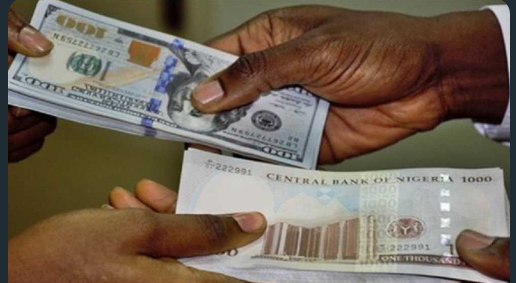
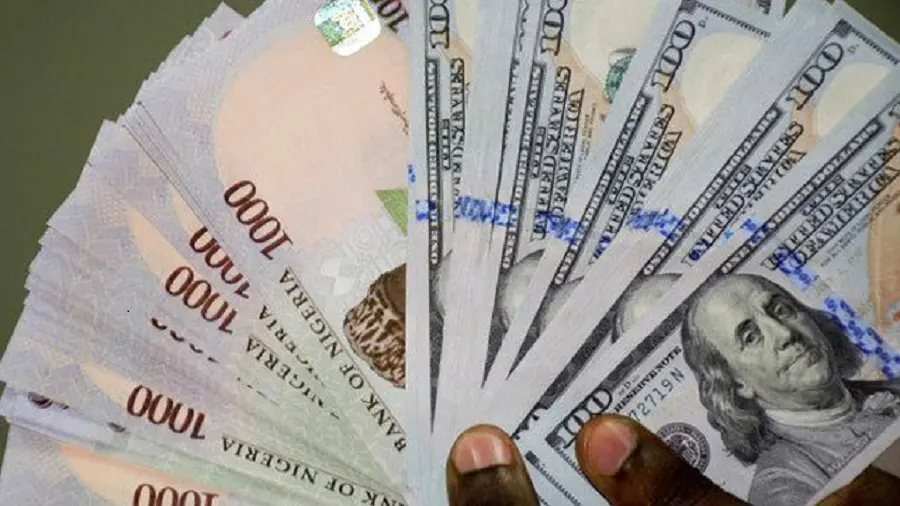
See Dollar to Naira exchange rate today, December 30, 2025

Published

on

ADVERTISEMENT
Zoom Ad
ADVERTISEMENT
Zoom Ad

The Nigerian Naira maintained a steady yet cautious position against the United States Dollar during early trading sessions today, Tuesday, December 30, 2025.


This performance comes as the year winds down, with market participants closely monitoring the interplay between the official Nigerian Foreign Exchange Market (NFEM) and the unofficial parallel market.

Official Market Performance
​At the Nigerian Foreign Exchange Market (NFEM), the Naira opened the day with a slight appreciation. According to real-time data from early morning trading, the exchange rate settled around N1,448.03 per dollar.

This represents a marginal gain from the previous day’s opening rate of N1,455.39, reflecting a relative stabilization in the official window as corporate demand for foreign exchange typically eases during the final week of the year.

Financial analysts attribute the relative stability in the official window to consistent interventions by the Central Bank of Nigeria (CBN) and a temporary decrease in import-related demand.

Parallel Market Trends
​In the parallel market, commonly referred to as the black market, the local currency continues to trade at a premium. Bureau De Change operators in major hubs like Lagos and Abuja reported rates hovering between N1,720 and N1,735 per dollar. The spread between the official and parallel markets remains a point of focus for policymakers, as retail demand for travel and personal remittances often peaks during the festive period.

Advertisement

While the gap persists, the volatility observed earlier in the quarter has largely subsided, providing a more predictable environment for end-users seeking foreign exchange outside the formal banking system.

Factors Influencing the Market
​Several key factors are currently shaping the exchange rate landscape:
​End-of-Year Liquidity: The seasonal slowdown in large-scale manufacturing imports has relieved some pressure on the NFEM.

​Foreign Reserves: Market sentiment remains bolstered by recent reports regarding Nigeria’s gross external reserves, which have provided the central bank with the necessary buffer to manage currency fluctuations.

Global Oil Prices: Stable crude oil prices have supported the inflow of foreign exchange, contributing to the current resilience of the Naira.

​As the trading day progresses, stakeholders expect the rates to remain within the current range, barring any significant economic announcements or sudden shifts in global market sentiment.


Advertisement
Continue Reading
Advertisement

Economy

IMF questions Nigeria’s $5bn borrowing structure

Published

on

By

ADVERTISEMENT
Zoom Ad
ADVERTISEMENT
Zoom Ad

The International Monetary Fund (IMF) has raised concerns over Nigeria’s plan to secure up to $5 billion in external financing through a derivatives-based arrangement with the First Abu Dhabi Bank in the United Arab Emirates.

The warning was issued by Christian Ebeke, the IMF’s resident representative in Nigeria, who told journalists that such financial structures are often complex and lack transparency in their terms.

According to him, similar transactions in other countries have raised red flags due to limited disclosure and difficulty in fully assessing the obligations involved.

“Our view is that the transaction in these types of structures carry risks. Usually they are opaque, so the terms are not always very transparent when we reviewed these instruments across countries,” Ebeke said.

Advertisement

He advised that Nigeria consider more conventional funding options, including Eurobonds or concessional loans, which he said tend to offer clearer terms and lower risk exposure for sovereign borrowers.

The development comes as Nigeria continues to ramp up external borrowing to finance its fiscal needs and infrastructure plans. On March 31, the National Assembly approved President Bola Tinubu’s request for $6 billion in external loans.

As part of the approval process, the president specifically sought backing for a structured Total Return Swap (TRS) arrangement of up to $5 billion with First Abu Dhabi Bank.

The federal government has argued that the funds would support budget implementation, infrastructure development, and the refinancing of more expensive domestic and external debts.

Advertisement

However, the IMF’s comments add to ongoing global scrutiny of complex sovereign financing arrangements, particularly those involving derivatives-based instruments that can obscure the true cost of borrowing.

Nigeria’s public debt stock currently stands at about $110.3 billion (approximately N159.2 trillion as of December 2025), underscoring concerns about debt sustainability as new borrowing plans expand.

Continue Reading

Economy

OPEC+ approves fourth oil output increase since Hormuz closure

Published

on

By

ADVERTISEMENT
Zoom Ad
ADVERTISEMENT
Zoom Ad

The Organisation of Petroleum Exporting Countries and its allies, also known as OPEC+, has approved the fourth oil output increase since the Hormuz closure crisis.

The decision followed renewed commitments by Saudi Arabia, Russia, Iraq, Kuwait, Kazakhstan, Algeria and Oman to support market stability.

In a statement issued at the weekend, OPEC stated: “The seven OPEC+ countries, which previously announced additional voluntary adjustments in April and November 2023, namely Saudi Arabia, Russia, Iraq, Kuwait, Kazakhstan, Algeria and Oman, met virtually on June 7, 2026, to review global market conditions and outlook.

“In their collective commitment to support oil market stability, the seven participating countries decided to implement a production adjustment of 188,000 barrels per day from the additional voluntary adjustments announced in April 2023.

Advertisement

“This adjustment will be implemented in July 2026. The additional voluntary adjustments announced in April 2023 may be returned in part or in full, subject to evolving market conditions and in a gradual manner.

“The countries will continue to closely monitor and assess market conditions and, in their continuous efforts to support market stability, reaffirmed the importance of adopting a cautious approach and retaining full flexibility to increase, pause or reverse the phase-out of the voluntary production adjustments, including reversing the previously implemented voluntary adjustments announced in November 2023.

“The seven OPEC+ countries also noted that this measure will provide an opportunity for the participating countries to accelerate their compensation.

“The seven countries reiterated their collective commitment to achieving full conformity with the Declaration of Cooperation, including the voluntary production adjustments, which will be monitored by the Joint Ministerial Monitoring Committee (JMMC).

Advertisement

“They also confirmed their intention to fully compensate for any overproduced volumes since January 2024. The compensation period will be extended until the end of December 2026.”

It added: “The seven OPEC+ countries will hold monthly meetings to review market conditions, conformity and compensation. The seven countries will meet on July 5, 2026.”

Continue Reading

Economy

Naira depreciates to N1,397/$ in parallel market

Published

on

By

ADVERTISEMENT
Zoom Ad
ADVERTISEMENT
Zoom Ad

The naira on Friday depreciated to N1,397 per dollar in the parallel market from N1,390 per dollar on Thursday.

Likewise, the naira depreciated to N1,365 per dollar in the Nigerian Foreign Exchange Market, NFEM.

Data from the Central Bank of Nigeria, CBN, showed that the indicative exchange rate for the market rose to N1,365 per dollar from N1,359.75 per dollar on Thursday, reflecting N5.25 depreciation for the naira.

Consequently, the margin between the parallel and official markets widened to N32 per dollar from N30.25 per dollar on Thursday.

Advertisement

The turnover in the interbank foreign exchange market recorded its fourth daily decline by 42.5 per cent to $73.6 million from $128.2 million on Thursday.

This week, the naira strengthened by N1 per dollar in the official market, with turnover in the interbank foreign exchange market climbing to N683.2 million, representing a 76.7 per cent rise compared to N386.54 million recorded the previous week.

However, the local currency weakened in the parallel by N2 against the greenback.

Advertisement
Continue Reading

Trending

Copyright © 2024 Naija Blitz News