News
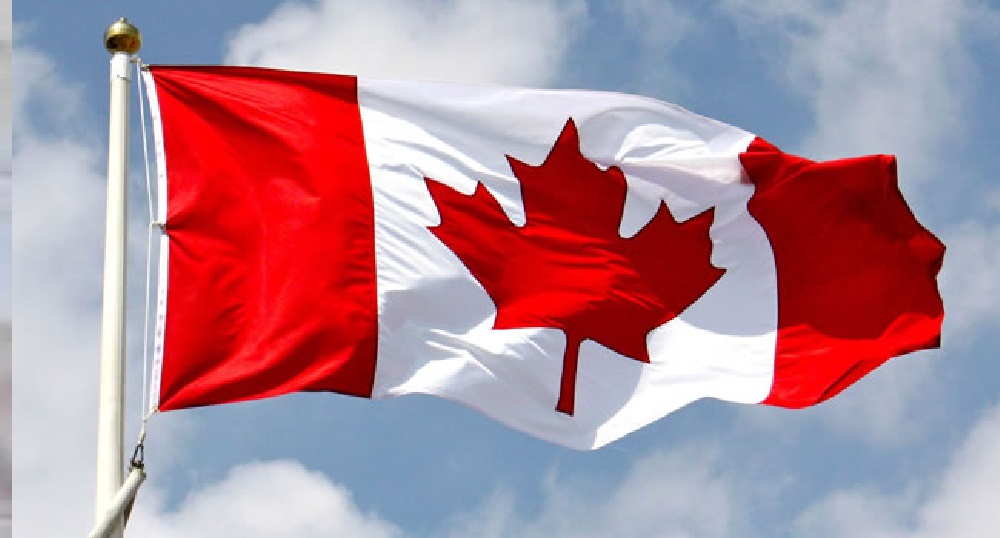
Canada deports 366 Nigerians as 974 face repatriation
- /home/naijuinz/public_html/wp-content/plugins/mvp-social-buttons/mvp-social-buttons.php on line 27
https://naijablitznews.com/wp-content/uploads/2024/08/Canada-flag.jpg&description=Canada deports 366 Nigerians as 974 face repatriation', 'pinterestShare', 'width=750,height=350'); return false;" title="Pin This Post">
- Share
- Tweet /home/naijuinz/public_html/wp-content/plugins/mvp-social-buttons/mvp-social-buttons.php on line 72
https://naijablitznews.com/wp-content/uploads/2024/08/Canada-flag.jpg&description=Canada deports 366 Nigerians as 974 face repatriation', 'pinterestShare', 'width=750,height=350'); return false;" title="Pin This Post">
Canada deported no fewer than 366 Nigerians between January and October 2025 as the country stepped up immigration enforcement at its fastest pace in more than a decade, official figures have revealed.

Data obtained from the Canada Border Services Agency (CBSA) removals programme also showed that an additional 974 Nigerians are currently listed under “removal in progress,” awaiting deportation.
The statistics, last updated on November 25, 2025, placed Nigeria ninth among the top 10 countries whose nationals were removed from Canada during the period under review. Nigeria also ranked fifth among nationalities with the highest number of people awaiting removal.

The surge coincides with a broader immigration crackdown by Canadian authorities.
The CBSA is now deporting close to 400 foreign nationals every week, the highest rate recorded in over 10 years.
In the 2024-2025 fiscal year alone, Canada removed 18,048 persons at an estimated cost of $78 million.
Under Canada’s Immigration and Refugee Protection Act, the CBSA is mandated to remove any foreign national with an enforceable removal order.
A person may be deemed inadmissible for reasons ranging from criminality and security concerns to misrepresentation, health issues, financial reasons, or failure to comply with immigration regulations.
CBSA data showed that about 83 per cent of deportees are failed refugee claimants whose asylum applications were rejected, while criminal-related cases account for roughly four per cent of removals.
Canadian law recognises three types of removal orders:
Departure orders, requiring the person to leave within 30 days;
Exclusion orders, which bar re-entry for between one and five years; and
Deportation orders, which permanently prohibit return unless special authorisation is granted.
An analysis of the 2025 deportation data showed that Nigeria is the only African country listed among the top 10 nationalities removed from Canada.
Other African countries were grouped under “remaining nationals,” accounting for a combined 6,233 removals.
The top countries for deportations in 2025 were Mexico (3,972), India (2,831), Haiti (2,012), Colombia (737), Romania (672), the United States (656), Venezuela (562), China (385), Nigeria (366), and Pakistan (359).
Similarly, Nigeria is the only African country among the top 10 in the “removal in progress” category, which is led by India (6,515), followed by Mexico (4,650), the United States (1,704), China (1,430), and Nigeria (974).
Canadian authorities say the intensified deportation drive is aimed at meeting revised immigration targets and easing pressures linked to housing shortages, labour market strain, and border security.
To support these efforts, the government has earmarked an additional $30.5 million over three years for removals, alongside a $1.3 billion investment in border security.
However, refugee advocates have raised concerns. President of the Canadian Association of Refugee Lawyers, Aisling Bondy, warned that deportations could increase further if Bill C-12, widely referred to as the “border bill” is passed.
One of the clauses in that bill would permanently bar many people from making refugee claims in Canada,” she said.
Despite the tightening policies, Canada remains a major destination for Nigerians seeking education, employment, and improved living conditions.
The 2021 Canadian census showed that more than 40,000 Nigerians migrated to Canada between 2016 and 2021, making them the largest African migrant group and the fifth-largest recent immigrant population overall.
Figures from Immigration, Refugees and Citizenship Canada indicated that 6,600 Nigerians became permanent residents in the first four months of 2024 alone, ranking fourth behind India, the Philippines, and China.
Between 2005 and 2024, over 71,000 Nigerians acquired Canadian citizenship, placing Nigeria among the top 10 source countries for new Canadian citizens.
Canada’s ageing population and ongoing labour shortages continue to attract skilled Nigerian professionals and students, even as immigration controls grow tighter.
News
Tinubu set to commission newly constructed Arterial Rd N5 Obafemi Awolowo Way today
Today, June 10th 2026, President Tinubu will commission the newly constructed Arterial Road N5 (Obafemi Awolowo Way) from Life Camp Junction to RR III, Dape District section.
#FCTProjects2026
#RenewedHopeFCT
News
Obi drags former political acolyte Okonkwo to court over alleged defamatory bribery claims
The presidential candidate of the Nigerian Democratic Congress (NDC), Peter Obi, has started legal action against his former political acolyte and kinsman, Kenneth Okonkwo, over allegations that he and other party leaders collected bribes from aspirants seeking elective positions.
The lawsuit marks a significant escalation in the public fallout between the two political associates, whose relationship has deteriorated in recent months following disagreements over political developments and party affairs.Politics
According to court documents filed by Obi’s legal team, the former Anambra State governor is challenging a series of statements allegedly made by Okonkwo during a public broadcast, in which he accused Obi and leaders of the NDC in the South-East of demanding illicit payments from aspirants seeking tickets to contest for seats in the House of Representatives.
The suit, dated June 9, 2026, was filed by Chief Alex Ejesieme (SAN) of Alex Ejesieme (SAN) & Co. (Madiba Chambers), who described the allegations as false, malicious, and highly damaging to Obi’s reputation.
According to the legal filing, Okonkwo allegedly claimed that House of Representatives aspirants were required to pay an additional ₦10 million to party leaders after paying the official expression of interest and nomination fees.
The suit quoted Okonkwo as alleging that Obi and South-East leaders of the NDC informed aspirants that payment of the additional sum was necessary to secure consideration within the party.
Obi’s lawyers further stated that Okonkwo claimed documentary evidence existed to support the allegation and that receipts had allegedly been issued for the payments.
The actor-turned-politician was also accused of alleging that Obi personally compiled the list of party candidates from a hotel room and manipulated the candidate selection process.
Among other assertions attributed to Okonkwo were claims that Obi travelled abroad to collect money from individuals and that he, alongside other NDC leaders in the South-East, was involved in activities amounting to criminal conduct.
Obi Describes Allegations as False and Defamatory
In the legal action, Obi’s lawyers strongly rejected the allegations, insisting that the statements were entirely fabricated and intended to tarnish the former governor’s image.
The legal team argued that the claims portrayed their client as a dishonest political figure involved in bribery, extortion, fraud, and criminal conspiracy.
According to the suit, the statements were capable of exposing Obi to public hatred, ridicule, contempt, and distrust among members of society.
“The above statements, in their natural and ordinary meaning and by necessary implication, falsely and maliciously represent our client as a person who demands, solicits, organises and collects bribes; who extorts, defrauds and swindles political aspirants of their money; who is a fraudster, a scammer and a dishonest political actor,” the legal team stated.
The lawyers further argued that the allegations struck directly at Obi’s reputation as a public servant and political leader.
They described the remarks as reckless and unsupported by any credible evidence.
Concern Over Social Media Amplification
Obi’s legal representatives also expressed concern over the manner in which the statements were allegedly disseminated.
According to the law firm, the comments were made during a live television appearance before being widely circulated across social media platforms and online channels, thereby increasing their reach and potential impact.
The legal team maintained that while freedom of expression remains a constitutional right, it does not extend to publishing statements capable of damaging another person’s reputation without factual basis.
They argued that the remarks went beyond the limits of political criticism and fair comment.
“Your words were not mere political commentary. They crossed the permissible bounds of fair comment and constituted a direct assault on our client’s person, integrity, image and reputation,” the lawyers stated.
Obi Demands Retraction, Apology and Compensation
As part of the reliefs sought, Obi’s legal team is demanding that Okonkwo immediately withdraw the statements in their entirety and issue a public apology.
The proposed apology, according to the lawyers, must be clear, unconditional, and given the same level of prominence as the original allegations.
They further requested that the apology be published across all major social media platforms, including X, Facebook, Instagram, and YouTube.
In addition, the legal team is seeking a written undertaking from Okonkwo, committing him to refrain from making further defamatory statements against their client.
The suit also includes a demand for financial compensation for the alleged damage caused to Obi’s reputation and public standing.
The legal battle comes amid ongoing political realignments and public disagreements involving former allies within Nigeria’s opposition landscape, with the dispute expected to attract significant public and political attention in the coming weeks.
News
NCC: Telecom operators to deploy 12,000 new sites as 75m subscribers get compensation
NCC moves to stop big telcos from crushing small players
The Nigerian Communications Commission, NCC, says mobile network operators will deploy over 12,000 new coverage and capacity sites nationwide, with more than 5,000 already completed, to improve service quality and expand infrastructure.
This was contained in a communiqué issued after the NCC’s 109th Board Meeting held on May 25, 2026, where the Governing Board reviewed sector developments and outlined regulatory priorities.
The commission said operators have also extended fibre connectivity to more than 700 sites, while colocation and infrastructure-sharing companies have upgraded equipment at over 2,000 Base Transceiver Stations, BTS, to strengthen network resilience and quality of service.
It noted that the ongoing expansion reflects the industry’s commitment to improving coverage, capacity, and customer experience nationwide.
–75m subscribers compensated–
In a major consumer protection move, the NCC revealed that more than 75 million subscribers have been compensated following its directive requiring operators to provide redress for poor quality of service in areas where standards were not met.
The commission described operators’ compliance level as substantial, adding that it is independently validating claims to ensure all eligible subscribers receive due compensation.
However, the NCC expressed concern over partial compliance by Tower Companies, TowerCos, with directives to reinvest regulatory fines into infrastructure upgrades through escrow accounts. It stressed that full compliance is needed for sustainable network improvements.
–Fibre growth, security challenges–
The commission also reviewed data consumption trends and noted that rising demand for broadband continues to pressure existing infrastructure.
Fibre-to-the-Home, FTTH, subscriptions rose from 84,141 in Q4 2025 to 210,065 by the end of the following quarter, reflecting growing adoption of fixed broadband.
The NCC said expanding fibre infrastructure remains critical to reducing pressure on mobile networks, lowering connectivity costs, and improving service quality.
The commission also raised concerns over persistent vandalism of telecom infrastructure despite its designation as Critical National Information Infrastructure, CNII. To address this, it said it is exploring a Communications Industry Security Trust Fund and stronger stakeholder collaboration.
The NCC reaffirmed its commitment to building a sustainable, resilient, and inclusive communications sector that supports Nigeria’s digital transformation and the federal government’s $1 trillion economy goal.
-
News23 hours agoSad: Nigerian Labour Leader Dies At International Labour Conference In Geneva
-
News23 hours agoThe 30 Days of Projects Commissioning in the FCT starts today
-
News21 hours agoTinubu Swears In New Ministers
-
News22 hours agoIran holds funeral ceremony for two air defense personnel slain in Israeli airstrikes
-
News21 hours agoReps Demand Answers on Defence Spending, Summon Service Chiefs, Finance Minister
-
News7 hours agoNECO to recruit 22,000 supervisors, cautions applicants against fake recruitment portals
-
News19 hours agoTinubu Commissions OSEX Main Carriageway, Vows End To Era Of Abandoned Projects(Photos)
-
News7 hours agoUmahi gives Abuja-Lokoja highway contractors 72 hours to mobilise