Experts disagree on how it ‘ll affect budget
Nigeria’s 2026 budget may be threatened following the US strike on Venezuela at the weekend.


This is as a result of the ripple effect the action is having on the price of crude in the international market.
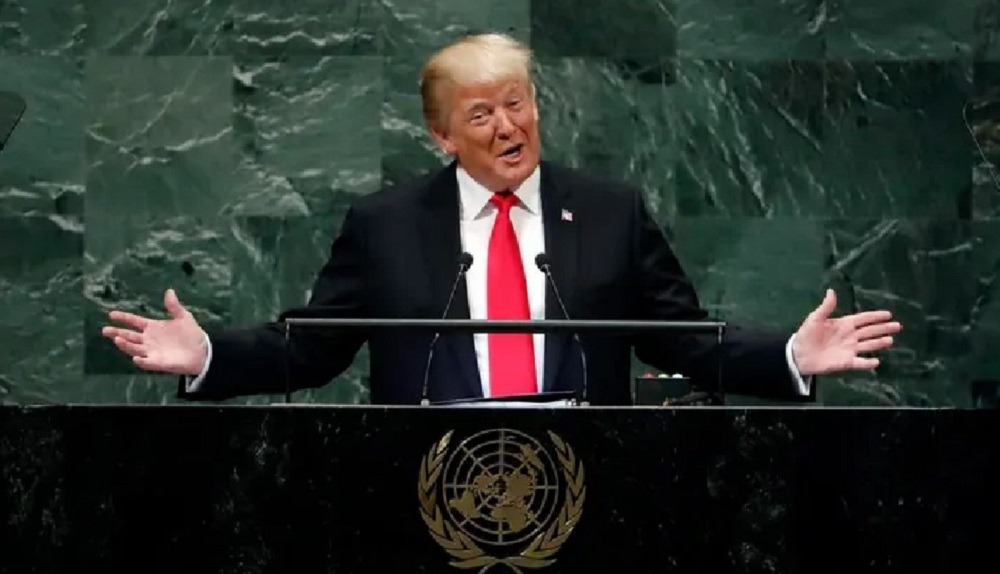
Yesterday, oil prices continued their decline with Brent dropping by 0.38 per cent to $60.56 a barrel. The United States(US) West Texas Intermediate (WTI) crude fell by 1.17 per cent to $56.46 a barrel as the market reacted to President Donald Trump’s announcement that the US had secured a deal to import up to $2 billion in Venezuelan crude. 
Also, Trump said Venezuela will turn over between 30 million and 50 million barrels of oil to the US in two months.
With Nigeria’s 2026 federal budget of N58.18 trillion predicated on a “conservative” crude oil benchmark of $64.85 per barrel, experts reckon that should the decline continue, the revenue earnings of the country may be affected.
On Wednesday, US Energy Secretary Chris Wright further accentuated Trump’s plans for Venezuela’s oil, affirming that the plans to take long-term control of Venezuela’s oil industry, including overseeing crude sales and revenues, “indefinitely.”
Under the plan, Washington would sell Venezuelan oil directly on global markets, thus adding to the current glut being experienced in the global supply and delivery position.
Mayowa Sodipo, an oil and gas consultant, said continued involvement of America in Venezuelan oil will negatively affect Nigeria’s revenue projection for this year because the US has always been the world’s largest buyer of the country’s oil.
‘’The gains being recorded by the local currency, the Naira, may also be in jeopardy given that oil remains the largest source of foreign exchange for the country.
Our forex may suffer if the price decline continues; it means reduced Forex inflow for the country, including affecting our external reserves, and this will put more pressure on the naira,” Sodipo said.
He warned that the effect will reverberate in the overall economy as major projects may be impacted negatively. “The government has embarked on huge projects; they may suffer funding should the price continue to decline,” Sodipo added.
This view was reechoed by former chairman of the Chartered Institute of Bankers of Nigeria (CIBN), Prof. Segun Ajibola, who warned that as one of Nigeria’s top oil buyers, any reduction in U.S. demand could have knock-on effects for export volumes and prices.
Ajibola said: “At the current price of about $60.8 per barrel compared with Tinubu’s proposed $64.85, the situation is already becoming stressed. If a price war ensues, as could be triggered by increased supply from Venezuela, it will affect Nigeria’s projections for 2026.”
On the contrary, an economist and Chief Executive Officer, Centre for the Promotion of Private Enterprise (CPPE), Dr Muda Yusuf, opined that the situation in Venezuela was unlikely to have any significant impact on the global oil market, particularly in the near term.
He based his argument on the present glut being experienced in the oil market and the insignificant contribution of Venezuela to the market.
Yusuf said: “Venezuela’s current oil output is extremely low, accounting for less than one per cent of global oil production. Years of underinvestment, operational inefficiencies, sanctions, and institutional collapse have severely weakened the country’s oil sector.
’As a result, Venezuela no longer plays a material role in influencing global oil supply dynamics. Importantly, the recent attack and the circumstances surrounding Maduro’s capture did not damage Venezuela’s oil production infrastructure. Consequently, oil output is expected to remain broadly unchanged in the short term.”
Beyond Venezuela’s limited production capacity, he further argued, the global oil market is presently experiencing a supply glut. This supply cushion means that even if Venezuela were to experience some level of production disruption, it would not translate into any meaningful impact on global oil prices. Current market fundamentals, he said, are therefore resilient enough to absorb any marginal shocks from Venezuela.
Yusuf, however, noted that the country remains strategically significant in the longer term as it holds one of the largest proven oil reserves in the world- about 18 per cent of global reserves, a resource base he argued, gives Venezuela substantial latent potential
“If the current political developments do not escalate into prolonged instability, and if Donald Trump follows through on indications that American oil companies could re-enter the Venezuelan oil sector, the country’s oil output could gradually recover,” the economist said.
He added that such a turnaround would occur only in the medium to long term. Yusuf also noted that rebuilding production capacity would require significant capital investment, technical expertise, regulatory clarity, and time. Therefore, any supply boost from Venezuela would not be immediate and should not be factored into short-term oil market expectations.
“In summary, while Venezuela’s political developments are geopolitically notable, they do not pose a short-term risk to global oil supply or prices. Any meaningful impact would depend on long-term political stability and sustained reinvestment in the country’s oil industry,” Yusuf said.
However, in the medium to long term, the economist argued that there may be a significant increase in output, which may lead to a significant increase in supply and which may affect the global oil price.
“But that is in the medium to long term because for now, Venezuela will be experiencing some instability. Even the investors that Trump was talking about will also be very cautious in returning to Venezuela to produce.
“So, it will take some time for them to have that level of confidence to go to Venezuela and invest. I mean, it will also take some time, a minimum of a year. These are investors who have left the place for some time. These are investors who also want to watch the political environment and the security environment in the place. So, investors will also take their time before they go there to begin to invest in oil production; these are private investors. These are not government investors.
However, the Organisation of Petroleum Exporting Countries (OPEC+) appears to be girding its loins. At its January 4 meeting, OPEC+ agreed to keep output steady, despite internal tensions, reinforcing expectations that 2026 will be marked by oversupply. With inventories comfortable and alternative barrels available, traders see little reason to panic. On that narrow view, oil’s muted reaction looks rational.
Yet markets are rarely adept at pricing geopolitical risk in real time. President Trump’s threats, not only against Venezuela but also Colombia, Mexico and even Greenland, inject a level of headline risk that is hard to model but difficult to underestimate. History suggests that investors’ instinct to “keep calm and carry on” often holds until it suddenly does not.