
News
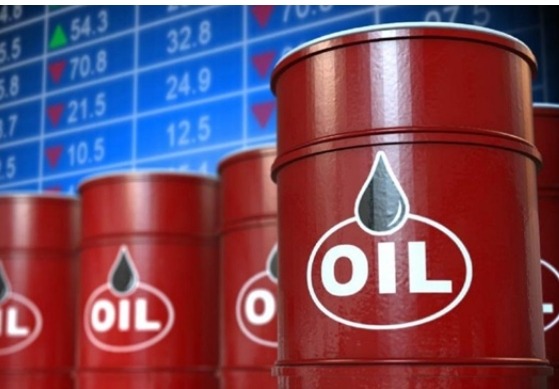
Oil prices fall on Venezuela crisis



Experts disagree on how it ‘ll affect budget
Nigeria’s 2026 budget may be threatened following the US strike on Venezuela at the weekend.
This is as a result of the ripple effect the action is having on the price of crude in the international market.
Yesterday, oil prices continued their decline with Brent dropping by 0.38 per cent to $60.56 a barrel. The United States(US) West Texas Intermediate (WTI) crude fell by 1.17 per cent to $56.46 a barrel as the market reacted to President Donald Trump’s announcement that the US had secured a deal to import up to $2 billion in Venezuelan crude.
Also, Trump said Venezuela will turn over between 30 million and 50 million barrels of oil to the US in two months.
With Nigeria’s 2026 federal budget of N58.18 trillion predicated on a “conservative” crude oil benchmark of $64.85 per barrel, experts reckon that should the decline continue, the revenue earnings of the country may be affected.
On Wednesday, US Energy Secretary Chris Wright further accentuated Trump’s plans for Venezuela’s oil, affirming that the plans to take long-term control of Venezuela’s oil industry, including overseeing crude sales and revenues, “indefinitely.”
Under the plan, Washington would sell Venezuelan oil directly on global markets, thus adding to the current glut being experienced in the global supply and delivery position.
Mayowa Sodipo, an oil and gas consultant, said continued involvement of America in Venezuelan oil will negatively affect Nigeria’s revenue projection for this year because the US has always been the world’s largest buyer of the country’s oil.
‘’The gains being recorded by the local currency, the Naira, may also be in jeopardy given that oil remains the largest source of foreign exchange for the country.
Our forex may suffer if the price decline continues; it means reduced Forex inflow for the country, including affecting our external reserves, and this will put more pressure on the naira,” Sodipo said.
He warned that the effect will reverberate in the overall economy as major projects may be impacted negatively. “The government has embarked on huge projects; they may suffer funding should the price continue to decline,” Sodipo added.
This view was reechoed by former chairman of the Chartered Institute of Bankers of Nigeria (CIBN), Prof. Segun Ajibola, who warned that as one of Nigeria’s top oil buyers, any reduction in U.S. demand could have knock-on effects for export volumes and prices.
Ajibola said: “At the current price of about $60.8 per barrel compared with Tinubu’s proposed $64.85, the situation is already becoming stressed. If a price war ensues, as could be triggered by increased supply from Venezuela, it will affect Nigeria’s projections for 2026.”
On the contrary, an economist and Chief Executive Officer, Centre for the Promotion of Private Enterprise (CPPE), Dr Muda Yusuf, opined that the situation in Venezuela was unlikely to have any significant impact on the global oil market, particularly in the near term.
He based his argument on the present glut being experienced in the oil market and the insignificant contribution of Venezuela to the market.
Yusuf said: “Venezuela’s current oil output is extremely low, accounting for less than one per cent of global oil production. Years of underinvestment, operational inefficiencies, sanctions, and institutional collapse have severely weakened the country’s oil sector.
’As a result, Venezuela no longer plays a material role in influencing global oil supply dynamics. Importantly, the recent attack and the circumstances surrounding Maduro’s capture did not damage Venezuela’s oil production infrastructure. Consequently, oil output is expected to remain broadly unchanged in the short term.”
Beyond Venezuela’s limited production capacity, he further argued, the global oil market is presently experiencing a supply glut. This supply cushion means that even if Venezuela were to experience some level of production disruption, it would not translate into any meaningful impact on global oil prices. Current market fundamentals, he said, are therefore resilient enough to absorb any marginal shocks from Venezuela.
Yusuf, however, noted that the country remains strategically significant in the longer term as it holds one of the largest proven oil reserves in the world- about 18 per cent of global reserves, a resource base he argued, gives Venezuela substantial latent potential
“If the current political developments do not escalate into prolonged instability, and if Donald Trump follows through on indications that American oil companies could re-enter the Venezuelan oil sector, the country’s oil output could gradually recover,” the economist said.
He added that such a turnaround would occur only in the medium to long term. Yusuf also noted that rebuilding production capacity would require significant capital investment, technical expertise, regulatory clarity, and time. Therefore, any supply boost from Venezuela would not be immediate and should not be factored into short-term oil market expectations.
“In summary, while Venezuela’s political developments are geopolitically notable, they do not pose a short-term risk to global oil supply or prices. Any meaningful impact would depend on long-term political stability and sustained reinvestment in the country’s oil industry,” Yusuf said.
However, in the medium to long term, the economist argued that there may be a significant increase in output, which may lead to a significant increase in supply and which may affect the global oil price.
“But that is in the medium to long term because for now, Venezuela will be experiencing some instability. Even the investors that Trump was talking about will also be very cautious in returning to Venezuela to produce.
“So, it will take some time for them to have that level of confidence to go to Venezuela and invest. I mean, it will also take some time, a minimum of a year. These are investors who have left the place for some time. These are investors who also want to watch the political environment and the security environment in the place. So, investors will also take their time before they go there to begin to invest in oil production; these are private investors. These are not government investors.
However, the Organisation of Petroleum Exporting Countries (OPEC+) appears to be girding its loins. At its January 4 meeting, OPEC+ agreed to keep output steady, despite internal tensions, reinforcing expectations that 2026 will be marked by oversupply. With inventories comfortable and alternative barrels available, traders see little reason to panic. On that narrow view, oil’s muted reaction looks rational.
Yet markets are rarely adept at pricing geopolitical risk in real time. President Trump’s threats, not only against Venezuela but also Colombia, Mexico and even Greenland, inject a level of headline risk that is hard to model but difficult to underestimate. History suggests that investors’ instinct to “keep calm and carry on” often holds until it suddenly does not.


Alhaji Ibrahim Galadima, a former Chairman of the Nigeria Football Association (NFA), died on Saturday after a prolonged illness.
His death was confirmed by former Secretary-General of the NFA, Sani Ahmed Toro.
Galadima was a prominent figure in Nigerian sports administration, having led the NFA before it was restructured into the Nigeria Football Federation (NFF).
He also served as Chairman of the Kano State Sports Council between 1981 and 1983.
Born in 1951 in Fagge, Kano, Galadima had a long-standing career in sports governance.
He was a member of the National Sports Commission and was elected Vice President of the Nigeria Olympic Committee in 1985, a position he held until 1987.
He was later reappointed as Chairman of the Kano State Sports Council and continued to play key roles at both state and national levels.
Galadima also served on the Presidential Monitoring Committee on the development of sports facilities for the 1995 FIFA World Youth Championship, which was initially scheduled to be hosted in Nigeria but later relocated due to health-related challenges.
In addition, he was a member of the Confederation of African Football (CAF) Youth Championship Organising Committee.
In 2002, he was elected Chairman of the then Nigeria Football Association, further cementing his legacy as one of the country’s influential sports administrators.
Burial arrangements will be announced later according to family sources.

Tragedy struck the Panshanu Hill stretch of the Bauchi-Jos federal highway on Friday evening as a horrific multi-vehicle collision claimed the lives of eleven persons, leaving thirty-two others with life-threatening injuries.
The victims, including women and children, were reportedly burnt beyond recognition when the vehicles involved in the crash erupted into a massive fireball upon impact.
According to a crash report released by the RS12.14
Toro Unit Command of the Federal Road Safety Corps
(FRSC), the accident occurred at approximately 6:40
PM. FRSC personnel, who arrived at the scene within ten minutes of the report, battled to rescue survivors from the mangled, smoking wreckage.
The crash involved a white MAN mini-tanker, identified as part of the Nigerian Police fleet, and a white FIAT J5 Boxer commercial bus with registration number KTU624XY.
Preliminary investigations by the FRSC identified
“dangerous driving” and the use of “worn-out tyres” as the probable causes of the carnage. The impact, which occurred on a single, unpaved carriageway, sent both vehicles off the road and triggered an immediate inferno.
A breakdown of the casualties paints a heart-wrenching picture of the disaster. Out of the 43 persons involved in the accident, 11 fatalities were recorded, comprising one male adult, three male children, five female adults, and two female children.
The 32 injured survivors, including five male children, 19 female adults, seven female children, and one male adult, were rushed to a nearby general hospital for emergency treatment.
The Bauchi State Command of the FRSC has reiterated its warning to motorists to avoid overspeeding and ensure their vehicles are in roadworthy condition, especially when navigating the treacherous bends of the Panshanu Hill.

The 2026 UTME, which began on April 16, is expected to continue until April 22 across examination centres nationwide.
The Joint Admissions and Matriculation Board on Friday announced that it had released the results of 632,788 candidates who sat for the first day of the 2026 Unified Tertiary Matriculation Examination (UTME).
A statement by the JAMB spokesperson Fabian Benjamin noted that the results of candidates who sat the 2026 UTME on Thursday, 16 April 2026, have been released and are now available for viewing.
To check their results, he advised candidates to send UTMERESULT via SMS to 55019 or 66019, using the same phone number (SIM) used during registration.
He, however, said that at this stage, candidates may view their results only; printing is not yet available.
The 2026 UTME, which began on April 16, is expected to continue until April 22 across examination centres nationwide.
How To Print Your Official Result Slip
The result slip carries the candidate’s passport photograph, full scores, and details required for admission processing.
It will be made available for printing on JAMB’s e-Facility portal at efacility.jamb.gov.ng and attracts a fee of N1,500.
Once activated, candidates should follow the steps below.
– Visit efacility.jamb.gov.ng.
– Log in with your registered email address and password.
– On your dashboard, click Print Result Slip.
– Click Continue with Payment and pay the N1,500 fee.
– Select 2026 as the examination year and enter your JAMB registration number.
– Download and print the result slip.
Check Your Score Via SMS
– Make sure you have at least N50 airtime on the phone number linked to your JAMB registration.
– Send UTMERESULT to 55019.
– Your score will be delivered to you via SMS.
Other Tips
– If you have forgotten your password or email address, use the Forgot Password option on the portal or visit a JAMB office with your registration details.
– Keep multiple printed copies of your result slip, as institutions typically request it during screening and admission.
– Use only JAMB’s official websites — efacility.jamb.gov.ng or portal.jamb.gov.ng to avoid scams.
JAMB Cautioned Against Manipulation
Candidates were strongly cautioned against manipulating the SMS received from the official platform (55019/66019) to fabricate or alter scores with the intent to mislead others, including parents.
“Such actions constitute a serious criminal offence. The Board treats such misconduct with the utmost gravity.”
“Currently, two candidates and one parent are in custody for engaging in result falsification using AI and other electronic means. Any candidate found culpable will face the full consequences of the law”, JAMB warned.
The examination is ongoing, and results will continue to be released as they become available.

Sad! Ex-NFF Chairman is dead

AFCON Fallout: Senegalese fans released after serving 3 months jail terms in Morocco

11 die, 32 injured in Bauchi tanker crash




-

 Politics14 hours ago
2027: Why Tinubu should be afraid — ADC
-
 Economy14 hours ago
Monetary Shake-Up! CBN Unveils New Interest Rate Benchmark
-

 News14 hours ago
Court Fixes Ruling Date In High-Profile Godwin Emefiele Trial
-

 Metro14 hours ago
Police Inspector joins robbery gang, shot dead during operation
-

 News14 hours ago
Aliko Dangote always tells me to save my money – Davido
-
 News14 hours ago
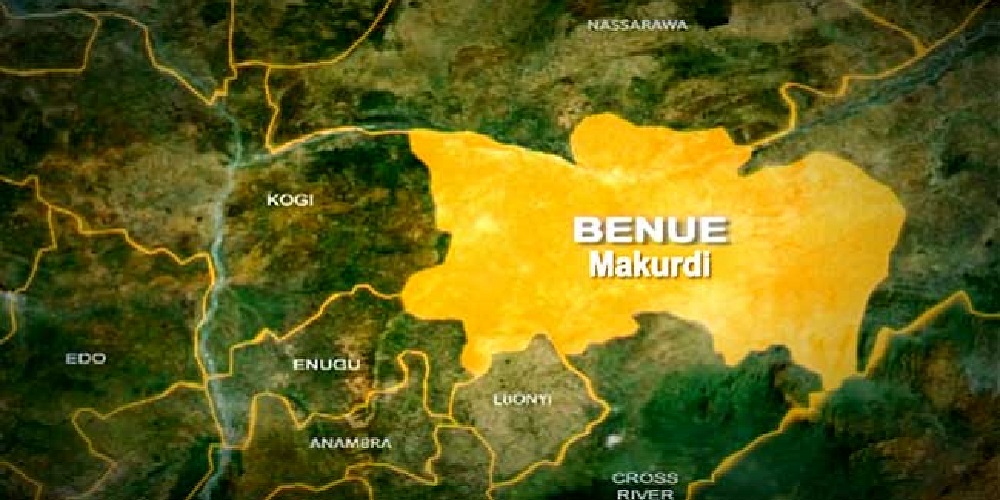
Security Operatives Arrest Seven Suspects Linked To Benue Abduction
-
 News8 hours ago
Fuel, diesel prices will drop in Nigeria as crude oil slumps
-

 News6 hours ago
Expulsion: Bala, Abejide vow to battle Mark-led ADC faction to finish