Connect with us

News

LIST: UI tops UNILAG, Covenant, UNN, OAU, others to emerge best in Nigeria

Published

on

ADVERTISEMENT
Zoom Ad
ADVERTISEMENT
Zoom Ad

By Kayode Sanni-Arewa

The University of Ibadan (UI) has emerged as Nigeria’s highest-ranked institution in the Times Higher Education (THE) World University Rankings 2026.

According to the rankings published on Thursday on THE’s official website, UI was placed in the 801–1000 global band, making it the top-ranked Nigerian university in the 2026 edition. The achievement marks a return to the summit for UI, which last held the position in 2023.

The 2026 rankings assessed 2,191 universities across 115 countries, using 18 performance indicators grouped under five key areas: teaching, research environment, research quality, industry engagement, and international outlook. The assessment drew from over 174.9 million citations from 18.7 million research publications, as well as survey responses from more than 108,000 scholars worldwide.

Advertisement

UI climbed from fourth position in Nigeria in the 2025 rankings to reclaim the top spot, displacing Covenant University, which led Nigerian institutions in both the 2024 and 2025 editions.

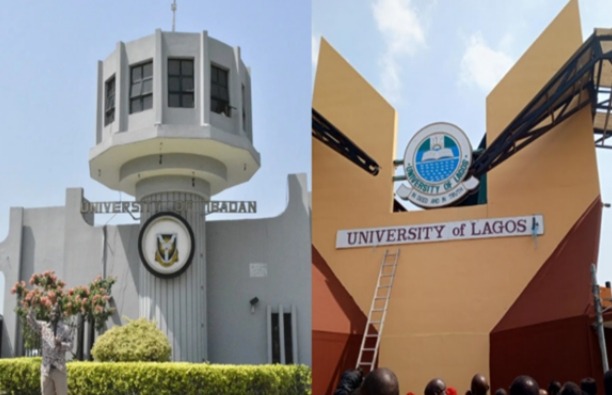
Alongside UI, the University of Lagos (UNILAG) was the only other Nigerian institution to feature in the global top 1000, also ranked in the 801–1000 category.

Bayero University Kano (BUK), Covenant University, and Landmark University were all placed in the 1001–1200 global band.

In terms of performance strengths, UNILAG recorded the highest research quality score among Nigerian universities with 66.7. Bayero University Kano led in international outlook, while Covenant University ranked highest nationally for industry engagement, reflecting its strong collaboration with the private sector.

Advertisement

Several Nigerian institutions were placed in the 1201–1500 global band, including Ahmadu Bello University, Federal University of Technology Minna, University of Ilorin, University of Jos, and the University of Nigeria, Nsukka.

A larger group of universities appeared in the 1501+ category, reflecting ongoing challenges in global competitiveness despite inclusion in the rankings.

In total, 51 Nigerian universities featured in the Times Higher Education World University Rankings 2026. However, only two—UI and UNILAG—made it into the global top 1000. Fourteen institutions were ranked in the 1501+ category, while 27 universities that submitted data were not ranked.

1. University of Ibadan

Advertisement

2. University of Lagos

3. Bayero University Kano

4. Covenant University

5. Landmark University

Advertisement

6. Ahmadu Bello University

7. Federal University of Technology, Minna

8. University of Ilorin

9. University of Jos

Advertisement

10. University of Nigeria, Nsukka

11. Babcock University

12. Delta State University, Abraka

13. Ekiti State University

Advertisement

14. Federal University of Agriculture, Abeokuta

15. Federal University of Technology, Akure

16. Federal University of Technology, Owerri

17. Federal University Oye-Ekiti

Advertisement

18. Ladoke Akintola University of Technology

19. Lagos State University

20. Nnamdi Azikiwe University

21. Obafemi Awolowo University

Advertisement

22. University of Benin

23. University of Calabar

Continue Reading
Advertisement

News

DSS impounds 676 guns, 330,000 rounds of ammunition in anti-crime operations — DG

Published

on

ADVERTISEMENT
Zoom Ad
ADVERTISEMENT
Zoom Ad


The Department of State Services (DSS) has impounded 676 firearms and more than 330,000 rounds of ammunition in its ongoing operations against terrorism, banditry, kidnapping and other violent crimes across Nigeria.

Director-General of the DSS, Mr Oluwatosin Ajayi, disclosed this while speaking with senior editors as he marked two years in office on August 28, 2026.

Ajayi, who has spent 36 years in the intelligence service, said the seizures were part of a broader effort by the agency to disrupt criminal networks, strengthen intelligence-led operations and improve cooperation with other security agencies.

Advertisement

The DSS boss, who began his career as a cadet officer and rose through the ranks to become the first cadet of the Service to attain the position of Director-General, also spoke extensively on the agency’s evolving approach to human rights, accountability, media relations and the fight against terrorism and insurgency.

He said his administration had focused on five major areas: strict law enforcement, inter-agency cooperation, accountability, respect for human rights, and infrastructural and administrative reforms aimed at improving operational efficiency.

According to him, the DSS has deliberately moved away from approaches that could blur the line between civil disputes and criminal matters, insisting that civil cases should be resolved through dialogue or the courts rather than arrests and the use of force.

“I have told my people there should be no arrest in any civil case,” Ajayi said, explaining that the Service now seeks judicial interpretation where necessary instead of resorting to coercive measures.

Advertisement

He cited the case involving Professor Pat Utomi and the alleged attempt to establish a shadow government as an example of the new approach. Rather than arresting Utomi, he said, the Service approached the court for an interpretation of the matter.

He also cited disputes involving the Socio-Economic Rights and Accountability Project (SERAP) and Sahara Reporters publisher, Omoyele Sowore, saying the Service had increasingly relied on judicial processes rather than arrests to resolve contentious matters.

A new approach to human rights

Ajayi said respect for human rights had become a central component of his administration, arguing that an intelligence agency could not effectively perform its duties while alienating the population it depended on for information.

Advertisement

He said the DSS had adopted what he described as “restorative justice”, including compensation and other forms of restitution where its operatives had wrongfully injured, detained or otherwise harmed innocent people.

The Director-General said the Service had paid more than N300 million in compensation in various cases, although he stressed that the figure did not capture all interventions because some cases were handled without publicity.

One of the cases involved a Jos-based businessman who was mistakenly shot by DSS operatives.

A court had ordered the Service in 2016 to pay him N10 million in compensation, but the judgment was not implemented at the time.

Advertisement

Ajayi said he ordered a review of such cases after assuming office and accepted responsibility for correcting past mistakes.

“When you wake up, that’s your morning. It’s never too late to do the right thing,” he said.

He said the victim’s condition had deteriorated considerably and that, after medical assessment, the Service not only provided medical treatment but approved an additional N10 million to help him rebuild his livelihood.

“We actually went further to set up a business for him, and he is now an employer of others,” Ajayi said.

Advertisement

He also disclosed that an Abuja-based businesswoman who was mistakenly arrested during an operation targeting suspected oil bunkerers was paid N10 million after investigators established that she was innocent.

According to him, the DSS subsequently supported efforts to rebuild her business.

Continue Reading

News

NERD: UNIBEN, ABU, UNICAL, EKSU, Kwara State Poly Lead Nigeria’s Academic Digitisation Drive as Country crosses 400,000 academic submissions

Published

on

ADVERTISEMENT
Zoom Ad
ADVERTISEMENT
Zoom Ad

Nigeria’s push to build a national digital infrastructure for education records and quality assurance in higher institutions has recorded a major milestone, with the Nigeria Education Repository and Databank (NERD) surpassing 400,000 digitised theses and dissertations.

Officials and education stakeholders see the achievement as an important step towards preserving the country’s intellectual output and making Nigerian research more accessible, while simultaneously building a national database for the instant validation of academic credentials.

Data from the repository showed that by early September 2026, the platform had accumulated over 400,000 visible academic submissions from universities, polytechnics, monotechnics, colleges of education, and other post-secondary institutions across the country.

That figure had exceeded 410,000 as of press time.

Advertisement

Likewise, the National Credential Verification Service’s component of NERD has verified more than 115,000 academic credentials and allocated these National Credential Numbers (NCN), fulfilling a critical mandate of NERD for the authentication, preservation, and digital warehousing of academic qualifications.

The development represents one of the measurable outcomes of the Federal Government’s Renewed Hope Agenda and its ongoing education digitisation programme under President Bola Ahmed Tinubu, GCFR, whose administration has increasingly placed technology, data and institutional accountability at the centre of reforms in the education sector.

Under the supervision of the Minister of Education, Dr Tunji Alausa, CON, NERD has grown into an increasingly broad national infrastructure connecting institutions, students, academic works, workers, and credentials within a common digital environment.

—629 institutions active on repository—

Advertisement

The scale of institutional participation is equally significant.

Figures on the NERD platform show that NERD has recorded 907 enrolled institutions, of which 629 are active, demonstrating the widening reach of the national repository across different categories of post-secondary education.

The latest institutional breakdown displayed by the platform includes 259 universities, 163 polytechnics, 179 monotechnics, 178 colleges of education and 130 institutions classified under other categories.

Beyond institutions themselves, the digital network now covers 2,020 enrolled faculties, with 1,620 recording visible submissions, while 5,353 of 9,626 enrolled departments have visible academic works on the repository.

Advertisement

The figures suggest that the challenge is gradually shifting from simply bringing institutions onto the national platform to deepening participation within individual faculties and departments.

—Varsities, polytechnics battle for top spots—

Competition among institutions is also becoming visible in the repository’s national statistics.

The latest Top 20 chart places the University of Benin and Ahmadu Bello University, Zaria, at the head of a tightly packed group of institutions, followed by Ekiti State University, the University of Calabar and the University of Nigeria, Nsukka, among other leading contributors.

Advertisement

The rankings are notable for the strong showing of polytechnics alongside universities.

Institutions such as Kwara State Polytechnic, Kaduna Polytechnic, Auchi Polytechnic, Federal Polytechnic Nasarawa and Federal Polytechnic Nekede feature prominently among institutions contributing substantial volumes of student academic works.

At faculty level, the Faculty of Education at Ahmadu Bello University leads the current chart, while Education at Ekiti State University and Science and Technology at Kaduna Polytechnic are also among the leading contributors.

The departmental statistics reveal an even more diverse picture. Mass Communication and Public Administration departments belonging to several polytechnics dominate some of the highest positions, illustrating that Nigeria’s growing digital research collection is not being driven exclusively by the traditional university system.

Advertisement

—Projects dominate national academic collection—

The data also offer a glimpse into the composition of the material being preserved.
Student projects overwhelmingly constitute the largest category of visible academic works, with theses, dissertations, seminar papers, and other research outputs making up smaller portions of the repository.

Similarly, as of the 4th day of September 2026, the number of undergraduate submissions (409,456) far exceeds the number of postgraduate submissions (1,563).

The significance of the initiative extends beyond the sheer number of documents accumulated.
For decades, Nigerian universities and other tertiary institutions generated large volumes of theses, dissertations, projects and other scholarly materials that were often stored almost exclusively within departmental libraries, physical archives or disconnected institutional systems.

Advertisement

Consequently, potentially valuable research could be difficult to discover outside the institution where it originated.

The Tinubu administration’s establishment of NERD represents an attempt to reverse that pattern by creating a structured national layer through which the country’s academic output can be verified, preserved, indexed and progressively made discoverable.

—Women lead in research submissions—

Fresh statistics from NERD also reveal an interesting dimension to Nigeria’s emerging academic knowledge base: female students currently account for substantially more of the visible research submissions than their male counterparts.

Advertisement

Of the records categorised by sex in the visible dataset, 228,347 submissions were attributed to female students, compared with 181,536 for male students, while 77 records were not categorised.

The pattern broadly reflects the platform’s overall student enrolment figures. NERD’s latest statistics show 248,284 enrolled female students, against 197,526 males.

The age profile provides another indication of the demographic character of the emerging repository. The largest concentration of final-year or graduating students falls within the 25–29 age bracket, followed by those aged 20–24, with considerably smaller numbers in the older age categories.

Taken together, the figures provide a growing body of national-level data that could eventually help government, institutions and researchers better understand participation patterns within Nigeria’s tertiary education system.

Advertisement

—Industry focus and top knowledge pillars—

The data also revealed a notable trend: regardless of their disciplines, a sizeable number of Nigerian students are gravitating towards innovation- and technology-driven research topics.

Significantly, this inclination is not confined to students in science, technology and engineering; it is also increasingly evident across the social sciences, humanities, law and other disciplines, suggesting a broader shift towards research that embraces technology, innovation and practical problem-solving.

—From certificates to national knowledge infrastructure—

Advertisement

The academic credential verification component of NERD gives the initiative a second strategic dimension. With more than 115,000 academic credentials already verified and allocated unique National Credential Numbers (NCNs), the emerging infrastructure provides a common national framework for uniquely identifying, referencing and authenticating academic credentials, while NERD simultaneously preserves and organises the research and intellectual outputs produced across Nigeria’s education system.

That combination, knowledge preservation and credential authentication, could prove important to the Federal Government’s wider effort to modernise education administration and improve the integrity of academic records.

The milestone also comes as the Tinubu administration seeks to reposition education as an instrument for skills development, innovation and economic growth.

Alausa’s education ministry has increasingly emphasised reforms intended to connect education more closely with technology, employability, research and national development.

Advertisement

NERD now provides a measurable digital component to that policy direction: rather than leaving Nigeria’s academic heritage dispersed among hundreds of institutions, the country is gradually assembling a national body of knowledge that can be counted, verified, organised and analysed.

—A repository still growing—

The statistics are not static. Institutional participation and submission volumes continue to change as more records enter the system, meaning rankings that hold today may shift as institutions accelerate digitisation.

That dynamism may itself become one of the project’s strengths. Universities, polytechnics and colleges can increasingly see their contribution to the national research pool, while policymakers gain a broader view of where academic work is being produced and where participation remains weak.

Advertisement

Crossing the 400,000 mark, therefore, is less significant as an endpoint than as evidence of scale.

For the Federal Government, the milestone offers an early indication that a nationwide education repository can move from policy conception to measurable infrastructure. For institutions, it creates an opportunity to give decades of Nigerian scholarship greater visibility. And for students and researchers, it raises the prospect that academic work produced in Nigeria will increasingly become part of a permanent and organised national intellectual record.

The larger test will be how effectively that expanding body of knowledge is subsequently connected to research, industry, innovation and public policy. This is why the nation must watch closely what Alausa and his team are doing with the introduction of the National Laureate Programme, an initiative that seeks to build on the Tinubu administration’s achievements with NERD by helping to transition promising academic discoveries and research outputs into commercially viable products and services, creating greater visibility for young researchers and their work, and identifying, celebrating and rewarding research with strong potential for real-world application.

But with more than 410,000 academic works, 115,000 verified credentials and 629 active institutions already within the emerging ecosystem, Nigeria appears to have crossed an important threshold: from discussing the need to preserve its academic knowledge to actually building the infrastructure to do so.

Advertisement
Continue Reading

News

Bandits Kill Five, Abduct Several as Sokoto Community Comes Under Fresh Attack

Published

on

ADVERTISEMENT
Zoom Ad
ADVERTISEMENT
Zoom Ad


Suspected bandits have attacked Girkau community in Kebbe Local Government Area of Sokoto State, killing at least five residents, injuring others and abducting several people.

The attack reportedly occurred despite a security alert issued by the Sokoto State Police Command following intelligence indicating that suspected bandits were planning an attack in Kebbe LGA.

According to Crisis Reporter in the North-West, Bakastine, who disclosed the incident in a Friday post on X, the attackers reportedly spent several hours in Girkau during the invasion, leaving residents with limited options for escape or shelter.
He said five people were killed and several others injured, while the attackers also rustled a large number of cattle.
The victims reportedly included one person killed in Dukura and another in Jabga, both communities within Girkau Ward. Two other residents were injured during the attack.

Advertisement

A local vigilante was also reportedly abducted, while his locally made firearm was seized by the attackers.

The latest incident comes amid growing concerns over renewed bandit activities in Kebbe LGA. It also follows reports that suspected bandits had demanded a N40 million levy from residents of Kebbe town and threatened to attack the community if the money was not paid.

The fresh attack has heightened fears among residents and raised further concerns about the ability of security agencies to prevent attacks despite advance intelligence warnings.

Advertisement
Continue Reading

Trending

Copyright © 2024 Naija Blitz News