…as House deputy leader, Halims showoff award of doctorate


By Gloria Ikibah
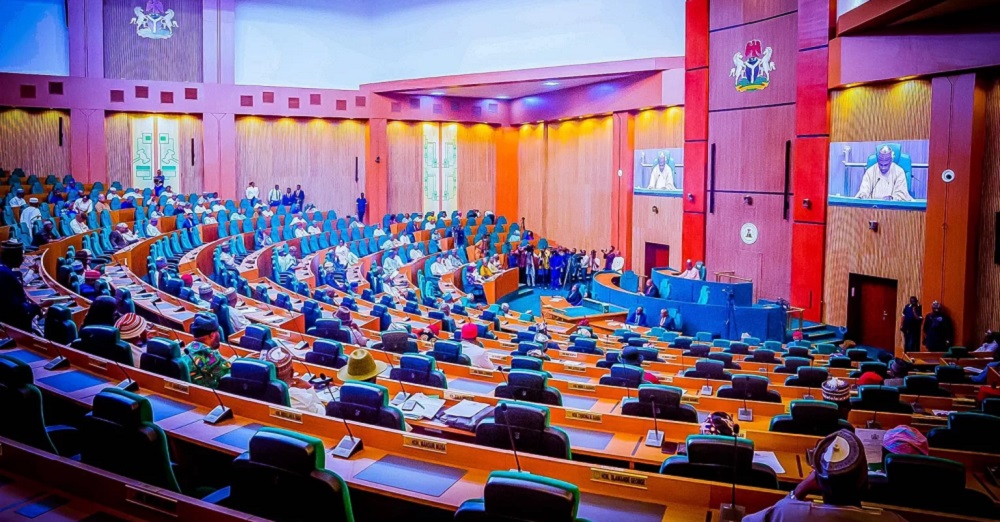
The House of Representatives on Wednesday witnessed a brief but tense moment during plenary following the announcement of an honorary doctorate awarded to a lawmaker from Kogi State. 
The session, which was later presided over by the Deputy Speaker, Rep. Benjamin Kalu, had been opened earlier by the Speaker, Tajudeen Abbas, with the formal presentation of petitions and the consideration of motions on matters of urgent public importance.
After the national anthem and opening prayers, the Speaker read a letter informing the House that the Deputy Majority Leader, Rep. Abdullahi Halims, had been honoured with an honorary doctorate by Prince Abubakar Audu University, Anyigba.
Rep. Halims, who represents Ankpa/Olamaboro/Omala Federal Constituency of Kogi State and is a member of the All Progressives Congress, formally notified the House of the award through the letter addressed to the Speaker. As colleagues offered their congratulations, he stood up and briefly displayed the award to fellow lawmakers.
However, the gesture prompted an objection from a member also from the APC, Rep. Awaji-Inombek Abiante from Rivers State, who raised concerns about the public display and use of honorary academic titles.
He cautioned against actions that could blur the distinction between academic degrees earned through study and honorary awards conferred as recognition.
Abiante said, “There is a clear-cut distinction between Honorary Doctorate degrees and Doctor of Philosophy. They are two different things.
“That is why some of us, when we stand up, we do not introduce ourselves as Doctor this or Doctor That. I will not sacrifice my labour in the academic environment for someone who just got honoured. Let us have that distinction sir.”
Although the matter was not debated further on the floor, Abiante’s comments drew strong approval from lawmakers across party lines.
In his ruling, Deputy Speaker Benjamin Kalu directed the House Committee on Rules and Business to review the concerns raised and propose clear guidelines on how the House should formally distinguish between honorary doctorates and academically earned degrees.
The exchange reflects a long-standing national debate over the social and professional use of honorary academic titles in Nigeria. Public and private universities regularly award honorary degrees to politicians, business leaders, entertainers and other prominent figures, usually in recognition of philanthropy, influence or public service.
Unlike a PhD, however, honorary doctorates do not involve academic coursework, original research or the defence of a thesis. International academic standards generally discourage recipients from using the “Dr” title in formal or professional contexts, except for ceremonial purposes.
In Nigeria, the issue has remained contentious, particularly within academic circles, where critics argue that widespread use of honorary titles weakens the value of rigorous scholarship and research. Concerns have also been raised about the increasing commercialisation of honorary degrees and their growing use as symbols of status by public office holders.
The matter has surfaced repeatedly within public institutions, professional associations and religious bodies, prompting calls for clearer rules on how honorary degrees should be referenced, especially by individuals in public service.
The incident at the House of Representatives on Wednesday signals that the debate has now reached the legislature, with lawmakers seeking a formal position that acknowledges honorary awards while safeguarding the integrity of earned academic qualifications.