Connect with us

Opinion

Finishing Strong: Behold the Hour Cometh…

Published

on

ADVERTISEMENT
Zoom Ad
ADVERTISEMENT
Zoom Ad

By Rt Hon Eseme Eyiboh, mnipr

There are moments in a nation’s life when institutions are reminded—quietly but unmistakably—that time does not negotiate with comfort. Nigeria’s Senate, returning from the conviviality of Christmas recess and New Year reflection to the discipline of plenary, has arrived at such a moment. The period of acclimatization has passed. The era of testing intentions is over. What remains is a phase in which time asserts itself, when the calendar ceases to be a backdrop and becomes an active force in governance.

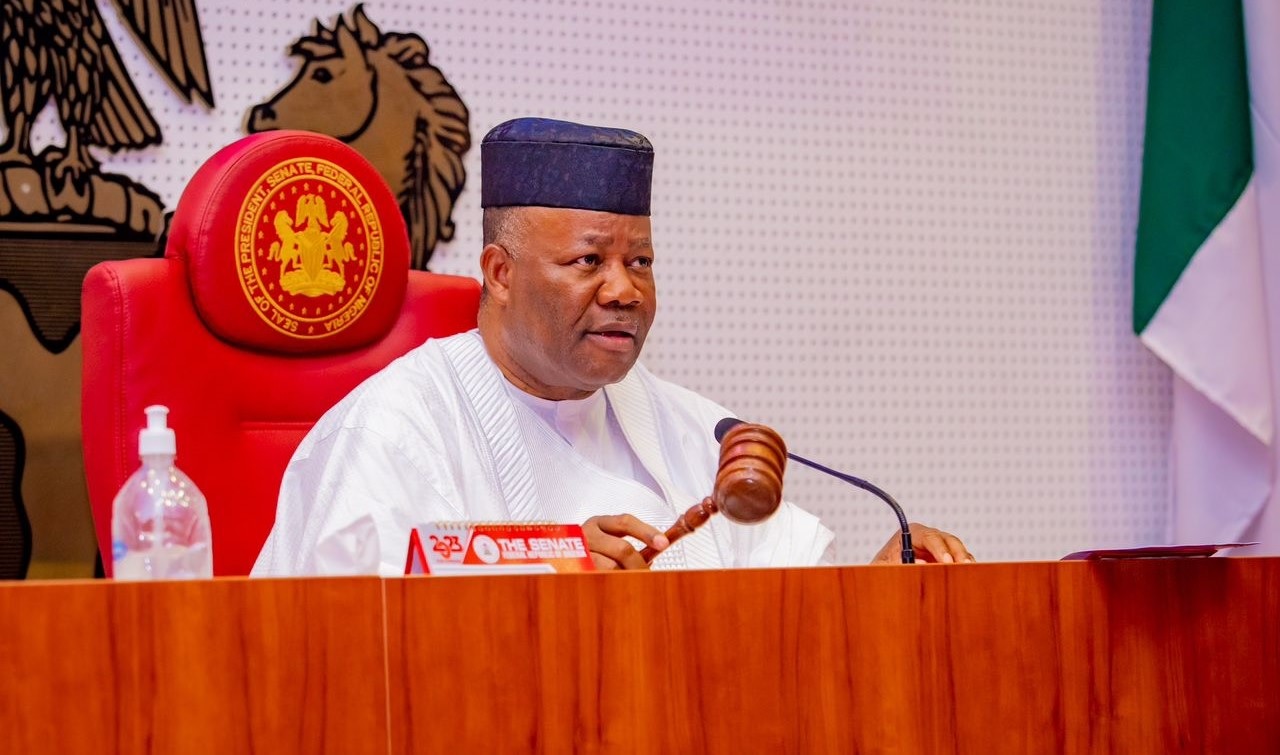
When the President of the Senate, Godswill Obot Akpabio, rose to welcome colleagues back to the chamber in early 2026, he spoke with an ease that respected ceremony while remaining alert to consequence. The tone was cordial but unsentimental; reflective without wandering. Beneath the courtesy was a clear intimation that the Tenth Senate had crossed from the comfort of beginnings into the gravity of its defining phase.

He began where seriousness often takes root—not with policy, but with people. The recess, he reminded senators, was not an escape from accountability but an extension of it: time spent among constituents, re-engaging voices that do not echo within the chamber, absorbing frustrations that do not arrive neatly packaged as memoranda, and reconnecting with the human weight behind legislative abstractions. In doing so, Akpabio quietly reaffirmed representation as a lived obligation rather than a procedural formality.

Advertisement

The Senate, however, resumed its work under the shadow of loss. The death of Senator Godiya Akwashiki during the recess lent the chamber a gravity that could not be ignored. Akpabio’s tribute was spare, almost austere, and for that reason it carried weight. He spoke of diligence, humility, and responsibility—not as ornament, but as the unobtrusive virtues that prevent institutions from emptying themselves of meaning. The moment of silence that followed served as a reminder that democracy rests not only on arithmetic and procedure, but on the moral character of those entrusted to serve.

The address then widened its lens to the nation beyond the chamber. Nigeria, Akpabio observed, did not pause while the Senate recessed. Economic pressures persisted. Security challenges endured. Social demands intensified. Yet threaded through this catalogue of strain was a firm insistence on resilience. Nigerians, he argued, have continued to endure and adapt, expressing themselves not only through protest or complaint, but through work, enterprise, and a stubborn conviction that tomorrow need not be a repetition of today.

This framing mattered. It acknowledged hardship without normalizing it, and resilience without romanticizing suffering. More importantly, it returned responsibility to leadership. Public expectations, Akpabio cautioned, have not diminished with time; they have sharpened.

Security, inevitably, commanded attention. The Senate President welcomed ongoing military cooperation between Nigeria and the United States as part of a broader effort to confront terrorism and safeguard stability. Yet strategy did not eclipse humanity. His condolences to families bereaved by insecurity were measured but sincere, underscoring a truth often obscured by briefings and statistics: security is not an abstraction, but the difference between return and absence, between continuity and grief.
Equally sobering was the warning that as many as 35 million Nigerians may face hunger in the coming year. This was not treated as a distant projection to be acknowledged and deferred, but as an imperative demanding legislative urgency, rigorous oversight, and collaboration. Food security, in this context, is not charity; it is statecraft.

Advertisement

As the political season approaches with its familiar excesses, Akpabio’s appeal for civility and restraint was timely. Democracy, he implied, is not weakened by competition but by recklessness; not threatened by ambition but by the abandonment of responsibility. National unity, he warned, must never become collateral damage in the contest for power.

The address also made deliberate space for Nigerians whose lives remain suspended in captivity within their own country. Akpabio urged continued remembrance and prayer, resisting the political impulse to move on too quickly. Progress that ignores unresolved pain, he suggested, is progress in name only.
Threaded through the address was an endorsement of the Renewed Hope Programme of the Tinubu administration—not as a panacea, but as a collective undertaking requiring patience, discipline, and cooperation. Hope, in this telling, is not sentiment; it is work.

Then came the central fact. With less than one year and five months remaining, the Tenth Senate has entered its final stretch. Akpabio stated this plainly, without theatrics. The final stretch, he argued, is where participation yields to performance—where urgency must be embraced without panic, reform pursued without recklessness, and productivity demanded without compromising standards.
What followed was a concise legislative philosophy.

The months ahead must be reform-driven. Laws passed now must strengthen institutions, secure lives and property, unlock growth, and restore confidence in the Nigerian state. There was a pointed warning against legislative clutter and symbolic excess. History, Akpabio reminded his colleagues, is unimpressed by volume; it is persuaded by value.
He described the task ahead as institutional housekeeping: clearing bottlenecks, completing what was begun, and leaving behind laws that function rather than frustrate. The imagery was modest, but the implication was serious. Governance, at its best, is stewardship rather than spectacle.

Advertisement

The vision outlined was ambitious yet restrained: a Nigeria more governable than it was met; more just than it was found; more hopeful than it was entrusted to this generation of lawmakers. Institutions stronger than individuals. Laws that serve rather than burden. It was nation-building language—and an invitation to judgment.

Practicalities were not ignored. The budget, Akpabio noted, requires rigorous scrutiny, responsible passage, and faithful implementation. Oversight should correct rather than merely criticize. Collaboration with the Executive remains essential, grounded in constitutional responsibility rather than convenience.

Perhaps the most demanding reminder was the simplest. Senators, he said, are the ears, the eyes, and the legislative voice of Nigerians. It was not grandiose. It was exacting.

As the address concluded, the themes of time and memory returned. The clock is moving. The nation is watching. History is recording. This, Akpabio insisted, is not a moment for anxiety but for purpose. When the Tenth Senate reaches the end of its tenure, let it be remembered not as a body that slowed near the finish, but one that accelerated.

Advertisement

In many respects, the address captured the tone Akpabio has sought to establish since assuming the Senate presidency: stability over spectacle, substance over noise, legacy over applause. Whether the Senate finishes strong will depend not on rhetoric, but on deeds. As a declaration of intent, however, this was a serious one.

The final stretch has begun! Behold the hour cometh! The work remains unfinished. The trust has been acknowledged; it now awaits to be honored. In the end, nations remember less what was promised at the threshold, and more what was delivered before the door finally closed.

Rt Hon Eseme Eyiboh, mnipr,is Special Adviser on Media and Publicity and Official Spokesperson to the President of the Senate.

Advertisement
Continue Reading
Advertisement

Opinion

Nationwide Terrorism, Banditry Calculated To Frustrate 2027 Polls – Senator Karimi

Published

on

By

ADVERTISEMENT
Zoom Ad
ADVERTISEMENT
Zoom Ad

Despite recent proactive responses by the nation’s security forces to instances of insurgency and terrorism in parts of the country, Senator representing Kogi West District, Sunday Steve Karimi is convinced that the unabating trend is not unrelated to the 2027 general elections.

The Independent National Electoral Commission, (INEC), last week, released the timetable for the forthcoming full-cycle polls.

While the presidential and national assembly elections are scheduled for Saturday February 20, 2027, governorship and state assembly polls will hold two weeks later on Saturday March 6, 2027. A section of the political class has raised observations about the collision between the electoral calendar as announced, and the Muslim Ramadan fast which will take place between February 7 and March 8, 2027. INEC is considering an approach to the parliament for guidance if shifts in the scheduled dates outside of the statutory provisions become imperative.

Security operations are proceeding simultaneously in Kwara, Nasarawa, Plateau, Benue and Taraba states where President Bola Tinubu through the Chief of Army Staff, Lieutenant-General Waidi Shaibu has deployed special battalions.

Advertisement

Nonetheless, kidnappers, murderers and terrorists continue to fester in parts of the country, leaving trails of anguish, blood and devastation.

Despite these concurrent security operations, a terrorist group in Kwara State at the weekend paraded about 200 captives from a recent vicious attack on Woro community in Kaiama local government area in northern Kwara State. In response to written threats by terrorist groups, residents of parts of Kwara South are migrating from their homes and farmlands.

Karimi in a statement at the weekend, posited that there is a nexus between the forthcoming general polls and the unabating insecurity in the country.

According to Karimi, certain interests and tendencies are resolved to continue to make the country ungovernable with the ultimate aim of disrupting the forthcoming general elections. His words: “The correlation is all too glaring. Against all odds, President Bola Tinubu has continued to record landmark successes across sectors. The economy is on the rebound; prices of products are lowering; government is paying university dons 40 per cent more than they previously earned; foreign reserves in less than than three years are nestling close to $50Billion; the naira has dropped below N1400 to the dollar. Despite these heartwarming developments, certain perverts remain averse to the gradual resurgence of the socioeconomy.”

Advertisement

Senator Karimi who is also the Chairman of the Committee on Senate Services, noted that the Tinubu administration has welcomed foreign collaboration in addressing the nation’s security challenges, alluding to the Christmas day intelligence-led bombing of parts of Sokoto State by the United States military. Detachments of US troops have also set boot on Nigerian soil, to bolster the training and intelligence-gathering capabilities of the nation’s military. The President also recently paid a state visit to Turkey during which military cooperation was one of the highpoints of engagements with his host, President Tayyip Erdogan.

All of these in addition to preexisting military operations with neighbouring countries, namely Chad, Niger, Cameroon and Benin Republic, to rout undesirables unsettling the country.

Karimi expressed the hope that the recent reorganisation of the nation’s military apparachik by the President and the continue rejigging of operational strategies will yield fruit sooner than later. Noted Karimi: “It is reassuring that the Minister for Defence, General Christopher Gwabin Musa has hinted about possible recourse to our abundant pool of retired military personnel to secure ungoverned spaces across the country. These initiatives will complement the subsisting deployment of forest guards in parts of the country, another initiative of the Tinubu administration. Mr President has also approved the recruitment of 50,000 police constables to improve the personnel strength of the Nigeria Police Force, all in response to the nation’s security realities,” Karimi observed.

Senator Karimi assured that the National Assembly will continue to support the President in his commitment to deliver good governance, tangible dividends of democracy and the quality and credibility of election in 2027, which Nigerians will be proud of.

Advertisement

“Our country will overcome these challenges. Our rebound within the past 32 months has been applauded by the World Bank at the level of the Managing Director for Operations, Anna Bjerde, who commended the nation’s economic reforms as a global example of consistent and credible leadership. When a nation like Nigeria which provides the oxygen for growth in the subregion is getting it right, antagonists are not farfetched.

Nigerians should rest assured by the President’s reassurance at the recent National Economic Council, (NEC) meeting, that we shall overcome terrorism and insecurity.”

Busayo Tosin Media Officer to Senator Sunday Karimi Representing Kogi West Senatorial Zone Chairman, Senate Committee on Services

Advertisement
Continue Reading

Opinion

ABARIBE DEFENDS WITHDRAWAL OF DIVISION ON ELECTRONIC TRANSMISSION, CITES STRATEGIC LEGISLATIVE TIMING

Published

on

ADVERTISEMENT
Zoom Ad
ADVERTISEMENT
Zoom Ad

By Anderson Osiebe.
Executive Director
HallowMace Foundation Africa

Senator Enyinnaya Abaribe has defended his decision to withdraw a call for division during Tuesday’s emergency plenary session convened by the Senate to address the controversial Clause 60 of the Electoral Act Amendment Bill — the clause dealing with Electronic Transmission of Election Results.

The emergency session was called amid heightened public interest and political tension surrounding the future of electronic transmission in Nigeria’s electoral framework.

During deliberations, Senator Abaribe called for a division — a formal voting procedure used to accurately count lawmakers’ positions on a matter. However, he shortly afterward withdrew the request, a move that attracted significant criticism across media platforms.

Advertisement

Responding to the backlash, the Abia South lawmaker clarified that his decision was neither a retreat nor a compromise, but a calculated legislative strategy aimed at protecting the broader objective of securing electronic transmission within the final version of the Electoral Act.

According to Senator Abaribe, proceeding with the division at that stage would likely have resulted in defeat, given the apparent numerical disposition in the chamber. Such a loss, he argued, would have weakened the reform effort and possibly removed the provision entirely from further consideration.

He emphasized that the legislative process does not end with Senate deliberations alone.

“Essentially, because the process involves harmonization with the House of Representatives,” Abaribe explained. “It is only after the House of Representatives version is not approved, that we can bring the sledge hammer of division.”

Advertisement

The senator’s remarks underscore a key aspect of Nigeria’s lawmaking process. When the Senate and the House of Representatives pass different versions of a bill, both chambers must reconcile their positions through a harmonization committee. It is at that stage that contentious provisions are negotiated and finalized before being transmitted for presidential assent.

Political observers note that forcing a division prematurely could have created a recorded defeat that might weaken the Senate’s negotiating position during harmonization.

By withdrawing the division, Abaribe appears to have opted for strategic patience, preserving the opportunity to deploy what he described as the “sledge hammer” — a decisive vote — if harmonization outcomes threaten the inclusion of electronic transmission.

The controversy highlights the tension between public expectations for assertive action and the often complex, incremental nature of legislative strategy.

Advertisement

While critics viewed the withdrawal as backing down, supporters argue that legislative battles are sometimes won not by dramatic confrontation, but by timing and tactical restraint.

As debate continues over electoral reforms, the issue of electronic transmission remains central to Nigeria’s democratic credibility, transparency, and public trust in elections.

The coming harmonization process between the Senate and the House of Representatives will now determine the final shape of Clause 60 — and whether electronic transmission of results remains firmly embedded in the nation’s electoral law.

Advertisement
Continue Reading

Opinion

THE COURT OF APPEAL JUDGEMENT AND SEPARATION OF POWERS: SENATOR NATASHA AKPOTI-UDUAGHAN AND THE CLERK OF THE NATIONAL ASSEMBLY OF THE FEDERAL REPUBLIC OF NIGERIA & 3 ORS

Published

on

ADVERTISEMENT
Zoom Ad
ADVERTISEMENT
Zoom Ad

By

Rt Hon Eseme Eyiboh mnipr

The judgment of the Court of Appeal delivered on Monday, February 9, 2026, represents a consequential affirmation of the constitutional principles that sustain Nigeria’s democratic order and the orderly functioning of its institutions.

By upholding the disciplinary actions of the Senate as lawful and procedurally sound, the Court has robustly reinforced the doctrine of separation of powers, a cornerstone of our constitutional democracy. The ruling confirms with unmistakable clarity that the authority of the Senate to regulate its internal proceedings and discipline its members is firmly rooted in the Constitution and its Standing Orders. This authority is neither incidental nor ornamental; it is an essential responsibility entrusted to the legislature to preserve order, decorum, and institutional integrity in the discharge of its duties on behalf of the Nigerian people.

Advertisement

The Court of Appeal has further enriched our constitutional jurisprudence by clearly delineating the proper limits of judicial intervention in the internal affairs of a co-ordinate arm of government. While reaffirming the judiciary’s vital role as guardian of fundamental rights, the judgment recognises that the legislature must retain the autonomy necessary to enforce its rules and maintain discipline, provided it acts within the province of the law. This equilibrium is indispensable to effective governance and democratic stability.

The circumstances that gave rise to this litigation are regrettable. Parliamentary democracy rests on respect for established rules, collective responsibility, and due deference to the authority of the Chair. Persistent refusal to comply with lawful directives of the Presiding Officer—including the reallocation of seating arrangements within the chamber—as well as failure to appear before the statutory Committee on Ethics, Privileges and Public Petitions, runs counter to the ethos of parliamentary conduct. Such actions risk undermining institutional authority and distracting from the Senate’s higher obligations of legislation, oversight, and representation in the national interest.

While the Court of Appeal set aside the contempt proceedings and the associated fine on procedural grounds, it is significant that the core findings affirming the Senate’s disciplinary powers and the validity of its actions remain undisturbed. This distinction reinforces both the primacy of due process and the legitimacy of institutional self-regulation under the Constitution.

As the Senate moves forward, it remains steadfast in its constitutional mandate to foster robust debate, exercise rigorous oversight, and enact legislation that advances the peace, order, and good government of the Federal Republic of Nigeria. In keeping with the spirit of reconciliation and institutional maturity that must guide democratic leadership, the Senate looks ahead with restraint, goodwill, and an abiding commitment to collective purpose rather than past grievance.

Advertisement

In this spirit, the Senator concerned, who has since resumed legislative duties, is expected to continue her duties with renewed adherence to parliamentary rules, mutual respect, and the shared responsibilities that bind all members of the National Assembly.

The strength of our democracy ultimately lies in the strength of its institutions, each operating responsibly within its recognised constitutional remit. The judgment of the Court of Appeal fortifies that foundation and renews the resolve to build a disciplined, stable, and forward-looking legislature in service of the Nigerian people.

The facts have spoken for themselves

God bless the Federal Republic of Nigeria.

Advertisement

Rt. Hon. Eseme Eyiboh, MNIPR
Special Adviser, Media/Publicity and Official Spokesperson
to the President of the Senate

Continue Reading

Trending

Copyright © 2024 Naija Blitz News