

News
Budget Snub Sparks Showdown: Reps Move to Axe NACETEM Funding, Query Food Council’s Finances
By Gloria Ikibah
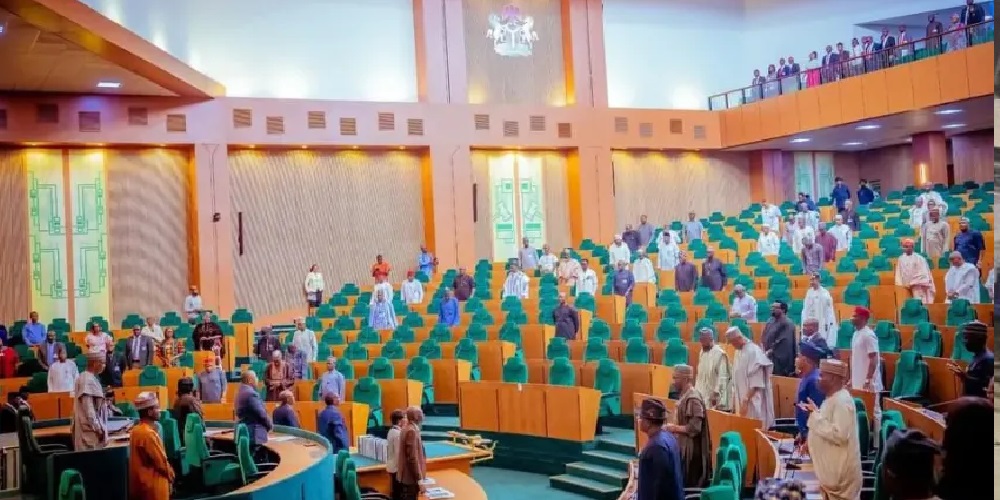
Tempers flared at the National Assembly on Thursday as lawmakers took a hard line against two federal agencies during a tense 2026 budget defence session in Abuja.
The House of Representatives Committee on Science and Engineering halted consideration of the 2026 budget proposal of the National Centre for Technology Management (NACETEM), escalating the matter by moving to strip the agency of its allocation entirely from the national appropriation bill.

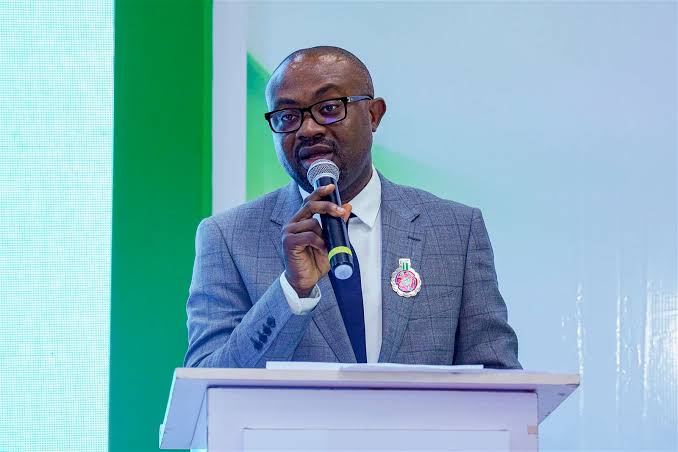
The committee also resolved to recommend the removal of NACETEM’s Director-General, Dr Olushola Odusanya, over his failure to appear before the panel to defend the agency’s budget and submit the documents required for legislative scrutiny.
Lawmakers described the absence as unacceptable, stressing that public officials are accountable to the legislature.
The committee maintained that no appointee should consider themselves above parliamentary oversight, particularly in matters concerning public funds.
Members warned that the decision will send a clear signal to other heads of agencies about the consequences of disregarding invitations from the National Assembly.
The standoff effectively leaves NACETEM facing the prospect of zero allocation in 2026 unless the matter is revisited.
In a separate but equally probing session, the committee turned its attention to the Nigerian Council of Food Science and Technology (NiCFOST), where concerns were raised over both its 2025 budget performance and its 2026 proposal.
Lawmakers were troubled by the council’s low internally generated revenue, reported at roughly N385,000 in 2024 and N285,860 in 2025. The figures stood in stark contrast to a sharp rise in overhead costs, which nearly doubled from N95.40 million in 2025 to N195.73 million in the 2026 proposal.
The council’s registrar explained that its revenue is drawn solely from registration fees and annual professional dues paid by its members, numbering about 10,000. Registration is set at N5,000, while annual dues stand at N2,000.
However, she was unable to account for the significant jump in overhead expenditure, noting that the increase was not part of the estimates initially submitted to the Budget Office.
The committee ruled that the discrepancies warranted further examination and indicated that NiCFOST would be summoned again for additional clarification before any final decision is taken.
With scrutiny tightening and patience wearing thin, agencies appearing before the National Assembly this budget season may be under pressure to come better prepared — or risk paying a steep price.
News
Ecoparl: Senator Barau Urges ECOWAS to Tackle Root Causes of Farmer-herder Conflicts
By Gloria Ikibah
Deputy President of the Nigerian Senate and First Deputy Speaker of the ECOWAS Parliament, Senator Barau Jibrin, has urged West African countries to draw lessons from Nigeria’s experience with farmer-herder conflicts and the humanitarian crises arising from them.
First Deputy Speaker made the call in a presentation titled, “Strategies for addressing internal displacement and farmer-herder conflicts in Nigeria”, delivered on his behalf by Senator Sadiq Umar during the Second Extraordinary Session and Seminar of the ECOWAS Parliament in Accra, Ghana.
He said Nigeria’s experience offered important lessons for the region and the African continent, particularly in addressing conflicts linked to competition for land and water.
According to him, Nigeria has extensive agricultural and pastoral economies, with a large proportion of the population depending on farming and livestock production for their livelihoods.
He, however, said increasing pressure on land and water resources had contributed to conflicts, banditry, terrorism and other humanitarian disasters.
Barau said the Federal Government had introduced measures to address the humanitarian consequences of the conflicts, including the creation of the Ministry of Humanitarian Affairs and Poverty Reduction.
He said the ministry was, among other responsibilities, established to manage emergency relief operations and responses to internally displaced persons (IDPs).
He said: “Nigeria’s approach is increasingly consistent with the international shift from short-term humanitarian response towards government-led development-orientated solutions.
“Nigeria is also one of the countries selected under the United Nations Secretary-General’s Action Agenda on Internally Displaced and Focused National Pathways towards Durable Solutions.
“Nigeria’s commitment to the protection of internally displaced persons has also been strengthened through its engagement with the African Union Convention for the Protection and Assistance of Internally Displaced Persons in Africa, commonly known as the Kampala Convention”.
Despite these interventions, Barau expressed concern that the crisis had continued to defy efforts to resolve it, with more than three million Nigerians still living in internally displaced persons’ camps across the country.
He argued that internal displacement should not be regarded as the sole responsibility of humanitarian agencies, but should involve coordinated action by relevant Ministries, Departments and Agencies (MDAs), traditional institutions and other stakeholders.
First Deputy Speaker also called for greater attention to early warning systems, conflict prevention mechanisms and climate adaptation as part of efforts to prevent conflicts before they escalate.
He said livestock should not be viewed merely as a security issue but also as an important economic sector capable of contributing to livelihoods and national development.
According to him, investment in ranching, animal feeding and breeding could help reduce some of the pressures associated with uncontrolled livestock movement.
Barau also urged ECOWAS parliamentarians to develop appropriate legislative frameworks for the protection of displaced persons and the regulation of land and livestock management.
“Parliamentary committees should conduct evidence-based oversight of government programmes and expenditure relating to displacement, security, agriculture, livestock and reconstruction,” he said.
He stressed that Nigeria’s experience had shown that internal displacement and farmer-herder conflicts were complex challenges that could not be resolved through isolated interventions.
The Senator said effective implementation of policies and programmes was equally important to ensuring that farmers and herders could pursue their lawful and productive livelihoods without unnecessary conflict.
Barau’s presentation focused on Nigeria’s internal security challenges and their socio-economic consequences, while urging other countries in the region to focus more on preventing similar crises rather than waiting to respond after they occur.
“For Africa, the challenge extends beyond responding to crises after they occur, it requires building resilient institutions, economies and communities capable of preventing conflicts and protracted displacement.
“As parliamentarians, we have a responsibility to support appropriate legislation, strengthen oversight, promote inclusive dialogue and ensure that public resources are directed towards sustainable solutions,” he added.
News
ECOWAS Parliament Must Stay Close to Citizens – Afenyo-Markin
By Gloria Ikibah
Third Deputy Speaker of the ECOWAS Parliament and member of Ghana’s delegation, Alexander Kwamena Afenyo-Markin, has called on parliamentarians to remain close to the people they represent and ensure that regional integration delivers tangible benefits to citizens.
Afenyo-Markin made the call during the ongoing Second Extraordinary Session and Seminar of the ECOWAS Parliament in Accra, Ghana, where he formally handed over his responsibilities to George Kweku-Ricketts Hagan of Cape Coast South, following the completion of his tenure.
The outgoing Deputy Speaker said regional integration must go beyond treaties, protocols and meetings among institutions, insisting that its impact must be visible in the daily lives of citizens across West Africa.
“Regional integration must be understood beyond treaties, protocols and meetings of institutions. Its true value must be felt in our communities, in the opportunities available to our young people, in the movement of our citizens and businesses across borders,” he said.
He said no single member state could successfully confront the challenges facing the region alone, stressing the need for collective action and stronger regional cooperation.
Afenyo-Markin also drew attention to the connection between climate change, poverty and insecurity in the region.
He said climate change could intensify existing pressures, worsen poverty, increase competition over land and water resources and threaten livelihoods.
He, however, cautioned against attributing every conflict in the region to climate change, urging policymakers to understand the relationship between environmental stress and insecurity without oversimplifying complex conflicts.
The outgoing Deputy Speaker also highlighted the importance of taking parliamentary activities beyond national capitals as part of efforts to bring regional institutions closer to the people.
He recalled the parliamentary seminar held in Congo Town, Liberia, in 2019 and the decision to take parliamentary activities to Winneba, the capital of his constituency, in 2021.
According to him, the initiative demonstrated the importance of taking the parliament to communities rather than limiting its activities to traditional political centres.
“Winneba subsequently hosted parliamentary activities on four occasions by 2024,” he said.
Afenyo-Markin said the visits provided residents with opportunities to interact directly with the regional institution, including traditional rulers, members of the business community, young people and the University of Education, Winneba.
“We must from time to time, leave the familiar surroundings of our national capital and meet our citizens where they live,” he said.
He noted that the approach had subsequently been extended to other locations, including Kano and Port Harcourt in Nigeria.
The lawmaker, who took time to highlight some of his contributions to his constituency and the wider region, said greater engagement with citizens remained central to strengthening the relevance of the ECOWAS Parliament.
At the handover ceremony, Afenyo-Markin expressed confidence in his successor, describing Hagan as a worthy parliamentarian with the experience required for the responsibility.
“He is a worthy member of Parliament, who I believe will succeed me in this responsibility. He is bringing his experience in parliamentary diplomacy and an understanding of regional integration to the role.
“Leadership is ultimately about service and continuity,” Afenyo-Markin said.
He also pledged his continued support to the ECOWAS Parliament, assuring that Ghana’s delegation would continue to contribute meaningfully to the work of the regional legislature.
News
Speaker Ibrahima Hails Ghana’s Female Vice Presidency, Pushes Diploma Recognition
By Gloria Ikibah
The Speaker of the ECOWAS Parliament, Rt. Hon. Memounatou Ibrahima, has described Ghana’s decision to elect a woman as Vice-President as an inspiration for women and girls across West Africa.
Speaker Ibrahima stated this when she met Ghana’s Vice-President, Professor Naana Jane Opoku-Agyemang, on the sidelines of the ongoing Second Extraordinary Session of the ECOWAS Parliament and the Second 2026 Parliamentary Seminar in Accra.
She expressed appreciation to the Vice-President for receiving her and for the speech she delivered at the opening of the parliamentary proceedings.
Ibrahima also commended President John Dramani Mahama and the people of Ghana, saying the country’s choice to have a woman occupy the vice presidency sent an important message across the region.
She said: “By entrusting the vice presidency to a woman, Ghana sends a powerful message to our entire region: that Africa believes in women’s leadership. Her journey is an inspiration to millions of young girls”.
The meeting also focused on the 25th anniversary of the ECOWAS Parliament and its core responsibilities, including issuing opinions on matters referred to it, examining the Community’s budget and conducting oversight missions.
The two leaders further discussed issues affecting young people across the region, particularly the harmonisation of curricula and mutual recognition of academic diplomas among ECOWAS member states.
Ibrahima said making it possible for qualifications obtained in one ECOWAS country to be recognised in another will strengthen regional integration and make free movement more meaningful.
She said a graduate from Lomé, Abuja or Dakar should be able to have their skills recognised in Accra, describing such recognition as an important step towards building an ECOWAS of the Peoples.
The Speaker thanked the Ghanaian authorities for their hospitality and the organisation of the parliamentary session.
The meeting forms part of the ECOWAS Parliament’s engagement with regional leaders as the institution marks its 25th anniversary and pursues integration priorities, including youth mobility and the recognition of academic qualifications across West Africa.
Rt. Hon. Ibrahima is the first woman to serve as Speaker of the ECOWAS Parliament since its establishment in 2000, having been elected to lead the sixth legislature in May 2024.
-
Economy24 hours agoDangote To Support Two Million Women With Refinery IPO Share Ownership – Aliko Dangote
-
News24 hours agoPrimate Ayodele Blasts Bishops Again! Dismisses Their Defense, Insists Their Endorsement of Tinubu Is Selfish Not Spiritual
-
News24 hours agoEx-LASU VC: Public varsities must charge N1m tuition per student to sustain financial independence
-
News23 hours agoOsun assembly endorses state police
-
News23 hours agoAlleged Phone Tapping: Court to Rule in El-Rufai’s No-case Submission Oct 26
-
Sports24 hours agoSadio Mane Builds $20.4m Mango Processing Plant In Hometown