

News
NCC Eyes Plateau’s Digital Future with Fresh Push to Connect Rural Communities
- /home/naijuinz/public_html/wp-content/plugins/mvp-social-buttons/mvp-social-buttons.php on line 27
https://naijablitznews.com/wp-content/uploads/2026/03/WhatsApp-Image-2026-03-24-at-12-998x600.jpg&description=NCC Eyes Plateau’s Digital Future with Fresh Push to Connect Rural Communities', 'pinterestShare', 'width=750,height=350'); return false;" title="Pin This Post">
- Share
- Tweet /home/naijuinz/public_html/wp-content/plugins/mvp-social-buttons/mvp-social-buttons.php on line 72
https://naijablitznews.com/wp-content/uploads/2026/03/WhatsApp-Image-2026-03-24-at-12-998x600.jpg&description=NCC Eyes Plateau’s Digital Future with Fresh Push to Connect Rural Communities', 'pinterestShare', 'width=750,height=350'); return false;" title="Pin This Post">
By Gloria Ikibah
The Nigerian Communications Commission (NCC) has renewed its pledge to extend broadband services to underserved communities in Plateau State, signalling a stronger drive to bridge Nigeria’s digital divide and unlock economic opportunities in rural areas.
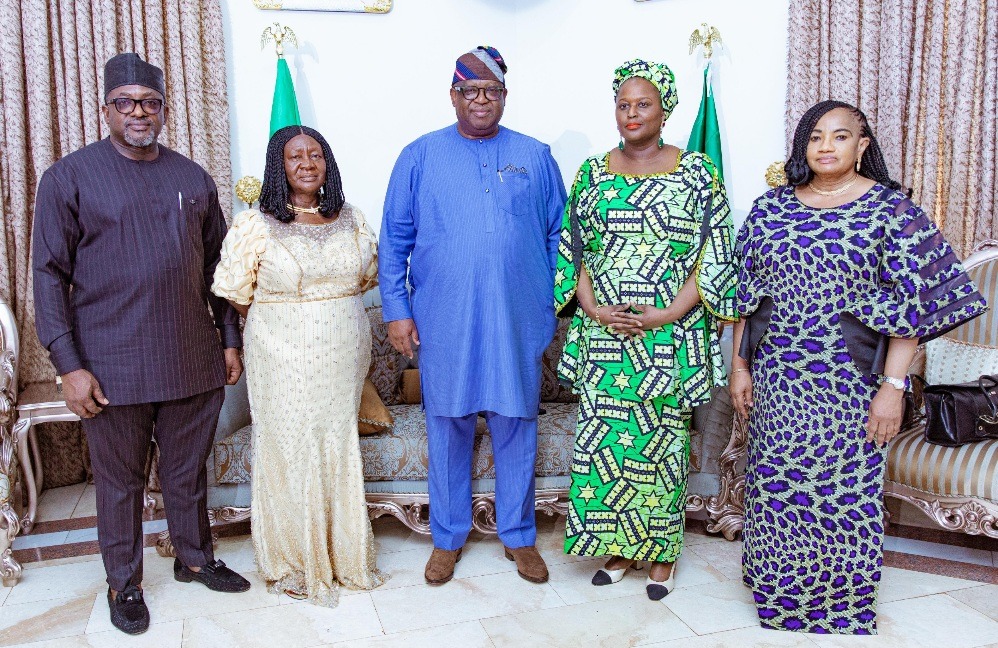
The commitment was reaffirmed during a visit by the Commission’s Executive Commissioner for Stakeholder Management, Rimini Makama, to Governor Caleb Mutfwang at the Government House in Jos, Plateau State.

Describing Plateau as a key player in Nigeria’s digital future, Makama said the state’s growing innovation culture and youthful population make it an essential partner in expanding connectivity.
She added that while progress is evident, significant gaps remain, particularly in rural communities.
She said: “The NCC has identified Plateau State as a pivotal partner in Nigeria’s broadband agenda; not ceremonially, but strategically. You have the educational institutions, the growing innovation ecosystem at nHub and beyond, the youth talent, and now a Governor whose public commitments; from the Right of Way policy to the TechFest declaration, signal the political will that digital infrastructure demands.
“We have taken notice. At the same time, we must be honest: many rural LGAs remain underserved, cut off from the digital economy that could transform their livelihoods. Bridging that divide is a shared responsibility, and the NCC is ready to fulfil its part”.
According to Makama, the visit marks the start of deeper collaboration between the Commission and the Plateau State Government.
She said it was “the beginning of a conversation” and that the NCC is keen to align its tools and mandate with the state’s development priorities, “from supporting the operationalisation of Right of Way policy, to exploring how the NCCs Universal Service Provision Fund can reach underserved communities across Plateau’s LGAs.”
The Commission maintained that its interest in Plateau is driven by clear signs of digital readiness, including policy reforms and commitments made during the state’s TechFest, which it believes are laying the groundwork for sustainable, innovation-led growth.
Despite these gains, NCC Executive Commissioner acknowledged that limited connectivity in several local government areas continues to restrict access to education, business opportunities and essential digital services.
In response, Governor Mutfwang welcomed the Commission’s engagement, describing it as both timely and significant, particularly as Plateau positions itself as a hub for digital innovation.
He stressed the need to translate policy into tangible outcomes, especially in emerging sectors such as artificial intelligence, while highlighting ongoing partnerships, including collaboration with the United Nations Development Programme to establish an innovation hub at Plateau State Polytechnic.
The governor also disclosed plans for a Business Process Outsourcing initiative aimed at creating at least 500 remote jobs for young people in Jos, noting the urgency of acting quickly to secure such opportunities.
He further called for a coordinated, government-wide approach to digital transformation, warning that outdated administrative systems must give way to modern, technology-driven processes capable of improving governance and expanding opportunities in e-commerce and innovation.
The engagement underscores a growing alignment between federal regulators and state governments as Nigeria intensifies efforts to expand broadband access and build a more inclusive digital economy.
News
Osun DECIDES:INEC starts distribution of reprinted ballot papers to party agents in 30 LGAs
The Independent National Electoral Commission (INEC) on Thursday began the distribution of reprinted ballot papers and result sheets to agents of all participating political parties across the 30 Local Government Areas (LGAs) of Osun State ahead of Saturday’s governorship election.
The exercise commenced at the Commission’s state office in Osogbo on Thursday night, following INEC’s compliance with a Federal High Court judgment ordering the inclusion of the Social Democratic Party (SDP) governorship candidate, Dr. Francis Olugbenga Ajala, and his running mate, Faseke Babajimi Oladipo, in the election.
The Federal High Court, Abuja, had on July 22, 2026, delivered judgment in Suit No. FHC/ABJ/CS/344/2026, directing INEC to recognise, accept, upload, process and publish Ajala’s candidature for the August 15 governorship election.
INEC complied with the judgment on Wednesday, August 12, 2026, leading to the reproduction of the ballot papers and relevant result sheets to reflect the inclusion of the SDP candidates.
The reprinted materials were subsequently moved to the Osun State INEC office in Osogbo, where agents of the participating political parties gathered on Thursday night to witness the distribution process.
Addressing journalists at the venue, the Osun State Resident Electoral Commissioner, Mrs. Oluwatoyin O. Babalola, explained that the exercise would commence with the signing of the result sheets by the party agents before the distribution of the materials to the respective Local Government Areas.
Babalola said the materials had already been customised according to the polling units for which they were intended, with the names of the polling units clearly indicated on the documents.
“Everything is going to be customised. Believe it. All the results, they already have the name of the polling units on them,” the REC told journalists.
She explained that the customisation was intended to ensure that the materials could be properly identified and matched with their designated polling units during the electoral process.
According to her, the signing by party agents was an important part of the documentation process preceding the distribution of the materials.
“If you are signing, you see what happened,” she said, while explaining the procedure to the agents and journalists at the venue.
The REC also indicated that the materials had been prepared in a manner that would allow the Commission and the political parties to keep track of the documents allocated to the various areas.
The exercise was not, however, a distribution of the materials directly to polling units.
Rather, the reprinted ballot papers and result sheets were being distributed to agents of the participating political parties for the respective 30 Local Government Areas of Osun State.
The party agents were present at the INEC office to witness the process, beginning with the signing of the result sheets before the materials were handed over for the respective Local Government Areas.
News
Osun election: INEC records 1.9million PVC collections
The Independent National Electoral Commission (INEC) has disclosed that 1,906,390 Permanent Voter Cards (PVCs) have been collected ahead of Saturday’s governorship election in Osun State.
The figure represents 81.50 per cent of the 2,339,233 registered voters in the state, according to a statement issued on Thursday by INEC National Commissioner and Chairman of the Information and Voter Education Committee, Mohammed Haruna.
Haruna said the remaining 426,842 PVCs, representing 18.50 per cent of the registered voter population, had been securely deposited with the Central Bank of Nigeria (CBN), in line with the Commission’s established procedure.
INEC also disclosed that 6,101 voters whose PVCs were damaged, defaced or lost applied for replacement and subsequently printed downloadable copies of their voter cards.
The Commission said it had published a polling-unit-by-polling-unit breakdown of the collected PVCs on its official website.
INEC further assured political parties, civil society organisations, the media and residents of Osun State of its preparedness to conduct a free, fair, credible, transparent and inclusive election on Saturday, August 15, 2026.
Police deploy thousands for election security
Meanwhile, security agencies have intensified preparations for the governorship election, with the Nigeria Police Force deploying thousands of personnel across the state’s 30 local government areas.
Police sources and official statements indicate that at least four police officers will be deployed to each of the 3,673 polling units across the state.
The deployment, however, excludes personnel from other sister security agencies expected to participate in the election security operation.
With the election just hours away, political parties and candidates are making final preparations while voters await the outcome of what is expected to be a closely watched governorship contest.
News
Uncovered: N24bn Ghost Workers’ Pension Remains Unclaimed Two Years After ICPC Seizure
Two years after the Independent Corrupt Practices and Other Related Offences Commission (ICPC) uncovered and seized N24 billion allegedly meant for the payment of ghost workers’ pensions, no individual or organisation has come forward to claim ownership of the funds or challenge the seizure in court.
ICPC Chairman, Dr Musa Aliyu, disclosed this on Thursday in Abuja while delivering a lecture titled, “Anti-Corruption Reforms, Economic Stability and Effective Communication,” organised by Economic Confidenti.
Aliyu said investigations by the commission had uncovered cases in which unpatriotic civil servants allegedly enrolled their children and other family members as ghost workers on government payrolls.
According to him, one individual was found to have enrolled 14 members of his family on the payroll and was allegedly collecting 13 salaries.
“Up till now, no single person has come out to claim the N24 billion or gone to court to claim ownership of the money,” Aliyu said.
He said the commission would continue to investigate payroll fraud and other financial irregularities in government institutions to protect public funds.
The ICPC chairman described corruption as one of the greatest challenges confronting Nigeria, stressing that the menace must be tackled with seriousness if the country is to achieve sustainable economic progress.
He called for stronger enforcement of anti-corruption laws, noting that the country continues to lose significant amounts of money through bribery and other corrupt practices.
Aliyu also expressed concern over the involvement of some public officials in economic crimes, despite their responsibility to serve as role models for younger Nigerians.
He said some officials allegedly use consultants as intermediaries to facilitate corrupt activities and conceal the movement of illicit funds.
Recalling a major case uncovered by the ICPC in 2012, Aliyu cited an alleged diversion of $65 million released for the construction of houses for public officers to address accommodation challenges.
He said instead of using the funds for the intended purpose, those involved allegedly diverted the money and abandoned the housing project.
The ICPC chairman warned that pervasive corruption could discourage both local and foreign investment, stressing that investors would be reluctant to commit their resources to an environment where corruption thrives.
He said the commission would henceforth place greater emphasis on strengthening weak government systems that create opportunities for fraud and undermine economic growth.
Aliyu also referred to the recent discovery of a fake government agency, saying such an organisation should have been detected earlier if the country’s institutional systems were sufficiently robust.
He further identified the insertion of unexecuted projects into government programmes as another consequence of weak systems, saying the practice deprives Nigerians of value for money.
According to him, contractors found to have been awarded such projects would be compelled to execute them once identified.
To build a stronger culture of integrity, Aliyu urged Nigerians to begin anti-corruption campaigns from the primary school level, saying children should be taught early about the dangers and consequences of corruption.
He said such efforts would help raise a generation that would reject corrupt practices and demand accountability from public officials.
“Nigeria can capture corruption and a solid foundation will come up for the country on integrity. The damaging effect of corruption is too much and must not be allowed to thrive,” he said.
Aliyu added that the ICPC would focus on addressing systemic weaknesses that facilitate corruption in areas including constituency projects and payroll management, while working to sanitise the public sector.
-
News19 hours agoOsun 2026: CCLCA berates INEC over poor mock accreditation, demands arrest of Fadahunsi
-
News4 hours agoAPC Women Leader Allegedly Shares Salt, ₦1000 Cash To Osun Residents Days Before Governorship Election
-
News14 hours agoIgbere Traditional Rulers Back Deputy Speaker, Kalu’s Bid for Another Term, Describe His Legislative Service as Outstanding
-
News4 hours agoCustoms Busts Wildlife Syndicate At Abuja Airport, Rescues Two Rare Lion Cubs Bound For Congo
-
News18 hours agoFadahunsi, Osun and the Price of Political Rhetoric
-
News14 hours agoOsun guber poll: Amnesty demands immediate action against Senator Fadahunsi
-
News4 hours agoFire guts hostel at St Louis College, Jos
-
Sports21 hours agoCameroon shock Morocco via penalties to reach WAFCON final