News
Kalu Drives Global Backing for New Post-Conflict Peace Blueprint at IPU Assembly
- /home/naijuinz/public_html/wp-content/plugins/mvp-social-buttons/mvp-social-buttons.php on line 27
https://naijablitznews.com/wp-content/uploads/2026/04/IMG-20260416-WA0044-1000x600.jpg&description=Kalu Drives Global Backing for New Post-Conflict Peace Blueprint at IPU Assembly', 'pinterestShare', 'width=750,height=350'); return false;" title="Pin This Post">
- Share
- Tweet /home/naijuinz/public_html/wp-content/plugins/mvp-social-buttons/mvp-social-buttons.php on line 72
https://naijablitznews.com/wp-content/uploads/2026/04/IMG-20260416-WA0044-1000x600.jpg&description=Kalu Drives Global Backing for New Post-Conflict Peace Blueprint at IPU Assembly', 'pinterestShare', 'width=750,height=350'); return false;" title="Pin This Post">
By Gloria Ikibah
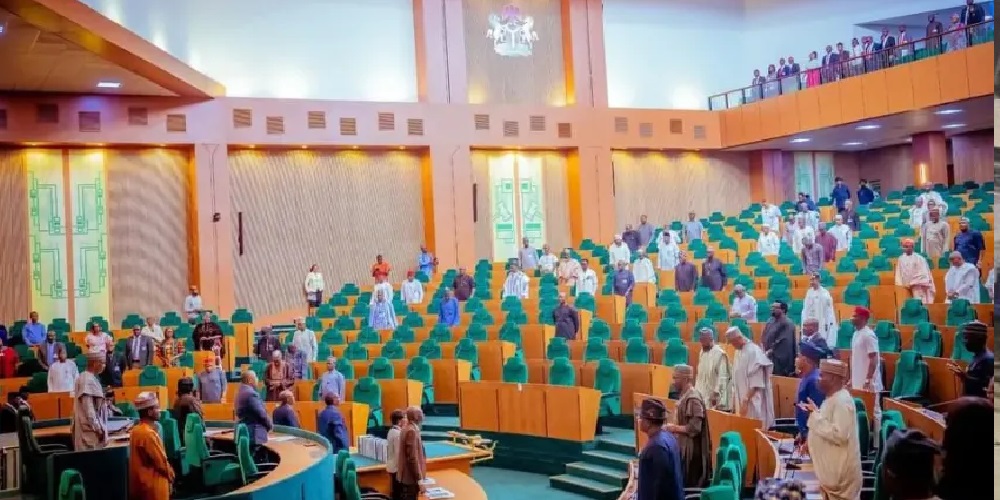
Nigeria’s Deputy Speaker of the House of Representatives, Rt. Hon. Benjamin Kalu, has played a leading role in securing the adoption of a major international framework aimed at strengthening post-conflict recovery and peacebuilding efforts.
The resolution was endorsed at the 152nd Assembly of the Inter-Parliamentary Union in Istanbul, placing legislatures at the heart of efforts to rebuild societies and sustain long-term peace after conflict.

Kalu, who served as co-rapporteur alongside delegates from Jordan and the Netherlands, presented the draft document, which outlines a comprehensive approach to managing post-conflict transitions and restoring stability.
The move reflects a growing global shift towards recognising the central role of parliaments in ensuring accountability, inclusiveness and durability in peace processes.
The newly adopted framework is built around five key pillars, including institutional strengthening, fair economic recovery, social cohesion, inclusive governance and continued international support.
It also places strong emphasis on human and collective security as essential foundations for achieving lasting peace, while encouraging preventive strategies that address the root causes of conflict and promote resilience.
Central to the framework is the principle of national ownership, with countries expected to lead their own recovery efforts through inclusive systems that guide reconstruction, legal reforms and institutional rebuilding.
The approach also stresses that external support must align with national priorities and remain subject to democratic oversight, ensuring that recovery processes are both accountable and sustainable.
Kalu said: “The 152nd Assembly of the Inter-Parliamentary Union urges Parliaments in countries affected by or emerging from conflict to ensure strong national ownership of peace and recovery processes by leading inclusive nationwide consultations, defining priorities through democratic deliberation and legislation, and ensuring that any external support is adapted to local needs, constitutional frameworks and international human rights obligations.
“Parliaments responsible for implementing peace agreements are called upon to give full legal effect to their provisions by incorporating them into national legislation, establishing clear implementation requirements, and creating permanent, cross-party mechanisms to regularly review progress. These should include hearings with relevant actors, such as women and youth groups and representatives of affected communities, to coordinate parliamentary follow-up, ensure continuity, identify gaps early, and uphold commitments across political cycles.
“When addressing the legacies of conflict, parliaments are also urged to establish national transitional justice frameworks by adopting legislation that enables truth-seeking processes, victim-centred reparations, and fair and transparent vetting or amnesty procedures, as well as effective cooperation with national and international accountability mechanisms. This ensures that justice, recognition of past harms and institutional reform form an integral part of sustainable peace.”
Beyond that, the resolution charges parliaments in countries affected by or emerging from conflict to lead inclusive nationwide consultations and ensure external support adapts to local needs, constitutional frameworks, and international human rights obligations.
Through the IPU resolution, Kalu also urged parliaments to establish national transitional justice frameworks that enable truth-seeking processes, victim-centred reparations, and fair vetting or amnesty procedures, while encouraging the use of human security approaches in legislative, oversight, budgetary, and representation functions.
The document also encourages parliaments to rebalance national and international budgetary priorities in favour of peacebuilding and prevention, prioritize conflict-affected populations in reconstruction and financing, and strengthen transparency and anti-corruption safeguards in recovery funds.
It further charges parliaments to support national and community-level reconciliation through inclusive dialogue and trauma-informed initiatives, promote local dialogue processes that bring together communities and former adversaries, and institutionalize the full, equal, and meaningful participation of women and youth across all peace and dialogue processes in line with UN Security Council resolutions 1325 and 2250.
The resolution also asked parliaments to strengthen inclusive political participation by ensuring all affected communities are represented in legislative deliberations, foster constructive political dialogue through cross-party platforms, and work with governments, regional organizations, the IPU, and the United Nations to strengthen international support and funding for peace agreements.
It likewise proposes that parliaments consider lawful mechanisms to facilitate reparations for victims and mobilize resources for reconstruction, including the use of frozen or otherwise immobilized assets where lawful.
The resolution requests that the IPU provide targeted technical assistance to parliaments engaged in post-conflict recovery, including advisory missions, capacity-building, peer-learning, and support in mediation and conflict prevention.
News
Reps Weigh Funding Reform for South-South Commission as Oil Regulators, Industry Raise Fresh Concerns
By Gloria Ikibah
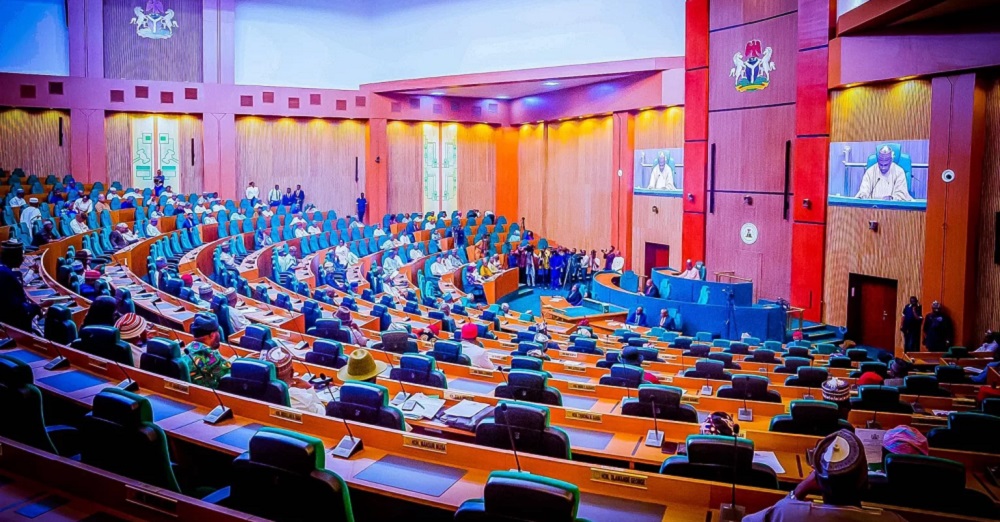
The House of Representatives has intensified consultations on a proposed amendment to the South-South Development Commission (Establishment) Act, 2025, seeking stakeholders’ input on plans to strengthen the Commission’s funding base while balancing the interests of government, host communities and the petroleum industry.
At the resumed public hearing on Wednesday, the House Committee on the South-South Development Commission engaged government agencies, petroleum regulators, oil producers and other stakeholders on the proposed legislation, which seeks to expand the Commission’s funding sources to accelerate development across the oil-rich region.
Committee Chairman, Rep. Julius Pondi, explained that the hearing was reconvened after several critical stakeholders were unable to attend the earlier session held on July 8 because they were participating in the Nigerian Oil and Gas (NOG) Conference.
According to him, “the committee considered it necessary to provide all relevant stakeholders with an opportunity to contribute to a bill with far-reaching implications for the region and the petroleum sector”.
Pondi reaffirmed the commitment of the House to an “open and participatory legislative process”, noting that public hearings remain essential in ensuring that laws reflect the views of government institutions, industry operators, professional bodies, civil society organisations and host communities.
He said the amendment was designed to strengthen the Commission’s financial capacity to fulfil its mandate of promoting sustainable development in the South-South.
According to him, despite serving as the nation’s economic backbone through petroleum production, maritime commerce and industrial activities, the region continues to grapple with inadequate infrastructure, environmental degradation and persistent socio-economic challenges.
“We are particularly interested in receiving constructive contributions on the proposed funding framework, its sustainability, its implications for government and industry, as well as alternative proposals that can further strengthen the objectives of the legislation,” Pondi said.
The Nigerian Upstream Petroleum Regulatory Commission (NUPRC) expressed support for a transparent and sustainable funding framework for the Commission but raised concerns over the proposal requiring oil and gas companies operating in the South-South to contribute three per cent of their total annual budgets.
Presenting the Commission’s position, Chief Executive Officer, Mrs Oritsemeyiwa Eyesan, represented by the Head of Regulations and Statutory Compliance, Kingsley Chikwendu, argued that the phrase “total annual budget” remained undefined in the bill, creating uncertainty over how the levy would be assessed and implemented.
He warned that the proposal, if retained in its current form, could effectively introduce another expenditure-based levy payable regardless of profitability, production levels or the financial position of affected companies.
Chikwendu noted that upstream operators already shoulder multiple statutory obligations, including royalties, petroleum taxes, contributions to the Niger Delta Development Commission (NDDC), Host Community Development Trust Funds under the Petroleum Industry Act (PIA), the Nigerian Content Development Fund, environmental remediation commitments and abandonment funds.
He urged lawmakers to carefully evaluate the likely impact of the proposed levy on investment decisions, production costs and the competitiveness of Nigeria’s upstream petroleum sector before reaching a final decision.
The Nigerian Midstream and Downstream Petroleum Regulatory Authority (NMDPRA) also advised the committee to ensure that any additional funding mechanism aligns with the fiscal philosophy and investment objectives of the Petroleum Industry Act, 2021.
Representing the Authority, Senior Manager Ahmed Laido said any new financial obligation should strengthen investor confidence, provide regulatory certainty, encourage long-term investment and support the Federal Government’s ease-of-doing-business reforms.
He stressed that lawmakers should consider the wider economic implications of the proposal to ensure the Commission’s funding objectives do not undermine the competitiveness and sustainability of the petroleum industry.
The Oil Producers Trade Section (OPTS) of the Lagos Chamber of Commerce and Industry similarly cautioned against introducing another statutory levy on operators.
Chairman of OPTS, Bala Wudiri said oil and gas companies were already making substantial statutory contributions under existing laws, including payments to the NDDC and the Host Community Development Trust Fund.
He cautioned that imposing an additional three per cent contribution could increase the financial burden on operators, duplicate existing obligations and reduce Nigeria’s attractiveness as an investment destination.
Wudiri urged the committee to provide greater clarity on the proposed funding mechanism and adopt a balanced approach that would strengthen the South-South Development Commission without discouraging investment or creating overlapping statutory obligations.
The hearing highlighted broad support for improving development across the South-South, even as stakeholders differed on the most appropriate funding model.
Participants agreed that the Commission requires adequate resources to deliver critical infrastructure and development projects but urged lawmakers to ensure that any new funding framework preserves a stable, competitive and investment-friendly environment for Nigeria’s petroleum industry.
The committee is expected to review all memoranda and submissions before presenting its recommendations to the House of Representatives for further legislative consideration.
News
Many feared killed as Boko Haram insurgents crush ISWAP in fierce Lake Chad battle
A fresh clash between rival terrorist groups, Jama’atu Ahlis Sunna Lidda’awati wal-Jihad, JAS, and the Islamic State West Africa Province, ISWAP, has reportedly left dozens of fighters dead in parts of the Lake Chad Islands, raising renewed security concerns across Nigeria’s North-East.
The development was reported by security analyst Zagazola Makama.
According to the report, the fighting erupted around Mangari and Tumbun Allura after both factions engaged in a fierce battle over control of strategic locations within the Lake Chad basin.
Makama reported that JAS fighters gained the upper hand during the confrontation, allegedly killing dozens of ISWAP fighters before seizing two boats belonging to the rival group and retreating to their stronghold at Kurnawa.
The report noted that the boats are considered critical assets because they are used to transport fighters, weapons, food supplies and other logistics across the Lake Chad waterways.
“The reported seizure of the boats is considered significant, as watercraft remain a critical means of transportation for fighters, weapons, food supplies and other logistics across the difficult terrain of the Lake Chad waterways,” the report stated.
According to intelligence sources quoted in the report, troops deployed in Mallam Fatori, Baga, Cross Kauwa, Kukawa and other communities around the Lake Chad axis have been placed on heightened alert amid fears that fleeing ISWAP fighters could disperse into nearby areas.
Makama added that security assessments warned the confrontation could increase the risk of isolated attacks, improvised explosive device, IED, ambushes and retaliatory assaults as surviving fighters attempt to regroup.
The report further stated that military authorities are considering intensified offensive operations, including increased patrols and enhanced intelligence, surveillance and reconnaissance activities, to prevent fleeing insurgents from reorganising.
News
PFIPC Probe: Head of Civil Service finally admits due diligence failed, accepts responsibility
The Head of the Civil Service of the Federation, Mrs. Didi Esther Walson-Jack, has confirmed that due diligence was not thoroughly carried out in the process that led to the recognition of the purported Presidential Foreign Intervention Promotion Council.
She accepted responsibility for the lapse, saying her office relied on documents that appeared authentic without subjecting them to sufficient verification.
Walson-Jack made the admission while appearing before the House of Representatives ad hoc committee investigating the alleged operation of the purported council.
She told lawmakers that her office had no reason to doubt the documents at the time because they bore the State House logo and what appeared to be a familiar signature.
However, the HoSF said subsequent comparisons with genuine State House correspondence, backed by police forensic findings, confirmed that the signatures were different.
She, however, assured the committee that her office would review its internal verification procedures to make them more robust and fraud-proof.
Meanwhile, the Inspector-General of Police, Tunji Disu, has told the committee that the self-acclaimed Director-General of the purported council, Mr. Adeniyi Adeyemi, could not appear before the lawmakers due to a subsisting court order.
Disu, who was represented by Deputy Commissioner of Police Olufemi Akinola, said Adeyemi could only appear upon an order of a court of competent jurisdiction.
Following the submission, the committee adjourned further sitting on the matter until next week.
-
Metro17 hours agoNavy Arrests Vessel With 650 Metric Tonnes Of Stolen Crude
-
News17 hours agoTinubu Meets New NBA Chair, Badejo-Okusanya
-
Metro17 hours agoGunmen Kill Serving Army Colonel In Abuja, Injure Wife, Two Others
-
Politics17 hours agoOsun 2026: Accord Is Like Keke Napep Facing Trailer – APC Mocks Adeleke
-
Sports17 hours agoSuper Falcons Receive Rewards For Historic WAFCON 2024 Triumph
-
Sports17 hours agoWAFCON 2026: NSC Announces $5,000-per-goal Incentive For Super Falcons
-
News17 hours agoFG lists 7 mistakes to avoid when applying for government jobs
-
Sports17 hours agoGlasgow 2026: Team Nigeria Gears Up For Athletics Showdown