
News
Okowa Accuses Ned Nwoko of Misleading Anioma People Over State Creation Proposal

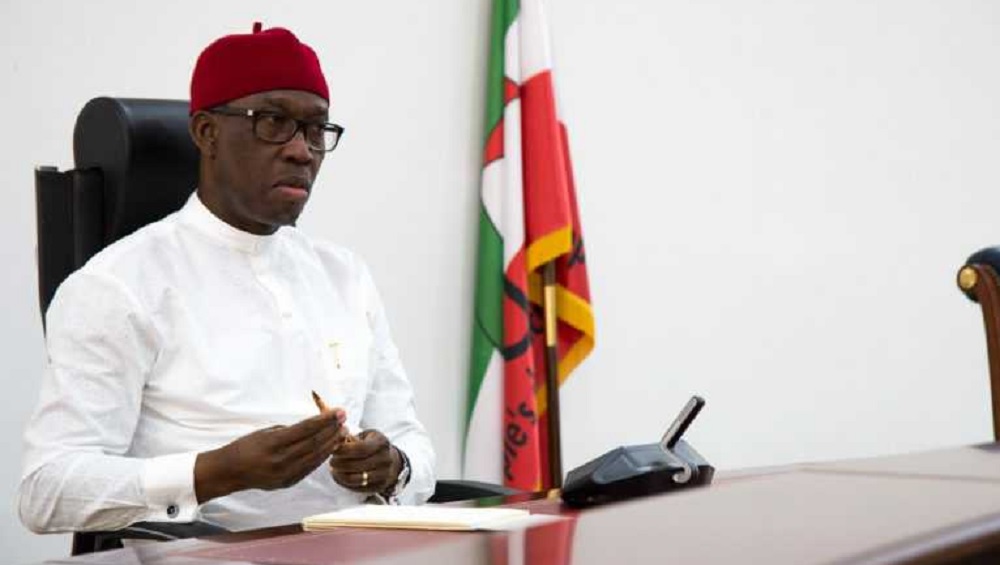


Former Delta State governor Ifeanyi Okowa has criticised Senator Ned Nwoko over his campaign for the creation of Anioma State, accusing him of misrepresenting the wishes of the people of Delta North.
Okowa made the remarks while addressing stakeholders of the All Progressives Congress (APC) in Oshimili South Local Government Area during consultations linked to his reported 2027 senatorial ambition.
The former governor stated that while the people of Delta North are generally in support of the creation of Anioma State, their preference is for the proposed state to remain within the South-South geopolitical zone—not to be aligned with the South-East as allegedly being suggested.
He stressed that the vision for Anioma State should reflect the collective will of the people, comprising the existing nine local government areas, with Asaba serving as its capital.
Okowa described Nwoko’s push as poorly handled, accusing him of acting without adequate consultation. According to him, the process of state creation requires broad-based engagement and consensus, not a unilateral approach.
He argued that political leaders must remain connected to the people they represent and understand their priorities before advancing major proposals.
Highlighting the historical struggle that led to Asaba becoming the capital of Delta State, Okowa criticised any suggestion that could undermine its current status. He noted that Asaba has continued to grow and remains central to the identity and aspirations of the Anioma people.
Okowa also questioned the timing of the agitation, pointing out that the current legislative cycle is nearing its end, making discussions around state creation less practical at the moment.
He suggested that raising the issue now could mislead the public, adding that any meaningful progress toward state creation must follow due legislative processes and proper timing.
Reaffirming his support for the creation of Anioma State, Okowa emphasised that it must be pursued through unity and collective decision-making involving stakeholders, the people of the region, and the state government.
He maintained that only a coordinated and widely supported effort would make the creation of the proposed state achievable.



By Sonny Aragba-Akpore
The future of technology is getting more interesting as the adoption of Artificial Intelligence (AI) and internet of things (IoT) takes centre stage.
But while the fast adoption creates excitement for scientists and those who desire to deploy technology for everyday use and everything,there are manifest fears of possible abuse of AI if strategies are not put in place to guide both promoters and users.
Questions of ethics and compliance are being raised and these have created worries for everyone.
And to douse these fears and create a semblance of comfort for all,AI governance is becoming necessary to stem a potential unwholesome practice.
“AI governance encompasses the frameworks, policies and practices that promote the responsible, ethical and safe development and use of AI systems. It establishes the guardrails that enable innovation while protecting stakeholders from potential harm” analysts agree.
Responsible AI governance considers among others:Ethical standards which define AI governance policies to promote human-centric and trustworthy AI and ensure a high level of protection of health, safety and fundamental human rights.
On regulations and policies,Boards consider compliance with applicable legal frameworks that govern AI usage where they operate, or intend to operate, such as the European Union (EU) AI Act.
The governance treats Accountability and oversight to ensure Organizations assign responsibility for AI decisions to ensure human oversight and prevent misuse and abuse.
Chief technology officers, risk officers, chief legal officers and their boards must develop a governance approach that protects data, prevents unauthorized access to ensure that AI systems don’t become a cybersecurity threat.
As AI governance fast emerges as one of the most pressing strategic challenges facing boards and everyday living today,its governance remains a major concern.
In the Q4 2025 Business Risk Index conducted by Diligent Institute and Corporate Board Member, “60% of legal, compliance and audit leaders now cite technology as their top risk concern — well ahead of economic factors (33%) and tariffs (23%). Yet despite this urgency, only 29% of organizations have comprehensive AI governance plans in place.”
Although there’s currently no wide-scale governing body to write and enforce these rules, many technology companies have adopted their own version of AI ethics or an AI code of conduct.
AI ethics are the set of guiding principles that stakeholders (from engineers to government officials) use to ensure artificial intelligence technology is developed and used responsibly. This means taking a safe, secure, humane, and environmentally friendly approach to AI.
A strong AI code of ethics can include avoiding bias, ensuring privacy of users and their data, and mitigating environmental risks. Codes of ethics in companies and government-led regulatory frameworks are two main ways that AI ethics can be implemented.
By covering global and national ethical AI issues, and laying the policy groundwork for ethical AI in companies, both approaches help regulate AI technology.
The future will see large parts of our lives influenced by Artificial Intelligence (AI) technology. Machines can execute repetitive tasks with complete precision, and with recent advances in AI, machines are gaining the ability to learn, improve and make calculated decisions in ways that will enable them to perform tasks previously thought to rely on human experience, creativity, and ingenuity.
“AI innovation will be central to the achievement of the United Nations’ Sustainable Development Goals (SDGs) by capitalizing on the unprecedented quantities of data now being generated on sentiment behavior, human health, commerce, communications, migration and more” according to the International Telecommunications Union (ITU) documents.
ITU said it will provide a neutral platform for government, industry and academia to build a common understanding of the capabilities of emerging AI technologies and consequent needs for technical standardization and policy guidance.
“Countries must put in conscious efforts to mitigate the dangers of deployment if they want to achieve positive results.” ITU said.
AI governance is calculated to Prevent bias whereby AI models can inherit biases from training data, leading to unfair hiring, lending, policing and healthcare outcomes.
The report states that Governance proactively identifies and mitigates these biases.
Aside that,AI governance Prioritizes accountability when AI makes decisions, and holds someone responsible.
Governance holds humans accountable for AI-driven actions, preventing harm from automated decision-making.
Price WaterhouseCooper (PwC),s Head of AI Public Policy and Ethics,Maria Axente was quoted as saying that “We need to be thinking, ‘What AI do we have in the house, who owns it and who’s ultimately accountable?’”
AI governance should Protect privacy and security where AI relies on vast amounts of data, a particular risk for healthcare and financial organizations handling sensitive information.
Governance establishes guidelines for data protection, encryption and ethical use of personal information.
Governance Prepares for AI’s
environmental, social and governance (ESG)
impact.
“Generative AI has a significant environmental impact, requiring massive amounts of electricity and water for every query. It also reshapes job markets and corporate operations.”Governance helps create policies that balance AI’s opportunities with its ESG risks and by Promoting transparency and trust,Many AI systems are considered “black boxes” with little insight into their decision-making.
Governance encourages transparency and helps users trust and interpret AI outcomes.
Governance Balances innovation and risk as AI holds immense potential for progress in healthcare, finance and education, governance weighs innovation alongside possible ethical considerations and public harm.
As the future of AI becomes a way of life,global telecommunications regulators,the International Telecommunications Union (ITU) says Geneva ,Switzerland is fast becoming the global headquarters for AI.
From July 7 through 10,2026 the world will converge to deliberate and conclude talks on AI governance.
It will host the seventh edition of “AI for good summit” as governments,institutions crystallize strategies for the future of AI across industries,homes ,governments and the work place.
“AI for Good will be held back-to-back with the Global Dialogue on AI Governance, convened by the United Nations General Assembly and facilitated by UN Secretary-General António Guterres at Palexpo from July 6 to 7, where the Global Dialogue is supported by a joint secretariat that include the Executive Office of the Secretary General, ITU, the United Nations Educational, Scientific and Cultural Organization (UNESCO) and the United Nations Office for Digital and Emerging Technologies (ODET), with ITU and UNESCO leading the coordination.
“As artificial intelligence moves from strategy to real-world deployment, countries need the skills, solutions, and international standards for AI to work for everyone,” according to ITU Secretary-General Doreen Bogdan-Martin.
“Through AI for Good, ITU helps turn AI breakthroughs into practical ways to improve lives. We are also pleased to work with our partners on the inaugural UN Global Dialogue on AI Governance where Member States and stakeholders will exchange perspectives on the policies shaping AI’s future.”
The AI for Good Global Summit to be hosted by ITU – the United Nations agency for digital technologies – with over 50 UN partners and co-convened by Switzerland is seen as the Summit flagship platform for showcasing and helping scale up AI applications in areas from healthcare and education to food security, disaster risk reduction and misinformation, particularly in developing countries.
World-class keynotes, global technology premieres and an expo floor filled with innovators, UN partners and national pavilions will present local AI solutions and strategies from around the world, including special exhibits featuring home-grown innovations from Switzerland.
“We are delighted to once again co-convene with ITU the AI for Good Global Summit in Geneva, a central location for discussing and showcasing advances in artificial intelligence,” said Albert Rösti, Swiss Federal Councillor and Head of the Federal Department of the Environment, Transport, Energy and Communication.
The summit will Unite leaders to scale AI impact.
Over 11,000 participants from 169 countries attended 2025 AI for Good Global Summit and World Summit on the Information Society (WSIS) events.
Participation included ministers from 100 countries, more than half representing developing countries.
The 2026 edition aims to further strengthen AI for Good as a globally representative platform for dialogue, collaboration, and action on AI and how to best harness the innovative power of technology.
While many tech companies grow the artificial intelligence in their various corners of the world,the International Telecommunications Union (ITU) ,the global technology regulator,is rearing to unify the technology in such ways as to create standards for open platform.
In a few months,tech gurus will converge on Geneva,the ITU headquarters in Switzerland to strategize on the way forward for Artificial Intelligence for Good.“The goal of AI for Good is to identify practical applications of AI to accelerate progress towards the Sustainable Development Goals(SDGs) and connect AI innovators with public and private-sector decision-makers to help scale up AI solutions globally.”according to the ITU.
In 2017 ,the landmark AI for Good Global Summit marked the beginning of a global dialogue on the potential of AI to act as a force for good. The action-oriented 2018 and 2019 summits gave rise to numerous AI for Good projects including several standardisation initiatives of the ITU

. NDLEA boss explains why govt introduced drug integrity test for students
The leadership of the National Association of Nigerian Students (NANS), has expressed full support for ongoing efforts by the National Drug Law Enforcement Agency (NDLEA) to rid Nigeria of the scourge of substance abuse and illicit drug trafficking.

The students’ union leaders led by their National President, Comrade Sola Oladoja, made the commitment on Tuesday 21st April 2026 when they paid a courtesy visit to the Chairman/Chief Executive Officer of NDLEA, Brig. Gen. Mohamed Buba Marwa (Rtd) at the Agency’s headquarters in Abuja where they equally reaffirmed their support for President Bola Ahmed Tinubu’s Renewed Hope Agenda and his re-election in 2027.
During the visit, Oladoja commended Marwa for his dynamic leadership and the Agency’s relentless successes against drug cartels. He specifically lauded his commitment to safeguarding the lives of Nigerian students through the War Against Drug Abuse (WADA) social advocacy initiative, which has been instrumental in raising awareness across tertiary institutions.
Reaffirming the association’s support for the NDLEA and the Renewed Hope Agenda of President Tinubu, Oladoja stated that the students’ backing of the current administration is rooted in tangible pro-youth achievements. These, he noted, include the successful implementation of student loans, the resolution of industrial strikes in tertiary institutions, and various youth empowerment schemes.
In his response, Marwa expressed his long-standing pride in the Nigerian student body, noting that his relationship with them has remained strong due to their consistent support across his various national assignments.
According to him, “As a critical sector of the Nigerian polity, what you said about your appreciation of the gains of President Tinubu’s Renewed Hope Agenda and your commitment to support his re-election in 2027 gladdens my heart.”
Addressing the specific challenge of drug prevalence in schools, the NDLEA boss emphasized the need for a collaborative front to sanitize the academic environment. “We need to work with you on our efforts to rid our campuses of drug abuse because of the consequences to students’ health, their aspirations, and even their families, as well as the society at large,” Marwa added.
Speaking on the recently introduced Federal Government Drug Integrity Test Policy for students, Marwa explained that the measure is strictly protective rather than punitive. He stated that the policy is designed in the best interest of the youth, as early detection of drug use makes treatment and rehabilitation far more effective.
The visit ended with a mutual commitment to deepen the partnership between NDLEA and NANS in the ongoing crusade against substance abuse on Nigerian campuses.
Members of the African Democratic Congress (ADC) staged a peaceful protest on Tuesday at the office of the Independent National Electoral Commission (INEC) in Dutse, Jigawa State.
They are demanding that INEC formally recognise the party’s national leadership led by David Mark.
The protest comes amid growing political tension in the state, as internal party disputes and defections intensify ahead of party primaries and the next general elections.
According to reports, the protesters marched to the INEC office in the state capital without incident and submitted a petition to the commission.
Speaking after the protest, the Jigawa ADC Youth Leader, Manniru Aminu, accused INEC of overstepping its authority and said the commission cannot determine legal disputes involving court rulings.
“INEC does not have the constitutional power to interpret court rulings. That responsibility lies with the judiciary,” he said.
The group also claimed that INEC is not acting neutrally in handling internal party issues, which they described as a threat to democratic fairness.
They insisted that the leadership of the ADC under David Mark remains the only legitimate and constitutionally recognised structure of the party.
The protesters demanded that INEC immediately restore the Mark-led leadership on its official records and website.
They also called for a public apology from the commission and urged that those responsible for the alleged bias be held accountable.
AI governance ,compliance and ethics

NANS leadership visits Marwa, backs drug war, President Tinubu’s renewed hope agenda

European top scorers: Harry Kane tops chart ahead of others




-

 News20 hours ago
FG Reveals Identities Of Alleged Coup Plotters, Files Treason Charges
-

 News23 hours ago
Just in: Kwara youths protest prolonged abduction of 176 women, kids by Boko Haram
-

 News20 hours ago
Tinubu Makes Fresh Key Appointment In Government
-

 News19 hours ago
US Lawmaker Accuses Tinubu’s Minister Of Bribery To Cover Up Genocide Report
-
 News21 hours ago
Defection Storm Rocks Reps as Parties Jostle for 2027 Advantage
-

 News19 hours ago
Saudi Arabia seeks partnership with FCT on green city, security, economy
-

 Foreign5 hours ago
Trump Extends Ceasefire To Give Iran More Time To Negotiate
-

 News5 hours ago
How Tinubu Sacked Finance Minister Wale Edun Weeks After Hon. Alex Mascot Exposed ‘Missing’ N1.15tr