By Gloria Ikibah


Speaker of The Gambia’s National Assembly, Rt. Hon. Fabakary Tombong Jatta, has said that West Africa can no longer afford business as usual, urging regional lawmakers to turn commitments into concrete action as the sub-region grapples with mounting pressures.
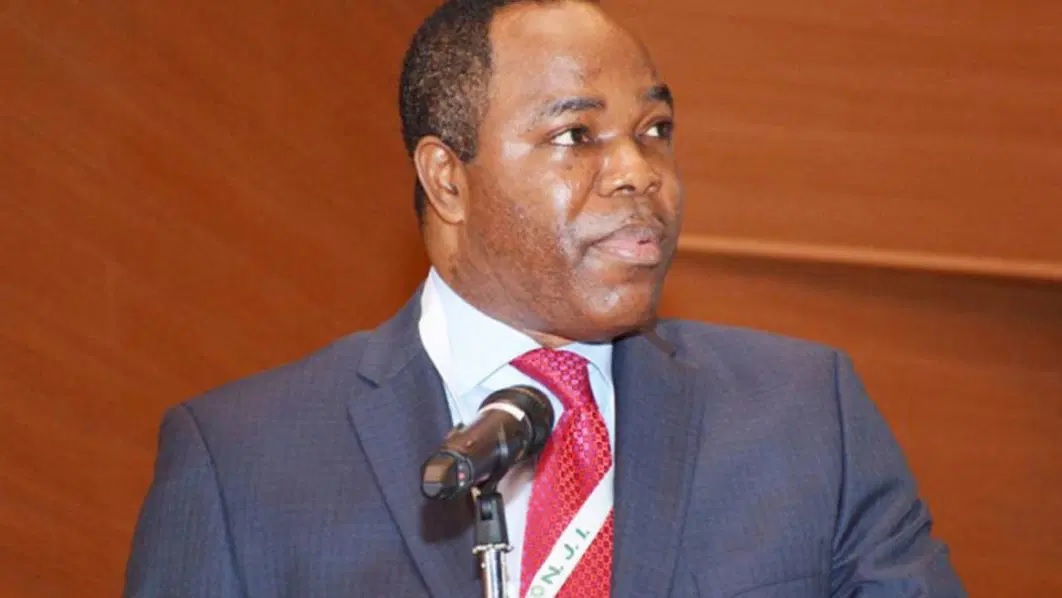
Jatta stated tbis while delivering a keynote address at the opening of the First Ordinary Session of the Sixth legislature of the ECOWAS Parliament’s on Monday in Abuja. 
According to him, the region faces a moment that will test both its resolve and relevance.
He said: “We convene at a time of profound consequence for our region. Across the Sahel, the persistent threat of terrorism and violent extremism continues to test not only the capacity of our states but the resilience of our collective will.
“Entire communities are being displaced, livelihoods disrupted, and generations of young people are growing up in conditions of uncertainty. This is not a crisis confined to geography; it is a shared regional challenge that demands a unified, strategic, and sustained response”.
Reflecting on his return to the ECOWAS Parliament, Jatta struck a personal note, describing the chamber as central to shaping the region’s shared identity and future.
“This Parliament is not merely an institution; it is a crucible where the idea of West Africa as a shared political, economic, and cultural community is continuously forged and refined,” he said.
But he warned that cracks are beginning to show within the democratic fabric of the region, warning that instability could undermine years of progress.
“Simultaneously, we are witnessing shifts within our democratic landscape that call for sober reflection. The strains on constitutional order in parts of our Community, and the signals of disengagement from regional commitments, pose a direct challenge to the cohesion and credibility of the ECOWAS project.
“We must confront these developments with clarity and courage. Regional integration cannot be sustained by treaties alone – it must be underpinned by trust, dialogue, and a collective commitment to shared values,” Jatta stated.
On the economic front, he acknowledged the promise of continental trade reforms but said progress within West Africa remains uneven and constrained.
“Non-tariff barriers persist, intra-regional trade remains below its full potential, and our economies are still overly exposed to external shocks.
“The vision of a fully integrated West African market must therefore move from aspiration to accelerated implementation,” he said.
Jatta also sounded the alarm on climate change, warning that environmental pressures are now directly fuelling insecurity and economic hardship.
“From the advancing desert in the north to the erosion of our coastlines in the south, environmental pressures are intensifying competition over resources, exacerbating conflicts, and threatening the livelihoods of millions.
“Climate change is no longer an environmental issue – it is a security, economic, and humanitarian imperative”, he added.
He welcomed moves towards direct universal suffrage for the ECOWAS Parliament, describing it as a significant step in strengthening democratic legitimacy and citizen engagement.
“It represents a bold step toward deepening democratic legitimacy and strengthening the direct bond between this Parliament and the citizens of West Africa,” he added.
Jatta urged lawmakers to lean on parliamentary diplomacy to keep channels of communication open, even when political tensions arise among member states.
“Where executive diplomacy may be constrained by matters of sovereignty and protocol, parliamentary diplomacy offers continuity, flexibility, and proximity to the people.
“You must therefore remain the channel through which dialogue persists, even in moments of political divergence,” he said.
He also pressed for practical steps to unlock the region’s economic potential, particularly by easing trade barriers and aligning regulations.
“The removal of non-tariff barriers, the facilitation of cross-border trade, and the harmonisation of regulatory frameworks are not abstract goals, they are practical necessities for unlocking the entrepreneurial potential of our people.
“Let us envision an ECOWAS where a trader in Banjul, a farmer in Ouagadougou, and a young innovator in Lagos operate within a truly integrated economic space, where opportunity is defined not by borders, but by potential,” he said.
Calling for a united front on climate resilience, Jatta said coordinated policies and stronger global advocacy would be key to turning shared vulnerabilities into strength.
“By harmonising environmental legislation, advocating for regional adaptation financing, and speaking with one voice on the global stage, ECOWAS can transform vulnerability into collective strength,.
“The expectations of over 400 million citizens of West Africa rest firmly upon this institution. They are not looking to us for rhetoric alone. They are looking for results, for safer communities, stronger economies, and governance that reflects their dignity and aspirations,.
“The ECOWAS project must endure as more than an institutional framework, it must remain a living covenant of peace, solidarity, and shared prosperity.
“Let us therefore recommit ourselves to the ideals that gave birth to this Community. Let us work tirelessly to restore and strengthen unity. And let us demonstrate, through our actions, that an ‘ECOWAS of the People’ is not merely a vision, but a tangible and achievable reality”, he said.