

Health
OF ZAMFARA, GOVERNANCE, AND THE 2027 GENERAL ELECTIONS
- /home/naijuinz/public_html/wp-content/plugins/mvp-social-buttons/mvp-social-buttons.php on line 27
https://naijablitznews.com/wp-content/uploads/2024/03/zamfara-state-map.jpg&description=OF ZAMFARA, GOVERNANCE, AND THE 2027 GENERAL ELECTIONS', 'pinterestShare', 'width=750,height=350'); return false;" title="Pin This Post">
- Share
- Tweet /home/naijuinz/public_html/wp-content/plugins/mvp-social-buttons/mvp-social-buttons.php on line 72
https://naijablitznews.com/wp-content/uploads/2024/03/zamfara-state-map.jpg&description=OF ZAMFARA, GOVERNANCE, AND THE 2027 GENERAL ELECTIONS', 'pinterestShare', 'width=750,height=350'); return false;" title="Pin This Post">
BY BOLAJI AFOLABI
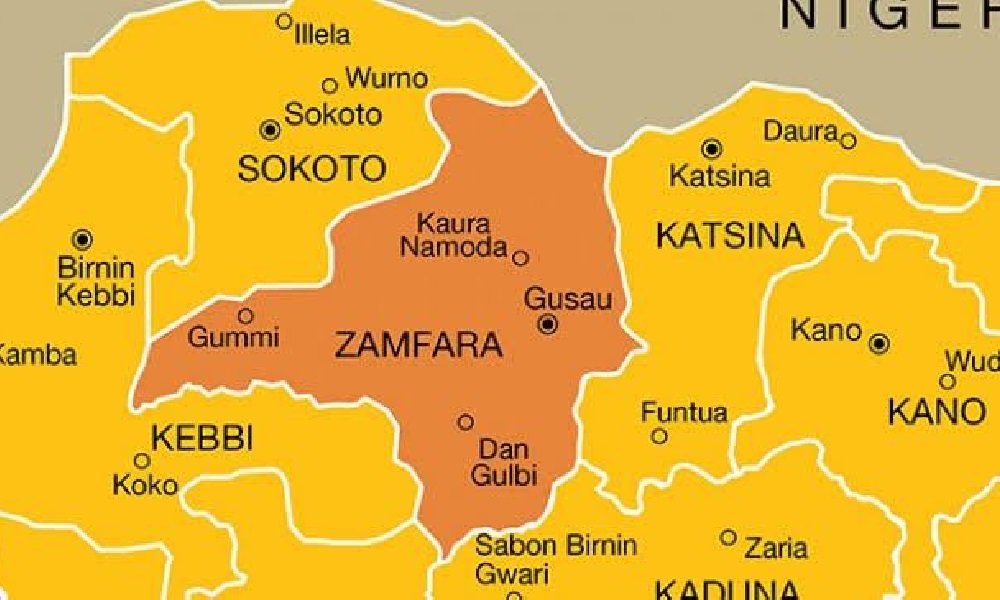
For multiple decades, if not centuries, football has been a very popular sport across the world. In Nigeria, given its uniqueness, football has been played and followed passionately from generation to generation. In the 1980s, there were not many football clubs in the Northern axis of the country that participated in the National League, now called the Nigeria Professional Football League, (NPFL). One of such was the Zamfara Tex FC – founded and sponsored by the Zamfara Textiles Limited. Others were the Raccah Rovers, Kano; DIC (now Ranchers) Bees, Kaduna; Jigawa Golden Stars; Mighty Jets of Jos; and United Nigeria Textiles Limited of Kaduna. Though Kaduna had two clubs, Zamfara Tex was special to the writer and his company of friends that they always watched the team’s matches against the Bees and UNTL at the Ahmadu Bello Stadium in Kaduna, as regularly possible.
The realization that the club was domiciled in Gusau – a town outside Sokoto – the capital of the (old) State further endeared it to the writer’s group. From social studies books, we later discovered that Gusau was the economic and industrial hub of the old Sokoto State. Aside from the Textile outlet, there were a few others including candy and confectionaries manufacturing companies. Also, being a railway-town, it was home to people of different tribes and ethnicities. Gusau, was in many ways, a melting pot of convergence of itinerary traders, farmers, and many other people who engage in their various legitimate businesses without fear and worries. The writer, at barely 15 years had a first-hand experience of the convivial, peaceful, and warm nature of the town. Commuting from Kaduna to Sokoto, the commercial vehicle had some issues a few kilometers to Gusau; which led to all the passengers sleeping over in the town. It was pleasant. It brings nostalgic memories all the time.

For many years thereafter, the writer’s affinity with Gusau and Zamfara (the capital and State) has grown in leaps and bounds. As fate will have it, one has built friendship and relationships with a few people who are indigenes or settlers. The average Zamfararian, either in Gusau, Talata Mafara, Kaura Namoda, Maradun, Shinkafi, Bukkuyum, Birnin Magaji, Bakura, or any other community is loving, accommodating, hard working, and compassionate. Aware of these and other attributes of the people, one is always worried about negative reports from the state. Somehow, the writer’s attraction and attachment to the state abhors any unpleasant comments about Zamfara. Like what happened a few weeks ago!
Indeed, public venues such as viewing centres, open-hall restaurants, and some other busy sit-outs are veritable locations to get gists about happenings in the capital city, and by extension the country. The writer was at a popular car-wash point in Gwarimpa which had a few other outlets where patrons can “keep their mouths and hands busy” with hot, spicy assorted meats, drinks, and all. Shortly after taking refuge on a bench within the “sitting area” three middle-aged men were engaged in a discussion; defection of the Zamfara State Governor, Dr. Dauda Lawal to the All Progressives Congress, APC. From their respective comments, it was obvious that, as indigenes, they were not happy about the development – which Lawal said was for the overall interest of the state. Thereafter, they began sectoral review of his administration. Somehow, the writer had to “step in and revolt” when they moved to achievements-deconstruction of Lawal labelling him a non-performer, absentee chief executive who is far from the people and realities in the grassroots.
Disagreeing, the writer had to mention some of the achievements of Lawal – read from the media. It includes intra-city infrastructures; construction of the airport; building and rehabilitation of schools; upgrading health institutions; increase of Internal General Revenue. Others are prompt paying of workers salaries; creation of community security guards; payments of the backlog of debts owed WAEC; youth employment. After listening to what one of them described as ‘a brave defence” they took turns to espouse more on their views, reiterating that, given his background more was expected from Lawal. One of my “panelists” got me confused by throwing some posers. How did Lawal arrive at the choice of these projects? Are they what the people desire? Was any Needs Assessment done? What are the impacts of these projects on the people in the hinterland? What are the real and immediate needs of the people?
Challenged by these posers, one had to dig further to unravel the facts about governance in the state, nexus between the leadership and the people in relation to the 2027 General Elections. There were divergent opinions on the performances of the present administration. Though it was a pot-pourri of kudos and knocks, thumbs-up and thumbs-down, the preponderance of vilification was more. While Lawal’s records in a few sectors were acknowledged, many people had reservations about the importance of these projects to the well-being of the average person. A school of thought argued that people should be the fulcrum of every government policy and programme – which they claim is not the case in Zamfara. Another school of thought believes that having failed to provide responsive security measures; which was the centre-point of his campaigns – it will not be out of place to score Lawal low in terms of deliveries.
Alhaji Sani Abdallah, a fabric seller at the capital city market declared, “The Governor has done well in the beautification of Gusau by providing street lights, traffic lights, and construction of a new stadium but there are little or none of these in other parts of the state.” An educationist, Mr. Ezidoye Ugwu believes that, “Lawal’s score card would have been higher if some of the laudable projects in Gusau are replicated in a few of the other towns across the state.” For Alhaji Suleiman, a media practitioner, “though there are pockets of positives but on the average, Lawal has not met the expectations of many people; he has failed in protecting the lives and properties of the people.”
A grassroot politician who preferred anonymity postulated that, “since he has not realized his core campaign promise – security – many people are not impressed with whatever he is doing in other sectors. Zamfara is largely agrarian, the least expected of him is to provide security for people to go to their farmlands but this has not been possible for years. It will be very difficult for Lawal to get the support and votes of many people in 2027.” A staff member of a federal government agency in the state who craved anonymity advised Lawal, “not to believe in the skewed reports and comments of his aides and hangers-on but go to the grassroots and hinterland where the vast majority of people are not impressed with him. In fact, the possibility of getting the votes of these rural dwellers is extremely low.”
True, politics is local. If these comments can be extrapolated as a precursor to what may play out in next year’s general elections, Lawal’s journey back to the state’s government house will be topsy-turvy and turbulent. When added to the alleged non-interest of the members of the Yari and Matawalle Groups, and a few other factors, he is most likely to encounter many political landmines, booby traps, and uncertainties. Driving the point home, a grassroot female politician admitted that, “many of the Leaders in APC and their followers do not support Lawal whose entry has scuttled the ambitions of their own members. It will take serious work, begging, and cajoling for his second-term aspiration not to hit bad weather. For now, the PDP looks like the newest bride, as the party is gradually gaining groundswell support across the state.”
Politicians believe that 24 hours is a long time in politics. Rightly so. An African proverb says the eyes knows the portion of food that will fill the stomach. Also, that the morning determines how well the night will end. If anything, the forthcoming governorship elections in Zamfara promises to be thrilling and interesting. It will be filled with theatrics, drama, and surprises. No doubt, Lawal has his works cut-out. How he navigates out of the avalanche of roadblocks within the APC; meander through the grassroots whose political consciousness and awareness has increased overtime; as well as the rebounded and rebranded Zamfara PDP will become public knowledge by February 2027.
* BOLAJI AFOLABI, a Development Communications specialist was with the Office of Public Affairs, The Presidency, Abuja.
Health
What is being released to NCDC is a drop in the ocean- Senate C’ttee laments
Poor funding could undermine the ability of the North Central Development Commission (NCDC) to deliver on its mandate, the Senate has said, insisting that the N2.9 billion monthly allocation being released to the commission is only “a drop in the ocean” compared to its N140 billion budget allocation for 2026.
The Chairman of the Senate Committee on the North Central Development Commission, Titus Zam, sounded the warning while briefing journalists after an interactive session between the committee and the commission’s management at the National Assembly on Tuesday.
According to him, the current monthly release would amount to less than half of the commission’s approved budget if maintained throughout the year, expressing optimism that the federal government would increase funding as the commission becomes fully operational.
“If you give someone that has a budget of N140 billion, N2.9 billion per month, in 12 months, it won’t be up to half of the entire budgetary sum,” Zam said.
“I suppose that is just a temporary package. When the commission finally comes to fruition, much more funds will be released. So we thank Mr President and the Executive for dropping something now, but we look forward to more.”
The lawmaker, however, assured that the Senate Committee would ensure the prudent utilisation of the funds already released by providing effective oversight and guiding the commission on areas of priority.
He urged the commission to focus its interventions on agriculture, security and rural development, stressing that the North Central region is largely agrarian and continues to face serious security challenges.
“North Central is mostly an agricultural land. We have arable land, we have good rainfall and vegetation. There is policy for agriculture. We need the department of NCDC to take agriculture very seriously.
“We also have a challenge of insecurity. The commission is advised to support the security forces and state governments to complement their efforts towards mitigating the tide of insecurity within the region.
“We also ask them to take rural development very seriously because we are also rural in nature,” Zam said.
Health
NCDC records rise in Lassa fever cases, death toll hits 221
The Nigeria Centre for Disease Control and Prevention (NCDC) says Nigeria recorded an increase in confirmed Lassa fever cases during epidemiological week 26 of 2026, with 31 new infections reported, up from 22 the previous week.
The new confirmed cases were recorded in Bauchi, Ondo, Taraba and Benue states, according to the latest NCDC Lassa fever situation report released by the public health agency on Friday.
The report showed that 221 deaths have been recorded cumulatively in 2026, with a Case Fatality Rate (CFR) of 24.0 per cent, higher than the 18.7 per cent reported in 2025.
It stated that 23 states had reported at least one confirmed Lassa fever case across 111 Local Government Areas, indicating the continued geographic spread of the disease nationwide in 2026.
According to the report, 85 per cent of all confirmed cases originated from Ondo, Bauchi, Taraba, Edo and Benue states, while the remaining 15 per cent were reported elsewhere.
The report said Ondo accounted for the highest proportion of confirmed cases at 30 per cent, followed by Bauchi with 26 per cent, Taraba with 14 per cent, Edo with nine per cent, and Benue.
It revealed that people aged between 21 and 30 years remained the most affected group, although confirmed cases ranged from one to 93 years, with a median age.
The report also showed that the male-to-female ratio among confirmed cases stood at 1:0.9, suggesting nearly equal infection rates between males and females across affected states.
Health authorities noted that both suspected and confirmed Lassa fever cases increased compared with the corresponding period in 2025, while one healthcare worker was infected during week 26.
The report added that the National Lassa Fever multi-partner, multi-sectoral Incident Management System remains activated to coordinate surveillance, case management, risk communication and response activities nationwide.
Health
Medical academics give FG 21-day strike ultimatum
The Nigerian Association of Medical and Dental Academics (NAMDA) on Tuesday issued 21-day nationwide indefinite strike notice to the Federal Government despite commending some of the recent initiatives of the President Bola Tinubu’s administration.
NAMDA President, Dr Nosa Orhue, announced the strike ultimatum on Tuesday in Abuja after the association’s National Executive Council (NEC) meeting.
However, Orhue commended President Bola Tinubu’s administration for efforts to improve university education.
He also hailed the Minister of Education for supporting salary parity for medical academics.
He also lauded the Federal Government’s preparedness for a possible Ebola outbreak and pledged the association’s support toward strengthening the country’s public health response.
But the NAMDA President said members of the association would embark on nationwide, indefinite strike if the Federal Government failed to resolve outstanding remuneration and welfare concerns of its members in the next 21 days.
He said the union expected government to conclude negotiations within the period, warning that NEC would reconvene to determine its next line of action if talks failed.
According to him, NAMDA had engaged government through dialogue for more than 24 months without meaningful progress.
Orhue said the association was dissatisfied that negotiations on the renegotiation of the 2009 agreement had remained stalled since April 9, in spite of repeated engagements.
He alleged that while improved welfare packages had been implemented for other university unions, NAMDA members remained excluded, resulting in non-payment of earned academic and professorial allowances and worsening brain drain among medical academics.
The NAMDA president attributed the dispute largely to salary disparities between university-based medical lecturers and hospital consultants performing identical professional duties.
He explained that medical academics combine teaching, research and clinical responsibilities, including patient care, surgeries and hospital administration.
According to him, they earn less than their counterparts in the hospital system despite maintaining the same professional qualifications and practicing licenses.
Orhue said the Federal Government had previously recognised the unique status of medical academics through their placement on the Consolidated Medical Salary Structure (CONMESS).
The NAMDA President added that the Minister of Education, Dr Tunji Alausa, had supported salary parity and communicated the position to the National Salaries, Incomes and Wages Commission.
He, however, alleged that some government agencies were frustrating implementation of the agreement.
Orhue reaffirmed that the Consolidated Medical Salary Structure (CONMESS) remained the only acceptable salary framework for medical and dental academics.
He warned that any attempt to replace it with another structure could trigger industrial action.
He also rejected what he described as the forced migration of members of NAMDA above 65 years from CONMESS to the Consolidated University Academic Salary Structure (CONUASS).
According to him, the move amounts to a demotion and results in financial losses for affected academics.
He said the association was also demanding implementation of special pension benefits for retired hospital-based academics and opposed the National Universities Commission’s requirement for medical academics to obtain PhD qualifications.
(NAN)
-
News23 hours agoVIDEO: DAY 25 of Projects Commissioning in FCT: Watch Wike’s brief dancing steps
-
News23 hours agoShettima reveals how he shed tears beside Buhari during his last moments on earth
-
News22 hours agoTinubu Commissions Bwari Water Project, Pledges Clean Water for All FCT Satellite Towns(Photos)
-
News19 hours agoNSITF presents 78 beneficiaries with prostheses
-
Economy21 hours agoSee Black Market Dollar To Naira Exchange Rate Today 14th July 2026
-
News21 hours agoBREAKING: PFIPC scam: Police nab Prince Adeniyi Adeyemi
-
News23 hours agoFinal evacuation flight with 315 Nigerians from South Africa to arrive tomorrow
-
Health11 hours agoWhat is being released to NCDC is a drop in the ocean- Senate C’ttee laments