Connect with us

News

Prominent Analyst Calls for Immediate Halt to Amukpe–Escravos Pipeline Sale Process

Published

on

ADVERTISEMENT
Zoom Ad
ADVERTISEMENT
Zoom Ad

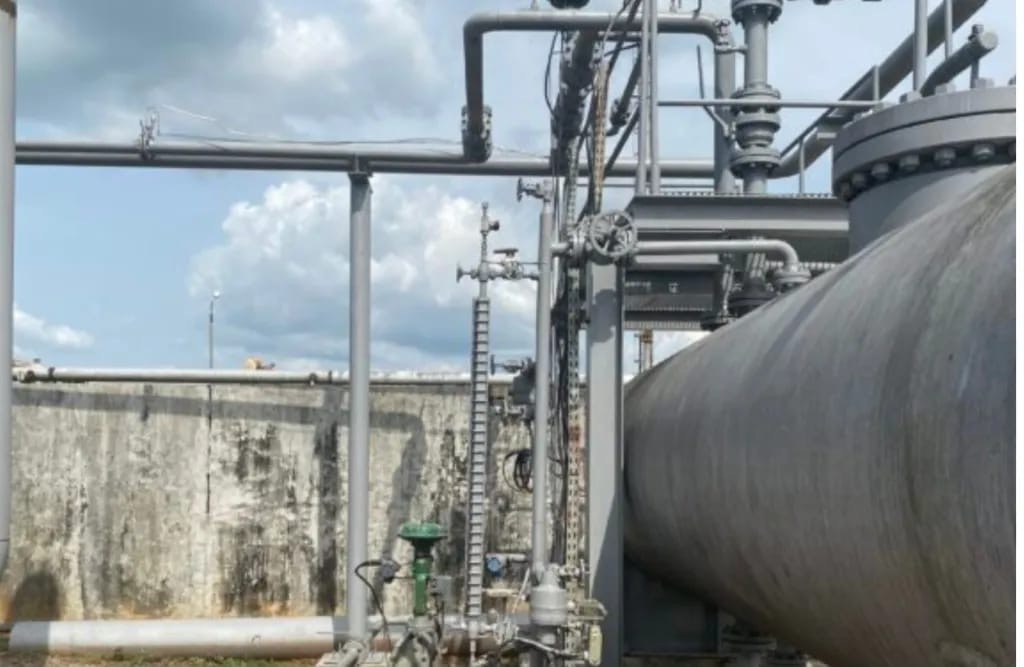
A prominent public affairs analyst, Prof. Okey Ikechukwu, has called for the immediate suspension and possible termination of all processes related to the proposed sale of a 40 per cent stake in the Amukpe–Escravos Pipeline, warning that proceeding under the current terms would amount to a “giveaway” of a strategic national asset.


Ikechukwu, Executive Director of the Development Specs Academy, made the remarks during an interview on Tuesday on Arise News, where he questioned the pricing, procedure, and transparency surrounding the transaction.

According to him, Nigeria is not in such financial distress as to justify disposing of a critical infrastructure asset at what he described as a “giveaway price.”

“If that is allowed to happen, it means there is no governance,” he said. “It means that people can exercise arbitrary discretion. It means that processes can be routinely violated.”

Advertisement

His intervention comes amid mounting controversy over the valuation of the pipeline asset. Independent assessments conducted in 2025 reportedly valued the 40 per cent stake at between $544 million and $641 million, more than double the $243 million offer associated with a transaction that collapsed in October 2024.

Ikechukwu argued that any attempt to revive or proceed with the sale on the basis of disputed or outdated valuation benchmarks would undermine due process and public confidence.

“We are not under any desperate need to sell it at a giveaway price, and that’s what appears to be happening here,” he said. “If that is allowed to happen, then it means there is no governance.”

Describing the pipeline as a “performing national asset,” the analyst noted that the facility reportedly maintains operational uptime levels of as high as 95 per cent.

Advertisement

“If you must sell a performing national asset, it must be sold at the right value,” he stated.

To illustrate his concerns, Ikechukwu compared the situation to a failed private land transaction later revived at an outdated price, arguing that such a practice would be unacceptable in any credible commercial environment.

He further warned that proceeding without an updated valuation process could damage investor confidence and weaken perceptions of regulatory integrity.

“But beyond all of that, where will investor confidence be?” he asked. “If you are a lender, how do you feel in this kind of environment? It might even be interpreted as sabotage.”

Advertisement

Beyond the question of pricing, Ikechukwu said the larger issue at stake was institutional credibility and adherence to due process.

“If that is allowed to happen, it means there is no governance,” he reiterated. “It means that people can exercise arbitrary discretion. It means that processes can be routinely violated.”

The development expert consequently called for an immediate halt to all ongoing steps connected to the proposed transaction.

“All processes leading up to the presumed attempt to sell it now should be stopped,” he said. “Quite frankly, terminated. An independent evaluation should take place so that we know the current value of what is on the table and ensure that the country does not lose money in the process.”

Advertisement
Continue Reading
Advertisement

News

SAD! 164 killed, 1,000 Injured In Venezuela

Published

on

ADVERTISEMENT
Zoom Ad
ADVERTISEMENT
Zoom Ad


A twin earthquake that was Venezuela’s largest in over a century has killed at least 164 people and destroyed multiple buildings near the capital, where residents searched Thursday for missing relatives.

Venezuela’s strongest earthquake since 1900 sent rescuers and locals clambering in the dark over flattened apartments, hunting for survivors and extracting people from under the ruins.

France, Spain and the US offered to urgently send rescuers after the magnitude 7.2 and 7.5 quakes the United States Geological Survey (USGS) said struck areas west of the capital on Wednesday evening.

Advertisement

The toll has climbed quickly, with interim president Delcy Rodriguez reporting at least 164 dead and over 970 hurt and noting the state of La Guaira north of Caracas was hit hard.

“We have nothing, right now we have nothing, not even the strength or the courage to go in there, just imagine,” Larry Rojas, 49, told AFP, standing in front of a collapsed building where his family was trapped in the La Guaira city of Catia La Mar.

The coastal city was without electricity, and many residents spent the night in the streets or searching for their relatives, according to AFP reporters.

The 7.5-magnitude earthquake was Venezuela’s most powerful since October 29, 1900, when a 7.7-magnitude tremor struck offshore.

Advertisement

After Wednesday’s shock, some residential buildings showed large cracks and fallen walls, with dozens of others destroyed, according to AFP reporters.

“There are people alive in there and no-one is coming to save them,” said a woman waiting for news of her daughter, who was buried in a ruined 12-story building.

France said it would send 85 rescuers and Spain pledged 54 army searchers as nations including China, India, Brazil and the United States also offered help.

Washington was “immediately deploying search and rescue teams, medical resources, and humanitarian assistance to Venezuela,” US Secretary of State Marco Rubio said on Thursday.

Advertisement

Earthquake hits Iranian capital Tehran
The first quake, with an epicenter 21 kilometers (13 miles) west of the coastal town of Moron, occurred at 2204 GMT, USGS said. Within a minute, a 7.5-magnitude quake struck about 45 kilometers away.

“This earthquake was the second event in a doublet. This magnitude 7.5 mainshock was preceded by 39 seconds by a 7.2 foreshock,” USGS said.

Interior Minister Diosdado Cabello asked people to leave their homes, adding that gas supplies had been cut to several buildings as a precaution.

“We have some damaged structures and we don’t want any kind of accident involving gas to occur,” he said.

Advertisement

The Maiquetia International Airport, located near Caracas, was closed due to “serious damage” to its infrastructure, Rodriguez said, with social media posts showing its severely damaged facilities.

The quakes triggered panic in the capital and drove people into the streets, AFP journalists saw.

“The stairs came away, the whole wall cracked. Things fell from the ceiling. It was horrible,” said 54-year-old bank employee Odalis Escalona.

An AFP journalist saw a 22-story building completely destroyed in the capital’s Altamira neighborhood, where people cried out relatives’ names as volunteers climbed over the rubble.

Advertisement

“We need flashlights,” one of them said.

The tremors struck at a depth of 22 kilometers and 10 kilometers, respectively.

They prompted screams of panic at a shopping center in Caracas, an AFP journalist observed.

“It was unbelievable, I don’t even know how long it lasted,” said shopkeeper Heidi Romero, who was on the top floor when the quake struck.

Advertisement

“We went out through the emergency stairs; that’s how they got us out,” the 42-year-old told AFP.

Many more in the capital exited buildings and waited outside before returning to their offices and homes.

Carmen Guedez, 69, was in the same room as her bedridden sister when she felt the jolt.

“It kept getting stronger,” said the administrator, who lives in a hilly middle-class neighborhood above the capital. “I started to see the windows begin to move and then everything shook.”

Advertisement

She described how she “huddled together” with her sister and a neighbor, adding that “we couldn’t get out. The neighbors are still out on the street.”

The states of Trujillo, Carabobo, Miranda and La Guaira were the hardest hit, according to Cabello.

The quake was felt as far away as the Colombian capital of Bogota, where alarms sounded and some residents evacuated buildings as a precaution.

Freddy Tovar, coordinator of Colombia’s National Seismological Network, said they had received more than 200 reports of tremors nationwide.

Advertisement

“The conditions of this seismic event mean that some aftershocks may occur, which could also be widely felt across Colombian territory,” he said in a video posted on X.

The strongest tremors in earthquake-prone Venezuela’s recent history occurred in the northeast in 1997, killing 73 people, and in Caracas in 1967, when 236 people died.

AFP

Advertisement
Continue Reading

News

FG freezes bank accounts of confirmed terrorism financiers(See list)

Published

on

ADVERTISEMENT
Zoom Ad
ADVERTISEMENT
Zoom Ad

The Federal Government has directed banks and other financial institutions across the country to immediately comply with sanctions against individuals and organisations linked to terrorism financing by freezing their assets and reporting suspicious transactions.

The directive followed recent sanctions imposed by the United States on a Nigerian man, Mukhtar Adamu Muhammad, and three Bureau De Change operators accused of helping move funds for the Islamic State group.

The action formed part of a wider operation targeting terror financing networks operating in Europe, the Middle East and West Africa.

Authorities disclosed that the affected BDC companies are Generation Currency Bureau De Change Limited, Nine to Nine Exchange Bureau De Change Limited and Manhattan Bureau De Change Limited.

Advertisement

The firms were accused of taking part in financial transactions connected to terrorist activities.

Reacting to the development, the Nigerian Sanctions Committee said all financial institutions and designated non-financial businesses must fully obey existing sanctions rules.

The committee directed them to freeze assets linked to sanctioned persons, file reports on suspicious transactions and notify the relevant authorities whenever matches are discovered.

The committee stated that Nigeria would not allow terrorists or those funding them to make use of the country’s financial system.

Advertisement

It added that the action taken by the United States supports measures already introduced by Nigeria and strengthens efforts to block the flow of money to terrorist groups.

The committee also noted that Nigeria had earlier expanded its sanctions list on June 18, 2026, by adding six individuals and one company.

Those listed include Ibrahim Yakubu Ogirima, Adamu Chiroma, Ibrahim Abubakar, Abdullahi Umar Usman, Babangida Muhammed, Adamu Hammajam and Abbal Bako & Sons Bureau De Change Limited.

According to the committee, the sanctions were based on intelligence reports, financial investigations and assessments carried out by different government agencies.

Advertisement

The investigations reportedly found grounds to believe that the affected individuals and entities provided financial support and assistance to the Islamic State West Africa Province (ISWAP) and related terrorist networks.

The committee praised the Federal Ministry of Justice and the Office of the National Security Adviser for their involvement in the sanctions process.

It also commended the Central Bank of Nigeria, the Department of State Services, the Economic and Financial Crimes Commission and the Nigerian Financial Intelligence Unit for their roles in disrupting financial channels used by terrorist groups.

It said the agencies had worked together to stop terrorists from accessing funds and resources needed to sustain their operations.

Advertisement
Continue Reading

News

DAY 12 of Projects Commissioning in the FCT: Watch Arterial Road N16 – Ring Road Il Intersection linking Jahi to Gwarimpa District

Published

on

ADVERTISEMENT
Zoom Ad
ADVERTISEMENT
Zoom Ad

This is the road.

Interchange and road at Arterial Road N16 – Ring Road Il Intersection linking Jahi District to Gwarimpa District.

#FCTRenewedHope
#FCTProjectsCommissioning

Advertisement
Continue Reading

Trending

Copyright © 2024 Naija Blitz News