Connect with us

News

Facts they never told you: ADSC boss, Oluwafemi unveils historical research on crime, drugs, organised violence in South Africa

Published

on

ADVERTISEMENT
Zoom Ad
ADVERTISEMENT
Zoom Ad

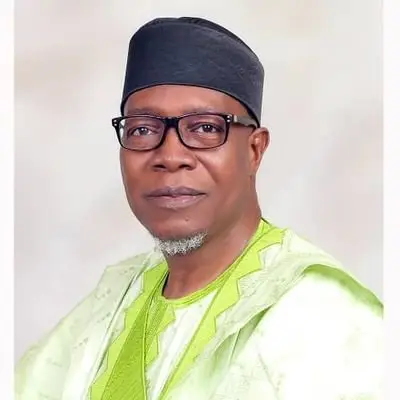
The President and Founder of the Africa Development Studies Centre (ADSC) Sir Victor Walsh Oluwafemi, has released a major historical and policy research presentation examining the origins of organised crime, armed robbery, drug trafficking, and criminal economies in South Africa.


New Research Challenges Longstanding Narratives Linking Nigerians to the Origins of Crime and Drug Trafficking in South Africa were exhaustively explained.

The research presentation, unveiled under ADSC’s continental governance and security studies initiative, critically examines widespread claims that Nigerians introduced crime and drugs into South Africa and concludes that historical evidence does not support such narratives.

Entitled: “Crime, Drugs, Apartheid and Historical Memory: Reassessing the Origins of Organised Crime in South Africa”

Advertisement

The study presents extensive historical evidence showing that South Africa had established criminal gangs, violent robbery networks, illicit cannabis trade systems, and anti-drug legislation decades before the end of apartheid and long before significant Nigerian migration into the country.

According to the research presented by Sir Victor Walsh Oluwafemi, South Africa had already enacted formal anti-drug laws as early as 1922, particularly targeting cannabis, commonly known locally as “dagga.”

“Historical records reviewed in the ADSC study also show that by the mid-twentieth century, South Africa had already emerged as one of the countries associated with significant cannabis seizures and underground illicit trade activities.

“The research further traces the roots of violent crime in South Africa to colonial and apartheid-era systems, including racial segregation, forced removals, economic exclusion, migrant labour structures, township underdevelopment, political violence, gang formation, illegal arms circulation, and institutional inequality.

Advertisement

Presenting the findings, Oluwafemi stated:
“Historical evidence must prevail over emotional narratives, misinformation, and xenophobic assumptions. Crime and drug trafficking in South Africa did not begin with Nigerians, nor were Nigerians responsible for introducing criminality into the country. The roots are deeply historical, structural, political, and socio-economic.”

“The ADSC President noted that by 1992, before the official democratic transition of 1994, South Africa already recorded some of the highest violent crime statistics globally, including murder rates estimated at approximately 77 per 100,000 people and armed robbery rates exceeding 375 per 100,000 in documented institutional studies.

According to the presentation, the post-apartheid reintegration of South Africa into the global economy, combined with expanding trade routes, porous borders, rising unemployment, global narcotics demand, and weak transitional institutions, contributed to the expansion of transnational organised crime involving multiple nationalities and syndicates from different regions of the world.

The ADSC research clarified that although certain foreign criminal networks, including some Nigerian syndicates, later became involved in organised criminal activities in post-apartheid South Africa, there is no historical basis for attributing the origins of South Africa’s criminal ecosystem to Nigerians.

Advertisement

He further warned against the dangers of broad national stereotyping and emotionally driven public discourse.

“Reducing highly complex historical and institutional realities to nationality-based accusations only fuels social division, xenophobia, diplomatic tensions, and misinformation across Africa.
The real issues remain inequality, governance failures, unemployment, organised criminal evolution, institutional weaknesses, and historical injustice.”

The study also explores the evolution of organised gangs in the Western Cape, township criminal economies during apartheid, illicit mining activities, smuggling corridors, and the growth of narcotics trafficking following South Africa’s international reintegration in the 1990s.

The research forms part of ADSC’s broader continental work on governance systems, migration studies, institutional resilience, organised crime, public policy, regional stability, and security sector reforms across Africa.

Advertisement

Key Historical Findings Presented by ADSC Include:

• South Africa had anti-drug legislation before 1930.
• Cannabis and illicit drug enforcement systems existed long before Nigerian migration into South Africa.
• Organised gangs and armed robbery networks existed during both colonial and apartheid periods.
• Apartheid-era policies significantly contributed to violent crime and underground criminal economies.
• Crime rates escalated sharply during the late apartheid transition period of the 1980s and early 1990s.
• There is no credible historical evidence that Nigerians introduced drugs or crime into South Africa.
• Post-apartheid organised crime became transnational, involving both local and international actors.
• Xenophobic narratives oversimplify deeply rooted historical and institutional realities.

The full ADSC research publication is expected to be released through the Centre’s official policy and research platforms in the coming weeks.

Advertisement
Continue Reading
Advertisement

News

Oil prices fall on Iran-US peace optimism

Published

on

ADVERTISEMENT
Zoom Ad
ADVERTISEMENT
Zoom Ad

Oil prices tumbled on Tuesday as growing optimism over a possible diplomatic breakthrough between Iran and the United States triggered a sharp sell-off in global crude markets, with Brent sliding toward the $91 per barrel mark.

According to the Economic Times, Brent crude fell by over three per cent during intraday trading, while WTI dropped nearly four per cent, as markets reacted to reports that a draft Iran–US peace agreement had been submitted for review in Washington and described as “preliminarily acceptable”.

The development immediately weakened the geopolitical risk premium that had kept oil prices elevated in recent weeks, particularly following heightened tensions that disrupted sentiment around Middle East supply routes and the strategically critical Strait of Hormuz.

The strait, through which roughly 20 per cent of global crude shipments pass, had been a key focus for traders after earlier disruptions triggered a sharp rally that pushed oil prices above $120 per barrel in late February.

Advertisement

At the time, fears of prolonged supply shocks sent global energy markets into panic buying. Tuesday’s decline therefore marks a significant reversal, as traders began pricing in the possibility that easing geopolitical tensions could stabilise supply flows and reduce the likelihood of further disruptions.

Experts said the market is now reacting less to immediate supply concerns and more to expectations of diplomatic progress, although they warn that sentiment remains highly sensitive to any setback in negotiations.

Any breakdown in talks, they note, could quickly reverse the current price trend given the still-fragile security environment in the Gulf region.

The Economic Times notes that energy markets reacted swiftly to shifting geopolitical signals and easing fears over supply disruption.

Advertisement

Oil traders said the combination of easing geopolitical fears and shifting supply data continued to drive volatility in global crude markets.

In Nigeria, the Nigerian National Petroleum Company Limited recorded an over 70 per cent rise in revenue and profit. The Dangote Refinery also benefited from high fuel exports, but households are enduring higher fuel prices, raising inflation pressures.

However, the conflict involving Iran led to a sharp rise in fuel costs, impacting Nigeria’s inflation figures negatively. It is expected that a further crash in oil prices would translate to cheaper fuel for Nigerians.

Advertisement
Continue Reading

News

Tinubu set to commission newly constructed Arterial Rd N5 Obafemi Awolowo Way today

Published

on

ADVERTISEMENT
Zoom Ad
ADVERTISEMENT
Zoom Ad

Today, June 10th 2026, President Tinubu will commission the newly constructed Arterial Road N5 (Obafemi Awolowo Way) from Life Camp Junction to RR III, Dape District section.

#FCTProjects2026
#RenewedHopeFCT

Continue Reading

News

Obi drags former political acolyte Okonkwo to court over alleged defamatory bribery claims

Published

on

ADVERTISEMENT
Zoom Ad
ADVERTISEMENT
Zoom Ad

The presidential candidate of the Nigerian Democratic Congress (NDC), Peter Obi, has started legal action against his former political acolyte and kinsman, Kenneth Okonkwo, over allegations that he and other party leaders collected bribes from aspirants seeking elective positions.

The lawsuit marks a significant escalation in the public fallout between the two political associates, whose relationship has deteriorated in recent months following disagreements over political developments and party affairs.Politics

According to court documents filed by Obi’s legal team, the former Anambra State governor is challenging a series of statements allegedly made by Okonkwo during a public broadcast, in which he accused Obi and leaders of the NDC in the South-East of demanding illicit payments from aspirants seeking tickets to contest for seats in the House of Representatives.

The suit, dated June 9, 2026, was filed by Chief Alex Ejesieme (SAN) of Alex Ejesieme (SAN) & Co. (Madiba Chambers), who described the allegations as false, malicious, and highly damaging to Obi’s reputation.

Advertisement

According to the legal filing, Okonkwo allegedly claimed that House of Representatives aspirants were required to pay an additional ₦10 million to party leaders after paying the official expression of interest and nomination fees.

The suit quoted Okonkwo as alleging that Obi and South-East leaders of the NDC informed aspirants that payment of the additional sum was necessary to secure consideration within the party.

Obi’s lawyers further stated that Okonkwo claimed documentary evidence existed to support the allegation and that receipts had allegedly been issued for the payments.

The actor-turned-politician was also accused of alleging that Obi personally compiled the list of party candidates from a hotel room and manipulated the candidate selection process.

Advertisement

Among other assertions attributed to Okonkwo were claims that Obi travelled abroad to collect money from individuals and that he, alongside other NDC leaders in the South-East, was involved in activities amounting to criminal conduct.

Obi Describes Allegations as False and Defamatory

In the legal action, Obi’s lawyers strongly rejected the allegations, insisting that the statements were entirely fabricated and intended to tarnish the former governor’s image.

The legal team argued that the claims portrayed their client as a dishonest political figure involved in bribery, extortion, fraud, and criminal conspiracy.

Advertisement

According to the suit, the statements were capable of exposing Obi to public hatred, ridicule, contempt, and distrust among members of society.

“The above statements, in their natural and ordinary meaning and by necessary implication, falsely and maliciously represent our client as a person who demands, solicits, organises and collects bribes; who extorts, defrauds and swindles political aspirants of their money; who is a fraudster, a scammer and a dishonest political actor,” the legal team stated.

The lawyers further argued that the allegations struck directly at Obi’s reputation as a public servant and political leader.

They described the remarks as reckless and unsupported by any credible evidence.

Advertisement

Concern Over Social Media Amplification

Obi’s legal representatives also expressed concern over the manner in which the statements were allegedly disseminated.

According to the law firm, the comments were made during a live television appearance before being widely circulated across social media platforms and online channels, thereby increasing their reach and potential impact.

The legal team maintained that while freedom of expression remains a constitutional right, it does not extend to publishing statements capable of damaging another person’s reputation without factual basis.

Advertisement

They argued that the remarks went beyond the limits of political criticism and fair comment.

“Your words were not mere political commentary. They crossed the permissible bounds of fair comment and constituted a direct assault on our client’s person, integrity, image and reputation,” the lawyers stated.

Obi Demands Retraction, Apology and Compensation

As part of the reliefs sought, Obi’s legal team is demanding that Okonkwo immediately withdraw the statements in their entirety and issue a public apology.

Advertisement

The proposed apology, according to the lawyers, must be clear, unconditional, and given the same level of prominence as the original allegations.

They further requested that the apology be published across all major social media platforms, including X, Facebook, Instagram, and YouTube.

In addition, the legal team is seeking a written undertaking from Okonkwo, committing him to refrain from making further defamatory statements against their client.

The suit also includes a demand for financial compensation for the alleged damage caused to Obi’s reputation and public standing.

Advertisement

The legal battle comes amid ongoing political realignments and public disagreements involving former allies within Nigeria’s opposition landscape, with the dispute expected to attract significant public and political attention in the coming weeks.

Continue Reading

Trending

Copyright © 2024 Naija Blitz News