Opinion
ZAKARI MOHAMMED: SPOTLIGHTING THE CREDENTIALS OF A SEASONED GRASSROOTS POLITICIAN
- /home/naijuinz/public_html/wp-content/plugins/mvp-social-buttons/mvp-social-buttons.php on line 27
https://naijablitznews.com/wp-content/uploads/2026/05/IMG_7040-1000x600.jpeg&description=ZAKARI MOHAMMED: SPOTLIGHTING THE CREDENTIALS OF A SEASONED GRASSROOTS POLITICIAN', 'pinterestShare', 'width=750,height=350'); return false;" title="Pin This Post">
- Share
- Tweet /home/naijuinz/public_html/wp-content/plugins/mvp-social-buttons/mvp-social-buttons.php on line 72
https://naijablitznews.com/wp-content/uploads/2026/05/IMG_7040-1000x600.jpeg&description=ZAKARI MOHAMMED: SPOTLIGHTING THE CREDENTIALS OF A SEASONED GRASSROOTS POLITICIAN', 'pinterestShare', 'width=750,height=350'); return false;" title="Pin This Post">
The demand for a new model of leadership recruitment in Nigeria has moved beyond rhetoric. Years of patronage-driven politics have produced a system where ethnic, religious, and social considerations outweigh competence, temperament, and intellectual depth. The consequences are measurable; economic instability, expanding insecurity, and a widening gap between citizens and government.

As 2027 approaches, voter sentiment is shifting. New political realignments are testing the ruling party’s dominance, especially in the North where subsidy removal, naira floatation, and escalating violence have weakened its base. A coalition featuring Atiku Abubakar, David Mark, Rauf Aregbesola, Rotimi Amaechi, Abubakar Malami, and Nasir El-Rufai is positioning the next election as a choice between continuity and structural reform.
Kwara State is a microcosm of that national contest. The Otoge movement that delivered APC in 2019 has not translated into consolidated grassroots loyalty. Insecurity once limited to the Northeast now affects communities in Kwara North and South, displacing families and reshaping the political map. That environment favors candidates with institutional experience and verifiable delivery.

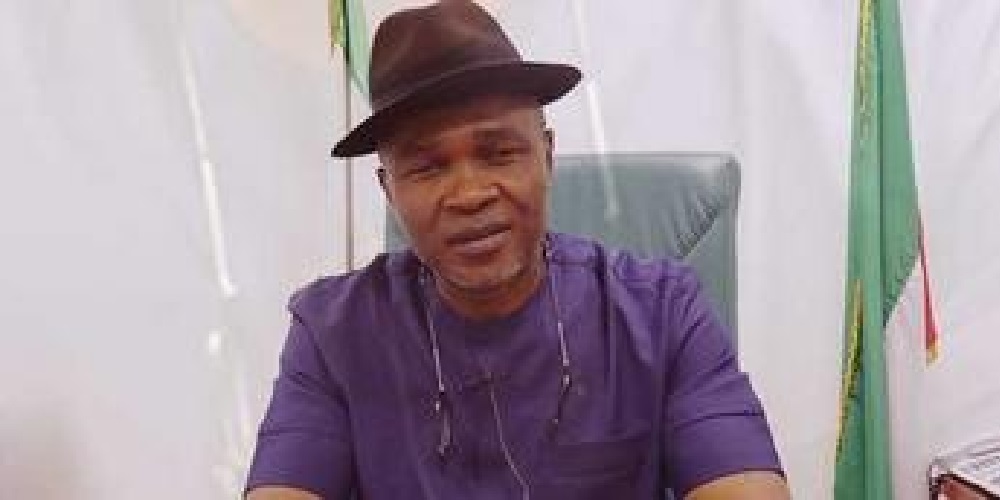
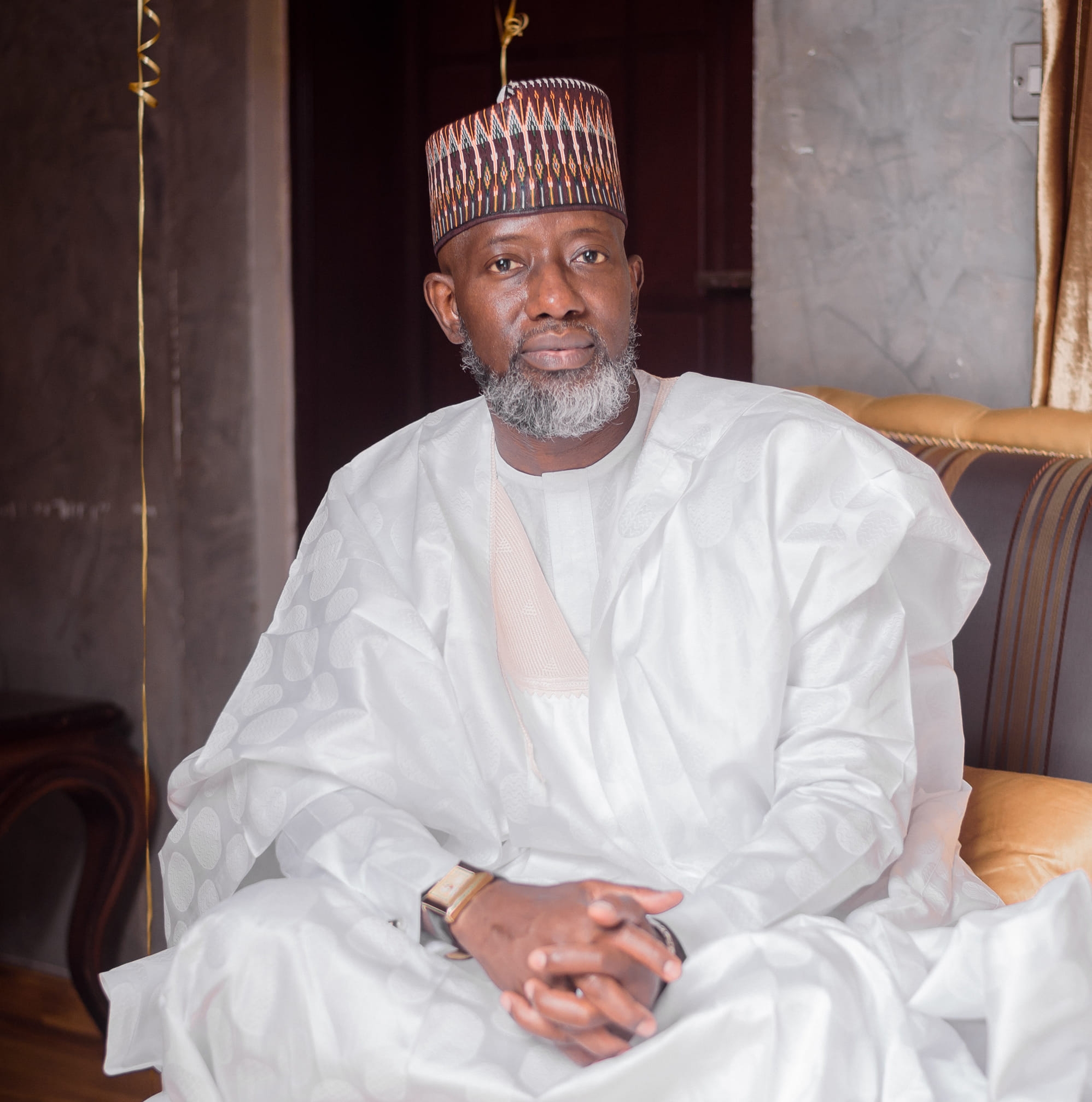
Zakari Mohammed, widely called Mai Jama’ah, brings that combination. His public career began in broadcasting, with ten years at Radio Kwara and Kwara TV between 1992 and 2002, where he rose to Government House producer. The role required editorial judgment, crisis communication, and political sensitivity.
He moved into the executive as Special Assistant on Sports, simultaneously serving as Sole Administrator of Kwara United. Under his leadership the club secured a continental ticket, linking administrative reform with competitive performance. He was later appointed Commissioner for Youth and Sports Development, then Commissioner for Energy.
As Commissioner for Energy, well over three hundred rural communities were connected to the national grid on his watch. More than one thousand transformers were installed or replaced across Kwara State, directly addressing distribution gaps. He also supervised the completion of the Federal Government’s abandoned NIPP project by the Kwara State Government. The late President Umaru Musa Yar’Adua commissioned the project, a federal acknowledgment of state-level delivery.
From 2011 to 2019, he represented Baruten/Kaiama Federal Constituency in the House of Representatives. In the 7th Assembly, as a first-term member, he was elected Chairman of the House Committee on Media and Publicity, becoming spokesperson for 360 lawmakers, including ranking members on third and fourth terms. He executed the role without controversy and maintained consistent, issue-based contributions during plenary.
In the 8th Assembly, he chaired the House Committee on Basic Education. That assignment had direct constituency impact, over 75 classroom blocks were built and renovated in Baruten/Kaiama under his oversight. He also collaborated with colleagues to push for the extension of retirement age for teachers and lecturers from 60 to 65 years, a policy shift aimed at retaining experience and stabilizing the education sector.
His most significant intervention in education was the construction, from scratch, of a Federal Government Girl Child Secondary School in Okuta, Baruten LGA. The project included boarding hostels and staff quarters, designed to improve access and retention for girls in a border community. Kwara is one of the few states with two such federal schools, the other located in Ilorin East by Oke Oyi, beside the NNPC Depot in Ilorin.
His academic profile reinforces his public service. He holds a Diploma in Civil Law, a BSc in Sociology and Anthropology, and a Master’s degree in Criminology. He earned a certificate in Emerging Leadership for the 21st Century from the Harvard Kennedy School of Government. He is completing his PhD thesis in Defence and Security Studies at the Nigerian Defence Academy, NDA, equipping him to address Kwara’s security challenges with both scholarly and operational insight.
The case for Zakari in 2027 rests on seven pillars.
First, infrastructure delivery. Rural electrification for over 300 communities, deployment of 1,000+ transformers, and completion of the NIPP project are documented.
Second, education infrastructure. 75+ classroom blocks renovated or built, plus a purpose-built Federal Government Girl Child Secondary School with boarding facilities in Okuta.
Third, education policy. The legislative push to extend teachers’ retirement age to 65 reflects a systems approach to human capital retention.
Fourth, legislative credibility. Two terms in the House, chairmanship of Media and Publicity in the 7th Assembly, and chairmanship of Basic Education in the 8th Assembly.
Fifth, executive range. SA Sports, Sole Administrator of Kwara United with continental qualification, Commissioner for Youth and Sports Development, and Commissioner for Energy.
Sixth, security scholarship. Advanced degrees in criminology and defence studies align with the state’s need for evidence-based security strategy.
Seventh, the equity argument. Kwara North has not produced a governor since 1999 despite consistent support for the APC since 2015. Zakari contested in 2023, lost the PDP ticket to SY Abdullahi, and remains a leading advocate for power shift. The ADC has zoned its governorship ticket to the North, creating a defined political path.
The constraints are clear. Incumbency commands structure, and coalitions are fragile. But if the 2027 contest in Kwara is judged on who has connected communities to power, built schools and classrooms, run public institutions to continental standard, legislated on education, and studied security at doctoral level, then Zakari Mohammed presents a record, not a promise.
He is not a candidate of convenience. He is a product of the newsroom, the cabinet, the National Assembly, and the academy. In a cycle where networks often replace process, that blend of delivery, education investment, and security scholarship is the most concrete alternative available, one to birth a deep, an urbane and intellectually mobile Governor come 2027 if elected.
Ahmed Mohammed is a seasoned PR strategist, and writes from Wuse II, Abuja.
[email protected]
Opinion
The Sundiata Post Model (4): Realm of the Long Term
By Max Amuchie | The Sunday Stew
This fourth instalment of the Sundiata Post Model asks the inevitable question: What must a knowledge-producing newsroom do to survive, adapt and remain relevant across generations?
That question is the gateway to what we call the Realm of the Long Term.
Every institution eventually enters the Realm of the Long Term. It is the stage at which immediate success gives way to enduring relevance, and where the central question is no longer whether an organisation can perform today, but whether it can continue creating public value across generations. Entering this realm requires more than ambition. It demands governance, institutional memory, financial resilience, leadership succession, continuous learning and an unwavering commitment to trust. This is the realm in which institutions either become enduring or gradually disappear.
The Realm of the Long Term is the point at which management ceases to focus primarily on performance and begins to focus on long-term stewardship. Decisions are evaluated not only by their immediate outcomes but by their contribution to the institution’s capacity to create enduring public value across generations.
Within the Sundiata Post Model the Realm of the Long Term rests on seven interdependent pillars: Financial Sustainability, Human Capital and Leadership, Knowledge Stewardship, Governance, Innovation and Adaptation, Trust and Reputation, and Mission Continuity. Together, these pillars determine whether an institution merely survives the present or continues creating public value across generations.
q
1. Financial Sustainability
Financial Sustainability is the institution’s capacity to generate, diversify, steward and invest financial resources in ways that preserve its independence, strengthen its capabilities and enable it to pursue its mission across generations.
Financial Sustainability is the institution’s capacity to generate diverse, mission-aligned sources of income that preserve its independence while strengthening both its Media Operations Engine and its Knowledge Operations Engine over the long term.
No institution, however compelling its vision or noble its mission, can endure without the economic capacity to sustain its work. Institutions do not survive on ideas alone. They survive because they deliberately create the financial resources that allow those ideas to mature into enduring public value.
Within the Sundiata Post Model, Financial Sustainability is understood differently from its conventional treatment in management literature. It is not simply about generating revenue, balancing budgets or maintaining profitability. Rather, it is the strategic financing of a knowledge-producing institution. Its purpose is to preserve institutional independence while providing the resources required to sustain both the Media Operations Engine and the Knowledge Operations Engine over the long term.
The Media Operations Engine generates value through journalism and public engagement. Its financial ecosystem includes advertising, brand partnerships, digital marketing, content syndication, commercial publishing, multimedia production, conferences, annual lectures, policy dialogues, executive forums and other public-facing institutional activities. These are not merely commercial ventures; they are mission-aligned enterprises that strengthen the institution’s capacity to produce independent journalism.
The Knowledge Operations Engine expands the institution’s financial horizon beyond the traditional economics of media. As the institution generates original knowledge, it creates opportunities for research grants, commissioned studies, partnerships with universities, think tanks and research institutions, collaborative projects with international organisations, consultancy, executive education, policy research, book publishing, biographies, proprietary datasets and the licensing of analytical frameworks, indices and methodologies. Knowledge itself becomes an institutional asset capable of creating both public value and sustainable income.
This represents a fundamental shift in how media organisations think about finance. The Sundiata Post Model recognises that journalism and knowledge production are complementary economic activities. The first generates public attention, civic engagement and commercial opportunities; the second generates intellectual capital, scholarly influence and knowledge-based revenue. Together, they produce a diversified and resilient institutional economy capable of supporting long-term growth without compromising editorial independence or research integrity.
Financial Sustainability therefore extends beyond accounting. It encompasses the institution’s capacity to build strategic partnerships, secure collaborative projects, attract research funding, develop intellectual property and transform original ideas into enduring institutional assets.
In the Realm of the Long Term, Financial Sustainability is ultimately the stewardship of institutional resources in service of institutional purpose. It is the first pillar because every other pillar depends upon it. Without sustainable financing, governance becomes fragile, knowledge production becomes intermittent, innovation slows, leadership development suffers and institutional memory gradually erodes.
2. Human Capital and Leadership
If Financial Sustainability provides the economic foundation of an enduring institution, Human Capital and Leadership provide its human foundation. Buildings, technology, financial resources and even brilliant institutional designs do not create enduring organisations by themselves. Institutions ultimately rise or decline because of the quality of the people who lead them and the culture they cultivate.
Within the Sundiata Post Model, Human Capital extends beyond recruitment. It encompasses the deliberate attraction, development, retention and continuous renewal of talented professionals who possess not only technical competence but also a commitment to the institution’s mission, values and standards. An institution enters the Realm of the Long Term only when it begins to think beyond filling positions to building generations of capable people.
Leadership occupies a special place within this pillar. The true measure of leadership is not merely what is accomplished during a leader’s tenure, but what remains after that tenure has ended. Institutions become enduring when leadership is viewed as stewardship rather than ownership. Every generation of leaders inherits an institution from those who came before and bears the responsibility of strengthening it for those who will come after.
This requires intentional investment in professional development, mentorship, succession planning and organisational culture. Expertise must be cultivated. Institutional values must be transmitted. Leadership pipelines must be continuously renewed. The departure of talented individuals should never threaten the continuity of the institution because knowledge, experience and responsibility lhave been systematically transferred to the next generation.
For a knowledge-producing institution, this responsibility becomes even greater. Journalists must continuously improve their craft. Researchers must deepen their methodological competence. Editors must strengthen both editorial judgment and institutional leadership. The objective is not merely to employ professionals but to cultivate an intellectual community capable of sustaining journalism, research and public service over the long term.
3. Knowledge Stewardship
Knowledge Stewardship is the deliberate creation, preservation, governance and transmission of institutional knowledge so that learning accumulates rather than disappears.
Every institution produces knowledge through its daily operations. Yet much of that knowledge is often lost through staff turnover, poor documentation or organisational neglect. The Sundiata Post Model rejects this waste. It regards datasets, editorial experience, research outputs, methodologies, institutional records and accumulated expertise as strategic assets that must be governed, preserved and continuously enriched. Knowledge stewardship transforms experience into institutional capital.
4. Governance
Governance is the system of structures, principles and accountability through which an institution safeguards its mission, exercises authority responsibly and makes sound strategic decisions.
Strong institutions are not sustained by personalities alone but by systems that outlive individuals. Effective governance establishes clear responsibilities, ethical standards, transparency, accountability and strategic oversight. It protects institutional integrity during periods of growth, crisis and leadership transition. Within the Realm of the Long Term, governance provides stability without preventing innovation.
5. Innovation and Adaptation
Innovation and Adaptation are the institution’s capacity to respond intelligently to changing technological, economic and social environments while remaining faithful to its core mission.
Long-term institutions do not survive by resisting change. They survive by adapting continuously without abandoning the principles that define them. Innovation therefore extends beyond technology. It includes new products, new organisational practices, new revenue models, new research methods and new ways of engaging society. Adaptation ensures relevance; mission provides continuity.
6. Trust and Reputation
Trust and Reputation constitute an institution’s accumulated credibility, earned through consistent competence, integrity and public service over time.
Trust is not created by slogans or marketing campaigns. It is built gradually through countless decisions that demonstrate reliability, fairness and professionalism. Reputation becomes one of an institution’s most valuable strategic assets because it influences public confidence, partnerships, talent recruitment and long-term legitimacy. In the Sundiata Post Model, trust is not simply an ethical aspiration; it is an institutional resource that must be deliberately protected.
7. Mission Continuity
Mission Continuity is the institution’s ability to preserve its fundamental purpose while continually renewing its strategies, structures and methods.
Institutions that endure distinguish between mission and method. Their purpose remains constant even as the means of fulfilling that purpose evolve. Mission continuity prevents organisations from losing their identity in response to short-term pressures while enabling them to adapt confidently to changing circumstances. It provides the enduring direction that unites successive generations of leaders, professionals and stakeholders.
The seven pillars are mutually reinforcing. They are not independent compartments that can be strengthened or weakened in isolation. The erosion of one inevitably affects the others, because institutions endure as integrated systems rather than as collections of separate functions.
Without Financial Sustainability, you cannot recruit and retain the best people (Human Capital and Leadership).
Without capable people, Knowledge Stewardship deteriorates.
Without Knowledge Stewardship, Innovation and Adaptation becomes weak because there is little accumulated knowledge to build upon.
Weak Governance eventually damages Trust and Reputation.
Once trust declines, revenue suffers, weakening Financial Sustainability again.
Eventually, Mission Continuity is threatened.
The Global South
While the region has produced many outstanding newspapers and broadcasters, relatively few have demonstrated the kind of uninterrupted institutional continuity that characterises some of the world’s oldest media organisations. Political instability, economic volatility, succession challenges, fragile governance structures and rapidly changing media economics have made institutional longevity the exception rather than the rule.
The Realm of the Long Term is therefore not merely about preserving an existing institution; it is about addressing one of the enduring structural weaknesses of media development in Africa and much of the Global South. The ambition is to build media organisations that do not merely survive their founders, but continue to generate public value across generations.
However, there are few media institutions that have proved capable of surviving across generations. In Nigeria, the Nigerian Tribune, founded in 1949 by Obafemi Awolowo, has endured for more than seven decades, surviving colonial rule, independence, military governments, democratic transitions and the digital revolution. In South Asia, The Hindu in India, established in 1878, and Dawn in Pakistan, founded in 1941, have likewise sustained their institutional identities through profound political, economic and technological change. In the developed world, organisations such as Reuters (founded in 1851), The Economist (established in 1843), The New York Times (founded in 1851) have demonstrated similar resilience over even longer periods.
The longevity of these institutions suggests that enduring media organisations share certain characteristics. They invest in governance, preserve institutional memory, renew leadership, adapt to technological change, cultivate public trust and develop sustainable business models. Their endurance is rarely accidental; it is the product of deliberate institutional choices sustained over decades.
The Sundiata Post Model seeks to identify, organise and systematise institutional principles that appear repeatedly among such media organisations. In that sense, it is both descriptive and prescriptive. It draws lessons from enduring institutions while proposing a coherent framework for building the knowledge-producing newsroom of the twenty-first century.
Finally, history shows that ideas sometimes outgrow the domains in which they were first conceived. Sun Tzu’s The Art of War was written as a treatise on military strategy, yet its principles have since informed thinking on business, leadership and organisational management. Likewise, while the Sundiata Post Model is proposed as a framework for twenty-first-century journalism, its underlying principles of knowledge production, institutional memory, governance and long-term stewardship may ultimately prove relevant to other knowledge-intensive organisations. Whether that broader applicability emerges is not for me, as its author, to determine, but for others—scholars, intellectuals, media executives, publishers, and management experts—to test, adapt, critique and refine through practice.
Trust is sacred. Stay seasoned
•Dr. Max Amuchie is a Scholar-Journalist, Media CEO, Lead Researcher at the Sundiata Post Intelligence Unit (SPIU), and an Expert Member and Peer Reviewer at ScienceOpen. He is the architect of The Insecurity Triad framework for African security analysis as well as the Trinity of Sovereignty Decay (formerly Trinity of State Decay) theory, and the Decoupling Sovereignty Index (DSI)—original frameworks for understanding, categorising, and measuring conflict, state decay, and sovereignty in the Global South.
X: @MaxAmuchie | Email: [email protected]
Opinion
NATIONAL ASSEMBLY OPEN WEEK: AKPABIO’S PUSH FOR A MORE OPEN PARLIAMENT
By Malachy Ukpong
The inauguration of the 2026 National Assembly Open Week by the President of the Senate, Senator Godswill Obot Akpabio, has generated widespread discussion among political stakeholders, governance experts, civil society organisations, members of the diplomatic community, students and ordinary Nigerians.
The initiative has been described by supporters as one of the 10th National Assembly’s most significant efforts to strengthen the relationship between Parliament and the Nigerian people by promoting transparency, public participation and legislative accountability.Across many established democracies, parliamentary open days or open weeks serve as platforms for citizens to better understand how the legislature functions.
Such initiatives allow the public to interact directly with lawmakers, observe parliamentary processes, participate in policy discussions and appreciate the constitutional responsibilities of the legislative arm of government. The National Assembly Open Week seeks to domesticate this democratic culture by opening the doors of Nigeria’s Parliament to wider public engagement.For many Nigerians, the National Assembly has often appeared distant from the people it represents, with legislative activities largely viewed through media reports and political debates.
The Open Week initiative therefore attempts to reduce this perceived distance by creating opportunities for citizens to engage lawmakers directly, ask questions about legislative priorities, understand the processes behind lawmaking and appreciate the oversight and representation functions assigned to the legislature under the Constitution.The programme also reflects an effort by the leadership of the 10th National Assembly to strengthen institutional transparency.
During the Open Week, committees, principal officers and lawmakers showcase legislative activities, explain bills under consideration, provide updates on constituency initiatives and discuss ongoing constitutional and policy reforms.
Such engagements offer citizens the opportunity to better understand how legislation is developed, how oversight responsibilities are carried out and how public resources appropriated by the National Assembly are intended to support national development.Supporters of the initiative argue that transparency is an essential ingredient of democratic governance. When citizens have greater access to information about parliamentary proceedings and decision-making processes, they are better positioned to hold elected representatives accountable.
Public engagement also enables lawmakers to receive direct feedback from the people whose interests they represent, thereby improving the quality of legislation and strengthening public confidence in democratic institutions.Another major objective of the National Assembly Open Week is to promote inclusive governance.
Throughout the programme, stakeholders from different sectors—including traditional rulers, civil society organisations, professional associations, women’s groups, youth organisations, labour unions, faith-based organisations, persons with disabilities, students, development partners and the media—are encouraged to participate in discussions on issues affecting national development.The emphasis on inclusion reflects the position consistently expressed by Senate President Akpabio that democratic governance should accommodate diverse perspectives and ensure that every segment of society has an opportunity to contribute to national policymaking.
According to him, Parliament is not designed to isolate itself from the people but to provide a constitutional platform where differing opinions can be debated, competing interests reconciled and national consensus built.
The Open Week also provides an opportunity to discuss ongoing constitutional amendment proposals before the National Assembly. Among the issues attracting significant public interest are electoral reforms, judicial reforms, local government administration, fiscal federalism, devolution of powers, the proposal for the establishment of state police and measures aimed at improving the participation of women and persons with disabilities in governance. Public conversations during the Open Week allow stakeholders to present memoranda, share expert opinions and contribute ideas that may assist lawmakers during legislative deliberations.One proposal that has received considerable attention is the Special Seats Bill, which seeks to create additional legislative seats reserved for women in the National Assembly and State Houses of Assembly as a temporary affirmative action measure.
Advocates argue that the proposal could help address the persistent underrepresentation of women in elective offices and strengthen gender inclusion in Nigeria’s democratic process.
Discussions during the Open Week provide another avenue for citizens and advocacy groups to express support, raise concerns or make recommendations regarding such constitutional proposals.
The initiative equally strengthens collaboration between Parliament and other arms of government without diminishing the constitutional principle of separation of powers. By creating opportunities for dialogue among legislators, government institutions, development partners and members of the public, the Open Week encourages broader consultation before major legislative decisions are taken. Such engagement has the potential to improve policy implementation by ensuring that laws are informed by practical realities and stakeholder input.Beyond policy discussions, the National Assembly Open Week serves an important civic education function. Many young Nigerians have limited understanding of how bills become law, the oversight responsibilities of legislative committees or the representative duties of elected lawmakers.
Through guided tours, interactive sessions, exhibitions and public lectures, participants gain firsthand knowledge of parliamentary procedures and democratic governance, helping to build a more informed and politically engaged citizenry.At the inauguration of the 2026 National Assembly Open Week, Senate President Godswill Akpabio emphasised the importance of listening to citizens as a foundation for effective governance. He stated: “A Parliament that listens becomes wiser. A democracy that listens becomes stronger.”
The remark underscores the broader objective of the initiative—to promote dialogue, encourage citizen participation and strengthen democratic accountability.Ultimately, the success of the National Assembly Open Week will be measured not merely by attendance or public interest during the event, but by its long-term impact on legislative openness, public trust and citizen participation in governance. If sustained and continuously improved, the initiative could contribute significantly to making Nigeria’s Parliament more transparent, more accessible and more responsive to the aspirations of the people it serves.The National Assembly Open Week therefore represents an important opportunity to deepen democratic engagement by fostering dialogue between elected representatives and citizens. Whether viewed as a transparency initiative, a civic education programme or a platform for inclusive governance, its enduring value will depend on the extent to which it strengthens public confidence in the legislative institution and encourages meaningful participation in Nigeria’s democratic process.
Opinion
OF CIPSMN’S CIRCUS SHOW, PRESIDENTIAL CENSURE, AND NATIONAL DEVELOPMENT
BY NDAGI BELLO EL’SUDI
Lately, the Chartered Institute of Purchasing and Supply Management of Nigeria, (CIPSMN), the umbrella body of practicing and aspiring practitioners has been in the news. Sadly, for the wrong reasons. Somehow, this position has been further strengthened by the generality of those in the profession and technocrats in other related sectors. Presidential censure on the CIPSMN’s (Establishment ) Amendment Bill has not only drawn public attention, but also generated commentaries from respected members of the constituency. Further, it has led to widespread criticisms and condemnation of the “arrowheads” of the CIPSMN’s moves – described as a non-ingenious attempt to assume a position it does not deserve, by law. According to reports, President Bola Tinubu withheld assent to the Bill for some pertinent reasons which bothers on legal issues, ethics, and operations.
From media reports, President Tinubu declined assent to the Bill because some of the amendments sought were full of irregularities and illogicalities. This includes – seeking to give the Institute powers beyond its statutory mandate; attempting to foist itself as the Regulator; seeking to be empowered to exercise control over inspection of organizations, sanction employers, and assume compliance functions over entities and companies; seeking some other powers which clearly exceeds the Institute’s scope. Others are the phony insertions of new sub-clauses which seeks to confer powers and control on the Institute which are clearly beyond its brief; seeking subtle control of incorporated entities and organizations in the appointment of Head(s) of Procurement, and other related activities.
Indeed, there are empirical reports that the Bill, at different stages of legislative inquisition, and other attempts by promoters of the hideous plot had suffered several thumbs-down by relevant agencies and stakeholders in 2007, 2024, and 2025. Serially, many of the amendments sought were roundly defeated with convincing, logical, and legal submissions. This includes Section 1(c) which conflicts directly with Section 5(k) of the Public Procurement Act (PPA) 2007, which gives powers on training, education, and examination of procurement professionals to the Bureau of Public Procurement, (BPP) – and is already doing it; Section 12 will bring it in conflict with global standards, and also the provisions of the PPA. Among other things, the CIPSMN is accused of trying to undermine existing laws through institutional over-reach; attempting to cause institutional overlap; attempting to breed regulatory confusion and legal conflict.
Somehow, this latest development has brought to the fore, the CIPSMN’s ‘leadership’ beef with the BPP. The Bill, which from inquiries does not have the blessings of the majority of members, has been on the works since 2007. A major stakeholder who pleaded anonymity confessed that, “honestly, I didn’t know that the ‘owners’ of CIPSMN are still bent on their selfish and immoral agenda of forcefully taken over procurement activities in Nigeria, and pigeon-hole professionals.” A senior official in a federal government agency declared that, “one wonders why these persons are being too difficult and mischievous. Why are they resolute in destroying and derailing the harmonious working relationships between the BPP and professionals? It is time they drop these machiavellian tactics and embrace meaningful collaboration for national growth, and personal development of members.”
Some stakeholders are at a loss about the fierce-grip and authocratic control of the ‘officials’ over CIPSMN. Further checks reveal shocking discoveries that demand immediate attention by relevant agencies. As presently constituted, though the Institute has a Governing Council – which includes Ministries of Investment, Trade & Industry; Education; and Finance, the Council have not met for years. The Institute has been under the control and manipulation of two individuals for about 20 years; who are reportedly cousins – they both function interchangeably as President or Registrar, and Secretary or Head of Secretariat or National Coordinator. A member of the Institute in one of the Federal Ministries who craved anonymity lamented that, “the men operate like the lord of the manor as they take unilateral decisions at all times. The Institute’s account has never been published, and there has never been any attempt to interpret the CIPSMN Act since 2007 – which are flagrant disobedience.”
Ideally, the Legislature being the fulcrum of democratic governance ought to be thorough, detailed, and diligent in the enactment and amendment of any Bill or Act. The scale and speed of the passage of the Bill gives serious concerns. How did the contentious Bill, with numerous obnoxious amendments pass through the legislative binoculars of our resourceful lawmakers? Why would the Senate and House give the go-ahead for presidential assent to a Bill which encumbered subsisting Act of the Legislature? Why the haste and rush? One believes that since the Legislature is the bedrock of meaningful reform policy and process, lawmakers should do their best to ensure that clear, cogent, and coherent legal frameworks are provided – wholly, without ambiguities to agencies involved. The agencies should enjoy some legislative protections – where legally possible – towards ensuring that no other agency or entity encroaches or breaches the Act establishing and guiding responsibilities. Pity, the reverse happened.
Prior to Nigeria’s return to democracy in 1999, there were procedural errors, operational defects, and bureaucratic infractions in public procurement expenditures. It was bad and battered. Successive administrations made efforts to tinker with the systems for improvement. This led to the enactment of the Public Procurement Act (PPA) 2007, which empowered the BPP to harmonize, set standards and guidelines towards ensuring professionalism in public procurement. Also, the Bureau is given regulatory authority for monitoring and oversight of public procurement; ensuring transparency, competition, and value for money in government contracting. In addition, it has responsibilities to regulate and strengthen Nigeria’s procurement governance; advancing ethical standards, and institutional integrity of the public procurement system; ensuring professional regulation through certification and licensing of federal procurements; upgrading procurement processes towards meeting global standards.
Since its establishment in 2007, the BPP has undergone various stages of evolution, particularly in the last two years. Under the leadership of Dr. Adebowale Adedokun, it has emplaced necessary templates for improving and deepening public procurement. The BPP has been a strategic institution in driving meaningful infrastructural development, sectoral transformation, economic growth, and national development through transparency, probity, and corporate governance. Leveraging on the political will provided by President Bola Tinubu, the BPP has posted many milestones. This includes saving the country over N200 bn, $155m, €1.7m through its upgraded Nigeria Open Contracting Portal (NOCOPO); domestication of and efficient procurement policies in public service in conformity with best global practices; effective and results-yielding procurement processes through its collaboration with the World Bank, European Union, and other development partners.
Others are barment policy and sanctions on contractors for shoddy and low quality jobs; fostered bid cycles, reduced leakages and waste expenditures, and improved public access to contract data through its Digital Transformation & Transparency Policy, Nigeria E-Market, e-government procurement system, and other IT-based platforms; emplaced procurement policies which gives preference or access to disadvantaged groups; ensuring the participation of marginalized groups in public contract opportunities; strengthening inclusive growth in conformity with the Sustainable Development Goals (SDGs). Conscious of the important roles of Permanent Secretaries, (PS) – as the chief accounting officers in Federal Ministries in the procurement circle, the BPP revived – after 4 years stoppage – the National Retreat for PS, and also improved its scope, contents and objectives.
The programme was held in Uyo, and attended by virtually all the PS, and other very senior officials in MDAs, as well as some top officials of the Akwa Ibom State Government. The testimonials of some of the participants confirmed that the Retreat was hugely successful. Pleading anonymity, one confessed that, “this programme was an eye-opener to many of us who never knew that such synergy is absolutely necessary to positively drive the Renewed Hope Agenda of President Bola Tinubu.” A colleague declared, “before now, I never knew that the BPP is doing so much for national development…I now realize that MDAs and the Bureau must be in sync towards ensuring meaningful growth and development.” While corroborating, another participant advised that, “the Retreat should be more regular for maximum results, also, the BPP should expand the scope of participation to the sub-national government – States, this would percolate the benefits of effective public procurements across the country.”
Back to the CIPSMN Bill. Having done a holistic review and comprehensive studies on the matter, it is imperative for the Institute to focus on its core mandate and not embark on a wild goose chase. Public Procurement is beyond P & S. Wondering the intentions of the promoters of the Bill, a management staff in the private sector who pleaded anonymity commended, “President Tinubu for withholding assent, because if he did, it would have destroyed the gains recorded by his government; through BPP in project deliveries, derailed the huge foreign direct investment coming to Nigeria, and sour the integrity of our corporate governance structures because the Bill negates all known professional ethics practices in the world.”
In many ways, the Bill – as coupled by the purveyors has exposed their insidious, knavish, and invertebrate penchant for influence-peddling, power-hunger, and attention-seeking. Spineless and wishy-washy, it is an agglomeration of recalcitrant miscalculations, conjured misinformation, and calculated mischief which deserves a festoon of sarcasm, self-deception, and perdition. Another stakeholder was unequivocal, “in fact, the Bill should be completely repealed and buried to put finality to the intransigence of two individuals whose actions are causing unnecessary tensions and overheat in the procurement sector, that may affect the pace of achievements recorded by the government – if not checked immediately.” Perhaps this counsel may be instructive!
* NDAGI BELLO EL’SUDI, a Public Policy Analyst based in Abuja.
-
News20 hours agoTinubu Appoints Olanrewaju-Smart as Presidential Adviser on House of Representatives Affairs
-
News19 hours agoAtiku demands proper accounting of N7.98trn oil windfall, says Nigerians deserve to know
-
News19 hours agoAbbas Hails President Tinubu’s Choice of Olanrewaju-Smart as House Liaison Adviser
-
News19 hours agoBandits kidnap Kebbi State High Court judge
-
News19 hours agoICPC investigates Permanent Secretary over delayed Tinubu’s approved agency funds
-
News18 hours agoSad: Young Nigerian reportedly trafficked for commercial s*x dies after rescue
-
News10 hours agoTinubu smokes silk cigarettes a lot: he can’t do without them: Babachir Lawal
-
Opinion21 hours agoThe Sundiata Post Model (4): Realm of the Long Term