Connect with us

News

Nigeria remains World Bank’s third-largest borrower with $18.5bn

Published

on

ADVERTISEMENT
Zoom Ad
ADVERTISEMENT
Zoom Ad

Nigeria has retained its position as the third-largest borrower from the International Development Association (IDA), the concessional lending arm of the World Bank, despite a slight decline in its debt exposure in the first quarter of 2026.


According to the IDA’s March 2026 financial statements, Nigeria’s exposure stood at $18.5 billion as of March 31, 2026, down marginally from $18.7 billion recorded at the end of December 2025.

The $200 million decline represents a 1.1 per cent reduction over the three-month period. However, on a year-on-year basis, Nigeria’s debt exposure increased significantly by $1.2 billion, or 6.9 per cent, from $17.3 billion recorded in March 2025.

The latest ranking places Nigeria behind Bangladesh and Pakistan among the World Bank’s largest IDA borrowers.

Advertisement

Data from the report showed that Bangladesh remained the largest borrower with an exposure of $22.7 billion, followed by Pakistan with $19.2 billion, while Nigeria ranked third with $18.5 billion.

Other major African borrowers include Ethiopia with $14.4 billion, Tanzania with $14.3 billion, and Kenya with $13.2 billion in outstanding exposure.

The report also revealed that the IDA’s total loans outstanding stood at $230.8 billion as of March 31, 2026, slightly below the $231.1 billion recorded at the end of December 2025, reflecting a mild moderation in the institution’s lending portfolio.

According to the IDA, loans classified under non-accrual status represented only 0.4 per cent of the total portfolio, while provisions for potential loan losses amounted to $6.3 billion, equivalent to about 2.0 per cent of underlying exposures.

Advertisement

Nigeria’s exposure accounted for roughly eight per cent of the IDA’s total loan portfolio and approximately 13.3 per cent of the combined exposure represented by the institution’s ten largest borrowing countries.

The IDA noted that its ten largest country exposures collectively accounted for about 60 per cent of total portfolio exposure as of March 2026, highlighting the concentration of concessional lending among a relatively small number of developing economies.

Despite the slight quarter-on-quarter decline, Nigeria’s debt profile with the World Bank continues to trend upward over the longer term.

The report showed that Nigeria’s exposure rose from $17.3 billion in March 2025 to $18.5 billion in March 2026, underscoring the country’s increasing reliance on concessional financing to support development priorities and economic reforms.

Advertisement

Similarly, Ethiopia’s exposure increased from $13.2 billion to $14.4 billion over the same period, while Tanzania’s exposure rose from $12.6 billion to $14.3 billion.

Bangladesh’s debt exposure climbed from $21.2 billion to $22.7 billion, while Pakistan’s increased from $18.3 billion to $19.2 billion. Ghana also recorded an increase from $7.1 billion to $7.4 billion.

Nigeria’s position among the top borrowers reflects the scale of its infrastructure, social investment, and reform financing needs under the World Bank’s concessional lending framework.

The Federal Government is also currently engaging the World Bank for additional financing support.

Advertisement

Recall that Nigeria is seeking a fresh $1.25 billion World Bank facility aimed at expanding access to finance, improving digital services, strengthening electricity supply, and supporting reforms in tax administration, agriculture, and trade.

If approved, the proposed facility would raise total World Bank loan approvals secured under the administration of President Bola Ahmed Tinubu to about $10.6 billion in June 2023.

The proposed loan would also rank among the largest World Bank facilities approved for Nigeria in recent years, following the $1.5 billion Reforms for Economic Stabilisation to Enable Transformation Development Policy Financing approved in June 2024.

Experts had cautioned Nigeria against the rising multilateral loans especially amidst rising debt with Nigeria’s debt profile rising to N159 trillion as of 2025.

Advertisement

A finance expert and senior partner at SPM professionals, Dr. Paul Alaje recently noted that the current debt stock of the country is directly owned by Nigerians and will be paid by even citizens not yet born.

“So here is the point, as the volume increases, Nigeria has to pay more, mind you the debt they gave to us is not this year, but as of December 31 2025.

So by the time we look at the one that we have retired and the new loans that have been approved and some that have been collected this year, it is clear that by the time the DMO is reporting that in the first quarter 2026, we would have crossed $160 billion. So it’s more of a burden on the economy. Whether we have the capacity to pay or not is a different kettle of fish,” he added.

Daily Trust
Advertisement
Continue Reading
Advertisement

News

Tinubu Orders Security Reinforcement At NIPSS

Published

on

By

ADVERTISEMENT
Zoom Ad
ADVERTISEMENT
Zoom Ad

President Bola Tinubu has directed the immediate and permanent reinforcement of security at the National Institute for Policy and Strategic Studies (NIPSS), Kuru, Plateau State, following a recent attack on the institution’s perimeter that claimed the lives of two soldiers and a police officer.

The directive was conveyed on Friday by Vice President Kashim Shettima during a visit to the institute, where he addressed participants of the Senior Executive Course (SEC) 48 on behalf of the President.

According to the Vice President, the attack has strengthened the Federal Government’s resolve to protect critical national institutions, support security personnel and ensure that similar incidents do not occur in the future.

Expressing the condolences of the Federal Government, Shettima sympathised with the families of the fallen security personnel and assured them of government support.

Advertisement

“I come to you with a heavy heart and a firm spirit. A banditry attack on the perimeter of NIPSS claimed the lives of two gallant soldiers and one courageous policeman. To their families, to the Nigerian Armed Forces, and to the Nigeria Police Force, I extend, on behalf of His Excellency, President Bola Ahmed Tinubu, GCFR, and the entire Federal Government, our deepest condolences.

“We mourn with you. We share your pain. And we honour their sacrifice,” he was quoted as saying.

The Vice President announced that President Tinubu had ordered the activation of emergency security measures at the institute, directing the Director-General of NIPSS to work closely with the Armed Forces, the Nigeria Police Force and the Department of State Services (DSS) to strengthen security around the facility.

“His Excellency, President Bola Ahmed Tinubu, GCFR, has directed that emergency security measures be activated at once, with the DG to coordinate with the Armed Forces, the Police, and the DSS to fortify the perimeter without delay.

Advertisement

“On the President’s order, a comprehensive action plan and timeline for permanent reinforcement, covering surveillance, personnel, access control, and emergency systems, must be submitted to the Office of the Vice President within seventy-two hours. Weekly progress reports will follow until full completion. No future attack must find us unprepared,” he added.

Shettima described NIPSS as Nigeria’s strategic intellectual nerve centre and a vital national asset whose protection must remain a top national security priority.

He noted that although the attackers intended to create fear and disrupt the training of future leaders, the incident instead demonstrated the courage, resilience and discipline of participants, management and security personnel at the institute.

Addressing staff and participants, the Vice President assured them that their safety remained a priority for the Federal Government.

Advertisement

“Your safety is non-negotiable. The President has directed the immediate reinforcement of security around NIPSS and all strategic institutions. The sacrifice of those three brave men will not be in vain. Their children will be our children. Their welfare will be our responsibility,” he said.

He further stressed that those responsible for the attack would not succeed in undermining the purpose and mission of the institute.

Commending the participants of SEC 48 for their conduct during the incident, Shettima said they had demonstrated qualities befitting future national leaders.

“When darkness came to the gates of this Institute, it expected to find people who would scatter into the night. It found instead men and women who stood their ground.

Advertisement

“You did not flee. You did not abandon your colleagues. You faced the worst that cruelty could send, and you answered it with composure, with courage, and with the steady discipline of people who understand exactly why they were summoned to this place,” he noted.

The Vice President also praised the Director-General of NIPSS, Ayo Omotayo, for his leadership and swift coordination with security agencies, which ensured the prompt deployment of reinforcements and the safety of participants and staff.

He similarly commended the Director of Studies, Barrister Nima Salman Mann, for maintaining order and coordinating the safety of staff and participants during the crisis.

Earlier, Plateau State Governor Caleb Mutfwang expressed appreciation to the Federal Government for its support and the Vice President’s visit, describing it as a demonstration of empathy and solidarity following the attack.

Advertisement

The governor approved NIPSS management’s request for the establishment of a buffer zone around the institution, as well as the installation of security lights and other measures to enhance security in the area.

He also paid tribute to the fallen security personnel and praised the bravery of staff and course participants who helped repel the attackers and prevent further incursion into the institute.

In his remarks, the Director-General of NIPSS, Omotayo, presented an incident report to the Vice President and appealed for additional security support, including the deployment of more personnel and the installation of surveillance infrastructure such as CCTV cameras around the institution.

He noted that the attack underscored the vulnerability of critical government institutions across the country and highlighted the need for improved security measures.

Advertisement
Continue Reading

News

Ekiti Gov’ship Election: INEC Assures Voters Of Credible Poll As CSOs Raise Concerns

Published

on

By

ADVERTISEMENT
Zoom Ad
ADVERTISEMENT
Zoom Ad

As Ekiti State prepares for Saturday’s governorship election, the Independent National Electoral Commission (INEC) has assured voters of its readiness to conduct a free, fair, and credible poll.

The Resident Electoral Commissioner (REC) in Ekiti State, Bunmi Omoseyindemi, urged eligible voters to participate confidently in the electoral process, stressing that the commission remains committed to delivering a transparent and impartial election.

Speaking with Channels Television, during preparations for the exercise, Omoseyindemi said INEC had resolved all logistical challenges and put adequate measures in place to ensure the timely deployment of personnel and election materials across the state.

He also highlighted the close collaboration between INEC and security agencies through the Inter-Agency Consultative Committee on Election Security (ICCES), noting that the partnership is aimed at guaranteeing a peaceful and secure voting environment.

Advertisement

The REC further disclosed that the INEC Result Viewing Portal (IReV) would be deployed during the election to enhance transparency by enabling real-time upload and public viewing of polling unit results.

Meanwhile, a coalition of civil society organisations monitoring the election under the European Union Support to democratic governance in Nigeria (EU-SDGN) Election Observation Hub has expressed concern over reports of voter inducement, political intimidation and disinformation ahead of the poll.

At a pre-election press conference, the group alleged that incidents of vote-buying involving cash, food items, and the collection of Permanent Voter Card (PVC) and National Identification Number (NIN) details through pre-funded bank accounts had been reported in parts of Irepodun/Ifelodun, Ikole, Ikere, Ekiti East and Ekiti West Local Government Areas.

The observers also raised concerns over the spread of misinformation on social media, including unverified claims regarding the use of cloned PVCs to manipulate election outcomes.

Advertisement

While describing the overall security situation in the state as largely peaceful, the coalition urged political parties, candidates and their supporters to refrain from vote-buying, intimidation and the dissemination of false information.

The group also called on security agencies to remain professional and neutral throughout the electoral process, while encouraging voters to exercise their democratic rights freely and without fear, coercion or inducement.

The 2026 Ekiti State governorship election will hold on Saturday, June 20, across the state’s 16 local government areas, with more than 1 million registered voters expected to decide whether Governor Biodun Oyebanji secures a second term or a new leader emerges.

According to INEC, a total of 1,059,360 registered voters are eligible to participate in the election, which will be conducted across 2,445 polling units located in 177 wards. Voting is scheduled to commence at 8:30 a.m.

Advertisement

Authorities have also announced a statewide restriction on vehicular movement from midnight until 6:00 p.m. on election day to facilitate the smooth conduct of the exercise.

Although 14 candidates are contesting the election, with Governor Biodun Oyebanji of the All Progressives Congress (APC), Oluwole Oluyede of the Peoples Democratic Party (PDP), and Dare Bejide of the African Democratic Congress (ADC) as the leading contenders.

INEC has confirmed the distribution of sensitive election materials to local government areas and assured voters of the readiness of the Bimodal Voter Accreditation System (BVAS).

Security agencies have also deployed personnel and operational assets across the state, particularly in border communities and other strategic locations, to maintain law and order throughout the electoral process.

Advertisement

Civil society organisations monitoring the election have urged residents to participate peacefully and responsibly, emphasising the importance of safeguarding the integrity of the democratic process.

Continue Reading

News

Bandit Leader’s Mother, Sister Jailed 20 Years for Aiding Terrorism

Published

on

By

ADVERTISEMENT
Zoom Ad
ADVERTISEMENT
Zoom Ad

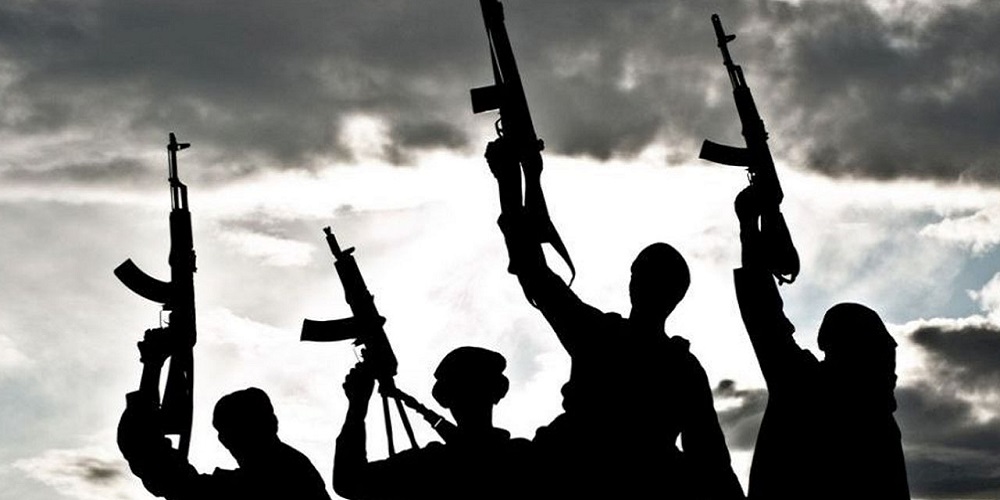
A federal high court in Kogi State has sentenced the mother and sister of slain bandit leader Battujo to 20 years imprisonment each for aiding terrorism and concealing information about his criminal activities.

Justice Hauwa Yilwa handed down the sentence on Friday after the defendants, Safiya Salihu and Halima Abdullahi, pleaded guilty to terrorism-related charges filed by the office of the attorney-general of the federation (AGF).

The Department of State Services (DSS) arrested the women following investigations into Battujo’s activities. The bandit leader was killed by security forces on June 10 during an operation in a forest near Iluke in Kabba/Bunu Local Government Area of Kogi State.

During proceedings, Rotimi Oyedepo, director of public prosecutions of the federation, applied to withdraw two of the five counts against the defendants.

Advertisement

· The women received N490,300 from Battujo despite knowing the money was linked to terrorism
· They accepted sponsorship from him for the hajj pilgrimage using funds suspected to be proceeds of terrorist activities
· They aided and abetted Battujo by passing information to him through telephone conversations
· They concealed information that could have helped security agencies apprehend the bandit leader

According to the prosecution, one defendant failed to report knowledge of Battujo’s activities to law enforcement, while the other withheld information after visiting his forest camp and seeing him in possession of firearms.

Justice Yilwa sentenced each defendant to 20 years imprisonment on the counts to which they pleaded guilty, ordering that the sentences run concurrently. The judge also directed that the convicts undergo rehabilitation after serving their prison terms.

Battujo was among the bandit leaders operating across parts of north-west and north-central Nigeria before he was neutralized in a military operation earlier this month. His death marked a significant victory for security forces battling banditry in the region.

Advertisement
Continue Reading

Trending

Copyright © 2024 Naija Blitz News