News
FG slashes ministers’ imprest to N700,000
- /home/naijuinz/public_html/wp-content/plugins/mvp-social-buttons/mvp-social-buttons.php on line 27
https://naijablitznews.com/wp-content/uploads/2024/09/Taiwo-Oyedele.jpeg&description=FG slashes ministers’ imprest to N700,000', 'pinterestShare', 'width=750,height=350'); return false;" title="Pin This Post">
- Share
- Tweet /home/naijuinz/public_html/wp-content/plugins/mvp-social-buttons/mvp-social-buttons.php on line 72
https://naijablitznews.com/wp-content/uploads/2024/09/Taiwo-Oyedele.jpeg&description=FG slashes ministers’ imprest to N700,000', 'pinterestShare', 'width=750,height=350'); return false;" title="Pin This Post">
The Federal Government has introduced fresh measures aimed at strengthening financial discipline across Ministries, Departments and Agencies by placing new limits on reimbursable imprest and tightening oversight of public funds.

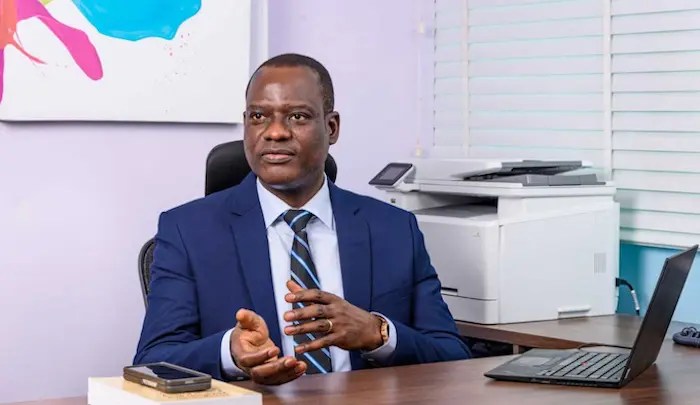
The new directives are contained in the 2026 Annual General Imprest Warrant signed by the Minister of Finance and Coordinating Minister of the Economy, Taiwo Oyedele and conveyed through a Federal Treasury Circular issued by the Office of the Accountant-General of the Federation.
The circular, dated June 3, 2026, and signed by the Accountant-General of the Federation, Shamseldeen Ogunjimi, authorises accounting officers across the three arms of government to approve funds to eligible imprest holders while setting clear spending thresholds and compliance requirements.

According to the circular, ministers will be entitled to a maximum reimbursable imprest of N700,000, while permanent secretaries and directors-general will be limited to N500,000. Directors and heads of departments will be entitled to N300,000, while heads of formations in states and other authorised imprest holders will have a ceiling of N100,000.
The Office of the Accountant-General said the move was in line with the provisions of Financial Regulation 1003 and forms part of efforts to ensure accountability and prudent management of public resources.
The circular stated, “All Accounting Officers in the three arms of government, including Ministries, Extra-Ministerial Offices and Agencies, are hereby authorised to approve funds to eligible imprest holders.”
However, it added that “the limit of reimbursable imprest shall be” N700,000 for ministers, N500,000 for permanent secretaries and directors-general, N300,000 for directors and heads of departments, and N100,000 for heads of formations and other authorised holders.
In another significant directive, the government restricted the frequency of imprest reimbursements.
“The frequency of reimbursement of any standing imprest shall normally be once in a quarter and shall not exceed twice in a quarter where the need arises,” the circular stated.
The government also directed all accounting officers and expenditure controllers to ensure that procurements above N1m are conducted through contract awards in line with existing procurement laws.
“All local procurement of stores and services costing above N1,000,000 shall be made only through the award of contracts, except as otherwise provided by the Public Procurement Act,” the circular noted.
The directive further emphasised strict compliance with financial regulations governing the management and retirement of imprest accounts.
To strengthen monitoring, all self-accounting ministries, extra-ministerial departments and agencies have been directed to submit returns to the Accountant-General within 30 days of the circular.
The returns are expected to contain details of how 2025 imprest allocations were retired, as well as lists of approved imprest holders for 2026 and their locations.
The government also ordered imprest holders to operate dedicated operational bank accounts in compliance with the Federal Government’s electronic payment policy.
According to the circular, monthly reports detailing funds paid into the accounts and evidence of retirement of such funds must be submitted to the Office of the Accountant-General.
The Accountant-General warned that the Treasury Inspectorate Department would conduct routine inspections throughout the financial year and impose sanctions for violations.
“Any breach of the regulations in the operation of imprest accounts shall lead to the withdrawal of the right to issue any imprest by the affected accounting officer, and appropriate sanctions shall be applied accordingly,” the circular stated.
The directive was addressed to senior government officials, including the Chief of Staff to the President, ministers, permanent secretaries, heads of extra-ministerial agencies, service chiefs, the Inspector-General of Police, chairmen of federal commissions and anti-corruption agencies, as well as heads of revenue-generating institutions.
Imprest is a cash advance provided to public officers to cover routine and urgent official expenses that may not require the full government procurement process.
Under Nigeria’s Financial Regulations, imprest holders are required to account for all expenditures through supporting documents and retire such advances before obtaining fresh approvals.
Successive administrations have sought to strengthen controls around imprest management following concerns raised by audit reports and oversight institutions over weak documentation, delayed retirement of advances and instances of misuse of public funds.
The Federal Government has, in recent years, expanded the use of electronic payment systems, tightened treasury controls through the Treasury Single Account policy and strengthened compliance requirements for Ministries, Departments and Agencies as part of broader public financial management reforms aimed at improving transparency, accountability and value for money in government spending.
The latest circular signals the government’s intention to further tighten oversight of cash advances and reinforce adherence to financial regulations across the federal public service.
News
UNN Dismisses Report Of Mass Abduction Of Students
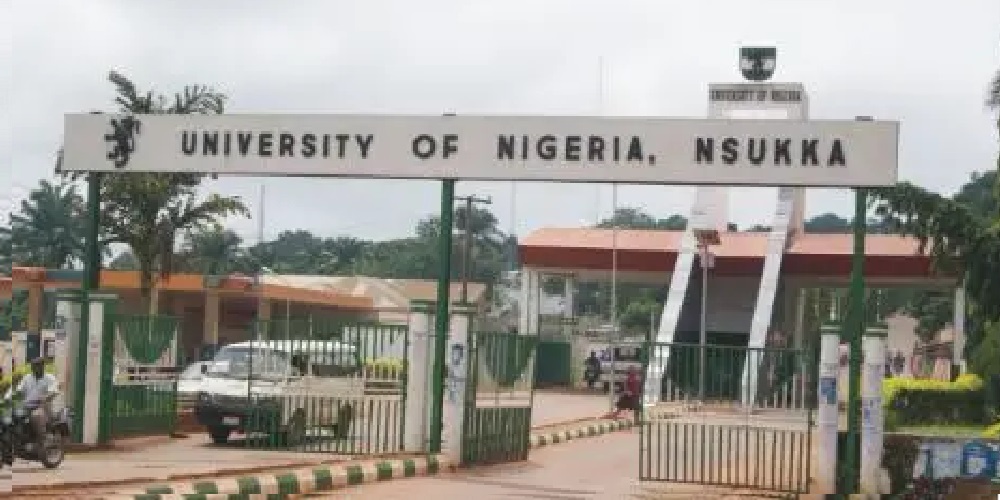
The management of the University of Nigeria, Nsukka (UNN), has dismissed a social media report alleging an impending terrorist attack and mass abduction of students on its Nsukka campus, describing the claim as false and unverified.
The university said there is no credible security intelligence or verified threat supporting the online post currently circulating among students and members of the public.
In a statement issued by the acting public relations officer of the institution, Inya Agha Egwu, the management said the report is unsubstantiated and should be disregarded.
Egwu, however, said the university has taken precautionary measures to further strengthen security across the campus in line with its commitment to the safety of students, staff, and visitors.
According to him, the measures include the deployment of personnel of the Nigeria Police Force and the Nigerian Army to key entry points, working alongside the university’s internal security unit.
He added that some access gates to the Nsukka campus would be temporarily closed to improve monitoring and control of movement in and out of the institution.
The statement also announced the suspension of motorcycle operations within the campus, adding that only authorised security personnel would be allowed to use motorcycles inside the university premises.
Staff who commute using motorcycles were advised to park them at designated areas outside the campus before proceeding to their workplaces.
Egwu urged members of the university community to remain calm and continue their normal academic and administrative activities without fear.
He also warned against the spread of unverified information, noting that such reports could create unnecessary panic and disrupt the peace of the institution.
“Members of the University community are urged not to spread unverified information capable of creating unnecessary anxiety,” he said.
The university further encouraged students and staff to report any suspicious activity to security authorities, stressing that security remains a collective responsibility.
News
Sowore Faults MTN CEO’s Claim On Unlimited Data, Threatens Nationwide Protest
Activist and African Action Congress (AAC) 2027 presidential candidate, Omoyele Sowore, has challenged claims by the Chief Executive Officer of MTN Nigeria, Karl Toriola, that unlimited mobile data plans are virtually non-existent globally unless subscribers pay extremely high fees.
Sowore, in a post on his X handle on Sunday, described the MTN boss’s assertion as false, insisting that millions of consumers across the world have access to unlimited or effectively unlimited mobile and broadband data plans at prices he said are more affordable relative to local incomes than what Nigerians currently pay.
The activist’s reaction came after Toriola made the remarks during a press conference titled: “Data on Trial” held in Lagos where the MTN chief argued that unlimited data plans are not sustainable on mobile networks without compromising service quality.
“The issue of unlimited data on mobile network, it does not exist anywhere in the world, except you are paying $400 a month or whatever. There are high bundles and fair usage policies,” Toriola said.
He added that network capacity constraints make unrestricted data offerings impractical at low prices.
“On mobile networks, it does not really exist. There is a limit, because you can never build enough capacity for everyone to be on an unlimited bundle and you think you will provide quality service that will be decent,” he said.
Responding, Sowore dismissed the claim, insisting it does not reflect global market realities.
“Liars,” Sowore wrote.
He argued that many countries still provide consumers with unlimited or near-unlimited data plans at relatively affordable rates compared to income levels.
“Millions of consumers around the world enjoy truly unlimited or effectively unlimited broadband and mobile data plans at prices that are often cheaper, relative to income, than what Nigerians pay for far less service,” he said.
Sowore also criticised the quality and cost of telecommunications services in Nigeria, calling for improved consumer outcomes.
“Nigerians deserve affordable, reliable, and genuinely consumer-friendly telecommunications services, not endless tariff hikes, poor network quality, and excuses,” he wrote.
He further escalated his position, hinting at possible mass action against the telecom operator.
“The time to #OCCUPYMTN nationwide is fast approaching!” he added.
The exchange comes amid renewed public debate over telecommunications pricing in Nigeria following tariff adjustments approved by the Nigerian Communications Commission (NCC).
Earlier in 2025, the regulator approved increases of up to 50 per cent in voice, SMS, and data tariffs, citing inflationary pressures, naira depreciation, and the need to sustain investment in the sector.
MTN Nigeria has defended the adjustments, maintaining that Nigeria remains among the cheapest markets globally for mobile data services despite the increases.
However, critics, including Sowore, argue that consumers in several countries continue to enjoy better service quality and more affordable unlimited data offerings, intensifying the debate across social media platforms.
News
Only authorised agencies can enforce laws, Ramaphosa condemns Xenophobia
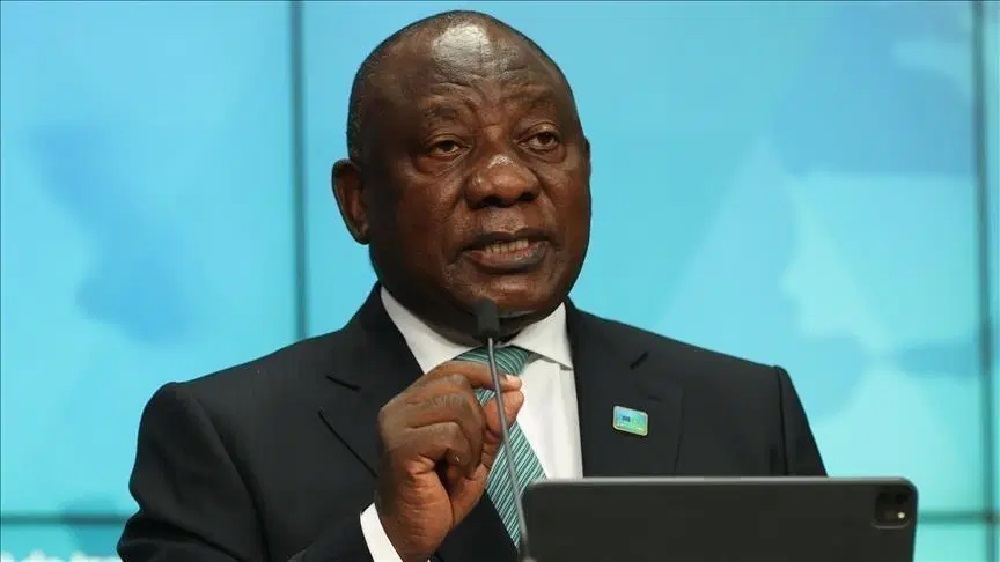
South African President Cyril Ramaphosa has reiterated his government’s commitment to lawful migration management, stressing that violence, intimidation, xenophobia and the spread of misinformation have no place in the country.
Addressing the nation on Sunday, Ramaphosa outlined actions and behaviours that he said are unacceptable, including unauthorised individuals demanding documentation or proof of nationality, blocking access to public services, and acts of violence against foreign nationals.
The President also condemned racism, sexism, xenophobia, Afrophobia and other forms of intolerance, as well as the spread of misinformation, incitement and fake news on social media.
According to Ramaphosa, employers who exploit undocumented workers are equally engaging in conduct that cannot be accepted.
“Only authorised law enforcement agencies may act against violations of the law,” the President said, adding that “all people must be treated with dignity and respect,” regardless of their nationality or immigration status.
Ramaphosa also announced the adoption of a Comprehensive Approach for Migration Management aimed at strengthening border security, enforcing immigration laws, tackling corruption and closing policy loopholes as part of efforts to address illegal immigration in South Africa.
The President said the plan was approved by Cabinet last week and endorsed by the President’s Coordinating Council, which comprises premiers, local government representatives and traditional leaders.
“As government our objective is clear. We want a South Africa where every person who enters the country does so lawfully; a South Africa where immigration laws are respected and enforced; a South Africa where businesses compete fairly; a South Africa where communities feel safe and secure, and a South Africa that remains true to its constitutional values and its commitment to human dignity,” he said.
According to Ramaphosa, the strategy is built on five pillars: cracking down on violations of immigration and labour laws, preventing illegal entry into the country, rooting out corruption in the immigration system, strengthening immigration laws and policies, and enhancing cooperation with other countries to address migration challenges across the region and continent.
On enforcement, the President said government agencies would intensify efforts to identify and deport undocumented foreign nationals residing illegally in the country.
“The Department of Home Affairs, the Border Management Authority, South African Police Service and other law enforcement agencies have been and will intensify the process of identifying and deporting undocumented foreign nationals residing illegally in South Africa,” he said.
Highlighting progress already made, Ramaphosa disclosed that “in the past year alone, the BMA managed to intercept and stop over 450,000 people who were attempting to enter South Africa illegally.”
He also announced plans to establish dedicated immigration courts to accelerate deportation processes involving undocumented migrants.
The President said the second pillar of the strategy focuses on strengthening border management and ensuring authorities know who enters the country, why they are entering and how long they are permitted to stay.
“Secure borders are not a sign of hostility towards other countries. They are a fundamental requirement of a sovereign and well-governed State,” Ramaphosa said.
He added that government would continue investing in modern technology, infrastructure and personnel to secure borders while facilitating legitimate trade, travel and economic activity.
As part of the measures, the government will begin a phased relocation of refugee reception centres to border posts, starting with the Tshwane centre later this year.
Ramaphosa said the third pillar centres on eliminating corruption and improving the efficiency of the immigration system through technology-driven reforms.
“We are continuing the crackdown on corruption and inefficiencies in the Department of Home Affairs.
“We must recognise that illegal immigration is often enabled by corruption. Officials who sell documents, facilitate unlawful entry or abuse public office for personal gain betray the trust of the South African people. We will pursue these cases relentlessly.”
According to the President, officials implicated in such offences are already facing disciplinary and criminal action.
“Those responsible are facing dismissal, criminal prosecution and the full consequences of the law,” he said.
Ramaphosa also cited the establishment of an Intelligent Population Register containing biometric data for every person in the country, describing it as a key step towards the introduction of a Digital ID system.
He said efforts to phase out the green ID book would continue, noting that the document remains vulnerable to identity theft and abuse.
The Department of Home Affairs, he said, would soon announce a deadline after which the green ID book would no longer be recognised.
The President further revealed that the move would help curb abuse of the Traffic Registration Number, which foreign nationals require to register or purchase vehicles.
“The Department of Transport will issue new regulations to align with the identification laws of our country within the next three months,” he said.
Addressing legislative reforms, Ramaphosa acknowledged weaknesses in South Africa’s immigration framework.
“The laws that regulate immigration in South Africa are fragmented and often contradictory. They allow legal loopholes that are exploited by undocumented migrants. We are addressing these loopholes,” he said.
On regional cooperation, the President stressed the need for African countries to work together to tackle the root causes of migration.
“We need to address the factors that drive migration on our continent and elsewhere,” Ramaphosa said.
He added that South Africa would continue collaborating with neighbouring countries and other African nations to create conditions where migration is driven by choice rather than necessity.
“As part of this effort, I will be sending envoys to a number of sister African countries to outline the measures that we are announcing this evening,” he said.
Ramaphosa assured citizens that Cabinet would continue monitoring implementation of the migration strategy and regularly review progress on the measures announced.
-
News15 hours ago‘It’s out of place’ , don’t compare Ogbomoso and Adelabu kidnaps – Presidency tells Nigerians
-
News24 hours agoCBN Imposes N100M Penalty On Inadequate Processing Of Forex Documents
-
Health24 hours agoNARD Issues 21-Day Ultimatum To FG Over Attacks On Doctors
-
Opinion15 hours agoThree years after: “People First” Paradigm: Why Governor Bassey Otu’s Transformative Governance Demands Consolidation and 2nd Term
-
Opinion21 hours agoThe Betrayal of a Movement: How Political Interests Undermined Peter Obi’s Stronghold
-
News20 hours agoReal reason why we banned night vigils – MFM
-
News12 hours agoReps Recover N521.8m VAT From CBN, Targets Additional ₦33bn in Outstanding Liabilities
-
News10 hours ago12 Years On: Suswam’s ₦3.1bn Scam Trial Stalls as Defence Yet to Open Case