

Connect with us

News

Reps Move to Modernise Price Control Law, as Bill Pass Second Reading

Published

on

ADVERTISEMENT
Zoom Ad
ADVERTISEMENT
Zoom Ad

By Gloria Ikibah

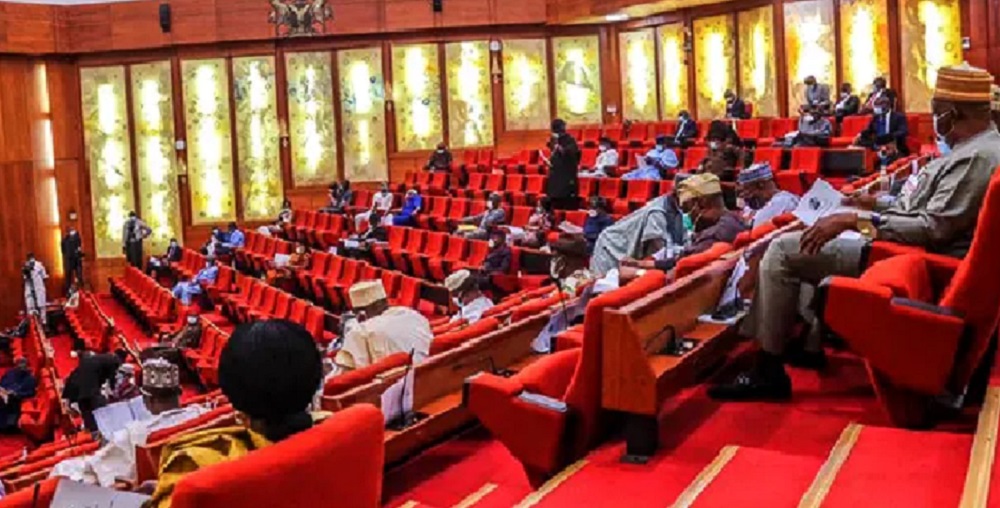
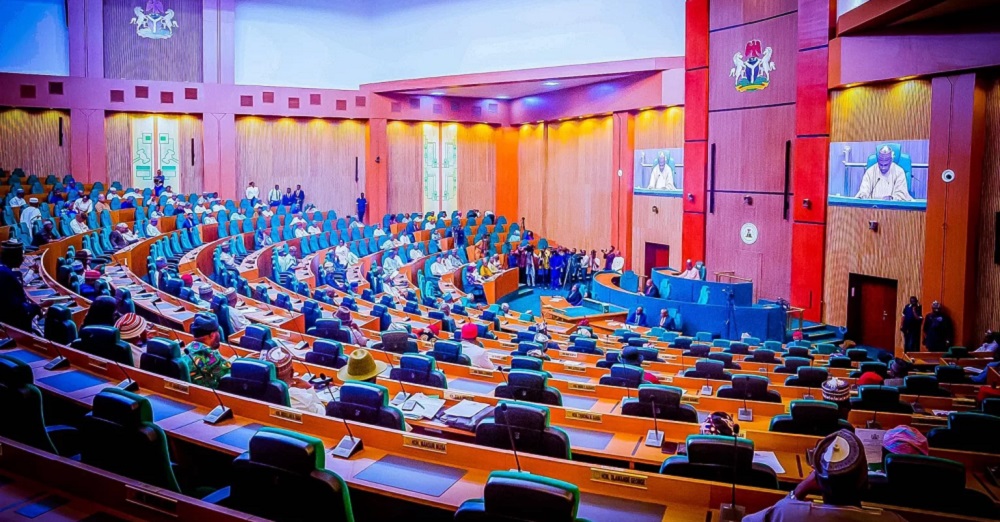
The House of Representatives on Wednesday pushed forward sweeping reforms to Nigeria’s price control regime, as lawmakers approved key bills for second reading amid spirited debate on parliamentary procedure.

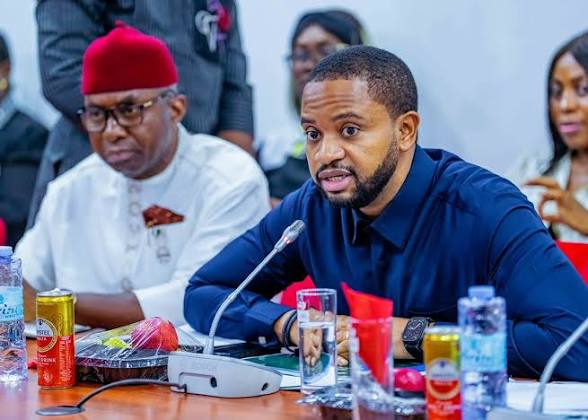
Leading debate on the Bill to amend the Price Control Act, Ahmed Munir, declared that the 1977 legislation had become obsolete and ineffective in the face of present-day economic realities.

“The original intent of the 1977 Act was global, to protect ordinary Nigerians from hoarding, price gouging and artificial scarcity. However, the mechanisms it put in place and the list of commodities it covered are completely out of sync with the economic realities of 2026.

Advertisement

“As it stands today, the Price Control Act is blindly a dead letter law,” he said.

He criticised the existing penalties as “laughably low” and faulted the Act for failing to define essential goods in line with the needs of modern households.

He stressed that the amendment would not amount to a return to rigid price-fixing.

“While inflation has external and structural drivers, we cannot ignore the local menace of unscrupulous middlemen, artificial hoarding and predatory price-fixing by cartels, taking advantage of the vulnerability of our people. The current 1977 Act fails us in two major ways — obsolete penalties and vague and outdated definitions.

Advertisement

“This amendment does not seek a return to archaic, heavy-handed price-fixing, which we know destroys businesses. Rather, it introduces a smart, balanced and realistic regulatory framework.

“This bill is not about suffocating the free market. It is about putting a civilised guardrail on it. It ensures that while businesses make legitimate profits, the desperate situation of our citizens is not weaponised against them by cartels,” Munir argued.

According to him, the proposal will “bring transparency to supply chains and give teeth to the regulatory bodies like the Federal Competition and Consumer Protection Commission”.

He urged colleagues to back what he described as “this vital, people-centred bill.”

Advertisement

When put to a voice vote by the presiding officer, Speaker Tajudeen Abbas, the House unanimously adopted the motion and referred it to the Committee on Commerce for further legislative action.

Continue Reading
Advertisement

News

BREAKING: CBN revokes licences of 46 Microfinance Banks over failure to satisfy regulatory requirements

Published

on

ADVERTISEMENT
Zoom Ad
ADVERTISEMENT
Zoom Ad

The Central Bank of Nigeria (CBN) has revoked the operating licences of 46 microfinance banks across the country, citing their failure to meet key regulatory requirements for continued operation.

The decision takes effect from Wednesday, July 1, 2026, according to a statement issued by the Acting Director of the CBN’s Corporate Communications Department, Hakama Sidi-Ali. The apex bank said the action was taken in line with its powers under Sections 12 and 13 of the Banks and Other Financial Institutions Act (BOFIA), 2020, and was approved by the CBN Governor, Olayemi Cardoso.

According to the CBN, the affected institutions lost their licences after failing to satisfy the conditions required to remain licensed financial institutions.

The bank explained that the revocation was based on one or more regulatory infractions, including insufficient assets to meet liabilities, shutting down operations without obtaining CBN approval, prolonged inactivity and cessation of financial intermediation, failure to commence business within 12 months after receiving a licence, and failure to maintain the minimum capital requirements without impairment from accumulated losses.

Advertisement

The CBN described the move as part of its ongoing efforts to strengthen the nation’s financial system and ensure that all licensed financial institutions operate in compliance with existing laws and prudential regulations.

“The revocation of the licences is part of the Bank’s ongoing efforts to safeguard the stability of the financial sector, protect depositors, and ensure that licensed institutions comply with current laws and regulatory requirements,” the statement said.

The apex bank reiterated its commitment to maintaining a safe, sound and resilient financial system, stressing that it would continue to take appropriate supervisory and regulatory measures where necessary to sustain public confidence in Nigeria’s banking sector.

Advertisement
Continue Reading

News

Tinubu Hails Wike’s Performance, Says All FCT Districts Now Feeling Impact of Governance(Photos)

Published

on

ADVERTISEMENT
Zoom Ad
ADVERTISEMENT
Zoom Ad

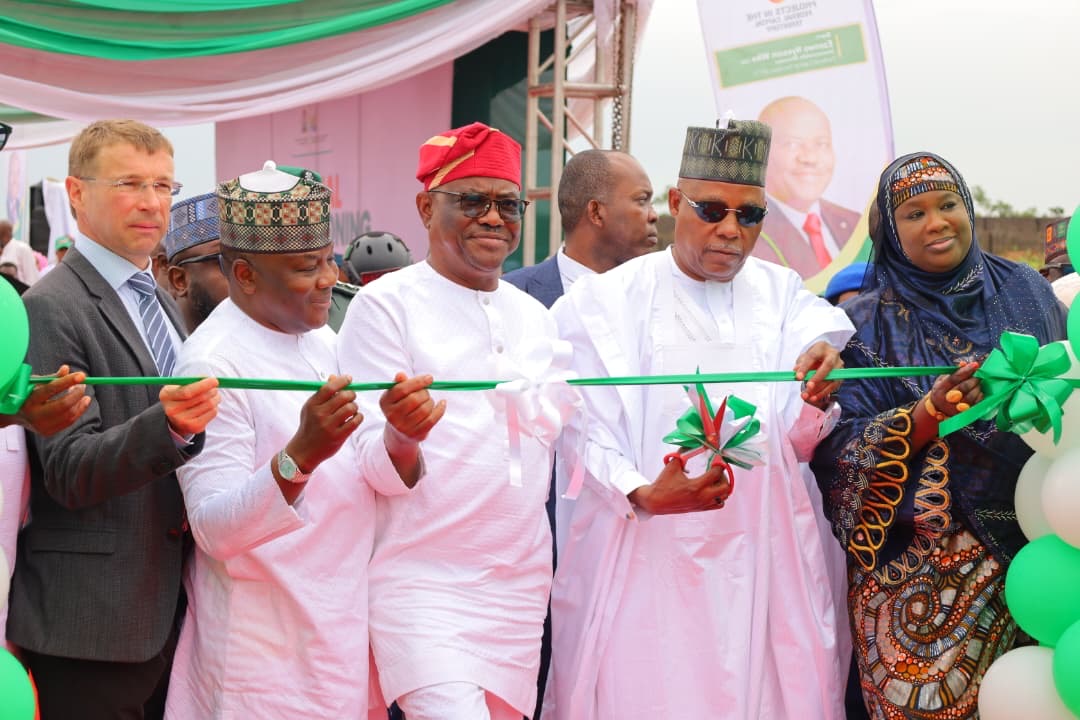
President Bola Ahmed Tinubu on Wednesday hailed the performance of the Federal Capital Territory (FCT) Minister, Nyesom Wike, declaring that it has become very evidently clear that all districts in the FCT are now feeling the impact of governance through completed projects that improve the quality of life of residents.

The President, represented by Senate President Godswill Akpabio, spoke while commissioning the Full Scope Development of Akinwumi Ajibola Street, comprising Important Local Streets (ILS) 16, 18 and 19, in Gaduwa District, Abuja.

Describing the project as a practical demonstration of the Renewed Hope Agenda, Tinubu said his administration was focused on delivering projects that address the everyday needs of Nigerians.

“We are here to open a road, but more importantly, we are here to restore access. The Full Scope Development of Akinwumi Ajibola Street is now complete and open for use. In this government, we measure ourselves by finished work. This street is finished work,” he said.

According to the President, residents of Gaduwa endured years of hardship despite owning homes in the district because there was no motorable road linking them to their properties.

“For years, families in Gaduwa built homes here in good faith, yet they had no motorable road to reach those homes. When the rains came, the place became impassable. That is not how a capital city treats its citizens. Under the Renewed Hope Agenda, we came to work, and today that promise is visible on these streets,” he added.

Tinubu commended the Minister of the Federal Capital Territory, Barr. Nyesom Wike, for changing what he described as the culture of project delivery in Abuja through effective supervision, prompt funding and timely completion of projects.

“When the Honourable Minister reviewed the files and saw the neglect, he did not issue another memo. He brought contractors back to site, gave clear targets and backed those targets with funding.

Advertisement

“You have changed the culture of delivery in the FCT. You ended the era of mobilisation without movement and abandoned inner roads. You are taking development from the city centre into the districts and satellite towns so that no resident is left behind. You have my confidence and my commendation,” the President said.

He noted that the completed road would improve mobility, reduce travel time, enhance property values and provide safer access for residents through the provision of drainage and streetlights.

Tinubu also urged residents to protect the infrastructure by preventing vandalism and ensuring drainage channels remain free of refuse.

“We will not stop here. Across the FCT, from the city centre to the area councils, our task is to finish what matters, connect what was separated and ensure that public funds translate into public value,” he said.

Advertisement

Earlier, FCT Minister Barr. Nyesom Wike said the commissioning formed part of the 16th project in the administration’s ongoing 31-day project inauguration programme marking President Tinubu’s third year in office.

According to him, the President had directed upon assumption of office that every district in the FCT must benefit from government projects, irrespective of whether they are located in the city centre or satellite communities.

“You instructed us that every district in the FCT must feel the impact of this administration. Today, I can confidently say that no district can claim it has been neglected. We have taken development to Jahi, Gwarimpa, Katampe, Guzape, Kwali and now Gaduwa,” Wike said.

The minister attributed the rapid execution of projects to the cordial working relationship between the Executive and the National Assembly, which ensured timely budget approvals and releases.

Advertisement

He also cautioned the Abuja Municipal Area Council (AMAC) against naming roads constructed by the Federal Government without due approval.

“If the Federal Government constructs the roads, permission must be obtained before naming them. Do not wait for us to build roads before putting names on them or using them to generate revenue,” he warned.

In her remarks, the Minister of State for the FCT, Dr. Mariya Mahmoud, described the commissioning as another milestone in the implementation of the Renewed Hope Agenda.

She said the project reflected the administration’s commitment to people-oriented infrastructure that improves mobility, enhances economic activities and raises the living standards of residents.

Advertisement

Mahmoud commended President Tinubu, Wike, the National Assembly, contractors, consultants, traditional rulers, security agencies and residents of Gaduwa for their contributions to the successful completion of the project, assuring that the FCT Administration would sustain the pace of infrastructure development across the territory.

Continue Reading

News

BREAKING: Borno Sch Releases Identities Of 36 NECO Candidates Still In Boko Haram Captivity After Invasion

Published

on

ADVERTISEMENT
Zoom Ad
ADVERTISEMENT
Zoom Ad

The identities of the students abducted by suspected Boko Haram terrorists during Monday’s attack on Government Day Secondary School, Lassa, in Askira/Uba Local Government Area of Borno State, have emerged, as school authorities confirmed that 36 candidates remain in captivity.

Documents obtained from the school show that the missing students comprise 25 female and 11 male candidates who were writing the ongoing National Examinations Council (NECO) Senior School Certificate Examination when the terrorists stormed the school.

The development provides the first comprehensive account of those still unaccounted for following the brazen attack that once again exposed the vulnerability of schools in Nigeria’s insurgency-ravaged North-East.

The list indicates that although security forces mounted a rescue operation shortly after the attack, only seven abductees have so far regained their freedom.

Advertisement

Those rescued comprise five female students and two teachers.

A teacher who was among those rescued told SaharaReporters that 43 persons were initially abducted, including 41 students and two teachers, leaving 36 students still in Boko Haram captivity.

The media had earlier reported that troops of Operation HADIN KAI, backed by Nigerian Air Force surveillance and strike aircraft, pursued the fleeing terrorists into the bush, engaged them in a firefight and rescued some of the victims.

Security sources also disclosed that the troops recovered motorcycles used by the insurgents during the operation.

Advertisement

Speaking to the media on Wednesday, a staff member of the Government Day Secondary School, who requested anonymity for security reasons, said the attack came at a heavy cost.

According to the source, one teacher, one Nigerian soldier and a local hunter were killed during the exchange with the terrorists.

“They paid the supreme sacrifice while trying to stop the terrorists from taking away the students,” the source said.

The attack occurred while students were sitting for their NECO examinations after the insurgents reportedly infiltrated Lassa community on motorcycles, disguising themselves as soldiers and operatives of the newly created Forest Guards on the town’s market day before launching the assault. Security officials said the gunmen fired sporadically, killing a teacher before whisking away students into nearby forests.

Advertisement

The Borno State government has since confirmed that the abducted students are between 15 and 18 years old, while efforts involving the military, police, Civilian Joint Task Force (CJTF) and local vigilantes are continuing to secure the release of those still being held.

The latest mass abduction has renewed concerns over the persistent targeting of schools by Boko Haram and its breakaway faction, ISWAP, despite repeated assurances by Nigerian authorities that educational institutions in the North-East are adequately protected.

The media had also reported that the terrorists struck Lassa barely a day after another kidnapping incident in the same Askira/Uba axis, where several women working on their farms were abducted, highlighting the worsening security situation in southern Borno.

Advertisement
Continue Reading

Trending

Copyright © 2024 Naija Blitz News