Foreign
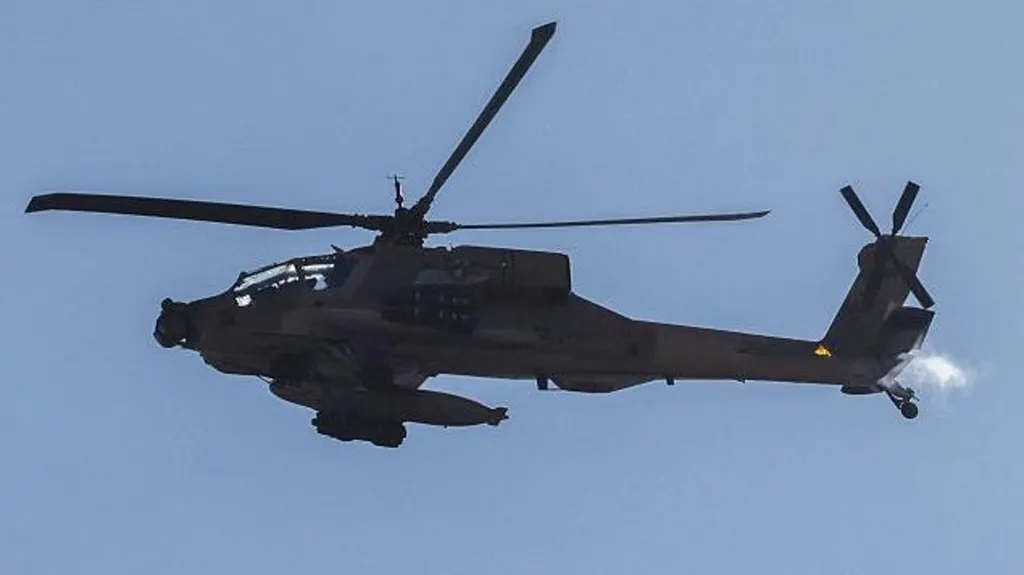
US and Iran exchange fire after American patrol helicopter downed in Hormuz
- /home/naijuinz/public_html/wp-content/plugins/mvp-social-buttons/mvp-social-buttons.php on line 27
https://naijablitznews.com/wp-content/uploads/2026/06/ertrh-1-1000x575.jpg&description=US and Iran exchange fire after American patrol helicopter downed in Hormuz', 'pinterestShare', 'width=750,height=350'); return false;" title="Pin This Post">
- Share
- Tweet /home/naijuinz/public_html/wp-content/plugins/mvp-social-buttons/mvp-social-buttons.php on line 72
https://naijablitznews.com/wp-content/uploads/2026/06/ertrh-1-1000x575.jpg&description=US and Iran exchange fire after American patrol helicopter downed in Hormuz', 'pinterestShare', 'width=750,height=350'); return false;" title="Pin This Post">
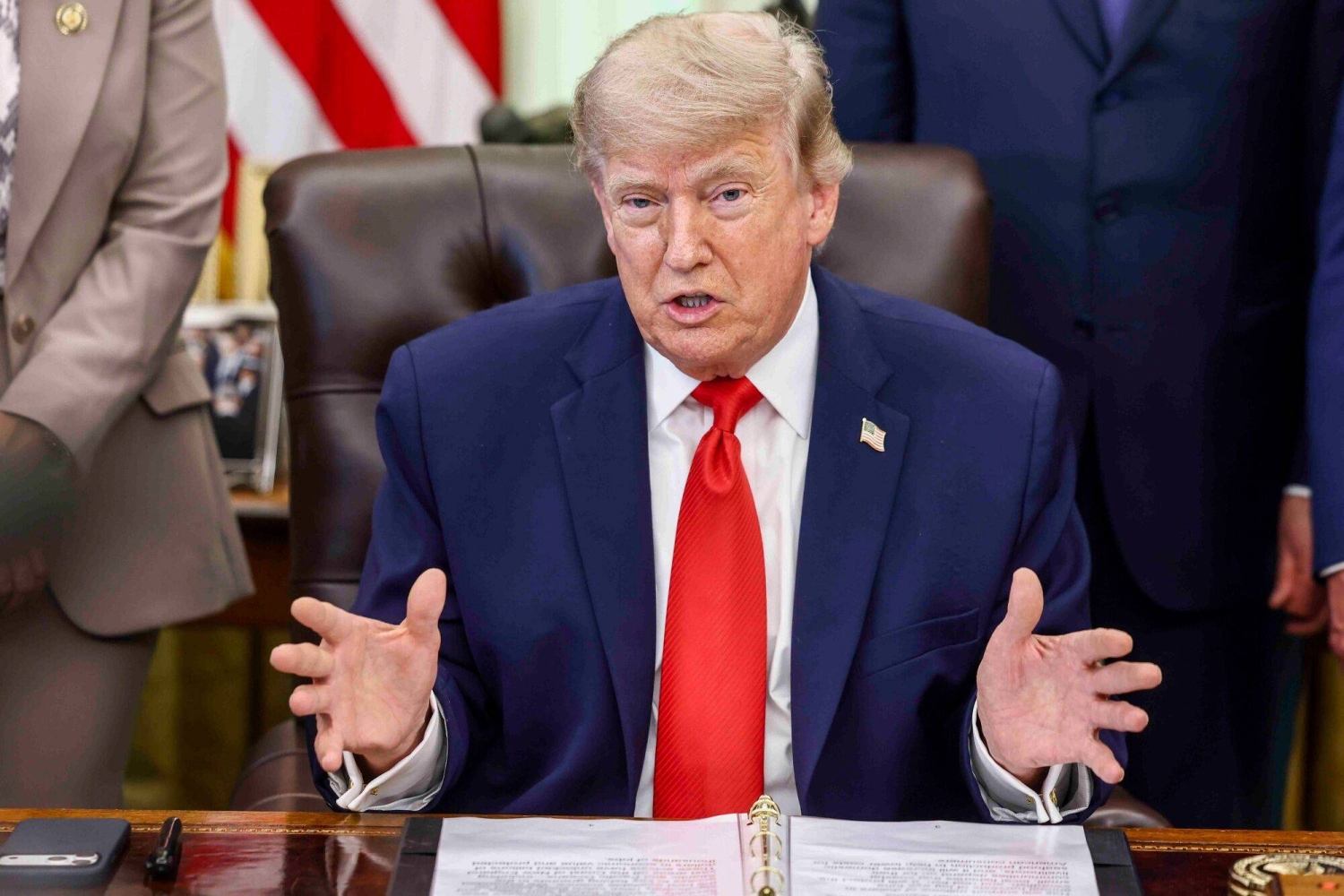
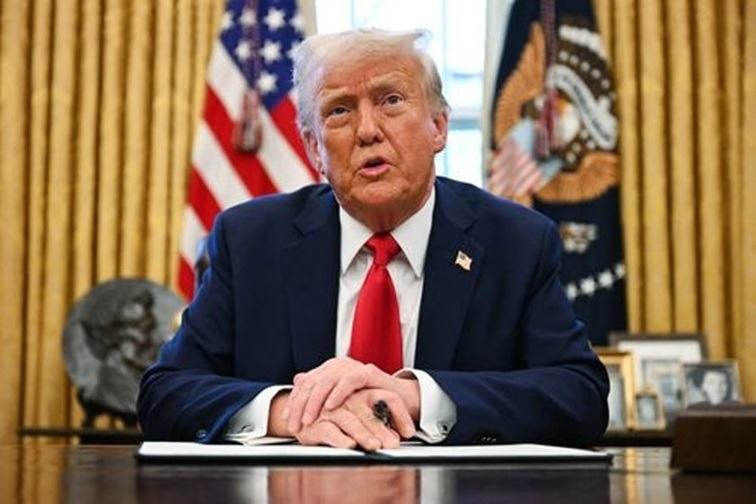
The US and Iran have exchanged fire after President Donald Trump blamed Tehran for the downing of an American military helicopter over the Strait of Hormuz on Monday.

The US Central Command (Centcom) said it launched airstrikes at Iranian targets at 17:00 ET (21:00 GMT) on Tuesday and later said the operation was complete.
In response, Iran’s Islamic Revolutionary Guard Corps (IRGC) said it launched strikes on two US bases in the region, one in Bahrain and the other in Jordan, while Kuwait’s army said it was also intercepting an attack.

The US has described its strikes as “a proportional response” for the Apache helicopter downing, while the IRGC described the attacks as “vicious”.
The exchange of fire comes after two crew members of the downed helicopter were rescued by an American sea drone on Monday, Centcom said. It was the first time the US military publicly confirmed that type of vessel was used in such an operation.
According to US officials, Iran used a drone to launch the attack on the helicopter. But it’s not clear whether the Iranian drone had deliberately attacked, an unnamed US official told CBS News, the BBC’s US partner. The semi-official Mehr News Agency reported that Iran had not claimed responsibility for the downed aircraft.
In response, Centcom said US fighter jets “struck Iranian air defense, ground control stations, and surveillance radar sites near the Strait of Hormuz”.
The IRGC said US strikes had damaged a telecommunications tower and two water tanks.
Iran said the US had targeted the cities of Jask and Sirik, and Qeshem – an island in the Gulf.
Centcom released the statement saying the mission was “completed” just over three hours after it announced an initial wave of strikes triggered by the downing of the US helicopter on Monday.
US officials are yet to comment on reports of attacks on its bases and it is unclear if there has been any damage. However, an air raid alert was issued in Bahrain, according to local authorities who said Iranian attacks had been repelled.
US President Donald Trump said earlier on Tuesday the downed helicopter had been patrolling the Strait of Hormuz, a critical shipping channel that was effectively closed days after the US launched its first strikes on Iran in late February.
“There were two pilots involved, both are safe and uninjured,” Trump wrote on Truth Social. “Nevertheless, the United States must, of necessity, respond to this attack.”
In Washington, US House Speaker Mike Johnson said he was in the room with Trump when he decided that US attacks on Iran should resume.
“We lament that it became necessary,” said the top Republican in Congress, adding that “we’re gonna have to take care of this business”.
Iran’s foreign minister issued a threat to the US in the aftermath of the renewed US attacks, saying the country “will leave no attack or threat unanswered”.
“Despite its defeats on the battlefield, the US opted to test our determination,” Iran’s Foreign Minister Abbas Araghchi wrote on X.
He added: “Leave our region if you want to be safe.”
Araghchi said on Tuesday that foreign forces near Iran’s territory were at “constant risk on account of their own human errors, plain accidents or potentially being caught in crossfire”.
“To reduce risk, best solution is for them [foreign forces] to leave,” the Iranian leader said in a post on X.
Minutes before Trump’s comments on the downed American Apache helicopte on Tuesday, Iran’s top negotiator in peace talks with Washington, Mohammad Baqer Qalibaf, took to social media to signal retaliation.
“We prefer the language of diplomacy, but we speak other languages far more fluently. Break your commitments, and we’ll switch to what we speak best.”
“You ride the horse you saddled!,” he wrote.
The flare-up between the US and Iran comes after Israeli forces carried out strikes across southern Lebanon on Tuesday.
Tehran had warned that Israeli attacks on southern Lebanon would trigger another wave of retaliatory strikes.
Israel and Iran halted attacks on each other after exchanging fire over the weekend for the first time since April’s truce.
Trump publicly told both countries to “immediately stop ‘shooting’” because they were jeopardising negotiations between Washington and Tehran on a deal to end the regional war.
He said on Truth Social that Israel and Iran are looking to do “an immediate ceasefire” but peace is “subject to ignorance or stupidity getting in its way”.
On Tuesday he also told journalists: “We’re in the final throes of what will be a very, very good deal,” adding that it could take “two or three days” and the Strait of Hormuz would open immediately after.
Foreign
UK announces social media curfew for 16, 17-year-olds
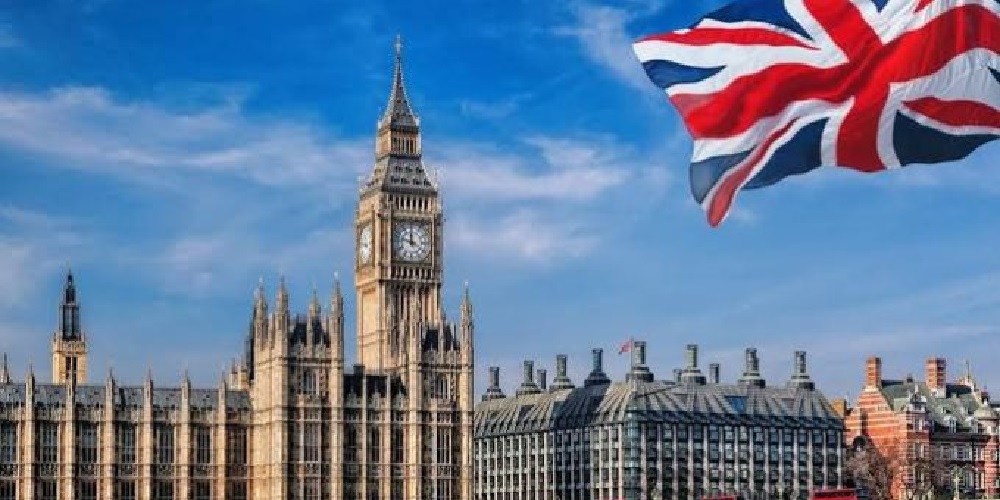
Children aged 16 and 17-year-olds in the UK will face a voluntary overnight social media curfew, alongside a shutdown of infinite scrolling and mandatory breaks in AI chatbot use, under new plans announced by Technology Secretary Liz Kendall.
According to a report by The Independent UK on Tuesday, the measures form part of the government’s wider restrictions on children’s social media use, and will see default settings block access for older teenagers between midnight and 6 am.
Kendall, in a statement, said, “These measures will be crucial in helping young people get the sleep they need, focus on school and college, and spend more quality time with family and friends, all of which are fundamental to building a happy, healthy and fulfilling adult life.
“We want young people to enjoy the benefits of technology while having the tools to make the online world a place where they can thrive.”
The Independent said features designed to keep users engaged, such as never-ending video reels and algorithmic feeds, will also be automatically switched off under the new defaults.
However, the report noted that critics have questioned how effective the measures will be, given that 16 and 17-year-olds will be able to turn off these default settings themselves.
The curfew plan follows last month’s announcement of a broader social media ban for under-16s by Prime Minister Sir Keir Starmer’s government, expected to cover platforms including Snapchat, TikTok, YouTube, Instagram, Facebook and X, but not messaging services such as WhatsApp and Signal, from next spring, according to the newspaper.
The report added that responsibility for working out key details of the policy will fall to Andy Burnham, who is set to become prime minister after winning the Makerfield by-election.
Kendall is also reportedly pushing new safeguards for children using artificial intelligence, including requiring under-18s to take regular breaks while using chatbots, and a crackdown on AI services that give dangerous, misleading or unverified mental health advice.
Ministers are said to be considering banning chatbots deemed a serious threat to children.
Conservative shadow education secretary Laura Trott reportedly criticised the plan, describing it as “another dog’s dinner from Labour” and arguing that curfews teenagers can simply switch off “won’t achieve anything.”
Foreign
South Africa Confirms Visa-Free Entry for 22 African Countries, Excludes Nigeria
The South African government has reaffirmed its visa exemption policy, allowing citizens of 22 African countries to enter the country without obtaining a visa in advance, subject to the permitted duration of stay and applicable entry conditions.
According to the country’s official visa exemption policy, eligible travellers may enter South Africa for periods ranging from 30 to 90 days, depending on their nationality.
The African countries currently eligible for visa-free entry include:
Algeria – up to 30 days
Benin – 30 days or less
Botswana – up to 90 days
Cabo Verde (Cape Verde) – 30 days or less
Comoros – up to 90 days
Côte d’Ivoire (Ivory Coast) – up to 30 days
Gabon – 30 days or less
Guinea – up to 90 days
Kenya – up to 30 days
Lesotho – 30 days or less
Madagascar – up to 30 days
Malawi – 30 days or less
Mauritius – 30 days or less
Mozambique – up to 90 days
Namibia – 30 days or less
Rwanda – up to 30 days
Seychelles – 30 days or less
Eswatini – 30 days or less
Tanzania – up to 90 days for ordinary passport holders
Tunisia – up to 90 days
Zambia – 30 days or less
Zimbabwe – up to 90 days
South Africa also grants visa-free entry to holders of the African Union Laissez-Passer and the Southern African Development Community (SADC) Laissez-Passer under its exemption policy.
Authorities, however, noted that visa-free access for some countries, including Kenya, Benin and Gabon, is subject to specific conditions. Travellers are therefore advised to confirm the latest entry requirements with South African authorities before making travel arrangements.
Notably, Nigeria is not among the countries currently eligible for visa-free entry into South Africa, meaning Nigerian passport holders are still required to obtain a visa before travelling.
Foreign
At least 27 killed, eight critically injured in Bangkok bar fire
At least 27 people have been killed and eight left critically injured after a fire tore through a bar in Bangkok’s popular Chatuchak district.
Firefighters were called to the scene just after midnight on Monday, and discovered patrons fleeing through the flame-enveloped front door of the venue.
Eyewitnesses say the fire started near the bar’s stage and spread rapidly. Footage posted on X show flames blasting out of the bar as people are seen running out, some screaming and falling over.
This is not the first time such incidents have occurred in Thailand. Despite official promises to improve fire and electrical safety standards following previous accidents, they are still often poorly enforced.
Firefighters arrived at the scene just after midnight, reportedly after a passing driver saw the venue on fire around 23:30 local time. He told local news outlet the Daily News that he leapt out of his car and broke windows to help two people escape.
The official cause of the fire is still under investigation, said Prime Minister Anutin Charnvirakul.
He also told reporters that he had spoken to a musician, who was performing when the fire started, who recounted what happened.
“He said that there was a fire at the cut-out switch, and after that things happened very quickly. There was blasting and everybody tried to flee from the smoke and flames,” he said.
“Many of them were not able to make their way out because they went to the back of the building and tried to hide themselves from the smoke and flames in the toilet, and that’s where we found most of the bodies.”
Firefighters were reportedly able to bring the flames under control in about half an hour, but despite this – some nine men and 18 women were killed, and more than 60 are being treated in hospital, eight of whom are critically injured.
Initial findings suggest that majority of the victims had died from smoke inhalation, said Suriyachai Raviwan, the director of Bangkok’s disaster department. However, he added, further investigation was needed to confirm this.
One motorcyclist, Surin Jaiharn, told AFP that he helped about five people flee the burning bar, using clothing to extinguish flames on their bodies.
“I feel depressed. I saw many deaths and I do not know the fate of the people I helped,” he told AFP.
As of Monday morning, the bar – Rong Beer Na Lat Phrao – has been cordoned off, with shattered windows and furniture piled up outside its entrance. An acrid smell of burning lingers in the air.
Confronting pictures taken after the fire had been brought under control show many body bags lined up outside the bar, and a large cordon around the area.
Inside, the furniture, walls and ceiling are completely blackened, and parts of the ceiling is peeling off.
Bangkok governor Chatchart Sittipunt visited the scene and claimed the fire had spread quickly through the flammable interior decorations on the bar’s ceiling. Toxic smoke from the burning decorations might have also caused victims to lose consciousness, he added.
There were also reports of numerous people found unconscious near the building’s emergency exit, said Chatchart, who added that there might have been tables or other objects obstructing the area.
“However, this matter requires a thorough and official investigation by forensic officers,” he added.
This is not the first time such an incident has occurred.
Four years ago another fire in a bar in a town south of Bangkok killed 22 people; in 2009, 66 people died in a nightclub fire in the capital.
-
News24 hours agoUnited States Lobbying Firm Offers Asylum Support To Adeniyi Adeyemi Amid PFIPC Scandal
-
News14 hours agoVIDEO: DAY 25 of Projects Commissioning in FCT: Watch Wike’s brief dancing steps
-
News24 hours agoArmy Hands Over Rescued Oyo Teachers, Pupils To Governor Makinde
-
News19 hours agoSAD: UK based young Nigerian mum takes own life over mental challenges
-
News19 hours agoOrire: Nigerian Army gives reasons why drones could not locate kidnappers
-
Sports23 hours agoDutch Referee Rob Dieperink Dies Weeks After World Cup Removal
-
News23 hours agoTinubu Made Buhari President — And Buhari Returned the Favor, Gowon Reveals
-
News23 hours agoMakinde Urges UN To Probe Circumstances Surrounding Oyo Schoolchildren’s Abduction