

Connect with us

News

ECOWAS Parliament Convenes High-Level Dakar Summit to Drive Renewable Energy Push in Rural West Africa

Published

on

ADVERTISEMENT
Zoom Ad
ADVERTISEMENT
Zoom Ad

By Gloria Ikibah

The ECOWAS Parliament is set to convene a major regional meeting in Dakar aimed at advancing renewable energy deployment and expanding electricity access to millions of people living in rural communities across West Africa.

The five-day Delocalised Joint Committee Meeting, scheduled for June 15 to 19, will bring together Members of Parliament, representatives of ECOWAS institutions, government officials, development partners, private sector stakeholders, civil society organisations and energy experts to examine practical solutions for accelerating rural electrification throughout the region.

The meeting will be held under the theme, “Harnessing Renewable Energy for Rural Electrification and Empowerment of Rural Economies in the ECOWAS Region: The Role of the ECOWAS Parliament”, will be organised by the Joint Committee on Energy and Mines, Agriculture, Environment and Natural Resources, and Infrastructure under the Sixth Legislature of the ECOWAS Parliament.

Advertisement

The gathering comes against the backdrop of persistent energy deficits across many rural communities in West Africa, where millions of residents still lack access to reliable electricity despite notable progress in recent years. Limited electricity access continues to affect key sectors, including agriculture, education, healthcare, digital connectivity and economic productivity.

With ECOWAS targeting universal access to sustainable and affordable energy by 2030, participants are expected to focus on the role of parliamentary action in advancing that objective and supporting policies that encourage investment and innovation in the energy sector.

Central to the discussions will be the potential of decentralised renewable energy solutions, including solar mini-grids, hybrid energy systems and stand-alone solar installations, to close the electricity access gap in underserved areas.

Delegates will also assess how West Africa can better harness its vast but largely untapped solar and hydropower resources to meet growing energy demand.

Advertisement

The meeting will further review major regional energy frameworks, including the ECOWAS Renewable Energy Policy (EREP), the Energy Efficiency Policy (EEEP), the updated ECOWAS Energy Policy and the Regional Electricity Market (REM).

Participants will also evaluate the contributions of the ECOWAS Centre for Renewable Energy and Energy Efficiency (ECREEE), the West African Power Pool (WAPP) and the ECOWAS Regional Electricity Regulatory Authority (ERERA) in strengthening regional energy integration.

One of the key features of the programme will be a field visit to a renewable energy installation in Senegal. During the visit, lawmakers will engage directly with beneficiary communities, local entrepreneurs, women and youth groups to gain first-hand insight into the impact of rural electrification on livelihoods, economic activity and community development.

At the end of the meeting, Members of Parliament are expected to adopt a set of recommendations aimed at reinforcing regional rural electrification initiatives, attracting greater investment into renewable energy infrastructure and strengthening parliamentary oversight of ECOWAS energy policies and programmes.

Advertisement

The outcomes of the Dakar meeting are expected to contribute to ongoing efforts to bridge the energy access gap and support sustainable economic growth across the ECOWAS region.
Continue Reading
Advertisement

News

Xenophobia: Senate Demands Probe Into Attacks On Nigerians In South Africa

Published

on

ADVERTISEMENT
Zoom Ad
ADVERTISEMENT
Zoom Ad

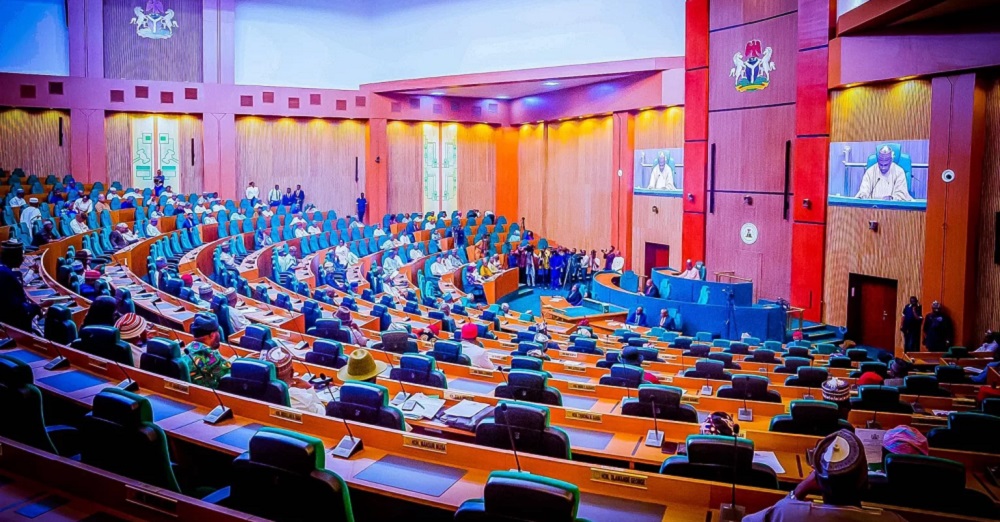
The Senate has mandated its Committee on Foreign Affairs to investigate the renewed wave of xenophobic attacks against Nigerians in South Africa and report back within two weeks to guide the Federal Government on appropriate diplomatic and policy responses.

The resolution followed a motion sponsored by Senator Asuquo Ekpenyong (APC, Cross River South), during which lawmakers unanimously condemned the attacks that have claimed lives and destroyed properties of many Nigerians.

The debate, which took place on the floor of the Senate on Tuesday, became intense as several senators advocated tougher measures against South Africa, with Senator Abdul Ningi (PDP, Bauchi Central) calling on President Bola Tinubu to begin the process of severing diplomatic ties with the country should the attacks continue.

“We can’t pretend those killed are not Nigerians. We are representing Nigerians. When we say caution, what do we mean by that? We can’t be condemning and not doing anything.

Advertisement

“The centrepiece of Nigeria’s foreign policy has to change. Let’s sever relations with South Africa. Enough is enough. Silence is no longer golden,” Senator Ningi said.

He stated that over 1,200 Nigerians were being repatriated from South Africa and argued that Nigeria’s foreign policy should be reassessed. His prayer was, however, turned down.

Also contributing to the debate, Senator Adams Oshiomhole (APC, Edo North) proposed that Nigeria should appropriate the profits of South African companies operating in the country, including financial institutions, and use them to fund and compensate Nigerian victims of xenophobic attacks.

“We can’t allow our people to suffer while South African investment and profit are being taken away here; the facts are self-evident. We don’t need further investigation,” the former Edo governor said.

Advertisement

However, the Deputy Senate President, Barau Jibrin, who presided over the plenary, urged lawmakers to exercise restraint pending the outcome of the committee’s investigation.

“Let the committee on foreign affairs investigate first. Nigeria leads Africa. We need to lead by example. Once we have well-informed facts, we can take action. If this report is not satisfactory to this chamber, then we will take the line you were taking,” he said.
Following Barau’s intervention, Senator Ningi agreed to withdraw his proposal for the immediate severance of diplomatic relations but insisted that the Senate records should reflect that the motion had been formally moved and seconded.
At the end of the debate, the Senate directed its committee on foreign affairs to investigate the recurring xenophobic attacks and submit its report within two weeks.

This is to enable the Senate to recommend appropriate actions for the Federal Government in addressing the situation.
FG Threatens Action

Their action followed a renewed wave of xenophobic attacks in South Africa. A June 30 deadline was issued to undocumented and illegal immigrants by groups in the country.

Advertisement

This has led to protests marked by looting, with several foreigners of African origin killed in the
Since then, several countries in Africa, including Nigeria, have begun the repatriation of their citizens who feel unsafe in South Africa.

On Sunday, the Federal Government warned that it could activate unspecified measures if the attacks and targeting of Nigerians continue.

In a statement, the Ministry of Foreign Affairs condemned the killing of two Nigerians in South Africa, saying the incident occurred at a time when foreigners were increasingly being targeted in South Africa, raising concerns over deliberate attempts to wrongly portray law-abiding Nigerians as criminals.

It placed South Africa on notice, warning that if the situation persists, “all options remain on the table”, with some to be activated if what it described as the country’s “uncultured and provocative trend of intolerance and apartheid-style behaviour against foreigners” is not addressed.

Advertisement

“Therefore, the systematic targeting of Nigerian nationals who are legally residing in South Africa is not acceptable, and their safety should be guaranteed,” the statement read in part.

Continue Reading

News

Photos: We’ll replicate FCT’s infrastructural strides in every part of Nigeria – Tinubu

Published

on

ADVERTISEMENT
Zoom Ad
ADVERTISEMENT
Zoom Ad


President Bola Tinubu has reiterated his administration determined to replicate the infrastructural stride being recorded in the Federal Capital Territory (FCT) in every part of the country.

Tinubu made the promise in Abuja on Tuesday, while inaugurating the newly constructed Transitway N2, from Central Business District to Wuse District, with two bridges by the Federal Capital Territory Administration (FCTA).

The president, who was represented by the Senate President, Senator Godswill Akpabio, said that the move would ensure every part of the country is developed with roads, bridges, railways, and more.

This, according to him, will ensure that no region is left behind in the quest for a more developed and secured Nigeria.

Tinubu said that the Transitway project symbolised progress and a reflection of his administration’s Renewed Hope Agenda, committed to building infrastructure that serves the people, unlocks economic potentials, and supports sustainable growth and development.

“This infrastructure is a very important piece of the FCT’s Master Plan, designed to ease traffic flow, enhance connectivity, and improve urban mobility for millions of commuters, residents, and businesses alike in the territory.

“For years, traveling between Wuse and the Central Area meant navigating bottlenecks, losing productive man-hours, and enduring frustrating traffic gridlocks. Today, all that has changed.

“By cutting down travel times and bridging these two major districts, we are opening up new commercial corridors,” he said.

The president commended the FCT Minister, Mr Nyesom Wike, for the ongoing transformation of FCT in line with the Abuja Master Plan.

“You have contributed to something larger than a roadway; you have contributed to the future of our capital city and therefore given pride to Nigeria,” Tinubu said.

Advertisement

In his remarks, Wike described the Transitway as a critical road corridor that seamlessly connects Wuse with the Central Business District.

The minister attributed the successes being recorded in the delivery of infrastructure in FCT to the overwhelming support of Tinubu, particularly the removal of the Administration from the Treasury Single Account.

The minister said that on July 17, the last day of the projects’ inauguration, he would present what Tinubu had done for the people of the FCT and for Nigerians in the last three years.

“There are so many things Mr president has done that we have not made public so that Nigerians will know why we must continue to pray and support him,” he said.

He assured FCT residents that all roads that were not on the Google map would be captured to enable residents to navigate through the city with ease.

On her part, FCT Minister of State, Dr Mariya Mahmoud said that the newly completed corridor was a strategic investment in connectivity, economic growth and urban efficiency.

Advertisement

Mahmoud added that the road corridor also represents another fulfilled promise in the FCTA’s resolve to build a modern and inclusive capital city.

Earlier, Mr Richard Dauda, acting Executive Secretary, Federal Capital Development Authority, said that the project, the first major realisation of the construction of Transitways in Abuja city was awarded in October 2025.

Dauda described the Transitway as a mixed traffic corridor designed to carry both vehicular and rail traffic through the city, and particularly connecting the sector centers.

“The corridor is designed to support integrated mass transit infrastructure, including light rail in the median and dual carriage roads on each side of the rail to inter-modal terminals at intervals.

Advertisement

“It is part of the larger mass transit system, which aims to connect the city center with other districts and satellite towns through the inner and outer transit loops,” he said.

He added that the Transitway in the Abuja Master Plan was designed as a continuous transport corridor that radiates from the transportation centres, located in the Central Area, runs through districts like Garki and Wuse in Phase I of the city.

He said that the corridor also runs through the four phases of the city, dissecting sector centres on both the northern and southern development corridors forming a loop.

“In full development, the northern flank of the Transitway covers almost 52 kilometres (km) and the southern flank covers almost 64 km,” he added.

Advertisement
Continue Reading

News

DAY 20 of Projects Commissioning in the FCT:See aireal view of transit way N2(Photos)

Published

on

ADVERTISEMENT
Zoom Ad
ADVERTISEMENT
Zoom Ad

President Tinubu To Commission Transit Way N2 from Central Business District to Wuse District With Two Bridges Today

#ProjectsFCT2026
#FCT31DaysCommissioning

Continue Reading

Trending

Copyright © 2024 Naija Blitz News