

Connect with us

Foreign

Hormuz to reopen on Sunday after US-Iran sign deal-Trump

Published

on

ADVERTISEMENT
Zoom Ad
ADVERTISEMENT
Zoom Ad


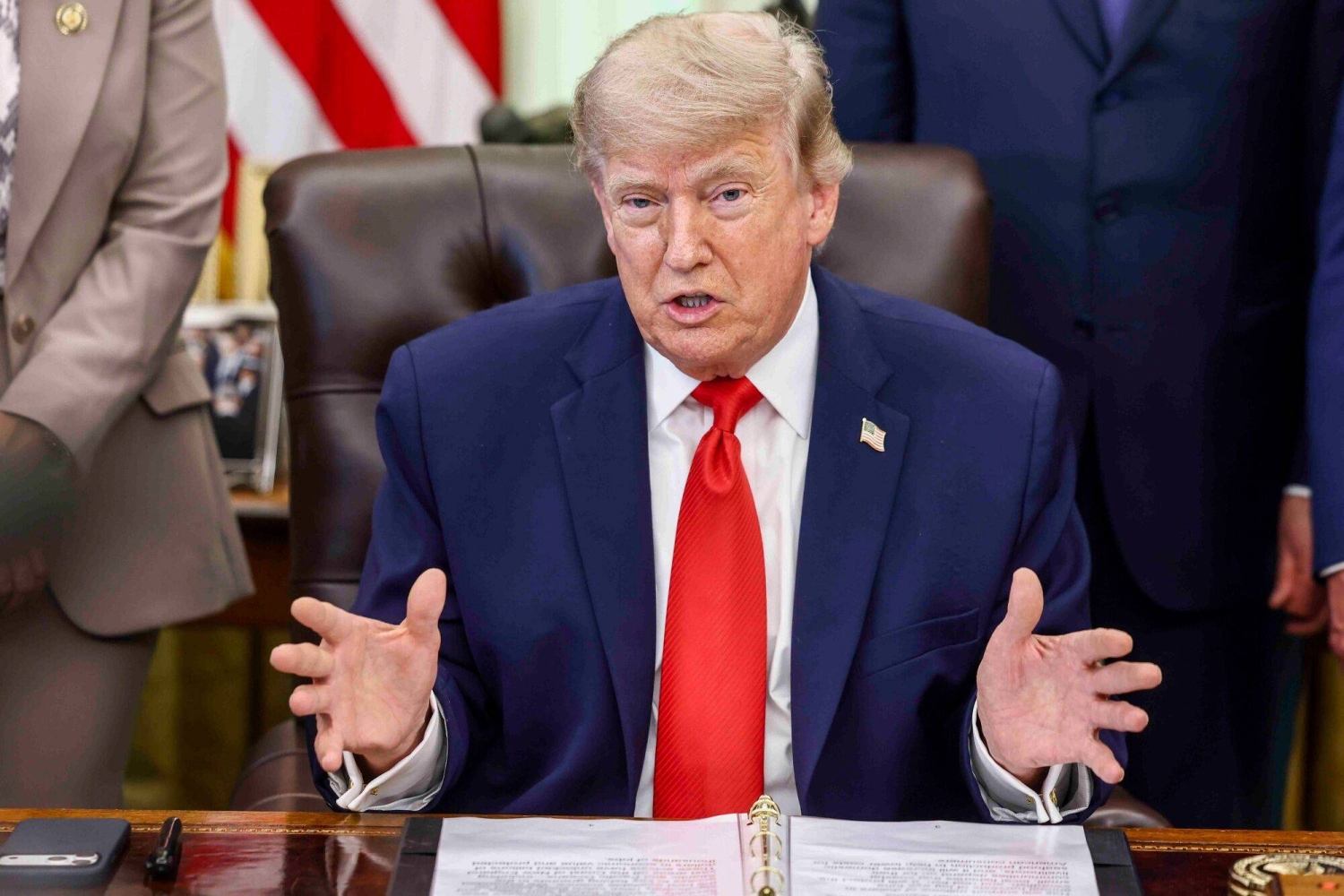
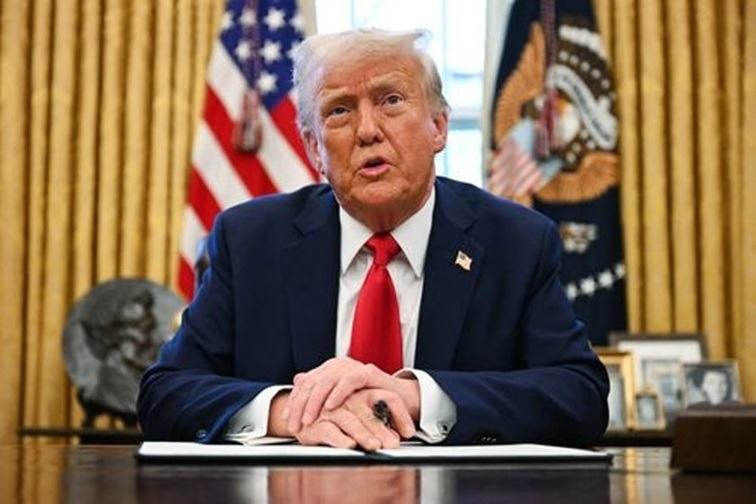
US President Donald Trump said that a deal with Iran to end the war in the Middle East could be signed on Sunday, and that the strategic Strait of Hormuz would be “open to all” immediately after.

Iran had offered a different timeline earlier in the day, but nonetheless signalled an agreement was in the offing, as both the warring parties and their mediators expressed increasing optimism that weeks of halting negotiations were drawing to a close.

The leader of key mediator Pakistan said a deal was closer “than ever before”.

Advertisement

The “finalisation” of this agreement is expected “within the next 24 hours”, Pakistani Prime Minister Shehbaz Sharif said Saturday on X, adding that it will be signed electronically, without going into further detail or specifying what this would involve.

He said “technical level talks” are expected to follow next week.

The momentum came in spite of fresh skirmishes in the Strait of Hormuz, which Iran has blockaded since early in the war, throwing global markets into turmoil.

“The Deal is scheduled to get signed tomorrow, and immediately after it is signed, the Hormuz Strait is OPEN TO ALL,” a post on Trump’s official Truth Social platform read on Saturday.

Advertisement

Since an April 8 truce paused the worst of the fighting, Trump has repeatedly insisted a deal was imminent, only for the wrangling to drag on.

Iranian foreign ministry spokesman Esmaeil Baqaei had said earlier on Saturday that the date of the signing was yet to be determined, but “it will not be tomorrow”.

However, he added: “The possibility of this happening in the coming days cannot be ruled out.”

The warring parties have nonetheless released conflicting information about the contents of the deal, as each seeks to show it emerged from the war with the upper hand.

Advertisement

Tehran has insisted it will maintain control over the Strait of Hormuz, a key maritime trade route for oil and gas shipments from the Gulf.

Since imposing its blockade, Iran has demanded that vessels obtain permission from its armed forces before transiting the waterway, and has established a new body to oversee it and collect tolls.

The US has responded with its own blockade of Iranian ports.

The US military’s Central Command said earlier Saturday Iran had “launched multiple one-way attack drones in an attempt to strike commercial ships transiting the Strait”.

Advertisement

It added that “US forces have downed all of them in recent hours”.

Iran’s Foreign Minister Abbas Araghchi, in an interview with state television on Friday, had said the deal on the table called for the lifting of the US naval blockade.

“The administration of Strait of Hormuz will no longer be the same as before,” he added, calling the waterway one of Iran’s “main instruments of deterrence”.

The US has repeatedly said Iran remaining in control of the strait would be unacceptable, and Trump’s post made no mention of tolls or other arrangements.

Advertisement


– ‘Nuclear dust’ –

Another key sticking point in the talks has been the fate of Iran’s nuclear programme, particularly its stockpile of highly enriched uranium — believed to have been buried by US strikes last year during a previous short-lived war.

Iran has long insisted its nuclear programme is peaceful and that it has a right to enrichment, but the United States, Israel and other Western governments suspect it of seeking a bomb.

Advertisement

Araghchi on Friday said the only way to deal with Iran’s enriched uranium “is to dilute it inside Iran”.

Trump, who has justified the war as necessary to prevent Iran from obtaining nuclear weapons, previously said the US would remove and destroy the uranium.

In Saturday’s post, he said: “When all is calm, we will go in and get the Nuclear Dust… and downblend and destroy it, whether in Iran, or the United States.”

“Hopefully, this process will all work out quickly, easily, and smoothly,” he added. “If it doesn’t, we have the ultimate alternative, hopefully never to be used again!”

Advertisement

Prime Minister Benjamin Netanyahu of Israel — which launched the war in tandem with the US in February — said Trump had promised him any agreement would include the removal of the enriched nuclear material.

In the streets of Tehran, there was scepticism that the latest agreement would cross the finish line.

“I don’t think there is any deal soon,” said Saeed Sadeghi, 49. “I don’t trust their word.”

Fars news agency shared a video from Iran’s northeastern city of Mashhad showing dozens protesting the deal outside a foreign ministry building on Saturday.

Advertisement

It showed women in black chadors chanting “death to dishonourable Araghchi, the infiltrator”, while waving red and black flags.

Foreign

Iranian Commander Issues “One-for-One” Threat to US Over Citizen Deaths

Published

on

By

ADVERTISEMENT
Zoom Ad
ADVERTISEMENT
Zoom Ad

A senior Iranian military commander has threatened that one US soldier would be killed for every Iranian citizen killed in US attacks, marking a sharp escalation in rhetoric as tensions between Tehran and Washington continue to intensify.

Ali Abdollahi, commander of Iran’s Khatam al-Anbiya Headquarters, said on Friday that what he described as a principle previously demonstrated on the battlefield would now become an official equation governing Iran’s response.

According to Abdollahi, any US attack resulting in the death of an Iranian citizen would trigger a direct response against American forces.

“For every martyr from the proud people of the Islamic Republic of Iran, one American force will be eliminated,” he said.

Advertisement

He concluded his message with a strongly worded warning directed at US forces, saying they had been issued what he described as “a one-way ticket to hell.”

The remarks come as military tensions between Tehran and Washington continue across the region, with both sides exchanging threats amid the ongoing conflict.

Separately, Iranian Foreign Minister Abbas Araghchi said Tehran would not accept a temporary ceasefire under any circumstances unless its demands regarding the Strait of Hormuz are met.

Araghchi said the current dispute with Washington is not the result of a lack of mediators, noting that Pakistan and Qatar continue to play mediation roles. Instead, he argued that the core issue lies in US policies, which he said must change.

Advertisement

Responding to a question about discussions with counterparts from Russia, China, Ukraine, and Pakistan, Araghchi said Iran maintains continuous and organized consultations with Moscow and Beijing and engages in dialogue whenever opportunities arise.

He added that recent meetings with Chinese Foreign Minister Wang Yi and Russian Foreign Minister Sergey Lavrov provided an opportunity to discuss the conflict in greater detail.

Regarding Pakistan, Araghchi said it was natural to discuss mediation initiatives and proposals with Islamabad but reiterated that the fundamental problem between Tehran and Washington is not the absence of mediators but US policy.

Araghchi also stressed that Iran would not yield to what he described as American pressure or intimidation.

Advertisement

“Iran has shown that it will not bow to US coercion. We do not respond to the language of force, pressure, or threats. We are not afraid of threats, we do not submit to pressure, and we do not accept the language of intimidation,” he said.

He reaffirmed that protecting the Iranian people and safeguarding Iran’s interests in the Strait of Hormuz remain fundamental and non-negotiable principles for Tehran, adding that Iran would maintain its current position until what he described as the legitimate demands of the Iranian people are achieved.

Continue Reading

Foreign

Biya’s Long Absence Raises Fresh Questions In Cameroon

Published

on

By

ADVERTISEMENT
Zoom Ad
ADVERTISEMENT
Zoom Ad

Cameroon is facing renewed political debate as President Paul Biya remains outside the country for 48 days, raising concerns among opposition leaders and many citizens over delays in government decisions and the country’s leadership.

Biya, 93, who has ruled Cameroon for more than four decades and is the world’s oldest serving head of state, left the country on June 7 for what officials described as a brief private visit to Europe with his wife, Chantal Biya.

Since then, he has remained in Switzerland, where he has frequently travelled over the years.

His prolonged stay has again led to rumours about his health. Earlier reports claimed he had been admitted to a clinic in Geneva, but Cameroon’s Communication Minister, Rene Emmanuel Sadi, denied the reports on June 18, insisting that the president had not been hospitalised.

Advertisement

Despite the government’s assurance, opposition parties say Biya’s continued absence has left the country without active leadership.

Mamadou Mota, vice-president of the Cameroon Renaissance Movement (MRC), said the situation reflects a clear gap in the country’s institutions.

The leader of the Cameroon Democratic Union (UDC), Patricia Tomaino Ndam Njoya, also called on the government to create a clear legal process for determining when a president is temporarily or permanently unable to carry out official duties.

The ruling party has rejected claims that the country lacks leadership. Higher Education Minister Jacques Fame Ndongo said President Biya remains fully involved in government work and continues to receive and review official documents wherever he is staying.

Advertisement

This is not the first time Biya’s absence has attracted public attention. In late 2024, he also spent about 50 days outside Cameroon, leading to similar concerns.

The opposition Social Democratic Front (SDF) described the country as operating without active direction, saying government activities appear to be continuing without proper leadership.

Many Cameroonians have also expressed frustration over the slow pace of government decisions. Viviane Ondoua Biwole, a public management professor at the University of Yaounde, said many people are tired of waiting for changes. She noted that the current government has remained in office for eight years, while many citizens expected a cabinet reshuffle after the last election.

Biya secured an eighth presidential term in the October election, but the result sparked protests across the country. Security forces moved against demonstrators, and the government later confirmed that several dozen people died during the unrest, although it did not release a full casualty figure. Opposition parties rejected the election outcome, while several Western embassies reacted with caution.

Advertisement

In his New Year’s address on December 31, Biya promised to appoint a new government in the coming days. More than seven months later, no new cabinet has been announced.

At the same time, municipal and parliamentary elections have been postponed several times, allowing current office holders to remain in their positions beyond their expected terms.

Although Cameroon has introduced some constitutional and institutional changes, including replacing the heads of both chambers of parliament in March and creating the office of vice-president through constitutional reforms in May, no one has yet been appointed to fill the new position.

The uncertainty has also encouraged the spread of false information. In June, fake documents made to resemble an official presidential decree were sent to a state-owned radio station in the capital, claiming that a vice-president had been appointed. Journalists verified that the documents were not genuine and refused to broadcast the claim.

Advertisement

As questions continue over who could eventually succeed Biya, political observers say there are reports of disagreements among people close to the president.

According to political analyst Stephane Akoa, different groups within Biya’s inner circle are competing for influence, while First Lady Chantal Biya is becoming more involved in government matters and is increasingly mentioned in discussions about appointments and key decisions.

Under Cameroon’s constitution, if the presidency becomes vacant and no vice-president has been appointed, Senate President Aboubakary Abdoulaye would take over temporarily until a new presidential election is held.

Advertisement
Continue Reading

Foreign

US Court Announces Date For Trial Of Ousted Venezuelan President Maduro

Published

on

By

ADVERTISEMENT
Zoom Ad
ADVERTISEMENT
Zoom Ad

A United States’ court on Wednesday fixed June 2027 for the trial of ousted Venezuela’s president, Nicolas Maduro and his wife, Cilia Flores.

Recall that the US military captured the duo in a stunning nighttime raid in January 2026.

Both have been held in a Brooklyn jail for over seven months after pleading not guilty to federal drug trafficking and firearms charges.

Recall that American commandos arrested the couple from their compound in Caracas on January 3.

Advertisement

READ ALSO: JAPA: Trump Unveils Stricter Visa Rules For International Students, Journalists

The lightning operation combined naval, air and ground forces, deposing the strongman who had led Venezuela since 2013.

During the 20-minute hearing on Wednesday, Judge Alvin Hellerstein set the trial date for June 1 next year following a joint request from prosecutors and defense counsel.

Meanwhile, protesters with signs reading “Free President Maduro” gathered outside the Manhattan courthouse waving Venezuelan flags, while opposing demonstrators held placards calling Maduro and Flores “dictators.”

Advertisement
Continue Reading

Trending

Copyright © 2024 Naija Blitz News