Connect with us

News

ECOWAS Parliament Pushes Renewable Energy as Key to Unlocking Rural Prosperity

Published

on

ADVERTISEMENT
Zoom Ad
ADVERTISEMENT
Zoom Ad

…as lawmakers, experts, development partners seek practical solutions to West Africa’s electricity deficit

By Gloria Ikibah

The ECOWAS Parliament has opened a five-day high-level meeting in Dakar with a renewed call for greater investment in renewable energy, positioning rural electrification as a critical tool for economic growth, job creation and sustainable development across West Africa.

The Delocalised Joint Committee Meeting brings together parliamentarians, government officials, energy specialists, development partners and private sector stakeholders to examine ways of expanding electricity access in rural communities, where millions of residents remain disconnected from reliable power despite the region’s vast renewable energy resources.

Advertisement

The gathering is expected to focus on policy reforms, financing mechanisms and legislative frameworks needed to accelerate the deployment of clean energy solutions throughout the sub-region, under the theme, “Harnessing Renewable Energy for Rural Electrification and Empowerment of Rural Economies in the ECOWAS Region: The Role of the ECOWAS Parliament” .

Declaring the meeting open on behalf of the Speaker of the ECOWAS Parliament, Rt. Hon. Hadja Memounatou Ibrahima, the Fourth Deputy Speaker, Hon. Billay Tunkara, emphasised that renewable energy must be viewed not only as a means of supplying electricity but also as a powerful instrument for transforming rural economies.

“Renewable energy is not merely a technical response to electricity demand. It is a key driver in transforming economic activities, particularly in rural areas,” he said.

Tunkara commended Senegal for its commitment to energy transition efforts and acknowledged the country’s drive towards greater energy independence. He noted that investments in solar power and diversification of energy sources had contributed significantly to improving electricity access in rural communities.

Advertisement

He also called on member states to intensify efforts to ensure that renewable energy becomes a vehicle for inclusive growth and social development across the region.

“Together, let us make rural electrification through renewable energy a catalyst for the economic empowerment of women, young people and farmers. Access to clean energy is a fundamental right, a factor in social peace and a driver of sustainable development”, he added.

The Deputy Speaker further urged governments across the ECOWAS region to strengthen support for renewable energy programmes through innovative financing arrangements, technology transfer initiatives, local manufacturing and stronger parliamentary oversight of regional energy policies.

In his welcome remarks, Head of the Senegalese Delegation to the ECOWAS Parliament, Hon. Guy Marius Sagna, described the conference as a crucial opportunity for West Africa to advance its quest for energy sovereignty and sustainable development.

Advertisement

He expressed concern that electricity access in many rural areas remains critically low despite the region’s abundant renewable energy potential.

“Our country, the Republic of Senegal, is deeply honored and truly enthusiastic to host this meeting, whose theme resonates particularly strongly as a call to action. A call to make the development of renewable energy a key component of our energy sovereignty.

“The figures speak for themselves. In our ECOWAS region, access to electricity for rural households is still capped at around 12 percent, while our region boasts exceptional solar potential. This gap between our resources and their exploitation is a challenge that we must collectively and urgently address”, he added.

According to Sagna, achieving energy independence is essential to addressing broader socio-economic challenges such as poverty, unemployment, food insecurity and underdevelopment.

Advertisement

Earlier, Chairperson of the Joint Committee on Energy and Mines, Agriculture, Environment and Natural Resources, and Infrastructure, Hon. Fanta Conte, highlighted the urgency of tackling the widening gap between energy demand and supply across the region.

“Less than 40 percent of the rural population has access to electricity. In some of our Member States, this rate falls below 10 percent in the most remote areas,” she said.

Conte noted that inadequate electricity access continues to undermine healthcare services, agricultural productivity, educational opportunities and income generation, particularly for women and young people living in rural communities.

She also emphasised the responsibility of lawmakers in ensuring that regional energy policies are translated into effective national legislation and implemented successfully.

Advertisement

“Our role is to ensure that commitments made at the regional level, particularly the ECOWAS Renewable Energy Policy and the Energy Efficiency Action Plan, are effectively transposed into national legislation and, above all, implemented on the ground,” she stated.

The committee chair expressed optimism that the deliberations, which include technical sessions and a field visit to renewable energy projects in Mboursine village, would yield practical recommendations capable of accelerating rural electrification and driving sustainable economic growth throughout the ECOWAS region.

The meeting is expected to continue until June 19, culminating in recommendations aimed at strengthening regional energy cooperation and expanding access to clean, affordable and reliable electricity across West Africa.

Advertisement
Continue Reading
Advertisement

News

Troops Rescue 14 abductees, recover 281 rustled livestock in Sokoto

Published

on

ADVERTISEMENT
Zoom Ad
ADVERTISEMENT
Zoom Ad

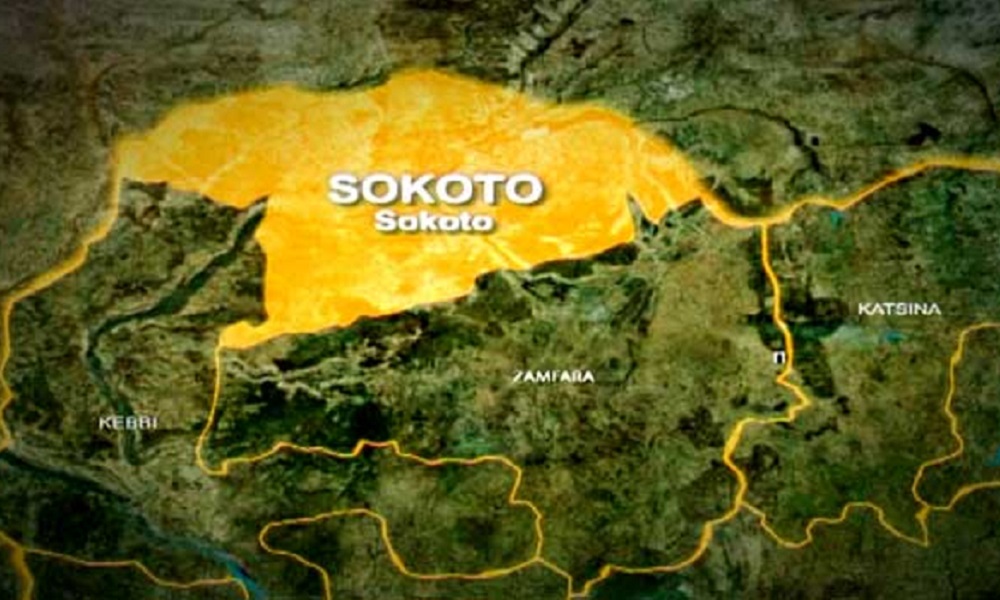
Troops of the Nigerian Army’s 8 Division Garrison have rescued 14 kidnapped victims and recovered 281 rustled livestock following an operation against bandits in Shagari Local Government Area of Sokoto State.

A security source familiar with the operation disclosed the development to journalists in Sokoto on Wednesday.

The source, who requested anonymity, said the troops responded swiftly to a distress call on Tuesday after bandits attacked Horo Birni Village and abducted several residents while rustling livestock.
According to the source, the troops intercepted the bandits as they were moving the kidnapped victims and the stolen animals, forcing them to abandon their captives and flee.
The operation led to the successful rescue of all 14 victims and the recovery of 281 livestock.

The source attributed the success of the operation to the troops’ prompt response and effective collaboration among security agencies.
“The troops are always battle-ready to tackle all forms of criminality in the country but need sustained community support and vigilance,” the source said.

Advertisement

In a related development, operatives of the Enugu State Police Command have rescued four kidnap victims during separate operations in Enugu and neighbouring Benue State, while recovering the body of another victim who was allegedly killed by his abductors.

The Command’s spokesperson, SP Daniel Ndukwe, said the rescues were carried out through coordinated intelligence-led operations involving police operatives, the Nigerian Army, the Enugu State Forest Guards, neighbourhood watch personnel, vigilante groups and the Benue State Civil Protection Guards.
One of the operations led to the rescue of two brothers who were abducted at Ezimo-Ulo in Udenu Local Government Area of Enugu State.
According to Ndukwe, operatives from the Udenu Police Division, the Anti-Kidnapping Section of the Command’s Violent Crime Response Unit (VCRU), the Distress Response Squad (DRS) and the Orukam Police Division of the Benue State Police Command tracked the kidnappers to Ikele in Owukpa Community, Ogbadibo Local Government Area of Benue State.

The operation, which also leveraged the Inspector-General of Police’s Handshake Patrol initiative, culminated in a gun battle that forced the kidnappers to flee with suspected gunshot wounds, allowing the victims to be rescued safely.

Security operatives recovered 15 rounds of live ammunition, the victims’ Android phones and car keys, other mobile phones and accessories, a bottle containing substances suspected to be hard drugs and related paraphernalia, clothing items and ₦11,800 from the kidnappers’ hideout.
The victims were later debriefed and reunited with their family.

Advertisement

In a separate operation, operatives of the Umabor Police Division, working with the Anti-Kidnapping Section of the VCRU, the Enugu State Forest Guards and neighbourhood watch personnel, rescued two other victims who had been kidnapped at Amukpa Village in Ogbozara Community, Nsukka Local Government Area.

Police, however, said another victim did not survive the ordeal. His decomposing body was recovered from a forest, where investigators believe he died from gunshot wounds inflicted by the kidnappers while in captivity.
Ndukwe said investigations were ongoing and that security operatives had intensified efforts to track down the fleeing suspects involved in both incidents.

Continue Reading

News

Finally, Woro Abductees Regain Freedom — Kwara Govt

Published

on

ADVERTISEMENT
Zoom Ad
ADVERTISEMENT
Zoom Ad

No fewer than 176 abducted during the deadly February 3 terrorist attack on Woro and Nuku communities in Kaiama Local Government Area of Kwara State have regained their freedom.

The development was announced on Wednesday in a post on the official Facebook page of the Kwara State Government, which was sighted by our correspondent.

The government wrote, “Alihamdulillaah and kudos to President Bola Ahmed Tinubu GCFR, security forces, and everyone who played a role in this huge feat. We are grateful!”

The victims, who are mostly women and children, were abducted by bandits on February 3, 2026.

Advertisement

Addressing a Channels Television crew in her office, the Commissioner for Communication, Bola Olukoju, expressed appreciation to President Tinubu, the military hierarchy, and the state governor for their roles in securing their release.

She said efforts to secure their freedom had been ongoing, adding that the exact number of those released could not be disclosed yet until further information is received from the military, who currently have the victims in custody.

“Yes, our Woro victims have been released. We are still awaiting more details from the military, but first and foremost, we would like to say a big thank you to the President, Bola Ahmed Tinubu, and the Nigerian military, and our governor, Mallam AbdulRahman Abdulrazak, who hasn’t rested since it happened,” the commissioner said.
“And he has been on it. When people ask: what is he doing? What has been going on behind the scenes, but because it’s a security issue, we can’t tell people about what we are doing.
“But to God be the glory; they have been released. We’re expecting more details.”

Advertisement
Continue Reading

News

Osun Poll: Imole Campaign Council Accuses EFCC of Using Anti-Graft Powers to Influence Election

Published

on

ADVERTISEMENT
Zoom Ad
ADVERTISEMENT
Zoom Ad

By Gloria Ikibah

The Imole Campaign Council (TICC) has accused the Economic and Financial Crimes Commission (EFCC) of abusing its statutory powers by freezing the Osun State Government’s accounts barely days before the governorship election of the state, alleging that the action amounts to political interference aimed at undermining the democratic process.

In a statement issued on Thursday by the Chairman Media and Publicity Committee, Rep. Bamidele Salam, the campaign council described the development as an unprecedented misuse of authority capable of disrupting governance and denying residents access to essential public services.

Salam argued that the timing of the action, coming about 10 days before the governorship election in which the incumbent governor is seeking re-election, raises serious concerns over the motive behind the decision.

Advertisement

He said: “The Imole Campaign Council (TICC) has accused the Economic and Financial Crimes Commission (EFCC) of going outside its mandate by interfering in the upcoming governorship election in Osun State, describing the freezing of Osun State Government account a few days to the election as a brazen abuse of authority and attack on the people.

“It is quite ludicrous that a body set up to fight infractions in the society is invariably enabling it. Nothing, other than politics can accurately explain the reprehensible action of the EFCC to freeze the account of Osun State Government just 10 days to election which the incumbent is a candidate.”

The council contended that the freezing of the state’s accounts had effectively crippled the government’s ability to discharge its constitutional responsibilities.

According to Salam, the action could affect the payment of workers’ salaries and pensions, execution of infrastructure projects, security operations and other essential public services.

Advertisement

“By implication, the EFCC as a body set up by law is frustrating a sub-national government from carrying out its lawful duties of payment of salary and allowances, pensions, fixing infrastructure, addressing security challenges and carrying out other duties which the Nigerian Constitution has entrusted unto the state”, he added.

The council further alleged that the anti-graft agency’s decision amounted to an assault on democratic governance and the rights of the people of Osun State.

“The EFCC has in other words executed a coup against the democratic expression of over five million citizens of a supposedly democratic country.

“In plain sight, what the EFCC has done is to recklessly weaponise its authority to exert economic pressure on Osun people in the bid to coerce them into schemed political choice”, Salam stated.

Advertisement

Salam also warned that the development could disrupt critical public services, including healthcare programmes, insisting that public institutions should never be used as political tools.

“With the politically motivated action of the EFCC, many essential services, including planning for some public health interventions, can no longer go on.

“This is very unfair to Osun people because we believe that public institutions should never become a political weapon against ordinary citizens”, he expressed worries.

While reiterating the council’s support for transparency and accountability in public office, Salam maintained that the anti-corruption campaign must not be used as a cover for political persecution.

Advertisement

The campaign organisation urged the commission to immediately reverse its decision and allow the state government to continue its operations without hindrance.

“As much as we are not opposed to accountability in governance, we state our total rejection to political witch-hunting disguised as corruption fight.

“The EFCC approach, timing and the follow-up posture all have politics written over it, and we want to call on the anti-graft body to immediately stop further attempts to interfere with the will of Osun people.

“We maintain that Osun people have every rights to democratic choices via the poll and as such, will not accept the subtle attempt by the EFCC to subdue their wills through abuse of authority.

Advertisement

“We therefore call on the EFCC to immediately unfreeze the account so that governance can continue and the people can get the services they deserved”, he said.

The EFCC had not issued a response to the allegations at the time of filing this report.

Continue Reading

Trending

Copyright © 2024 Naija Blitz News