News
NDLEA, UNODC outline weeklong activities to mark 2026 world drug day(Photos)
- /home/naijuinz/public_html/wp-content/plugins/mvp-social-buttons/mvp-social-buttons.php on line 27
https://naijablitznews.com/wp-content/uploads/2026/06/9dfc7bbb-27ec-4a6d-8a9b-821c408c01c5-1000x600.jpeg&description=NDLEA, UNODC outline weeklong activities to mark 2026 world drug day(Photos)', 'pinterestShare', 'width=750,height=350'); return false;" title="Pin This Post">
- Share
- Tweet /home/naijuinz/public_html/wp-content/plugins/mvp-social-buttons/mvp-social-buttons.php on line 72
https://naijablitznews.com/wp-content/uploads/2026/06/9dfc7bbb-27ec-4a6d-8a9b-821c408c01c5-1000x600.jpeg&description=NDLEA, UNODC outline weeklong activities to mark 2026 world drug day(Photos)', 'pinterestShare', 'width=750,height=350'); return false;" title="Pin This Post">
. We’re targeting criminal networks to effectively cut off their lifeblood, says Marwa, as UNODC reaffirms commitment to supporting Nigeria’s efforts

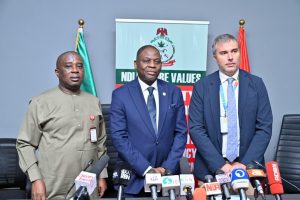
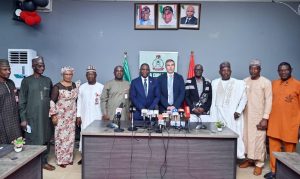
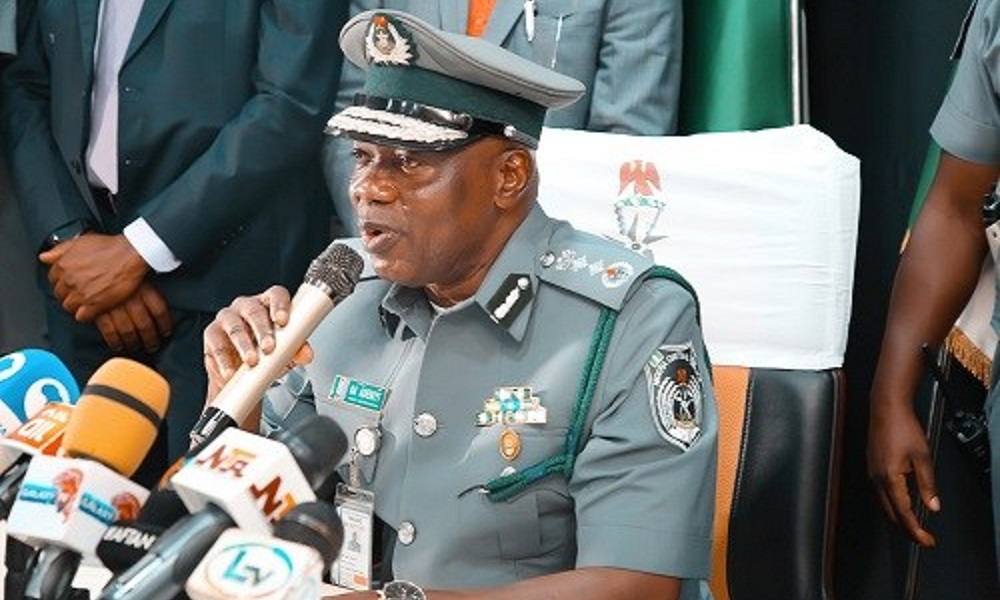
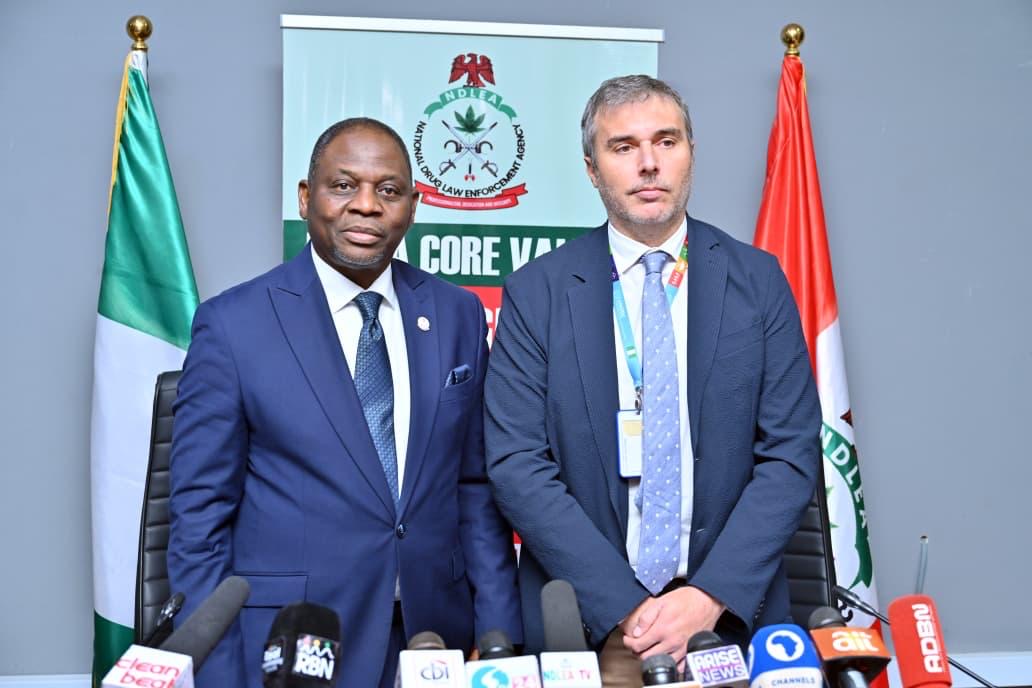
The National Drug Law Enforcement Agency (NDLEA) and the United Nations Office on Drugs and Crime (UNODC) have announced weeklong activities to commemorate the 2026 World Drug Day, even as the anti-narcotics agency vowed that it will continue to target the criminal networks with the aim of effectively cutting off their lifeblood.
This was announced at a joint press briefing by NDLEA and UNODC at the agency’s headquarters in Abuja on Friday 19th June 2026. In his address at the conference, Chairman/Chief Executive Officer of NDLEA, Brig Gen Mohamed Buba Marwa (rtd) noted that World Drug Day, observed globally on June 26, is a “vital occasion during which our collective efforts against the illicit drug menace are evaluated, refined, and given a definitive policy direction for the subsequent 12 months.”

Speaking on the theme for the 2026 World Drug Day: “The World Drug Problem: Persisting Issues, New Challenges, Innovative Responses”, Marwa said “this theme underscores the evolving dynamic of the global drug landscape. It acknowledges that while old battlegrounds remain, new synthetic threats, sophisticated trafficking networks, and digital illicit markets have emerged, demanding that we counter them with proactive, technology-driven, and highly innovative responses.”
According to Marwa who was represented at the briefing by the agency Secretary, Shadrach Haruna, “At the NDLEA, we have long recognized that old strategies cannot solve new problems. Under the continuous support of the Federal Government and our diverse stakeholders, we have heavily modernized our operations and balanced our enforcement capabilities with aggressive social advocacy. Our War Against Drug Abuse (WADA) initiative remains our primary vehicle for preventive action, and it has been refitted to address these new challenges by leveraging data, community intelligence, and innovative public enlightenment tools to protect our youth from falling victim to illicit substances.
“In strict alignment with this year’s profound theme, we are keeping alive our tradition of a week-long commemoration. To this end, the week officially kicks off today, Friday, June 19th, 2026, with this press conference. Later today, Friday, June 19th, we shall proceed to the National Mosque, Abuja, for a special Juma’at Service at 1:30 pm to seek divine guidance and commemorate this significant week.

“Tomorrow, Saturday, June 20th, our highly anticipated Walk Against Drugs—staged in collaboration with Baze University, Nile University, and the MTN Foundation (MTNF)—will take place. The take-off point will be the African University of Science and Technology, Galadimawa, starting at 8:00 am.
“On Sunday, June 21st, we will continue our spiritual intercession with a Thanksgiving Church Service at a designated worship center to commit the week’s activities into the hands of the Almighty. On Monday, June 22nd, at 10:00 am here at the NDLEA Conference Room, National Headquarters, we will host the final level of our national essay competition, themed: “Say No to Drug: Building a Healthy and Responsible Generation.” This intellectual contest highlights our focus on youth engagement and creative prevention.
“On Tuesday, June 23rd, we will observe NGO Day at the NDLEA Conference Room at 10:00 am. This day is dedicated to our civil society partners who remain indispensable in our grassroots sensitization efforts. On Wednesday, June 24th, beginning at 8:00 am, we will be having our Youth Out of School Programme. This is a targeted campaign focusing on high-risk environments within the FCT Area Councils, specifically reaching out to youths in major markets and motor parks with innovative, relatable anti-drug messaging. Thursday, June 25th, will be dedicated strictly to strategic planning, final reviews, and briefings in preparation for the grand finale.

“Finally, the climax of the weeklong activities, the Grand Finale, will hold on Friday, June 26th, at the State House Conference Centre, Abuja, starting at 9:00 am. This event will gather top government functionaries, diplomatic communities, and international stakeholders to formally unveil new policy frameworks for tackling the modern facets of the drug crisis.”
While speaking on recent operational milestones by the agency, which he said directly mirror its readiness to confront persisting issues and new challenges, the NDLEA boss noted that “Our flagship WADA programme, launched five years ago on World Drug Day 2021, has matured into a formidable “Whole-of-Society Approach.” It has successfully bridged the gap between law enforcement and the citizenry, turning ordinary Nigerians into active stakeholders in the war against drug abuse.
“On the enforcement front, our “Offensive Action” against drug cartels, launched in January 2021, has maintained its relentless momentum. We have continued to dismantle complex syndicates, leading to the arrest and successful prosecution of major drug barons. Our legal department has achieved unprecedented conviction rates, fortified heavily by the Proceeds of Crime Act (POCA). We are not just arresting traffickers; we are liquidating their financial empires. Through the civil action in rem instrumentalities, assets reasonably suspected to be proceeds of drug crimes are aggressively targeted and forfeited to the Federal Government, effectively cutting off the lifeblood of these criminal networks.”
He expressed the profound gratitude of the Agency to President Bola Ahmed Tinubu for his unwavering political will and support, as well as to State Governments across the federation. “Our deep appreciation also goes to our international partners, most notably the UNODC, the US-Drug Enforcement Administration (DEA), the Bureau of International Narcotics and Law Enforcement Affairs (INL), the UK Home Office International Operations (HOIO), Border Force, and the National Crime Agency (NCA) of the United Kingdom, the French Police and the German BKA, among others. We also acknowledge the seamless synergy we enjoy with the Nigerian Armed Forces, Nigeria Customs Service, Nigeria Police Force, Nigeria Immigration Service, NAFDAC, NFIU, FRSC, and the NSCDC, among others. Most importantly, I thank you, our friends from the media. The strategic victories we record daily would mean very little without your consistency in educating the public”, he added.
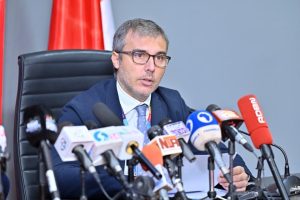
In his remark, the UNODC Country Representative Cheikh Ousmane Toure who was represented by the Deputy Country Representative, Mr. Danielo Campisi, stated that the world drug problem is not static, but evolving. “Nigeria stands at a critical point where it must address long-standing challenges while adapting to new realities. As we reflect on this theme today, let us remember: No single institution can address these challenges alone. Progress depends on partnership, shared responsibility, and sustained action; the problem persists, but it is not insurmountable; the challenges are evolving, but so are our solutions, and our response must be united, informed, and forward-looking.
“As we commemorate World Drug Day, UNODC reaffirms its commitment to supporting Nigeria’s efforts through evidence, innovation, human-centred approaches, and international cooperation. Together, we can strengthen our collective response to the world drug problem – addressing persistent issues, responding to new challenges, and advancing solutions that protect people and communities.”

News
DAY 8 of Projects Commissioning in the FCT
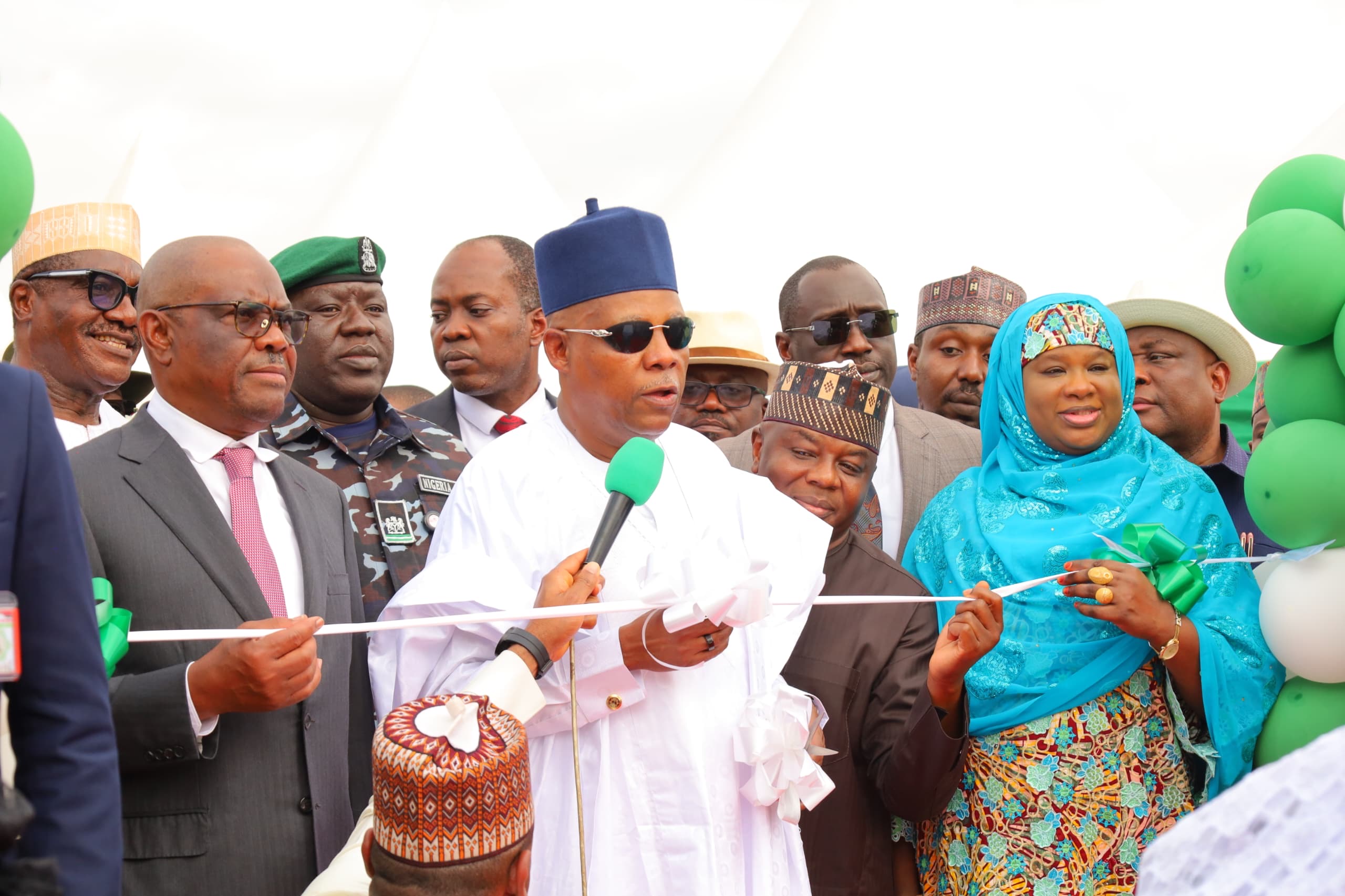
President Tinubu will commission Collector CN2 Roads and Other Roads Within Katampe District Today
#FCTRenewedHope
#FCTProjectsCommissioning
News
Just in: IPOB places Nnamdi Kanu under indefinite suspension
By Ojomah Austin.
The Directorate of State (DOS) of the Indigenous People of Biafra (IPOB) has announced the indefinite suspension of the Office of the Leader of the organisation and the position of Director of Radio Biafra, both currently occupied by Nnamdi Kanu.
The decision was disclosed in a statement issued on Thursday by the Head of the Directorate of State, Chikadibia Edoziem, who said the measure takes immediate effect and will remain in force until further notice.
According to the statement, the suspension was adopted as part of efforts to safeguard the organisation, its members and its broader objectives.
The group said the move was aimed at preventing security breaches and avoiding actions that could worsen tensions in the South-East.
The DOS expressed concern over what it described as a growing trend of unauthorised individuals and groups acting in the name of IPOB without the approval of the organisation’s leadership. It stressed that such actions do not represent the movement’s position and should not be attributed to IPOB.
The leadership stated that any unlawful activity carried out under the authority of the suspended offices should be regarded as the responsibility of those involved and not the organisation itself.
“The decision became necessary to halt reckless conduct and unauthorised claims of authority capable of exposing members to arrest, torture, imprisonment or death,” the statement said.
IPOB further declared that it would no longer take responsibility for actions undertaken by individuals who do not currently hold recognised positions within the organisation or who have not been authorised by the Directorate of State to speak or act on its behalf.
News
Xenophobia: 30th June deadline: Fear grips migrants in South Africa
… as Ndabandaba warns as deadline looms for migrants to leave South Africa
Ndabandaba, one of the main South African protesters has vehemently warned that: “on 30 June I can’t control the people of South Africa.”
This warning was as a result of the deadline looms for migrants to leave South Africa.
Lines of vehicles are reportedly backed up at Mozambique’s border post with foreigners anxious to leave.
South Africa has become a hostile place for undocumented migrants, as a deadline set by protesters for them to leave the country approaches.
“I am very scared and traumatised,” Esnat Joseph, a 36-year-old Malawian woman, told the BBC as she tried to comfort her crying one-year-old triplets.
She fled her home in an informal settlement in the port city of Durban, in KwaZulu-Natal province, seeking refuge in an open field where up to 7,000 foreigners – mainly Malawians – began gathering with their belongings two weeks ago.
“The people came to my house and told me: ‘You must leave. We don’t want you people to stay here any longer, so you have to go to your country.’ There were 10 and they were carrying weapons,” she said, describing how the group of South African men were holding machetes and whips.
“They cut my husband on his head and his neck. They were holding his neck like they wanted to kill him. Because of God he still survived, but he’s in the hospital.”
Many others at the field, where aid groups have been giving out blankets and food, report such door-to-door intimidation.
It follows a series of mainly peaceful protests this year led by the anti-migrant group March and March, opposition party ActionSA and others which have set 30 June as the deadline for undocumented migrants to leave.
Sticks in hand, the marchers have been chanting “Mabahambe” – a Zulu phrase meaning “They must go”.
As the countdown continues, President Cyril Ramaphosa warned South Africans on Tuesday that the “scapegoating of vulnerable people” was not the solution to country’s complex economic challenges.
Joseph came to South Africa three years ago and was working as a domestic servant before having her children.
Her legal status is not clear – she says she lost her passport and other paperwork in a robbery. She aims to go back to Malawi on one of the buses the Malawian consulate has been arranging with the help of donations for its desperate citizens to leave Durban.
Ghana, Mozambique, Nigeria and Zimbabwe have also been organising repatriations by air or bus over the last few weeks – with about 3,500 foreigners volunteering to leave so far.
The South African authorities said the more than 500 Nigerians recently repatriated had been in the country illegally, although this was disputed by the Nigerian authorities.
Arriving in Lagos last week after nearly nine years in South Africa, Benjamin, a returnee who only gave his first name, told the BBC: “South Africans don’t like foreigners, especially Nigerians. South Africa is not a place to be – it’s a place you can lose your life at any time.”
Protest organisers deny their actions are xenophobic. They say they are sick of other Africans abusing the system and, as March and March leader Jacinta Ngobese-Zuma put it, “playing the victim card”.
“If you come into South Africa with a passport that allows you to stay for 30 days. When it’s 50 days, when it’s two years, when it’s five years, you know you’re breaking the law,” she told the BBC at one protest in Durban.
“We can’t have South Africa being turned into a refugee site for all failed African states… every country prioritises its citizens and we want the South African government to do the same.”
Latest figures show South Africa is home to more than three million foreigners, about 5% of the population – most from neighbouring countries in southern Africa.
But the statistics do not record the many more migrants believed to be in the country without papers – a bone of contention for the protesters.
Their anger is rooted in growing hardship as the country grapples with growing youth unemployment and economic inequality.
South Africa has one of the highest rates of unemployment in the world at 32.7%, according to Statistics South Africa, which recorded 350,000 job losses in the first quarter of 2026 – the majority of whom are young people.
However, the continent’s most-developed economy remains a magnet for citizens of poorer countries who risk their lives to go there to seek work such as security guards and domestic servants.
Protesters, like Mecha Ramorola, also point to the country’s strained public services with South African “people fighting for scarce resources”.
“We are struggling to get our children into schools. We are struggling to get our old people into hospitals,” Ramorola told the BBC during a march in the capital, Pretoria.
But there are fears these protests could lead to a repeat of the violence that broke out in 2008, when 62 people, including 21 South Africans, were killed in riots that forced thousands from their homes. There were also outbreaks of xenophobic violence in 2015, 2016 and 2019.
Last month the Mozambique government said five of its citizens had been killed in xenophobic attacks in Western Cape province. South Africa’s foreign minister disputed this, saying two Mozambicans had died and that the circumstances of their deaths were being investigated.
Videos on social media are fuelling the hostility towards foreigners.
In one, a Ghanaian man is harassed by protesters telling him to go home, which prompted Ghana to summon South Africa’s ambassador to demand better protection for foreign nationals.
Another widely shared one shows prominent protester Nkosikhona Ndabandaba, popularly known as Phakel’umthakathi and who has 1.4 million followers on Facebook, approaching a man standing by the roadside and asking him his nationality.
When he replies that he is Congolese, Ndabandaba – wearing his trademark Zulu headdress – tells him in a polite tone but without inquiring about his legal status: “30 June is the deadline, but it’s not that you have to leave on 30 June. Leave now.”
But foreigners living in the country legally say they are also being targeted – some are camping outside Durban’s Home Affairs office for protection.
“I have my own document that recognises my refugee status in South Africa, but all of us are still being chased away,” a Burundian woman, who was there with her four children, told the BBC.
“I am very afraid for my life. The children are afraid. There is no respect. When you pass by here, you are insulted. The children are insulted even at school,” she said as she wrapped herself in a blanket to shelter from the cold of the southern hemisphere winter.
Just going to the shops can be intimidating these days, a Malawian beauty therapist in Cape Town, who has lived in South Africa for 16 years without legal status, told the BBC.
She, her husband and their nine-year-old daughter had a scary incident in a taxi on the way to a shopping centre: “We were in an Uber, just the three of us, and we were being asked by an Uber driver where are your papers? Where are you from? You sound different.”
The beauty therapist says she can understand why Ramaphosa recently set out an action plan to deal with illegal migration – but stressed that human beings, legal or not, had a right to safety.
“My child is not even going to school because we’re scared. We’re terrified of what would happen now.”
In a special national address earlier this month, the president warned that no individual or group had the right to demand proof of nationality from people in public spaces and said government would act against them.
“There is no space for xenophobia, racism, sexism, Afrophobia or any other forms of intolerance in South Africa,” he said, explaining his coalition government’s five-point strategy to deal with the crisis.
These include refusing asylum claims from people who had travelled through other “safe” countries, the introduction of a quota for the naturalisation of citizens and extending the reach of digital IDs to non-citizens.
There will also be jail terms for employers who give low-paying jobs to undocumented migrants.
“You find an immigrant being employed in jobs that a South African will ordinarily not accept, or that pays less than what the government demands, because one, they’re desperate, two, they’re open to abuse in being short changed,” analyst Prof Shepherd Mpofu told the BBC.
Ramaphosa said efforts would also be made to crack down on corruption within the system.
A 36-year-old Malawian woman in Johannesburg, who asked not to be named for fear of reprisal, told the BBC that she came to South Africa on a visitor’s visa and had been bribing border officials to stamp her passport for a fee every couple of months without crossing the border.
“I have decided to go back home for a while and close down my hair salon because of threats,” she said, explaining that she feared for her young children’s safety.
The latest spike in protests comes as political parties seek support ahead of local government elections in November.
Some unscrupulous politicians have been using misinformation to fuel fear and anger over illegal migration – sharing old videos and confusing the narrative.
A debunked claim that South Africa has 15 million undocumented migrants, first popularised five years ago by ActionSA leader Herman Mashaba, who is campaigning to become mayor of Johannesburg, keeps resurfacing.
“Political parties are scraping the bottom of the barrel in trying to lie to people that all our problems are the migrants, and if we get rid of the migrants, then we’ll have no problems in South Africa,” says Sharon Ekambaram, a human rights lawyer and member of the Kopanang Africa Against Xenophobia movement.
“This has been an ongoing phenomenon in South Africa and more recently, it has been associated with elections.”
The government keeps pushing back – its ministerial task team on migration saying this week that 40,000 illegal immigrants have been arrested so far this year for contravening the Immigration Act.
The public face of this – known as Operation New Broom – can be seen in downtown Johannesburg where for the last few months excavators have been demolishing informal corrugated iron shops set up on pavements.
Officials see the areas as possible “hot spots” for criminals and illegal migrants.
On the day I visited, Ethiopian migrants looked on at horror at the destruction – though they had been warned by the authorities.
Such measures as well as the protests are leaving many migrants feeling like the walls are closing in.
uMkhonto we Sizwe (MK), the country’s third largest party led by former President Jacob Zuma and which has a lot of support in KwaZulu-Natal, has not backed the deadline for migrants to leave – but endorses its sentiments.
“We all agree that undocumented migrants are breaking the law… They must leave our country peacefully without any violence or intimidation,” MK member Bonginkosi Khanyile told the BBC.
Nonetheless there is a tangible fear nationwide given the ominous warning from Ndabandaba, one of the main protesters.
Back at the field in Durban, terrified Malawians – most, according to officials, without papers – cannot wait to get out.
When the first bus arrived to evacuate some of them on Sunday, the crowds chanted in Zulu “Siyahamba”, meaning “We’re leaving”.
-
Metro8 hours agoPolice bust telecom fraud syndicate, arrest suspects over N7.7bn data scam
-
News19 hours agoFire reportedly engulfs Polaris bank in Lagos
-
News23 hours agoDAY 7 of Projects Commissioning in the FCT: Watch moment Wike arrives Tunga Madaki
-
News22 hours agoDAY 7 of Projects Commissioning in the FCT: Watch moment Akpabio arrives Tunga Madaki
-
News9 hours agoGunmen Abduct, March 18 Bus Passengers Into Kogi Forest
-
Sports8 hours agoReal Madrid Sign Ibrahima Konaté After Liverpool Exit
-
Entertainment9 hours agoPopular Actress Dies At 35 From Complications Of Sepsis
-
News18 hours agoTinubu: No Community Should Suffer for National Development, Commissions Airport Bypass Road in Abuja(Photos)